Crimson light, polished wood by Monica Raszewski
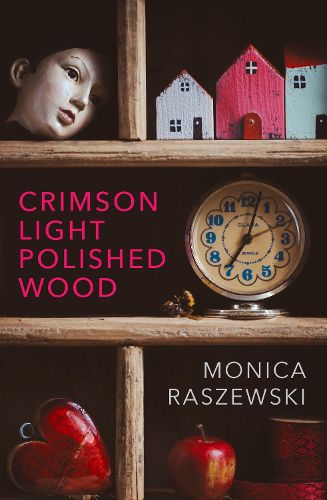
Raszewski’s fascinating book challenges the idea of what a novel should be. It is exactly the work of ‘shifting sands’ that young Lydia, the key protagonist, wants to create, in defiance of her mentor Leonora’s assertion that a book must follow a certain formula. Raszewski turns that all on its head, and the resulting novel is a mixture of fiction, memoir, memory, and snippets of information gleaned haphazardly as Lydia grows up. Lydia is enthralled by the woman next door, Leonora, the lesbian, the artist, the lover of literature, but she will never admit to such a thing. Lydia is the sullen unresponsive child, observer of her mother’s relationship with the amazing Leonora, but never willing to admit any encroachment on her own sense of identity, never willing to accept any advances of friendship or influence.
It is no surprise to the reader that Lydia is not the inheritor of Leonora’s house. There are intimations that her brother is more deserving of that beneficence, but perhaps the gift of the writing desk, books and walnut sideboard to Lydia is the special encouragement that she needs because those things become the inspiration for a major art installation that draws together all the threads of memory and relationships, a cathartic interpretation of the mysteries of the actors in her childhood world.
Raszewski’s book is one of shifting identities: Leonora was previously Isobel, sometimes Theresa; and her friend was Doreen, or maybe Miriam or Tanya. People changed names, changed relationships, and while observers may try to put the fragments of identity together they can never frame the finite person. That is how life is. There is no omniscient narrator.
Crimson light, polished wood is an intriguing work, deserving of more than one reading. It reveals the intricacies of relationships, of how one can never truly know another person, but how the influence of others can have an enduring impact. And if you are seasoned book lover, there are many references to past literature to enjoy.
Themes: Women, Identity, Literature, Art, LGBQTIA+, Parent child relationships.
Helen Eddy