Red Fox, 2010. ISBN 9781862304970.
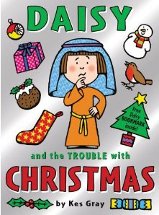
Junior Fiction. One in the series about the lovable but slightly odd
young girl, Daisy,
this one revolves around her involvement in Christmas. It is the time
of the year that she really enjoys, but it has its troubles. Mainly the
trouble with Christmas is that the excitement starts in September, and
then all the way to December are all the other chores she must do to
prepare for the big day. She must write letters, and decide what to ask
for, she must be involved with the Christmas play at school, then of
course November has Guy Fawkes Night with its attendant bonfire. All of
these things cause trouble to the girl as she tells us what happens on
each of these nights, showing us the trouble she gets into as a result
of her excitement. A lovely story to read out loud, this book gives a
different view of Christmas than the one usually presented in books for
children, and so will be a refreshing change to have in the classroom
at that time of the year.
Fran Knight
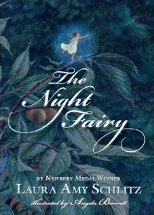
The Night Fairy by Laura Amy Schlitz
Ill. by Angela Barrett, Candlewick, 2010. ISBN: 9780763636746.
(Age 8+) Highly recommended. Flory the fairy was born at night and,
unlike many other night fairies, had beautiful wings. Before she was
three months old, the wings were crunched by a bat, leaving her to
adapt to a whole new way of life and having to find the best way to
survive. In the garden, created by a 'giantess', Flory settled into a
nesting box which had been hung for the wrens and began to observe the
visitors to the garden and its bird feeders. Here, Flory decides to
live as a day fairy and, when a squirrel comes to threaten her, she
begins to develop the magical abilities which will ensure her safety
when she meets other creatures. Finally, she comes to build new
friendships and alliances allowing her to grow and come to accept
herself.
This is a gentle, magical adventure story about a feisty little fairy
and should appeal to the young but more capable female readers, aged
about 8 and up. Schlitz's story contains small adventures in each
chapter, set out with double spacing to make it accessible to the
younger child. There is sufficient action to keep the audience
engrossed and is beautifully supported by Barrett's beautiful full
colour illustrations, with at least one appearing in every chapter and
a thumbnail print at the beginning of each. A highly recommended read.
Jo Schenkel
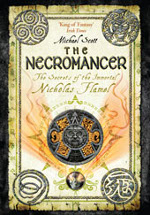
The Necromancer: The Secrets of the Immortal Nicholas Flamel by Michael Scott
Doubleday, 2010. ISBN: 9780385618298.
Highly recommended for ages 10 and up. When the twins, Sophie and Josh
Newman, return to San Francisco, their arrival is marred by the
appearance of their friend Scatty's twin, Aoife of the Shadows. Almost
as soon as they arrive, Sophie is kidnapped from their Aunt's house and
Josh immediately tries to go to her rescue. Not only must the twins try
to protect themselves but they need to discover just who can be trusted
as they work to develop their powers. They face many threats, with Dee
and Virginia Dare plotting together to gain ultimate power. In order to
do this, Dee is planning to create an army of creatures and bring the
Mother of the Gods back to life. For this to happen, however, he will
need a necromancer; a role which he believes can be carried out by the
'twins of legend'.
This is the fourth book in the series and continues with many twists
and turns and a myriad of characters, some from history and some from
myth and legend, as the twins race against the clock to save their
friends and the world from its ultimate destruction. With so many
different strands and locations in the story, it continues to be
unpredictable and entertaining. Scott has again written a highly
engrossing novel which will be devoured by the more capable readers of
fantasy.
Jo Schenkel, Pilgrim School
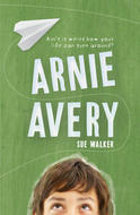
Arnie Avery by Sue Walker
Walker Books, 2010. ISBN 978 1 921529726.
Recommended. What started out as a regular Saturday afternoon at the
local pool turns into a nightmare. Family night is becoming
increasingly odd with Mum seeming to be disengaged with life and an
unexpected test produces disastrous results. Can life get any
worse?
When Arnie's friend Belly has an asthma attack while trying to teach
Arnie to box, a chain of events occurs that helps Arnie to see life
more clearly and enables him to find a solution to his problems. Arnie
is dealing with loss, a school bully and a dysfunctional family. It is
hard to imagine a successful solution to his problems. However as the
novel develops Arnie gains strength from unexpected sources and manages
to resolve his issues in a successful and rewarding way.
This is an excellent junior novel about relationships, friends and
family with strong characters and storyline.
Tracy Glover
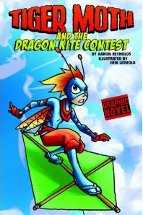
Tiger Moth and the dragon kite contest by Aaron Reynolds
Series: Tiger Moth (Graphic novels). Raintree Publishers, London, 2010.
ISBN 9781408216691.
(Ages 8+) This new series of graphic novels revolves around the
exploits of Tiger Moth, and his side kick, Kung Pow, primary school
ninjas. To celebrate Chinese New Year with his classmates, Tiger's
teacher sets up an Antennae School Kite competition. Tiger's
rivals, the Fruit Fly Boys, scoff at the idea, but become involved in a
very nasty way, trying to upstage Tiger and his friends, and sabotage
the competition.
This book is in full colour, has easily identified characters, easy to
read script with lively and involving illustrations. This particular
book gives facts about Chinese New Year and kite flying, which add to
the fun, and the whole is served well by a page showing the main
characters at the start, with a page about the author and illustrator,
a glossary, discussion and writing points and then information about
other graphic novels within the series, at the end of the book. The
stories and illustrations are attractive and easily digested, and will
be readily picked up by middle primary students.
Others in the series include: Insect ninja; Kung Pow chicken,
The
fortune cookies of weevil, The dung beetle bandits and The
pest
show on
earth.
Fran Knight
Darkwater by Georgia Blain
Random House, 2010. ISBN 978 1864719833.
(Age 15+) Recommended. The waterfront suburb is like an island, water
on three sides, an enclave of well known streets, some shops, a school
and the riverside, where the kids hang out after school and on
weekends. Kids ride their bikes around the streets; they run messages,
do chores at home, drop in to see friends. Their lives are
uncomplicated. It is 1973; some smoke a little dope, others have close
boyfriends and girlfriends, they all go to school together and most
have known each other since kindergarten. But Amanda Clarke is dead:
murdered, her body found half floating in the water near where they all
meet. It splinters the group like nothing else. They become suspicious
and wary of each other; their once safe suburb now locks its doors,
with parents picking the children up after school, and warning them to
be on their guard.
Winter writes her dairy, revealing the facts and beliefs of her group,
speaking for the senior students at her school. She knew Amanda, but
only as a girl in a higher grade, part of the group which included her
brother, Joe. Through the diary the writer examines all the events
surrounding the murder and so details all the characters. They become
real people, grieving for their lost friend, but also harbouring
beliefs about who killed this popular girl.
The book is a fascinating look at the loss of innocence, the change of
a once trusting community to one where people look upon their
neighbours with suspicion. And Georgia Blain has drawn this community
with an elegant ease. No word is out of place, the whole is
meticulously researched, the times recreated with an eye for detail
which is stunning. From the intellectually disabled boy and his mother,
cocooned in their house by the sea, to the women striving for some
independence, the developer attempting to build on the last piece of
untouched waterfront land, the green bans and intimidation within the
building industry; all are part of a background which firmly places the
story in the 70's. The school too, the wallpaper of the lives of its
students, plays a part in the developing story which is redolent of the
intertwining lives of this group of teenagers.
I thoroughly enjoyed reading this story and recommend its inclusion in
secondary libraries and in a list of texts for year 9 and above.
Fran Knight
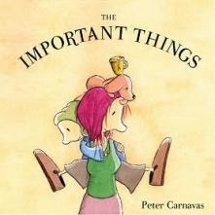
The important things by Peter Carnavas
New Frontier, 2010. ISBN 9781921042287.
(Age 4-8) Recommended. Christopher's mother does everything, from
painting the house by day and reading novels at night. She 'had to do
everything, for his father had faded from their lives.' One day she
decides to collect small things that had belonged to his father, like a
cracked mug, a hat and pair of old slippers, and takes them to the
second hand shop. A few days later, they start to reappear in the
house.
This is a heart touching story about a single parent family. Adults who
read it aloud to children will be truly touched by the thought of
Christopher's mother giving away unimportant things in an effort to
forget Christopher's father. Children will identify with
Christopher, knowing that quite often, unimportant things have special
memories. The depiction of the special bond between mother and son is
also touching. The mother is prepared to bring back home all the
unimportant things for Christopher to help him remember his father,
even though, as Carnavas beautifully shows in one picture, they make
her sad.
Carnavas' illustrations perfectly capture the mood of the mother and
child. The reader immediately senses the despondency of the mother as
she looks at the little things left behind by Christopher's father. Her
love shows through clearly as she plays games with Christopher.
Christopher's joy at having his father's possessions back is drawn
exquisitely as he plays the piano, wearing his father's hat and
slippers.
I was particularly struck by the idea of a father fading away from
their lives, and I am sure this will strike a chord with young readers.
I'm certain that this book will become very special for those children
who live in a single parent family, as it is so insightful about the
feelings of both the parent and child.
Pat Pledger
Blood Ninja by Nick Lake
Atlantic, 2010. ISBN 9781848873872.
(Age 13+) We all know that vampires are enormously popular at the
moment. This book seeks to capitalise on this popularity with an added
Japanese ninja twist. The protagonist of Blood Ninja is a
teenage boy
called Taro from a small fishing village in 1565 feudal Japan. Taro's
life changes dramatically one night when his bed-ridden father is
beheaded as he sleeps and in his father's defence Taro is also killed
only to be brought back to life by the bite his protector Shusaka, who
was once a samurai turned vampire and ninja. Taro along with his
orphaned over-weight best-friend are then forced to flee the small
village to find refuge from the ruler of their territory Lord Odo who
has ordered Taro's death. Taro, Hiro and Shusaka then move to safer
refuge by the cover of night, because sunlight can kill vampires,
fighting battles along the way. The quest takes another turn when Taro
decides he want to take revenge on his father's death by personally
assassinating Lord Oda. Concepts of vampires and ninjas are somewhat
challenged and at times difficult to comprehend in this book but the
regular fight action keeps the story moving, even if it a bit violent
for a younger age group, with beheadings and sword gashes described in
detail. This book would be recommended for those teenage readers of
other vampire, ninja or Japanese fantasy books. These readers might
then be looking forward to any follow-up books that are likely to stem
from this book in a future series.
Adam Fitzgerald
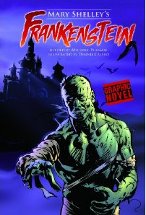
Frankenstein by Mary Shelley
Retold by Michael Burgan. Series: Graphic Revolve. Raintree
Publishers, 2009. ISBN
9781406213539.
Recommended. The perennial favourite, Frankenstein by Mary
Shelley, first published
in1818, is given the graphic novel treatment in this highly inviting
comic version of the well known story. Dr Frankenstein has spent years
experimenting with flesh dug from the cemetery, attempting to recreate
life. He eventually succeeds but is so appalled with what he has done,
that he searches for his creature to kill him. The moral decisions that
must be made by both creator and creation are given play in this full
coloured graphic novel.
The series, Graphic Revolve, also includes favourites such as 20,000
leagues under the sea (Jules Verne) Alice in Wonderland
(Lewis
Carroll), The wizard of Oz (Frank Baume), The jungle book
(Rudyard
Kipling) amongst others.
Each is abbreviated, but covers all the themes found in the novels, and
they are brightly coloured, a nice size to hold and read, and have
attractive inviting covers. At the end of each book is a glossary,
topic questions and writing points as well as information about the
author and the original version of the book, while the opening pages of
the book gives a drawing of each of the characters, As one who received
her first introduction to the classics of literature through classic
comics in the 1950's, I warmly recommend these. They will have broad
appeal to those looking for a quick read, those who want an
introduction to the classics, a class where a box of these is made
available for reading time, a parent who wants their child to have some
background to classical literature and those who want a graphic novel.
Fran Knight
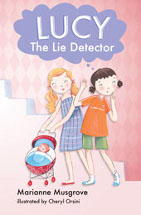
Lucy the Lie Detector by Marianne Musgrove
Random House, 2010. ISBN 978 1 741664553
The character of Lucy was originally introduced to us in Marianne's
earlier novel Lucy the Good and returns to solve the dilemma of
modern
life about what makes a lie and what is just embellishing the truth and
are they really the same thing.
Early in the story Lucy damages the family's new car and blames the
accident on her younger brother, Calvin. Lucy is alarmed when the
consequences for her actions are more severe than first thought and she
tries to make amends only to find another situation arising where her
actions are again questionable. Eventually Lucy takes her embellishing
of the truth to a level that has her truly worried about the
consequences.
The story reaches a satisfactory ending and the involvement of a guinea
pig and camel make the story enjoyable for younger readers.
Tracy Glover
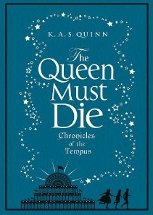
The Queen must die by K.A.S. Quinn
Atlantic Books, 2010. ISBN: 978 1848873704
(Suggested reading level 12-15) First in The Chronicles of the
Tempus
trilogy.
In this novel, Katie Berger-Jones-Burg, a contemporary American
teenager, time travels to London in 1851 where she becomes embroiled in
a sinister plot to assassinate Queen Victoria. Time slips are
acceptable in making historical fiction meaningful and alive,
especially when witnessed and interpreted by people whose language and
life experience is familiar to the reader's. I found the start of the
story tedious however, as the author introduces Katie's dysfunctional
rock star mother and paints the picture of a girl who feels lonely,
perhaps even unwanted as her mother meets a series of unsuitable men
with whom she conducts brief and unfulfilling relationships. The reader
is also made aware that Katie has visions of tormented figures,
strangely dressed, whom she instinctively understands are from an
earlier century. This is uninspiring and clumsy. Katie escapes into her
private world of literature, reading widely and eclectically and it is
whilst she reads a published series of letters written by Princess
Alice, one of Queen Victoria's six daughters that she falls asleep and
awakens in Alice's bedroom. Making friends with Alice and James, the
son of the Royal Doctor, Katie learns that a movement is afoot to
murder the Queen and the trio investigates, skulking about the Palace's
labyrinth of secret chambers and corridors whilst following intruders
in the dead of night. Fantasy elements aside, the story is laughably
implausible, given the confines of regal households of the time and the
most ungainly conversations and thought monologues occur as the author
awkwardly attempts to inform the reader and develop the plot. As the
characters seek to understand how and why Katie time traveled, whilst
attempting to keep her presence secret, a major feature of the story in
the construction of the Crystal Palace for the 1851 London Exhibition
is introduced. This is genuinely interesting and educational yet I felt
that the story could have been so much more appealing had the author
explained the Royal genealogy and details of national history earlier
and more clearly. At the conclusion, I was left thinking that the
author had a justifiable fascination with this period but assumed
readers were similarly informed. Whilst much of this novel is
excruciating to the adult reader, hopefully teenagers will be
captivated by the fantasy, mystery and action so that they are unaware
of the various flaws.
Rob Welsh
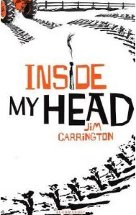
Inside my head by Jim Carrington
Bloomsbury, 2010. ISBN: 978140880277.
(Suggested reading age 14-17 years) Recommended. Jim Carrington writes
about adolescent bullying, set in modern rural England using four main
characters. Zoe has recently moved reluctantly from London with her
family and must face the trepidation of starting at a new school.
Knaggs is a nasty, manipulating bully who victimizes Gary over his
appearance, social position, accent and any minute detail which gives
him an opportunity to torment. David is Knaggs' friend who initially
tolerates the mindless taunting but gradually appreciates that his lack
of courage in objecting to the bullying is tantamount to endorsing it .
The narrative flows through the thoughts and experiences of Zoe, David
and Gary, presented in character chapters which provide alternate
insights. Assigning importance to the character David was a clever
strategy. A clear attempt is made to enlighten readers who might not
identify themselves as bullies but who must appreciate the serious
consequences which arise from tacit approval of a bully's actions and
failure to censure victimization. Young people readily understand
bullying behaviour and few approve, yet the majority witness bullying
of some sort and whether they support the bully without meaning or
wanting to is the lesson within this novel. This is a touching, sad
story and because it is realistic, the reader readily appreciates that
relentless, damaging taunts and practical jokes cause the lonely
suffering presented in the narrative.
Carrington deals with issues such as self-harm, psychiatric illness and
suicide in an interesting manner. Whilst the tortured Gary stoically
endures daily misery and inevitably wrestles with such notions, minor
characters experience the worst of these outcomes in their lives which
interplay through the main story. Accordingly Carrington acknowledges
the brutal realities but enables his central characters to strive for
more positive outcomes, rather than consigning them to a hopeless end
which young people don't need to read. The conversational language is
authentic and accordingly strong swearing is present but not
excessively recurrent or foul. The Norfolk location, the
characters, their families, teachers and school are readily
transferable to any setting. Teachers, parents and students can learn
from this tale which concludes less convincingly than it begins.
Rob Welsh
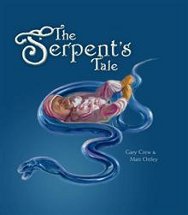
The serpent's tale by Gary Crew and Matt Ottley
Lothian, 2010. ISBN 9780734410283.
Picture book. Playing on the word 'tale' by both author and illustrator
gives the
reader a tantalising narrative about the universality of story in this
picture book for all ages. The boy pesters his mother into buying him
an amulet at the market. The metal charm is of a snake grabbing its own
tail, and the boy when asleep dreams the dreams of the ages. From the
first men, fighting for survival, to times of war, discovery and loss,
the tale of man is the same, beginning anew with each generation. When
the boy wakes the next morning, his mother opens the curtain onto a
world at war, and implores him to pack and run, to see what the story
will be in the future.
The tale of men is the same tale, and the snake and its tail appear on
most pages, emphasizing the place a story in our lives. Ottley's
illustrations parallel and augment the story, taking the story onto
another level altogether, with his scenes of war and destruction,
juxtaposed with scenes of a mother's love, courage, and a possible
future. The snake can be picked out even on the endpapers, and will
cause delight with younger readers. Each illustration has a hidden
depth and will entice readers to look past what they first see, to
discover parallels and hints of differing episodes in man's story.
Overlaid with the whiff of myth and legend, the book will initiate much
discussion in classes across the board, as the students delve into the
nature of story, its place in our world and its universality.
Fran Knight
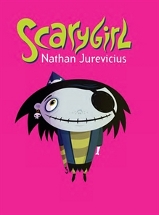
Scarygirl by Nathan Jurevicius
Allen and Unwin, 2009. ISBN 9781741753707.
(Age 8+) Picture book/Graphic novel. Abandoned by a dumpster along with
a host of other rubbish, Scarygirl
meets Blister, a cool giant octopus, who takes on the role of her
mentor and guardian. Determined to find the man who pervades her
fantastical dreams, Scarygirl leaves the peninsula on which she lives,
with Bunnuguru, a giant rabbit. Surviving all manner of obstacles, deep
ravines, trees looking like giant men, narrow winding bridges, monster
filled forests, the pair find themselves in a city where even greater
danger lurks. Dressed as a pirate, Scarygirl finds a cafe of
sorts
where she is directed to an auction house only to see the captured
Blister on sale for all to look at and mock.
Scarygirl's endearing smile pervades the whole story, inviting the
reader to follow her into all sorts of dangerous situations. Halfway
through the novel is an intermission, where Jurevicius takes the
opportunity to tell the reader about how the characters are created and
drawn, and I can imagine many readers wanting to stop here to try and
create the characters for themselves. But the story of Scarygirl will
draw them back to read how she succeeds in her quest, the bright,
colour filled pages of drawings grabbing the reader's attention all
over again.
Readers will love spying out all the hidden and half hidden nuances on
each page: Scarygirl's claw hand, the faces in the forest, the fire
monster, the amazing cafe in part two, with reminiscences of
Star Wars
and the Arabian Nights, all adding up to a pleasurable and enthralling
reading experience.
A story of love and friendship, Scarygirl displays the talent
of Nathan
Jurevicius and his creations have taken on a life of their own in
websites, model figures and merchandise which readers will want to
research.
Fran Knight
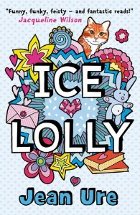
Ice Lolly by Jean Ure
Harper Collins, 2010.
(Ages 9+) Recommended. When teen fiction as a genre began to
grow, Jean Ure was there at the forefront and I have fond memories of
devouring A Proper Little Nooryeff and See You Thursday
during my own
adolescence. In recent years Ure has focused more on pre-teens and her
books always combine realism with warmth and gentle humour that leave
readers both satisfied and secure.
After Mum dies Laurel has to live with her Mum's brother and his
family. Under duress the ghastly Aunty Ellen allows Laurel to keep her
beloved but elderly cat, Mr Pooter. However, life is far from easy as
Laurel grieves for her unconventional Mum, struggles at her new school
and develops an ice queen persona to keep her feelings under wraps. Her
twin consolations are her love of books and her relationship with the
sympathetic school librarian, Mrs Caton.
When Mr Pooter develops kidney problems and Aunty Ellen wants him
'dealt with' Laurel decides to run away. It's only when an old friend
of her Mum appears on the scene that Laurel and Mr Pooter finally find
someone who is on their side.
This is a gentle story which gets under the skin - the account of
Laurel's books being boxed up and banished to the attic and her
abortive visit to Mrs Caton during the school holidays really
resonated. Laurel's avoidance of emotion is sensitively handled and the
warm and fuzzy ending makes this suitable for younger readers who are
just beginning to investigate the complexities of families and
relationships. Ice Lolly may not provide the gritty realism of Jacqueline
Wilson, but
there is sufficient heartache and drama for young readers to really
feel for Laurel, while giving them the reassurance and pleasure of a
'happily ever after' conclusion.
Claire Larson