Razorbill Penguin, 2010. ISBN 9780141327303.
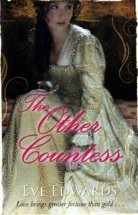
(Age 12+) This is a first novel by English author Eve Edwards who has a
strong interest in Tudor times; this historical romance is obviously
very well researched.
The story opens in 1578 when Ellie (Lady Eleanor Rodriguez of San
Jaime) first sets eyes upon the young William Lacey. Ellie and her
alchemist father are facing the wrath of William's family, upon
discovery that the deluded man cannot make gold out of metal after all,
yet much of the Lacey's family fortune has been lost in this ridiculous
quest. Ellie and her father are dishonourably banished from the court.
Four years later Ellie meets William again but this time they fall
passionately in love. This is a romance to be tried and tested; family
honour is at stake when Ellie is not considered worthy of William's
advances.His responsibility is to restore his family's fortune.
The historical backdrop is impressive - war with Spain, conflicts
between the Catholics and Protestants, court life and appearances made
by Sir Walter Raleigh and Queen Elizabeth I. Here is splendid
historical detail - costumes, foods, conventions - all contained within
an interesting narrative. Young readers of historical novels will
enjoy this story, and, as the subject matter is more of a human drama,
rather than witchcraft and magic, new readers to the genre should take
pleasure in the historical context. Discovering the turmoil in the
minds of the young, living at this time, and the need to make
imperative decisions for the sake of family and social standing, will
highlight the differences with modern society.
This is a well written novel, especially suiting girls in the age group
12+.
Julie Wells
Dragonblood series by Michael Dahl
Ill. by Federico Piatti. Raintree, 2010. Raintree, 2010.
(Age 10+) Suitable for reluctant readers. Each book in this series
starts with the words: 'A new Age of dragons is about to begin. The
powerful creatures will return to rule the world once more, but this
time it will be different. This time, they will have allies who will
help them. Around the world some young humans are making a strange
discovery. They are learning that they were born with dragon blood -
blood that gives them amazing powers.'
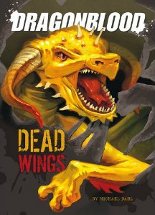
Another set of books in the Dragonblood series, this time illustrated
by Federico Piatti, will be welcomed by children who want a quick but
compelling read. Each book has a small amount of print on the page,
with an interesting type face that leads the eye onto words further on
the page. The main characters are older adolescents and adults, so
older reluctant or less able readers will not feel that they are
reading books designed for young children. The stories are interesting
and can be read very quickly by the more proficient reader, so will be
useful on a spinner of 'Quick reads' in the library or in the
classroom. Each book has different facts about the theme of the story,
eg The Missing Fang looks at fangs through history, and there
are
discussion questions and writing prompts.
Dead Wings by Michael Dahl. ISBN: 978 1 40621 536 6 Dragon Cowboy by Michael Dahl. ISBN: 978 1 40621 537 3 The Girl who Breathed Fire by Michael Dahl. ISBN: 978
1 40621 535 9 Eye of the Monster by Michael Dahl. ISBN: 978 1 40621
538 0 Wings Above the Waves by Michael Dahl. ISBN: 978 1 40621 534 2 The Missing Fang by Michael Dahl. ISBN: 978 1 40621
533 5
Pat Pledger
April Underhill, tooth fairy by Bob Graham
Walker Books, 2010. ISBN 978 1 40632155,
Picture book. Recommended. When grandma calls April, asking her
specifically to do a tooth visit, father is unsure whether April and
her sister Esme are ready to do their first solo run. He goes carefully
through their list of things to do, while mum gives all sorts of
reasons for them not to go. Eventually the parents relent, but not
before giving the girls some advice about what to do. The boy must
never see them, they are warned, because that would spoil the magic,
and April is given a string bag to bring back the tooth in. Mum checks
that they have their mobile phone with them, and off they fly, into the
night, away from their little house under the old tree trunk near the
M42. Buffetted by the wind, they find the house and wing their way
upstairs. But as they take the tooth, Daniel's eyelids flutter, and
they must text mum to ask what to do. They pull his eyelids shut then
visit grandma and tell her they have done the visit. And fly home to be
congratulated and welcomed by their parents. Daniel wakes the next
morning to tell grandma what has happened.
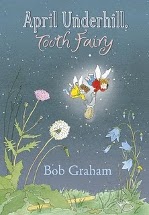
Brimful with the warmth of family life, of love and comfort, of trust
and learning to do things by themselves, this book by Bob Graham
is
appealing and enticing, as the two girls venture out alone to collect
the tooth. With the world all around they take their work seriously,
texting mum when help is needed, and making their own decisions on the
way. The illustrations are amazing with the depth that signifies
Graham's work, and filled with humour and detail that all readers love.
Fran Knight
The pig's knickers by Jonathan Emmet and Vanessa Cabban
Walker Books, 2010. ISBN 978 1406316247.
Picture book. When Pig grumbles about being plain and ordinary, a pair
of knickers flies into her face, blown from the clothesline at the
farm. She is delighted, and tries them on, feeling that they make her
special. Being the prefect colour and the right size, she parades them
around the farm, asking the other animals what they think. Politely
they all tell her that she looks amazing, astonishing and
astounding. She is overwhelmed with delight. That night she
washes her knickers and hangs them out to dry, only to find them gone
in the morning. She is devastated. When she cries to her friends, they
all tell her that it was not the knickers that made her astounding, but
herself. A twist at the end will leave classes laughing.
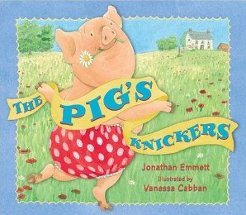
A delightful story about being yourself, and the very specialness of
each child, this story will be a great way of introducing the ideas
around what makes a person unique. Kids will love the drawing of the
pig with the knickers and then the other piece of underwear she finds.
They will delight at the animals trying to help her see that she does
not need anything else to make her special, and will giggle with the
goat who so decidedly ate the knickers, whistling to itself in the
background. Readers will love the looks on the animals' faces as they
try to convince the pig that she is indeed special.
I loved the uncompromising use of language, new words for readers to
get their mouths around and assimilate into their own vocabulary.
Fran Knight
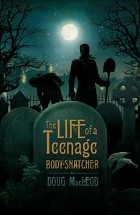
The Life of a Teenage Body-Snatcher by Doug MacLeod
Penguin Books, 2010. ISBN 9780143203919, p/b, 303pp.
Highly recommended (for ages 14+). The title and cover of this novel
are major attractions - one cannot resist picking it off the shelf and
checking it out! Once the story begins, there is no thought of
putting the book back on the shelf! Doug MacLeod has the reader
hooked from the first page. Set in England in 1828, the opening
pages take the reader at night to a ghostly cemetery where Thomas
Timewell is digging up the corpse of his grandfather, buried only that
day. He has good reason for doing this but is interrupted by the
appearance of 'professional' body-snatcher. This is Plenitude and he
offers to help Thomas with this grisly task.
There is much to discover about Plenitude and his life, and he has some
amazing colleagues. Weaving through Thomas' story are fantastic
characters as well - we meet his disoriented mother, the alcoholic
housekeeper Mrs Greenough, his worldly 14 year old adopted brother
John, his insecure school friend Charlie Callow, his obsessive teacher
Mr Atkins, and the author of some ghastly popular fiction Mr Wilks who
is not what he seems.
This is a clever black comedy full of gruesome and outrageous
adventures.
Wildly imagined, the story keeps us reading! We are shown much of
English society at the time - London at night, the prison system, class
inequality and the publishing industry, plus plenty of
body-snatching! MacLeod's story is somewhat gross and confronting
at times, but he cleverly balances this with humour and a strong sense
of the importance of family, loyalty and friendship.
I invite you to check out Doug MacLeod's website too - it is a beauty.
This book should have a wide teenage audience - adults will love it too.
Julie Wells
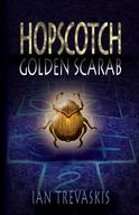
Hopscotch: Golden Scarab by Ian Trevaskis
Walker Books; 2010.
(Age 10-13) This is the second book in the Hopscotch series where the
adventurous Hannah and Jake are sucked into a game and are taken to an
ancient civilization. In the first book they are transported back to
Ancient Greece. In this edition they travel back to Ancient Egypt.
Reminiscent of a young Indiana Jones this is a great series that has
some
historical knowledge of the times of the Pharaoh's and tomb
raiders. We learn early on that they have lost the device that
takes them home which adds further complexity to the story. A great
read for year 5-7 who are looking for a new quest to follow.
Wendy Rutten
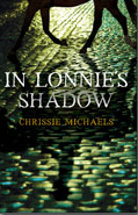
In Lonnie's Shadow by Chrissie Michaels
Ford Street Publishing, 2010. ISBN 9781876462918, p/b, 334pp.
(For mature readers, 14+ years, Australian author). Highly recommended.
Set in the 1860s in inner city Melbourne, this interesting tale is
framed around archaeological finds from the present day - 'a retrieval
of memories overlaid by time.' An inventory at the beginning of
the book lists items found at Casselden Place included in a public
exhibition. These items become the chapter headings and the
action of the chapter explains how these items have come about.
This imaginative use of subjects for a chapter heading by no means
takes away from the story, and the reader soon becomes involved in the
life and times of young Lonnie McGuinness, caught in slum life, trying
to eek out a living with illegal horse racing, yet aspiring to become a
jockey at some reputable stables, if he can escape the oppressive
backstreets.
Murderers and thieves abound in this seedy world - a little easier for
the wily Lonnie to survive but not for young girls, in particularly his
dear friend Pearl, who is tossed about in miserable circumstances;
everyone is witness to many harsh cruelties.
Michaels writes with a true sense of the times; poverty swamps
everyone; homes and streets are awash with rubbish and the accompanying
overpowering smells.
Life is hard and it takes fortitude to survive these times. The
descriptions of character and place are evocative and are confidently
authentic.
Also, it is worth checking the Museum of Victoria's website
to get a sense of the
times so well described by the author.
Full of tense excitement, with the ongoing adventures of Lonnie as he
battles to avoid being branded a criminal, through little fault of his
own but of his circumstances, In Lonnie's Shadow is highly recommended.
Julie Wells
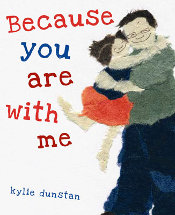
Because you are with me by Kylie Dunstan
Hachette, 2010. ISBN 9780734411310.
Highly recommended for 4+. Sometimes it takes a bit of help from someone you love to find the courage to do scary and new things. Together a father and daughter discover all the things they can achieve, from walking down the hallway in the dark to eating all your vegetables.
The illustrations are unusual and beautiful. Using a striking collage technique with lokta paper, Kylie Dunstan has created a colourful father and daughter story that will appeal to young readers who are experiencing firsts in their own lives.
Kathryn Pledger
Editor's note: Kylie Dunstan's picture book Collecting Colour won the 2009 CBCA Award for Picture Book of the Year.
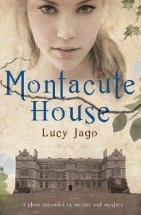
Montacute House by Lucy Jago
Bloomsbury, 2010.
(Age 13-15) Set in 1596, this title has all the trimmings.
For the villagers of Montacute, May Day did not bring good news. A
boy's
body was found with terrible burns and suspicious markings. For Cess
this did not mean too much until her friend goes missing. Cess is one
of the poorer members of the community. She and her mother are shunned
as Cess was born out of wedlock. For all this Cess has great
determination and is destined to do well. However the secrets that are
revealed during the novel could spell disaster for Cess and those
closest to her.
Themes include: Rituals, witchcraft, Village life, 1500's history.
It would pair well with The crucible.
Suitable for years 9-10.
Wendy Rutten
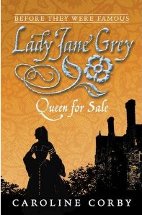
Lady Jane Grey: Queen for sale by Caroline Corby
Walker Books, 2010. ISBN 978 1406312553.
(Ages 10+) Recommended. Historical novel. Lady Jane Grey, great niece
of the ailing Henry VIII, is a prized possession to her parents, the
Dorsets, and their greed. Used as a pawn in the marriage stakes of like
minded climbers within the court circle, Jane is told she is to marry
the sickly Edward who follows as king when Henry dies. He is her
cousin, and she feels sorry for him, sickly and pale, and guided by
favourites who have wormed their way to be close to him. Her other
cousins, Elizabeth and Mary she sees rarely. Henry's last wife,
Katherine, seeing Jane at odds with her brutal parents, takes her into
her household where she seems to lead a peaceful life, until Katherine
and her baby die, leaving Jane alone again. With Edward ailing, the
Dorsets marry Jane off to Darnley, the son of their benefactor,
Northumberland who is close to the throne, and when Edward dies, Jane
becomes queen. Nine days later she is beheaded, and so ends the
shortest reign in history. Jane is only 16.
A story of the greed of those close to power, using whatever means at
their disposal to gain and keep power, the story of Lady Jane Grey is
mesmerizing in its sweep of British history following the death of
Henry VIII. Corby fills in the background, giving Jane a life beyond
the courts, seeing her as a pawn to be used in the game of power in the
court. The background of her life and times is stunningly recreated,
with the overlay of fiction to hold it together. One in a series
called, Before they were famous, the others include Cleopatra,
Boudica
and William of Normandy.
Fran Knight
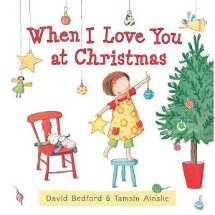
When I love you at Christmas by David Bedford and Tamsin Ainslie
Little Hare 2010. ISBN 978 1 921541261.
Picture book. The repetition on each page will encourage readers to
join in with the language as they turn each page to find the young girl
preparing for Christmas. Wrapping the gifts, making biscuits, hanging
stars from the tree, singing and dancing and making cards are all done
on the days before Christmas, and the toy tells the little girl that is
when she loves her, getting ready for the day. But it goes on for she
is also loved when she tosses and turns waiting for the day, and then
when it comes, she is also loved opening presents, but the best of
times is when the little girl gives her toy a present.
Full of the wonderful things a child does before Christmas, and
following through the things done on Christmas Day, the book turns the
story from being child centred and present centred to the toy loving
being loved and hugged at Christmas. The presents lie around forgotten;
it is the warmth of the holding and loving that is more important. A
cute reminder of the best things at Christmas, this book will be a neat
antidote to the commercial aspects thrown at children at this time of
the year.
Fran Knight
Candor by Pam Bachorz
Hardie Grant Egmont, 2010. ISBN 9781921564826.
Suggested reading 15 years onwards. Candor is a technologically
advanced, exclusive town which exists cloistered from contemporary
mainstream Florida society. Residence within the town is highly sought
after by wealthy families who join a long waiting list to gain approval
from its founder and owner Mr. Banks.
Superficially, the town is perfect, being drug, alcohol and crime free
and possessing excellent education and health facilities alongside
magnificent houses on manicured streetscapes.
The unrealistic flawlessness of the town provides a hint of sinister
influences which are gradually revealed by the protagonist Oscar Banks,
the seemingly perfect son of the town's massively wealthy founder. Mr.
Banks senior strives to control his residents and maintain their
obedience and devotion to the town by playing inaudible subliminal
messages. The messages are nothing short of mind control and the town's
residents little more than automatons programmed by an egomaniac. The
psychological manipulation is so intrusive that people have no free
will and whilst they consider themselves happy and fulfilled, this is
merely an artificial construct produced by the messages which determine
every aspect of their lives.
Eventually residents become addicted to the messages. Aspirations to
move elsewhere are suppressed and people are prevented from physically
distancing themselves from the manipulative influences by resultant ill
effects such as withdrawl symptoms and even psychosis.
Banks senior's deeds are reprehensible, however his misguided intention
is to create a wholesome society with family values, moral relations
and good health. The fact that he causes mental illness escapes him.
Oscar Banks has discovered his father's secret and develops methods of
resisting and moderating the subliminal directives. The reader finds
hope that he is able to undermine or confront his father, especially
when Oscar becomes smitten by a new resident, the beautiful Nia, who is
clearly non-conformist.
Bachorz cleverly beguiles us however because it becomes apparent that
Oscar is a slimy individual, being motivated purely by personal
financial gain and sexual favours. Classic themes would portray Oscar
protecting Nia, allowing them both to escape and hopefully free the
townsfolk by notifiying external authorities. However this author is
brave in devising a truly repugnant character as the anti-hero, even if
this part of the plot is perhaps unsatisfying because of it.
Oscar is mercenary, immoral and completely selfish. He is seemingly
unaware of his own hypocrisy in condemning his father whilst
perpetuating similar practices for his own ends. The reader is repulsed
by his childish obsession with his needs in the damaging manipulation
of his victims. It is dismaying that Oscar desires the affections of
Nia even when inducement is necessary to artificially synthesise them
and the self acceptance of his predatory behaviour was disturbing.
Readers will be interested to discover how the narrative develops.
Rob Welsh
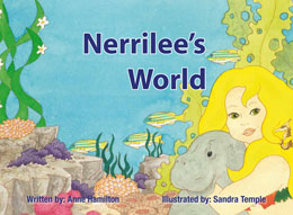
Nerrilee's World by Anne Hamilton
Wombat Books, 2009. ISBN: 9780975232194
(Ages 4-8) An oil spill in the bay leads to the mermaid Nerrilee
rushing off to visit her friends, spreading the news and checking on
their well being. Although she keeps asking other creatures about her
friend, Talissa, she doesn't meet up with her until the very end of the
book, when another spin is put on the activities of the day.
Throughout the story, the reader is introduced to a myriad of sea
creatures as well as following the journey of the mermaid. With
repetitive, rhythmic language, this is perhaps better suited to younger
children and yet the language is simultaneously stilted and lacking
simplicity. The illustrations of the underwater habitat are colourful,
stylized and realistic in contrast with those of the mermaids which
seem to be far more Disney style and hence out of place. With the text
laid over the top of the background illustrations, the format seemed to
be at odds with the pictures and held little appeal. Illustrations of
the different creatures which appeared in the story on the final two
pages were the highlight of the book.
Jo Schenkel
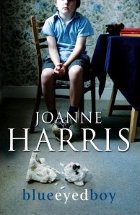
Blueeyedboy by Joanne Harris
Doubleday, 2010. ISBN 9780385609517. 410p.
(Age: 15+) Recommended for Year 11+. Told in the form of online blogs
to a webjournal, sometimes in first person, sometimes third, the novel
is about the only surviving brother of three and his widowed mother,
Gloria, who is possessive, cruel and ambitious. Because she colour
codes the children's clothing for her convenience they become known as
Black, Brown and Blue in the Webjournal. When two of the boys show
signs of synaethesia Gloria takes them to a wealthy academic who
sponsors them until a more interesting case, that of a blind girl who
claims to sense colours, is discovered, and the boys are rejected, one
of them seeking revenge. The webjournal charts the 'progress' of one of
the brothers through childhood and adolescence to an adult obsessed
with murder and revenge. The plotting is complicated and intriguing;
the reader is not sure which brother is the author of the journal, or
who the girl writing responses is, or whether what is written is fact
or fiction. The sense of threat increases as unexpected developments
happen, the bloggers being revealed for who they are. The narrative
techniques are interesting but the language is not overly demanding.
Ultimately about the helplessness of children, even adult children,
faced with a manipulative and determined parent, the theme is universal.
Jenny Hamilton
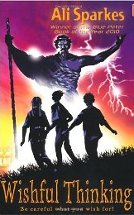
Wishful Thinking by Ali Sparkes
Oxford University Press, 2010.
(Ages 10+) Imagine having your own god, who grants you a Wii and makes
you popular with the most unobtainable girl in the school, and all he
requires is a little worship in return. Sounds good? Kevin Rutley
certainly thinks so, and when a freak mishap with a bunch of wishes
scrawled onto a cafe napkin reach Abandinus, Celtic god of the River
Ouse, Kevin and his friends Tim and Gracie, decide they are on to a
very good thing indeed.
But it's not just Abandinus who makes an appearance, Arimanius, god of
the underworld tries to inveigle Kevin into his clutches and when Kevin
resists, his much loved Nana is critically injured in a car crash.
Kevin and his friends discover that gods are not just fairy godmothers,
granting wishes left right and centre. Like humans, they have their own
agenda and the three friends soon find themselves helpless pawns in a
clash of monumental dimensions between warring gods.
Wishful Thinking revolves around little known English and Greek gods,
although the god of roads, Semitas, is I think Ali Sparkes own
creation. Dressed in a day-glo vest and responsible for hold ups and
orange cones, Semitas is a brilliant invention that I am sure many
adults call upon in times of stress; 'oh god, not another traffic jam.'
I am a huge fan of Ali Sparkes and this just confirms her place as an
inventive, exciting author perfect for upper junior and lower secondary
children. As always her story is original and fun with equal measures
of comedy and action - the perfect recipe to get young people reading.
Claire Larson