Egmont, 2011.
ISBN 9781405260152.
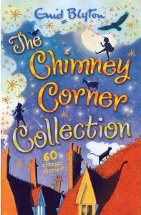
If you are looking for a stocking filler of engaging, magical stories
then this
new collection of Enid Blyton classics is the perfect choice. There is
a reason
that Blyton has remained a favourite throughout generations - this was
originally published in 1947 - and this is the ideal opportunity to
introduce
this generation of emerging readers to her fantasy world. There are 60
stories
in the collection ranging from The Magic Walking Stick to Old
Ugly the
Water
Grub, each full of Blyton's inimitable characters and the perfect
length to
read-aloud or read-alone. Even the title of the collection suggest
curling up
somewhere snug and just reading, particularly during those January days
when the
novelty of the Christmas toys has worn off or the batteries are flat.
Despite their age and the traditional black-and-white drawings, these
stories
remain popular. When I was in the library, I had a special shelf for
Enid
Blyton and despite having a sizeable collection built from scouring
second-hand
shops and book fairs, there were seldom any available for borrowing.
The
circulation stats were amazing. With 2012 being the National Year of
Reading,
perhaps it is timely to connect parent and child through story and
celebrate
these tales so familiar to many. This collection would be an ideal
starting
point.
Barbara Braxton
Girls Don't Fly by Kristen Chandler
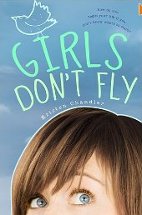
Penguin, 2011. ISBN 9780143566588. Girl Don't Fly, written by Kristen Chandler, follows the
endearing
story of a teenager stumbling her way through the realms of
self-discovery. Myra, already juggling the crumbling bricks of her
family fortress, has her feet fail beneath her and the world seemingly
fall out of the sky when her 'prince' dumps her. As the previously
steady foundation of her life deteriorates slowly under her, Myra is
forced to reconsider her so-called 'doormat' approach to life in order
to save herself from falling. Suddenly, like the gulls she so
passionately admires, Myra has the overwhelming urge to fly . . . fly
as she contends with her ex for a position on an expedition to an
island . . . fly recklessly into the arms of the expedition's
promoter
. . . and, ultimately, fly as the strong, self-respecting woman she
longs to become.
Surrounding such a well-intended, kind-hearted main character, this
novel immediately draws on the emotions of readers and creates an
intimate feel for the audience. Girls Don't Fly harbours a
certain
down-to-earth nature; all characters and events hold a sense of reality
resulting in issues that are easily related to and engaged in. Chandler
effectively uses clever metaphors to announce each chapter, introducing
humour and charm into the story. Overall, a recommended novel,
particularly for middle to late teenagers. Girls Don't Fly
explores the
evolution of a formerly timid and reliant teen into a thriving
independent woman through hectic, dramatic and hilarious high school
drama . . . a journey that will stay with me forever!
Emilia Corbo (student)
Weava the wilful witch by Tiffany Mandrake
Ill. by Martin Chatterton. Little Hare Books, 2011. ISBN 9781921714023
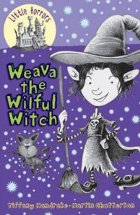
(Ages 7-12) Recommended. From the Little Horrors series comes the story
of Weava Charm, a witch who loves causing trouble and is hoping to get
her letter of acceptance into Hag's Abademy of Badness. While waiting
for her letter she goes to the city to visit her big sister Merry, but
to her dismay she finds Merry is now calling herself Mary, and living
as a normal human! To make matters worse, Mary expects Weava to pretend
to be human too, and takes away her wand and broomstick. When Weava
finally gets her letter from the Abademy, it comes with a task - she
must perform a 'new and original act of breathtaking badness.'
Weava is determined that her act of badness should be to convince Merry
to live as a witch again, so with the help of a mischevious kit-fae,
she sets about trying to trick her sister into using magic.
As with all the titles in the Little Horrors series, Weava is sure to
be enjoyed by children who like a bit of mischief and humour in their
stories. With likeable characters who don't always make the best of
choices, students will find a refreshing change from the normal
saccharine sweet fairy stories. Martin Chatterton's delightfully
expressive illustrations help bring the characters to life.
Donella Reed.
Pan's whisper by Sue Lawson
Black Dog Books, 2011. ISBN 978 1 742032 06 1.
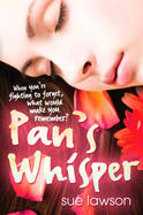
(Age: 13+) Pan's Whisper tells the story of Pandora, a teenage
girl who can no longer live with her mother and is put into the care of
a foster family. It is set in Australia and the author tells the story
of Pandora's trouble settling into the new family, being accepted at
school, learning to trust and the feelings of not knowing where she
belongs. The story switches back and forth between present day and the
memories of the past as Pandora writes to her sister, unveiling the
memories from the point of view of Pandora and the point of view of her
older sister who constantly struggled to protect Pandora from their
mentally ill mother. It is not until Pandora finally feels she belongs
that the memories of her past catch up and she realises what her sister
did for her and she finally has the strength to accept her life and her
past.
The author uses description and emotion to draw you in to Pandora's
battle and I would recommend it for girls aged 13+, who are independent
readers, to adults as it does switch back and forth between memories
and while the themes are explained with care, it does tackle mental
illness and abandonment and child neglect issues.
Kylie Kempster
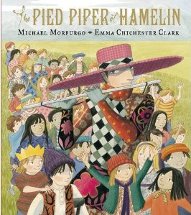
The Pied Piper of Hamelin retold by Michael Morpurgo
Ill. by Emma Chichester Clark. Walker Books, 2011.
(Ages 7+) Recommended. Picture book. Folk tale. The cautionary
tale of
the Pied Piper taking the children from the town following the non
payment of a debt owed him when he cleared the town of its rats is
retold in this handsomely produced hard cover book published by Walker
Books. The story is revisited, enlarged and modernised, given a
contemporary tweek to make the moral unambiguous to the modern reader.
Beset with mounds of rubbish, children who need to beg in the streets
for their supper, and families that go without, while orphaned children
live in shanties on the outskirts of the town, a plague of rats causes
problems, not only for the orphaned children who have to fight for the
scraps from the rats but also the wealthy as they find the rats inside
their houses, eating the food in the larders.
When a strangely dressed Piper comes to town, offering to rid the town
of its rats, he demands only a gold coin for the work, but in doing so,
the mayor refuses to pay him, and so the Piper promises that worse will
happen. And it does - he plays his flute so that all the children in
the town follow him to the mountains, where they disappear behind a
crevice. The lame beggar following some way behind is told by the Piper
to return to the town, and offer the people their children back in
return for cleaning the town and making everyone equal, with enough to
eat, a house to live in and a warm fire in winter. It takes the town a
whole year to clean their town and provide food and shelter for all,
and so the Piper leads the children back, to the relief of all.
A tale with a moral that will be discussed and talked over in many
classes, not only as an old folk tale, but a story of the disparity
between rich and poor, first and third worlds, literate and illiterate,
educated and non educated, town and city: encouraging children to think
about how this gap can be bridged.
Morpurgo's rewriting brings it up to the minute and Clark's
illustrations are wonderfully evocative, showing clearly the line
between the haves and have nots.
Fran Knight
Australian and world records 2012 by Jennifer Corr Morse
Scholastic Australia, 2011. ISBN 9781741699036.
(Age 8+) In the age of the Internet, the enduring appeal of world
record books may be a mystery to some but not to librarians, teachers
and parents. They know from experience that these books provide hours
of browsing enjoyment to young readers. Australian world records
2012
is no exception.
Unlike The Guinness book of world records, its
Australian cousin will satisfy the curiosity of those who want to
identify everything of record-making proportions in their own country.
Among the superlatives are the biggest, the smallest, the hottest, the
most remote, the wettest, the driest, the deadliest and the most
popular. Twenty-two pages devoted to sporting records will resolve any
argument about who has kicked the most goals in AFL matches or which
horse has won the most Melbourne Cups.
The Australian records precede a section on world records but Australia
still features as the country which consumes the most ice-cream, is
home to record breaking animals and has produced several high-achieving
athletes. The inclusion of icons of popular culture underscore the
book's principal purpose - infotainment.
The text is crafted in short sentences to appeal to younger readers and
is supported by statistics, graphs and high quality photographs. The
font is a little undersized but will suit most primary aged children.
While the book lacks an index, the table of contents is adequate. The
information has been selected to fascinate readers without resorting to
the more morbid attractions offered by some other books of this kind. Australian and world records 2012 is entertaining and
informative.
Readers are assured of time well spent wondering at the more curious
aspects of life on earth. They may even learn something new about
Australia and just a few will decide that reading can be fun after all.
Elizabeth Bor
VIII by H. M. Castor
Penguin, 2011. ISBN 9780 14 356728 8.
(Ages: 14+) Historical Fiction. Castor writes the story of Henry (Hal),
who became arguably the most famous English monarch, Henry V111. From
his beginnings as the Duke of York (a spare heir) loved and protected
by his mother and shunned by his father, the handsome young prince
believed he was destined for greatness.
Tall, broad-shouldered and accomplished at all aspects of courtly life:
religion, poetry, music, languages, history, hunting, sport and
swordsmanship, Henry was eager to be noticed and believed he had an
important role to play. His father, Henry VII, doted on his older
brother Arthur, and could not persuade Henry that his role was to be
un-noticed, that he should be no threat to the heir to the throne.
Portents, omens and visions proved to Henry that he was to be the
greatest king England had seen. He and his sons would provide England
and France with a dynasty that would last through history. His belief
that God had shown him the visions and given him the omens and would
annoint him as King ruled the rest of his life.
He believed that the inability of his wives to provide him and England
with a son was God's condemnation of his wives not himself. The two
biggest ambitions of his life; to reclaim France as his rightful
inheritance and to establish a stable dynasty were denied him (even
though he had a son, Edward, he wasn't Henry's idea of a strong healthy
heir).
Castor depicts Henry towards the end of his life as losing touch with
reality as his visions became more regular, more disturbing and his
reaction to them more public. This view of Henry VIII is different and
interesting but glosses over many of his actions.
The book is very readable and moves at a pace which keeps the reader
involved. It is an insight to aspects of the Tudor Court but tends to
skip over the more bloodthirsty moments, and there were plenty of
those!
Mark Knight
The sense of an ending by Julian Barnes
Jonathan Cape, 2011. ISBN 9780224094153. The Sense of an Ending won the 2011 Booker prize for its author. The
main character, Anthony, finds himself in later life forced to consider
the accuracy of memory, the nature of history and the value of life
itself. He remembers himself and his two friends delighting in
intellectual games, the pat phrase and the glib assertions that came
with senior history studies at school in the sixties. However, Adrian,
the acknowledged brilliant new student, challenges their assumptions.
History, he says, is the point where the 'imperfections of memory meet
the inadequacies of documentation'. The three are shocked by a
classmate's suicide, seemingly because his girlfriend falls pregnant.
Adrian tells the others that suicide is the only true philosophical
question. Some years later, after graduating with a First from
Cambridge, Adrian himself commits suicide. Was this connected to
Adrian's girlfriend, Veronica, who had previously been Anthony's
girlfriend for some time? Decades after this event, Anthony, who has
lived an unexciting life, is divorced and living alone, is forced to
remember the events of the time when Veronica's mother leaves him a sum
of money and Adrian's diary. Mystified, Adrian contacts Veronica who
won't hand over the diary but does give him a copy of a vitriolic
letter that he wrote to Adrian about his relationship with Veronica.
Anthony is appalled at his own venom, of which he has no memory, and he
is still denied the documentation of the diary. He is further mystified
when Veronica, without explanation, pugnaciously shows him a group of
disabled people. With the help of a carer and the only scrap of diary
that Veronica gives him, he eventually arrives at some understanding of
what happened to Adrian many years ago, and why he made the choice that
he did. Anthony, who has always seen himself as settled and peaceable,
realizes that there is no room for complacency in life. The novel is
about memory and responsibility, guilt and remorse. While the ending is
not totally convincing the themes are powerfully explored.
Jenny Hamilton
Health edited by Helen Sykes
Future Leaders, 2011. ISBN 9780980332056.
(Age 15+) Once again Dr Helen Sykes, of the Future leaders program, has
assembled contributions from experts and young writers to produce a
thought-provoking book. This year's theme is global health with an
underlying message of social justice. Two of the commentators - Gustav
Nossal and Fiona Stanley - have high public profiles. All have
impressive qualifications as well as experience in research and the
education of medical practitioners. Some serve on advisory boards and
raise community awareness of health issues.
Gustav Nossal's overview of major challenges is followed by articles on
subjects related to three aspects of healthcare. The first is the
campaign to reduce the impact of chronic and infectious diseases. The
second concerns the problems common to members of specific sectors of
society including children, adolescents, the elderly and people in
Indigenous and rural communities. The third is the need to reassess the
education of doctors, the implications of climate change and the
priorities of health systems in the 21st century.
The writing of all of the contributors has an academic stamp. They
present balanced arguments supported by documented evidence, an
approach which enables them to provide considered and authoritative
assessments of controversial issues, such as anti-vaccine activism.
Some of the writers are more aware than others of the need to define
medical terms and use subheadings to make complex subjects accessible
to lay readers.
All but one of the younger writers, have harnessed the power of fiction
to highlight the emotional cost of health issues. The results are a
moving counter-balance to the carefully considered scientific arguments
of the experts. A lone philosophical essay examines the role of
the emotions in ethical decision-making. Health combines the wisdom of current leaders with the
remarkable
intelligence and maturity of those to come. It is not always easy to
read but anyone willing to make the effort will not only be rewarded
with insights into some of humanity's most pressing problems but may
also be convinced of the need to provide existing solutions to the
millions who need them.
Elizabeth Bor
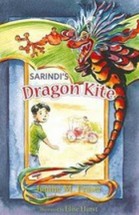
Sarindi's dragon kite by Janine M Fraser
Ill. by Elise Hurst. Angus and Robertson, 2011. ISBN 9780 7322 8776 4.
(Ages 9+) Warmly recommended. Asian themes. When Sarindi is asked what
he wants for this birthday he knows immediately that the dragon kite he
has seen in the village is his dream. But the date is May 27, and is
the day an earthquake strikes Indonesia, destroying villages and
killing thousands. Sarindi's mother is heartbroken, as their house
although shaken, is relatively untouched, but she has not heard from
her sister and her family in Bantuil. So Sarindi and his father set out
in their becak to the town to find out what has happened. They survey
the appalling damage, finding that their relatives' house has been
completely demolished and Sarindi finds his cousin's doll in the
wreckage. Going to a camp set up for the survivors, they find that
Sarindi's cousin, Agi is in the orphan tent, she is the only one left
from her family.
In a story form, the author tells a moving tale of the destruction of
the earthquake which struck Indonesia recently. The view taken by
Sarindi allows younger readers to see the devastation clearly, to feel
the impact on one family and how it has affected them, and then the
wider impact on a beloved family living closer to the eye of the storm.
It is a wholly moving and involving read, augmented by Elise Hurst's
drawings, which convey the closeness of the families in the story and
gives a glimpse into the lives led by Indonesian children.
Fran Knight
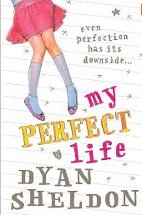
My Perfect Life by Dyan Sheldon
Walker Books, 2011. ISBN: 9781406336825.
Recommended. For those who were desperate to return to Dellwood High
after Confessions of a Teenage Drama Queen, your chance has
arrived! My
Perfect Life, the sequel by Dyan Sheldon, follows Lola Cep and Ella
Gerald on their mission to beat Dellwood's queen bee, Carla Santini, at
attaining the role of Student President. But Ella and Lola couldn't be
an anymore different pair of allies. Ella Gerard has everything; her
own phone, her own television, her own video and even temperature
control. Her life is perfect. So it's a wonder to everyone how she can
be best friends with the eccentric, outspoken and obstinate Lola Ceps.
When the girls discover Carla is running for President, after many an
argument, they finally agree on doing everything they can to ensure she
doesn't win the votes of their peers. And so My Perfect Life
evolves,
with Lola and Ella relentlessly battling against Carla to see who will
win the top spot . . . with hilarious consequences! From their posters
to
their rallies, each girl running for president constantly attempts to
better the other, providing the reader with 229 pages of amusement and
entertainment as the easy-to-relate to characters embark on their
journey to win!
Throughout the novel, the diversities between the two main characters
arise and their friendship is challenged. However, they overcome these
disputes with the help of their mutual goal, proving that opposites do
attract and that friendship conquers all. The novel also explores the
road to self-discovery, the importance of self-confidence, and
expresses that all it takes to achieve your dreams is trying your best.
Having read this book from cover to cover without putting it down once,
I found My Perfect Life to be a light, enjoyable read which
stood out
due to its unexpected ending!
Lucymarie Silvestri (Student)
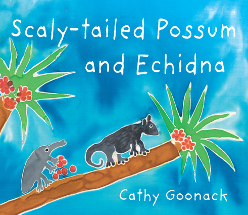
Scaly-tailed possum and echidna by Cathy Goonack
Ill. Katruna and Marlene Goonack, Myron Goonack. Magabala Books, 2011.
ISBN 089 1 9212449 19 0.
(Ages 4-7) Warmly recommended. Aboriginal People - Dreaming. This
story
of the scaly-tailed possum and the echidna and how each came to be,
following the echidna stealing food from the possum's pandanus tree,
will delight younger readers, for whom the book is a comfortable size
to hold. With bright, energetic pictures and bold colours, the book
will have instant appeal.
When the scaly tailed possum came down from its pandanus tree, the
echidna took its opportunity to climb it and steal the nuts. When the
possum returned, it fought the echidna and when the echidna fell, the
thorny parts of the tree stuck into him, making him spiky too. He
grabbed the tail of the possum and to this day his tail is smooth while
the rest of his body is furry.
The story tells the younger readers just how these animals came to be
that way, and shows the power of the Wandjina, the great spirit, in
meting out appropriate punishment for wrong doings. This is a story
from the Wunambul people of North West Western Australia in the
Kimberley region, and this story is retold by the Goonack family.
Photos at the front of the book shows the story being passed onto the
younger generation, while the books is augmented by a superb map and
information about the animals in the story and the writers and
illustrators. For more information about Magabala's stunning range of
books
see the website.
Fran Knight
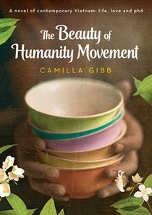
The Beauty of Humanity Movement by Camilla Gibb
Atlantic, 2011. ISBN 9780857891716.
Old man Hung, a Vietnamese pho maker is the centre of this complex tale
from which inter-generational stories of artistic martyrdom, romance,
survival and family drama radiate. Pho, (what Westerners would consider
a beef broth), is to Hung's loyal customers a work of art having deep
cultural significance. As a boy, Hung was sent from a country village
to Hanoi in the 1930s to work with his uncle and the nation's torment
at the hands of foreign powers is conveyed to the reader through his
ruminations.
French Colonialism, Japanese invasion, post-war portioning, hostilities
between the North and South, intervention by China, Russia and America
all contribute elements to this evolutionary tale which might have been
irretrievably bleak. Somehow, the irrepressible spirit of Hung, who
symbolises the tenacity and stoicism of his people carries the reader
through a mire of appalling suffering, Buddhist teaching, familial
devotion, courage and political philosophy are the armour which
protects the characters against oppression, cruelty and corruption.
Depiction of mindlessly destructive agrarian reforms which caused
wholesale starvation and political machinations which were little more
than bloodthirsty purges are unfortunately historically accurate and
mirror the Chinese and Russian experience of extreme Socialism. This is
not a wholly bleak story however. The optimism shown by the characters
in the more benign political climate of Doi Moi (where trade and
private ownership is allowed) is captivating and provides hope.
The presence of an American born Vietnamese woman who deals in art and
who hopes to understand the fate of her politically defiant father
brings about interaction with locals who are endearing for their
respect, decency and wonderful humour.
The book is more than a lesson in political history. This is a deeply
spiritual story, yet the reader also comes to understand the
characters' celebration of simple pleasures. This is particularly
evident in the constant references to food, made more noticeable by the
suffering caused by starvation in earlier times.
Rob Welsh
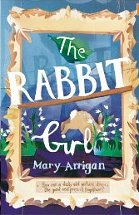
The rabbit girl by Mary Arrigan
Frances Lincoln Children's Books, 2011. ISBN 978 1 64780 156 2.
(Ages: 10+) Warmly recommended. A charming tale of two different
families coming together over a sketch of a girl with a rabbit, this
will appeal to a wide audience, as two stories, one set now and the
other set during World War 2, coincide.
Mallie and her mother, Sarah are at odds. Sarah just cannot keep a job
and so the pair finds it hard to make ends meet. Mallie pushes her
mother to start drawing again like she used to but to no avail.
Unbeknownst to Sarah, Mallie takes a part time job in a pet shop after
school, where she befriends the older man who owns the place.
For Sarah's birthday, Mallie buys her an attractive drawing of a girl
with a rabbit from the local secondhand shop and they display it
proudly in their tiny flat. When the pet shop owner and his son come to
tea, the man is distraught, telling the two women that the picture is
his, accusing Mallie of stealing it from him.
In alternate chapters we learn of the old man's background, that during
the war he was evacuated to Lake Windemere and there met a young girl
and a painter. This story of his war time life comes together with the
two women in today's London. This is an involving story with an easy
introduction to children at war and what happened to the more than one
million children evacuated from London, as well as giving a background
to a well known children's illustrator who lived in Lake Windemere.
Fran Knight
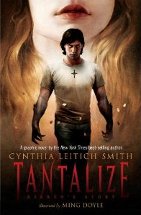
Tantalize: Kieren's Story by Cynthia Leitich Smith
Ill. by Ming Doyle. Candlewick, 2011. ISBN 978 0 7636 4114 6.
Kieren, as a hybrid werewolf, is to join an urban Wolf pack to master
his shift. He will have to leave everything behind and that includes
Quincie. When the chef at Quincie's family's restaurant is murdered,
Kieren decides he must find who his killer is. The new chef brings
trouble and Kieren has his theories about him. Kieren has to protect
his Wolf identity and Quincie but can he do that when he is the main
suspect in the murder case. With Kieren's friends can he find the true
killer and protect Quincie? But how much more can Kieren hide his shift? Tantalize: Kieren's Story is dark and thrilling. I loved that
Kieren
does everything he can to protect Quincie. The illustrations are
beautiful and add that extra depth to the storyline. It has a great
mixture of werewolves and vampires and unexpected twists and turns that
kept me reading. I loved reading Tantalize: Kieren's Story.
Cecilia Richards (Student)