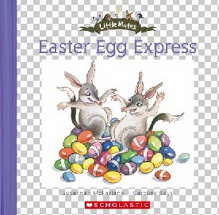
Scholastic, 2014. ISBN 9781742831695. The Easter Egg Express tells the story of Ellie and Erin, the Easter
bilbies in charge of delivering Easter Eggs. They are quite excited
until they realise just how many eggs they must deliver! What will
they do? The Easter Egg Express is a small picture book with accompanying
text. I love the repeated use of words starting with 'e' making it a
great book to discuss all the different sounds the letter 'e' makes.
It could be too small for a classroom setting but would be a great story
to read with your child or to have an older child read to a younger
one. The pictures are bright and colourful and I love the Australian
theme - echidnas, emus, bilbies, koalas and kangaroos celebrating
Easter together.
Kylie Kempster
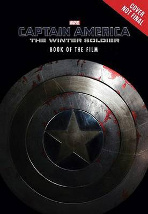
Captain America -The Winter Soldier adapted by Allison Lowenstein and Tomas Palacios
Scholastic 2014. ISBN 9781743623824.
(Age: 9+) Captain America - The Winter Soldier is the book of the
film and I love having these on the shelf in my classroom library.
Previous experience has seen children watching the movie and then
devouring the book. This will be no exception. The first 2 chapters
of Captain America - The Winter Soldier recap the first Captain
America movie and the next Avenger movie before taking us to
Washington and introducing us to Sam Wilson and an encounter with
Steve Rogers aka Captain America. Steve is whisked off quickly to
help S.H.I.E.L.D. and the action begins. Captain America has old
school morals in a modern world and it looks like S.H.I.E.L.D. will
have him testing those beliefs.
The story moves quickly and the chapters are short, using
descriptive language and action to engage the reader.I would
recommend it to readers aged 9+ who are looking for a fun read,
enjoy super heroes and movies. It would also be good for those
reluctant boys who struggle to be engaged with reading anything!
Kylie Kempster
Totalgirl: The Style Files by Amanda Nichols and Rebecca Lim
Allen & Unwin, 2014 ISBN 9781743316542.
I had mixed feelings about this book. While it demonstrated how
wonderful good friends can be in helping you to achieve your dreams,
I had some nagging doubts about using fashion and magazines as the
basis for it.
The main characters are girls in grade 6/7 and we meet the first of
them, getting ready for her first day back at school, which is a
casual day, thinking about her fashion choices. We hear about
her friends who are 'total fashionistas', how they love to shop for
clothes, and the fashion rules they follow. This is followed up with
the first class assignment of making up a fashion magazine.
I like the way the girls in the story really go all out to follow
their passion.
But I have some concerns about how the stories might come across to
impressionable young readers, when there is so much misinformation
produced by the fashion world and magazines today, especially about
the way people look and dress.
The book is 511 pages long and contains six stories, all of the same
style.
Tiffany Boyer
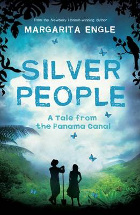
Silver People by Margarita Engle
University of Queensland Press, 2014. ISBN 9780702253294.
(Age: Young adult) Recommended. Historical. Panama Canal.
Environment. Rainforests. Silver People is skilfully concise
and the characters have an intimate, personal feel. Written in
non-rhyming verse style Margarita
Engle, a Newbery Honour Award winning author, has woven a
superb story about the digging of the Panama Canal.
The labourers for the huge project were segregated by country of
origin or the colour of their skin, into specific work groups. Their
living arrangements were determined the same way. Toiling in
appalling conditions in searing heat, landslides and tropical
illnesses were a constant threat, whilst digging the Canal with very
basic tools. Many spoke languages other than English, making
communication difficult and following orders confusing.
Those in charge, white Americans, French and Dutch were paid the
most and lived in relative luxury. Secondary to them were the 'gold'
people, Spaniards, Greeks and Italians, and those considered the
'lowest' were paid a few pieces of silver. Thus they were deemed the
'silver' people, Jamaicans, Barbadians and Haitians.
Mateo is just such a boy. Born in Cuba, and Spanish-speaking, the
fourteen year-old escapes from his hopeless situation with his
violent father and joins a labour train, bound for Panama. He is
expected to work like a man for his measly wage. However, he
befriends Henry and the mysterious but sympathetic forest-dweller,
Anita, teenagers like himself. Augusto, an artist, takes an interest
in Mateo and encourages his budding sketching talent.
Surrounded by the beauty of the Panamanian forest, the howls and
screeching of monkeys and jungle birds, Mateo and his friends
eventually find much-craved peace and love in their new home. Silver People is a quick-read, with a strong visual layer
throughout the language Ms Engle has judiciously crafted.
Joan Kerr-Smith
Editor's note: Teacher's notes are available
from the publisher.
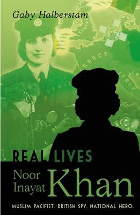
Noor Inayat Khan by Gaby Halberstan
A & C Black, 2013.ISBN 9781472900135.
(Age: 11+) This book will instantly draw you in, as it begins with a
rather confronting scenario of the main character being beaten by
her Nazi captors. For this reason I would be careful recommending
this book to children under 11 years, especially if they are
sensitive.
The book is based on the true story of a World War 2 heroine, Noor,
a British wireless operator. It begins with her secret flight into
Paris, where she joins the French Resistance. Nazi forces are
everywhere. I liked the tension and suspense the story creates, as
more and more of Noor's fellow spies are betrayed and captured by
the Nazi forces.
The best thing about the book, is the courage and bravery of many of
the characters, who repeatedly put themselves in danger, to help
others. It is clear that without these selfless acts of sacrifice,
many more people would have suffered and died. It is a good
reminder, especially to those of us here in Australia, who have
never experienced a life affected by war, that people are capable of
doing amazing things, especially in times of extreme hardship. It
certainly makes you appreciate that we have a stable government and
so, so much freedom, and how precious that is.
The other thing I liked about the book, is the honest way it deals
with the feelings Noor is experiencing, as she is desperately trying
to stay one step ahead of the Nazi forces, and prevent being
captured. Despite being afraid, tired and Britain's last wireless
operator in Paris, she finds it within herself to continue on. The
heart warming thing is, she is never quite alone, her fellow
resistors, her thoughts, the kindness of strangers, all help her
along her amazing journey.
Tiffany Boyer
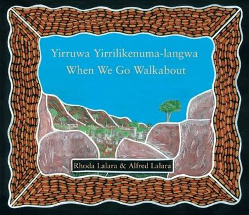
Yirruwa Yirrilikenuma-langwa - When We Go Walkabout by Rhoda Lalara
Ill. by Alfred Lalara. Allen & Unwin and The Little Big Book
Club, 2014. ISBN 9781743314562.
Yirruwa Yirrilikenuma-langwa, amiyembena yirrirringka yirruwa?
When we go walkabout, what do we see?
The beautiful landscapes and fauna of Groote Eylandt are brought to
life in this unique dual-language picture book which introduces very
young children to their unique surroundings. There is the
frill-necked lizard - dukwululuwawa - on the big rock; the green
frog - dilyaburnda - in the billabong; the wallaby - yiburada - in
the scrub and many more right through to the dingarrbiya and the
yikurridangwa!! And then back home, after the walkabout is complete,
there is someone special - the person who first introduced the
author and illustrator to their environment and who inspired the
book because they want to be able to share the wonders with their
own grandchildren in time.
This is a remarkable book for many reasons . . .
Apart from the text written in both Anindilyakwa and English - the
two-way learning that is the best way for indigenous children to
become literate in both English and their mother-tongue - the
artworks which are a collaboration between the illustrator Alfred
Lalara and his wife Alice Durilla, are an integral part of passing
on knowledge embedded in traditional stories and thus a critical
part of the book as a whole. The stories of how Alfred and his wife
learned to paint in the traditional style, and Rhoda's motive for
writing When We Go Walkabout make fascinating reading at the
end of the book. Clearly it is one of those rare titles that
entertains, informs and persuades at the same time.
The book itself is the first of the Emerging Indigenous Picture Book
Mentoring Project, a partnership between the Little Big Book Club
and Allen & Unwin in which six previously unpublished Indigenous
writers and illustrators will have their work showcased in four
picture books during 2014. Each creator has been partnered with a
renowned mentor in children's publishing including Nadia Wheatley,
Ken Searle, Nick Bland, Ann James, Bronwyn Bancroft, Boori Monty
Pryor and Ali Cobby Eckermann to share ideas, techniques and
inspiration for their first published work. The project has been
funded by the federal government through the Australia Council and
it means that not only will our cohort of children's writers be
enriched but our students will have access to authentic texts that
will work towards the understanding and harmony between our cultures
that is at the heart of so many of the Australian Curriculum
outcomes.
Even though the publishers suggest this is a book for the 0-5
brigade, Miss Nearly 8 and I shared and thoroughly enjoyed it. It
sparked a discussion about how other Australian children speak
different languages and how much fun that could be and because we
live where we do, we see some of the creatures like wallabies and
cockatoos daily, we tried saying the new names we had learned. It
helped that we could listen
to Rhoda Lara read it to us. (There's a QR code in the back of the
book.) We also talked about how the story was written so the
language and knowledge could be passed through the generations on
Groote Eylandt and what she had learned from her grandmother (me)
and what of that she might pass on to her own children. That was a
fascinating insight and showed that getting children to talk about
such things is a critical way of helping them understand both their
family history and their place in it.
Usually I give my review copies to a local school, but Miss Nearly 8
asked if she could have this one. She wanted to read it again and
think about it some more - and then write a story for her
grandchildren!! The best stories always go beyond the lines, and
this has clearly done that.
Barbara Braxton
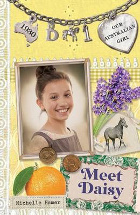
Meet Daisy by Michelle Hamer
Ill. by Lucia Masciullo. Our Australian Girl. Puffin, 2014. ISBN
9780143307631.
(Age: 8+) Recommended. This is a very heart warming book, about the
courage and strength of a young girl, Daisy, during the 1930's. I
would recommend it for ages 8 and above.
It starts off in a delightful Australian rural setting, and you can
almost feel the wind through your own hair, as we join Daisy on her
farm, riding her beloved horse Jimmy.
It is heart wrenching, when her secure childhood is brought to an
abrupt end, and she finds herself being sent to Melbourne with her
little sister, to live with her resentful Aunt, while her widowed
Father sets off to look for work.
I highly recommend this book for anyone interested in what life was
like for those living in Australia in the 1930s, especially during
the Great Depression. It is also just a great story, and worth a
read in it's own right.
The book is filled with wonderful characters, and the narrative is
colourful and engaging. I read the book from cover to cover in one
sitting, because I was so taken with the story. There are also some
interesting historical facts and a great snap shot of what life was
like during the depression, at the end of the book. You even get a
preview of the next book, to whet your appetite.
What I like about Daisy, is her courage and determination to make
the best of any situation. Daisy is a great role model for children
today, as she shows great resilience in very difficult
circumstances. When you reach the end of the book, you really are
left wondering if and how Daisy will manage when she is kicked out
by her cruel Aunt. I certainly wanted to read the next book in the
series, to find out how this dear girl survives, hungry and
homeless. And I really wanted to know what happened to her Father!
He obviously loved his daughters very much, so why hadn't he made
contact with them and sent the Aunt money, as promised?!
Tiffany Boyer
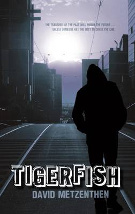
Tigerfish by David Metzenthen
Penguin, 2014. ISBN 9780143568421. Themes: Poverty and Disadvantage; Violence; Friendship;
Perseverence; Hope and Hopelessness; Abuse. One of the values of
literature is that it gives the reader an opportunity to 'walk a
mile in the shoes' of a character and see the world through their
eyes. Tigerfish gives us the opportunity of walking in the
shoes of several young teens that live in a tough working class
western Melbourne suburb - in Western Bulldogs territory. Their view
of the world has limited horizons, and we see the impact of poverty,
social dysfunction, educational disadvantage and violence as the
characters look ahead to an uncertain future. Into this world
arrives Ariel, a victim of tragedy, and a resident of perhaps the
worst house in one of the worst streets, in a suburb that has one
shining light - a shopping Mall. Her strength despite her
circumstances, and her friendship with Ryan and Evan give a sense of
hope in what could be a very 'hopeless' setting. The school
experience of Ryan and Evan is both violent and yet mundane. A
fellow student causes them distress, but even here we gain
understanding of the terrible circumstances of this aggressive and
abusive antagonist.
The author reflects the language choices of this social environment
with common expletives (but with some restraint considering the
frequency that the 'f' bomb would usually be launched). What
Metzenthen has been able to do is reveal the motivations of those
who live surrounded by hopelessness. The romance with Ariel and
growing concern for her family, the loyalty within Ryan's family,
friendships that reveal caring attitudes and the bright moments when
people show that they can overcome the dark clouds of disadvantage
are powerful reminders of humanity at its best. This is a powerful
book, but very uncomfortable and confronting to read because of the
challenges of disadvantage that it reveals.
Carolyn Hull
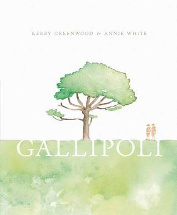
Gallipoli by Kerry Greenwood and Annie White
Gallipoli by Kerry Greenwood and Annie White
Scholastic, 2014. ISBN 9781743621295.
(Age 5+) Highly recommended. Gallipoli. World War 1. Bravery.
Friendship. Dusty and Bluey were mates, off to the Great War as part
of the Australian Light Horse. They were sent to Egypt to train as
soldiers and then deployed to Gallipoli, where they met Simpson and
his donkey Duffy, sustained injuries and attempted to be resilient
and positive under awful conditions.
Greenwood's prose brings this story alive, letting the reader learn
about Dusty and Bluey's feelings of excitement as they left for an
unknown war and gradually their fears about the horrors of war, each
promising to watch each other's back. She is able to bring in the
heroism of Simpson and his donkey and the awful times when the
soldiers are injured, the nurses who looked after them on the island
of Lemnos and the unexpected bond between the Turkish soldiers and
the Australians as they buried their dead and exchanged gifts. The
reality of war is not glossed over: the fact that soldiers are
killed, the trenches are muddy and freezing and the food inadequate
are all made clear. However it is the caring friendship between the
two men that shines out as they bravely do their duty as soldiers,
and after the war Bluey is shown managing a normal life after losing
his leg.
Illustrator Annie White's pictures are coloured in soft pastels and
really add a deeper understanding to the text, but which are not too
overwhelming for young readers to look at. The emotions on the faces
of the soldiers are wonderful, and the interspersing of drawings
within a photo frame add detail to the whole.
This is a book that will greatly aid children in understanding the
nature of war and the bravery of the young men who were sent to
Gallipoli.
Pat Pledger
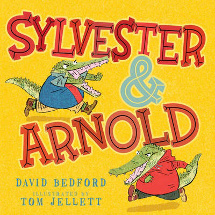
Sylvester and Arnold by David Bedford and Tom Jellett
Little Hare, 2013. ISBN 9781921714542.
Sylvester was a BIG, TOUGH croc. And so was Arnold. Sylvester wore
tough-croc shorts, A tough-croc vest and tough-croc boots. When he
went out to play he put on an ugly tough-croc face. So did Arnold.
Both spent all day making sure that everyone in the big, wide swamp
where they lived knew who was boss. But they had never met, until
one day.
This is a delightful story of how these two crocs set out how to be
fiercer than the other but then an even bigger threat arrives and
suddenly they are bullies no longer. It has a twist in its tail that
is charming and offers much to discuss about being friends and
building friendships.
Tom Jellett's illustrations are the perfect accompaniment and offer
a lot to explore about perspective. Even though each page is the
same size, how does he manage to portray the size and fierceness of
Sylvester and Arnold and then dwarf this with his illustrations of
Betty?
There is plenty of scope for little ones to be both the fierce,
tough Sylvester and Arnold and then contrast that with the meek and
mild Sylvester and Arnold as they try to sneak away under the cover
of darkness. Whole-body interaction accompanied by emotions,
expressions and noise!
It would also serve as a great introduction to the research process
if you ask the students what they already know about crocodiles
before you read it. Then, afterwards, discuss which parts might be
true and which parts are made up. Share other fiction stories about
crocs and then contrast these with the factual resources
highlighting the difference between what is written for the
imagination and what is written for information. Introduce the
interpretation of text by showing how the Bedford and Jellett can
let their imaginations roam because their purpose is to entertain
rather than inform. If your non-fiction resources are separate from
the fiction, explain the library layout and where the crocodile
resources are located. And there are dozens of ways each could
present what they have learned to create an engaging display for the
library's walls. Who would have thought 32 pages could contain so
much?
Barbara Braxton
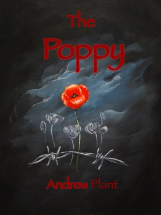
The Poppy by Andrew Plant
Ford Street, 2014. Hbk., ISBN 9781925000313. Pbk. ISBN
9781925000320.
In Flanders fields the poppies blow
Between the crosses, row on row,
That mark our place; and in the sky
The larks, still bravely singing, fly
Scarce heard amid the guns below.
We are the Dead. Short days ago
We lived, felt dawn, saw sunset glow,
Loved and were loved, and now we lie,
In Flanders fields.
This poem, by John McRae, has become one of the most enduring
written about World War I and has provided the most recognisable
symbol of remembrance for Australians and New Zealanders - the
poppy. Although Flanders Fields, itself, is in Belgium, the poem and
the poppy have become symbolic of the whole of that terrible
conflict on the Western Front, and so this new book by illustrator
Andrew Plant is aptly named, beautifully told and superbly
illustrated.
Starting on the front cover with the brilliant red of the poppy set
in front of ghostly images of other poppies entwined in barbed wire
and against a background of stormy black skies, this is a beautiful
'photo-essay' of the story of Villiers-Bretonnneux, which on ANZAC
Day 1918 became the scene of one of Australia's greatest victories
and which forged a bond between two nations that grows stronger each
year. Except the photos are not photos - they are eerily haunting
paintings that tell the story of the building of that bond. Bordered
in black and accompanied by simple text in white, their bright
colours are a stunning contrast which suggests feelings of hope and
future and endurance.
The petal of the poppy is whipped off in the winter wind and blows
across the village to show the Villiers-Bretonneux school, known as
Victoria School, because it was rebuilt through the contributions of
the people of Victoria so that even now the flags of two nations fly
above it and carvings of Australian flora and fauna adorn the school
hall; it flies through the village past the Musee Franco Australien,
and is carried further above the fields and up a broad, low hill to
a tall cross and a great tower where thousands of names are carved -
those who died but whose bodies were never recovered - and then out
over the rows and rows of headstones, some nameless, not even their
nationality known.
But the stories of the soldiers are known and told and not
forgotten. As the winter winds grip the Somme, the Australian and
French flags fly side by side and once again, the land turns red.
But now it is the petals of the poppies, not the blood of the
fallen.
So often our younger students' knowledge of World War I is limited
to the events at Anzac Cove in Gallipoli - here, in this stunning
book is the pathway to their understanding of the much more
drawn-out battle of the Somme and the Western Front, stories our
children should know as well as those students in Victoria School
who see 'N'Oublions Jamais l'Australie' in every classroom. Stories
and a motto which led them to raise nearly $21 000 to donate towards
the rebuilding of Strathewan Primary School after it was destroyed
in the Victorian bushfires, Black Saturday, 2009.
No doubt as the centenary commemorations of World War I begin, we
will see many new titles published but this one that encapsulates
all that we associate with the poppy is a must-have.
Barbara Braxton
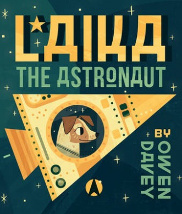
Laika the astronaut by Owen Davey
Templar, 2013. ISBN 9781848778788.
(Age: 4+) Recommended. Space travel. Dogs. Laika is a stray dog
scavenging a living on the streets of Moscow when she is picked up
by a group of scientists who train her for a special mission in a
spacecraft. She is the first animal to travel into space, paving the
way for later space journeys. Her rocket disappears but in this
story she has a happy ending.
This is a very poignant story of the first dog, Laika, and her
lonely journey into space. Davey traces her life story in simple
words that will allow children of all ages to learn about the
bravery of the little dog. There is no mention of the ethics of
using animals for experiments, although this book would be a useful
lead in for discussion for older children about this topic. Instead
Laika is pictured as a very lonely little animal who finally finds a
loving home out in space.
The pictures are very captivating, with the use of deep olive
greens, reds and black against tones of yellow. The shapes are
stylised and especially heart wrenching for those who know what
happens to Laika is the double page spread showing Blast-Off, with
Laika looking out of the rocket's window. The picture is repeated
with the rocket growing smaller and smaller. There are many layers
to the illustrations, and older children and those studying the art
of book illustration will have plenty to uncover.
This would be an ideal book to introduce the idea of space travel
and exploration to children, as well as introducing Laika as a hero
who will be long remembered as a space pioneer.
Pat Pledger
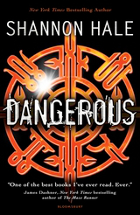
Dangerous by Shannon Hale
Bloomsbury, 2014. ISBN 9781408838853.
(Age 13+) Recommended. Science fiction. Disability. Strong female
character. Maisie Danger Brown is thrilled when she finds out that
she has been selected to go on an astronaut boot camp, she had no
idea just what was going to happen to her. She has been home
schooled all her life and is eager to see more of the world. For the
first time she comes up against excitement, prejudice and meets the
boy of her dreams. And then there is the intergalactic conspiracy
that threatens everyone. What will she be able to do to save her
loved ones and herself?
I am a fan of Shannon Hale books, The
book of a thousand days, and Princess
Academy being favourites, as well as loving her
graphic novels, Rapunzel's
revengeand Calamity Jack. Dangerous is a
change of genre for Hale, with this foray into science fiction and
action. However this book contains her signature wry and amusing
dialogue, an intrepid and clever heroine and an original plot, all
of which make it an entertaining read.
Maisie Danger Brown indeed has to live up to her middle name and
during the course of this adventure story she certainly does that.
She manages to outwit her adversaries, even those who are scathing
because of Ms Pincher, her artificial arm, and she uses all her wits
to work in a team that has accidentally all gained super powers. She
learns about the ethical choices that she has to make (can she let
someone die?) as well as finding about family secrets and family
love. Told in the first person, her sarcastic comments are a joy to
read ('I remind myself that teen brains haven't developed the areas
that are capable of lasting emotional commitment' pg. 404). The
other characters are also fully developed, including Jonathan Wilder
who Maisie finds herself drawn to.
There is action galore for those who enjoy thrilling moments,
including using super powers that have come from aliens, fighting an
evil corporate CEO and saving the world from an alien virus. The
team working with their super powers bring a whole new dimension to
the stereotypes about being superhuman, and to the moral
considerations of using super powers.
A unique plot, interesting setting and in-depth character building
make this a most enjoyable read.
Pat Pledger
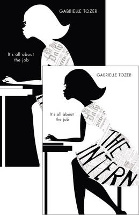
The Intern by Gabrielle Tozer
Angus and Robertson, 2014. ISBN: 9780732297053.
Themes: Careers - Fashion industry, Romance, Coming of Age/
Maturity, Self-image, Eating disorders. The Devil Wears Prada
meets The Ugly Duckling in this Coming of Age story of the
young Journalism student who wins an internship at a Fashion
Magazine. The book reveals the transformation of Josie from the
socially and romantically awkward A-grade student with a recognised
flair with words, to a confident wordsmith who makes the most of her
least desired placement at the city Fashion Magazine office. Her
lack of social and fashion sense, her family distress, and a
couch-surfing stay with a cousin and his dreamy flat-mate give this
story a youthful sense of fun and exploration of life as an 18 year
old. The interview she wins with a high profile boy band star and
the subsequent articles she writes about him launch her into the
spotlight. This attention also creates problems, with significant
repercussions when things unravel in the social media spotlight
after a drunken night out at a nightclub. Friendships that wax and
wane, and form and reform, are woven into Josie's story of
discovering who she is, what she wants and who she wants to share
her life with. There is a 'happy ever after' feel to the book, with
many loose ends getting tied into overly neat bows.
This is a story that will be enjoyed by teen girls who are impressed
by the Romantic Comedy genre. Josie is not from the 'In Crowd', so
this may connect to the young reader or aspiring writer who may have
felt exclusion or has under-valued their own strengths. This is not
a complex story, and although the teenage behaviour described is not
always pure in its focus and interests, in comparison to many books
written about this age group, it is somewhat naive and restrained
(but not completely so). The Intern also gives insights into Magazine culture and the
beauty industry, and the sometimes damaging effects of self-image
issues for many young women.
Carolyn Tull
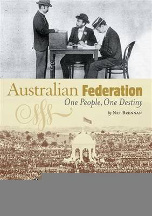
Australian Federation: One people, one destiny by Janette Brennan
Our stories series. Black Dog Books, 2014. ISBN
9781922179944.
(Age: 9+) Recommended. Australian history, Federation.
The imprint of Black Dog Books gives any reader the expectation of a
well researched non fiction book, well told in crisp short
paragraphs with plentiful photos, maps and illustrations to augment
the text. Their series, Our Stories, has hit library shelves
with glee, filling a niche for children to read of Australia's
history without the padding given by many history books. Australian Federation continues their acclaimed style, with
thirteen chapters of between two and four pages presenting such
information such as what we were like before Federation, the people
who led the push for Federation, the struggles the colonies had
before they made this agreement, and finally what Federation means
for Australia. Each chapter is brief and to the point, with easy to
read but meaty paragraphs of information alongside maps,
illustrations, pictures, newspaper cuttings and statistics.
The illustrations included are the known and not so known, from
Roberts' famous painting of the first parliament, to many cartoons
taken from local papers, to photos of the many people involved, and
make fascinating reading and further looking.
As is only to be expected with Black Dog Books' series, there is a
packed timeline, an easy to use index and glossary and a page of
references, including internet sites, all designed to increase the
information available to young readers. A great resource for history
classes.
Fran Knight