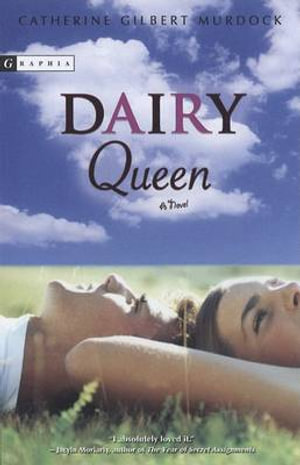
13+ This is the story of the summer when D.J Schwenk, a small town girl, learns to speak up for herself. As Brian Nelson, an aspiring football star says, "When you don't talk there is a lot of stuff that ends up not getting said". In this riveting first novel Catherine Gilbert Murdock portrays an unforgettable heroine, who is courageous and funny and who finally goes after what she wants. When her father is injured, D.J. takes over the manual work of their dairy farm. She agrees to train Brian, and this relationship pushes her to understanding herself and her family.
A wonderful book that was difficult to put down.
Pat Pledger
Lost Property by James Moloney
14+ James Moloney explores the rites of passage from adolescence into young adulthood in this story. 17 year old Josh Tambling appears to have everything: he is popular, smart and plays in a grunge band. When Josh takes a holiday job in the Lost Property Office at Sydney's Central Station, he realises that he has lost some important things in his life. His brother Michael refuses to let anyone know where he is living, and Josh is no longer certain of his religious faith. This is an outstanding novel.
Pat Pledger
xxxHolic by Clamp
Translated and adapted by Anthony Gerard, Tanoshimi,
Great Britain, 2006
(Lower secondary) Clamp, a group of 4 women who are Manga artists, is producing three
Manga series of books in Japan, Tsubasa, xxxHolic and Gohou Drug. These
comic books are widely popular in Japan, and are appearing in the
western world to great acclaim.
xxxHolic, volume 1 introduces the hero, Watanuki Kimihira, who
unwittingly falls under the spell of a witch, Yoku. She grants people
wishes and in return they give her their soul.
Working in her shop he sees the array of people willing to use her
services and following one such young woman, finds that she becomes
more and more like a statue, as her body seizes up, until she stops in
front of a truck, unable to move.
The book sized comics are entertaining and richly illustrated. I was
intrigued with the perspective of the drawings and the story line. The
comics introduce a tradition new to the west and will be lapped up by
the target audience, the lower secondary students.
Fran Knight
Cold skin by Steven Herrick
Allen & Unwin, 2007. ISBN: 9781741751291. (Age:15+)
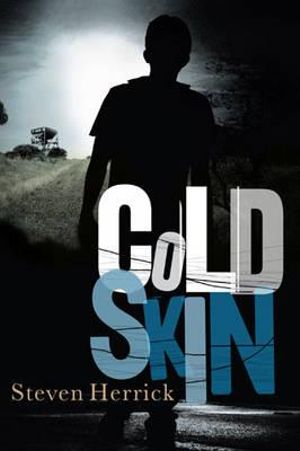
Herrick's finely tuned verse novels are deceptively simple, as they describe a setting, elucidate a set of characters, unfold a plot, while you are lulled by the rhythmic nature of the writing. Before you know it you are engrossed, surprising yourself as you see links and plot developments, character foibles and hints of what may be ahead.
Larry and Eddie Holding are at school, a one teacher place, but they'd rather be working at the mine like everyone else in this one job town. Their father, a returned serviceman, is dejected; feeling cowardly because he didn't see overseas action during the war, and despite their poverty, will not allow his sons to go down the mine.
The small town is delineated by its inhabitants, a mayor who runs the local store, rich and proud, a policeman who wants to do well for his town, a teacher disenchanted with rural life and the lack of women, a publisher who sees all, and goes about his job quietly. When one night a young girl is found murdered, the town looks inward, closing ranks. Malice and suspicion ferments as Eddie watches, noting movement, the other watchers, the drunks and then his father, hiding something and unable to be at peace.
The climax of the story will shock and extend your students' discussions of right and wrong, of consequences and morality.
Fran Knight
The Great Gatsby by Nicki Greenberg
Allen & Unwin, 2007. ISBN: 9781741751338.
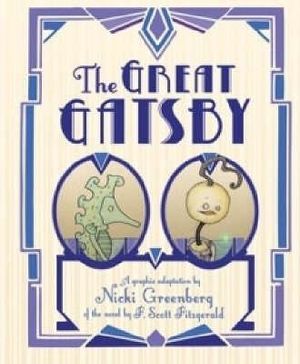
I came to this book with some trepidation, not knowing how someone could even give thought to changing a stalwart of literature to a graphic novel, and with strange creatures representing the characters. But I was engrossed, not quite from the start, but it certainly took me in the more I read. Drawn as a powder puff on a twig with a female body at the end of a long neck the wonderful character of Daisy, evokes our sympathy as she is revealed with all her insecurities and regrets, the epitome of a vacuous existence, the woman we all have seen splashed across the pages of women's magazines.
Her husband the brutish Tom, is drawn as a great lump of a man, hair sprouting from his chest and arms, elephant ears, beady eyes, and pig like teeth. Gatsby is an ephemeral sea dragon, with small eyes that peer lovingly at Daisy, always worried lest he do the wrong thing in her eyes. He lives only for her, his house and lifestyle built around the possibility of seeing her.
Each page has between 4 and 6 cartoons, drawn in sepia tones on a black background, with stamp like edging, like photos in an old album. Moth-like the characters play out their lives against the backdrop of 1920's New York, the Jazz Age, where new money is viewed suspiciously, but everyone comes to Gatsby's to be seen and exploit his generosity. For those who read only the graphic novel, the retelling is short but explicit, for those who go on to the novel, then the experience will be enhanced through reading both versions. For the astute teacher, reading the novel would be enhanced with this graphic version, giving as it does an updated view of the characters, a more modern perspective. The discussions emanating from such a comparison would be enthralling.
Fran Knight
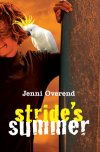
Stride's summer by Jenni Overend
Allen and Unwin, 2007 (Age 11-14) The summer he loses his father to the sea, Stride is unable to cope with the extra demands placed upon him by his mother. She too is grieving the loss of her husband and must take responsibility for the whole family on her own. Seeing Stride in his father's clothes and with the cockatoo, Ferd, unsettles her and his persistent lack of cooperation drives a wedge between them.
But this is also the summer he meets Jess, and her interest in him begins with Ferd. She has had experience with birds, and unsettles Stride, suggesting that he allow the cockatoo his freedom. Stride is not able to do this, seeing the bird as a link to his dead father. The two waltz around each other, Stride at first not wanting her to be anywhere near him, but gradually she insinuates herself closer and closer, until Stride looks for her on the beach.
The decision by his mother to sell their cottage is a catalyst for Stride to take off to his grandfather's place, but it is the height of summer, and the threat of fire is ever present. A coming of age story about a boy learning to accept change in his life, this book will appeal to upper primary and lower secondary students, particularly boys. Fran Knight
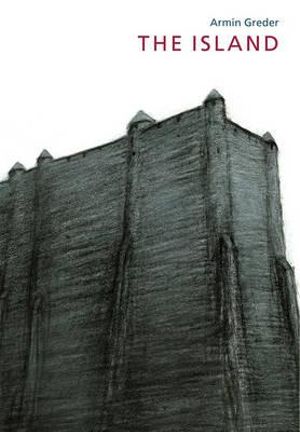
The island by Armin Greder
Allen & Unwin, 2007. (Age:8+) Highly recommended.
Highly recommended, this dark and mesmerising picture book for older children and adults is an essential addition to library collections. When an outsider is washed up on the beach, the local people are faced with the question of what to do with him. Fearful, but not wanting his death on their consciences, they isolate him on the end of the island, lock him in a goat pen and leave him. When he finally escapes and approaches them for food, they realise that 'their act of kindness had not been the end, but merely a beginning'. Growing fear and intolerance take over and he is finally condemned and the island barricaded against all newcomers.
Armin Greder's sparse prose and compelling illustrations present an overwhelming and chilling picture of the plight of refugees and the way that fear and racial prejudice can overwhelm even the voice of reason. The chilling illustrations are all done in dark tones with just a hint of teal and red, and bring to life the emotions of the refugee and the islanders. The anger and fear of the large and overwhelming islanders is almost tangible and the starving figure of the outsider is breathtaking.
A recipient of several European awards, this book could be used in the classroom in a variety of ways when introducing work on refugees, intolerance, racial prejudice and sharing. Teacher’s notes are available and outlines different strategies for teachers. Younger children would need to have discussion and follow up to show that with tolerance the bleak ending in the book need not happen today.
This is an unforgettable and very important book for our times.
Pat Pledger
The Truth About Emma by Gary Crew
Hachette Australia, 2007. (Age:15+)
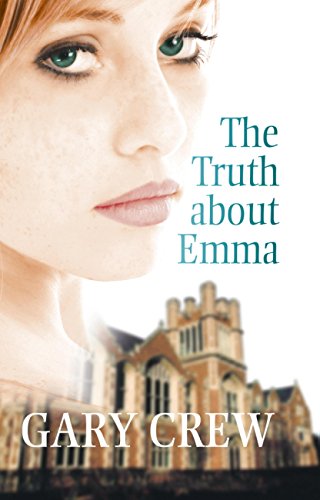
At a first glimpse of the beautiful young woman on the cover of The truth about Emma, the reader would expect this book to be a teenage romance, but that is not Gary Crew's style. He delivers an involved, disturbing and memorable story that has quite a punch about the power of the press and the complexity of human relations.
Emma Burden has been the target of international media, with headlines about an affair with a university professor while she was still at school and accusations of murder. Journalist Rafaelo Innocenti, hoping to get his big break, interviews her to see if he can find out the truth.
Told in a series of thirteen interviews, Crew leads the reader through the convoluted details of the life of Emma Burden. The story is told with an intellectual quality that demands the reader's commitment. From the very beginning when Innocenti states that for a man and woman to fall in love, they must 'both understand and practise the meaning of two words: compliance and antagonism', Crew insists that his reader think about relationships much more deeply than a mere newspaper or magazine story demands. References to Emma by Jane Austen, Madame Bovary and Lolita also move the reader into a higher level of thinking.
At the same time, the issues are ones that are of intense interest to young people. Popular media emphasises fame, clothing, and appearance and Crew spends time setting a scene where beauty is all-important and wearing the right designer apparel essential. The casual approach to sexual relationships is also a sub plot. One can't help being reminded of the stories about Paris Hilton and other celebrities.
Crew maintains a high interest level as the reader is swept along, avid to follow the story of Emma and for younger readers this may be enough. More discerning readers will want to pursue the many threads in this story and will find themselves pondering questions of morality and celebrity.
Pat Pledger
Relax Max by Sally Grindley
Orchard Books, 2007.
(Age 6-10) The third in the Max series of letters, Relax Max is
fun and easy to read. In his letters to author, D.J. Lucas, Max pours
out his troubles. His mother is infatuated with her boyfriend James and
they are going to move in together. He has to leave his familiar
bedroom to go to a new house and the prospect of a new brother or
sister looms. D.J. Lucas has problems too, writer's block is holding up
her new novel and Max tries to help her out.
Through a series of compelling and often funny and moving letters, Max
gradually comes to grips with the changes in his life. At school he is
learning all about poetry, and he expresses his feelings about what is
happening to him through a number of sometimes funny, sometimes sad
poems. These attempts at acrostics and haiku are a wonderful addition
to his letters. Sally Grindley has
written a great story that will appeal to newly independent readers and
would also be a humourous read aloud.
Pat Pledger
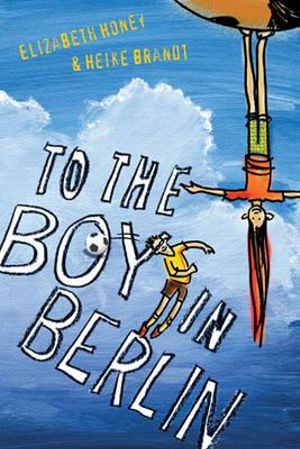
To the boy in Berlin by Elizabeth Honey and Heike Brandt
Allen and Unwin, 2007. ISBN: 9781741750041. (Age:11-14) Highly recommended.
A brilliantly involving story, this sequel to The Ballad of Cauldron Bay, takes a totally different tack to its predecessor. Henni is intrigued when she finds several boxes of books in German underneath their holiday house, and leaves a note in them when they leave. When she receives an email from a boy in Berlin with a similar name to that of the house owner, she is thrilled. And so begins a friendship that spans the world. Leo is able to translate her finds as well as research the shipping lists in Germany.
The strong willed Henni returns to Cauldron Bay to stay with the shop owner to try and find out more about the Schmidt family. She is disturbed by the prejudice she encounters, but her efforts at tracing the family come to fruition and she is able to put some stories to rest. The Schmidts migrated to Australia prior to World War One and encountered prejudice which made them leave. It is a sad story reflecting the extent to which nationalism can create monsters out of ordinary people. In the same way Leo is finding it unfair that his friend, Felix, born in Germany, is being told to return to Namibia, a country he does not know. Leo hides his friend, and in the emails to Henni the reader can see that events are overwhelming the boys. Henni advises him to tell his uncle, and so gain help, bringing the story to an exciting climax.
The range of themes in this wonderful book will be a boon in classrooms where migration, refugees, war and prejudice are being studied. But along with the serious issues, the story is funny, the translations often miss out the meanings, the riddles the two send each other give a nicely timed laugh in the midst of a serious issue, and their relationships in the two schools give a neat contrasting backdrop to what is actually going on in their lives. Told in emails, the story has immediacy, and the emails make it easily accessible to today's students. Highly recommended.
Solo by Alyssa Brugman
Allen and Unwin, 2007 (13+) Uncontrollable, destructive and at odds with the world, Mackenzie is sent on an outback camp, where she must suffer counseling and activities designed to build trust and communication. She decides that she will undergo the final activity, but has no idea about how she will cope by herself for 24 hours.
Driven to the designated area, she is told she must erect her own tent, build her own fire and fill in the time alone. Disdainful of any help or suggestions, she strikes out, ready for anything, but is unprepared for the revelations of her own thought processes. As the time passes, her words and actions reveal layers of meaning and destruction within her family. She talks about her father being a chemist, but questioned by people about this, told she is a liar. There is a death of someone close to her, but just who it is, is not revealed. She remembers playing hopscotch when the thief breaks in, but then cannot connect the thief with any other event. Delving into her past causes anxiety attacks.
The minutiae of her childhood life build along with the tension of her survival in the wilderness, until she reveals to the reader and herself what has happened to her. Until that moment we are all in awe of the strength of the girl, Mackenzie as she repels all attempts to help her. Mackenzie is a finely drawn character. We feel we know her through and through, but just as questions seem to be coming to a conclusion, she brings up other events, other thoughts, which unravel the web we have pieced together.
Brugman has developed an incredible story of a child whose family has disappeared beneath her. Events beyond her control have shaped her life for the worse, and she must recognize this and attempt to rebuild it. I followed her with my heart in my mouth and then immediately reread the book to make sure that Mackenzie will succeed, so engrossed was I with this girl's life. Girls particularly in secondary school will find this book gripping. Fran Knight
Pool by Justin D'Ath
Ford Street Publishing, 2007. ISBN: 9781876462512. (Age:12+)
When Wolfgang finds a butterfly wing on his father's car grill, he is so excited he emails a butterfly expert, Dr Karalis, anxious for a response. Each day he works at the local swimming pool, now almost a shrine where people come to be cured of their ills. Here he meets Audrey, a blind woman. Her father, worried that she is so alone, hires Wolfgang to take her out for the week, but he starts to become more interested in her. Her behaviour, to say the least, is odd, but Wolfgang begins to feel protective and responsible for her.
One night at a party, Wolfgang and several friends drink his father's whiskey, and drunk, get Wolfgang to open the swimming pool for them. Here he almost drowns, and one of his companions calls the ambulance. The group hides, and later Audrey visits Wolfgang to enquire after him, taking the pool key from his pocket. Next morning she is found, drowned.
In its bare bones, it sounds like a story about suicide, but it is so much more. D'Arth has created a modern fantasy story, where Audrey's experiences are wrapped up with the Lourdes like pool. When her blindness is not cured by the water, she takes the next logical step. Beethoven said near death that he would be able to hear in heaven, and so it seems for Audrey. But lurking under the logical explanations are the intriguing similarities between butterflies and Audrey, the near death experiences which people share, the possibility of angels. A well written tale, Pool will engender many discussions and debates, readers pondering the line between life and death, and at a grass roots level, talking about how people manage with a disability. An inspiring read for middle school students.
Fran Knight
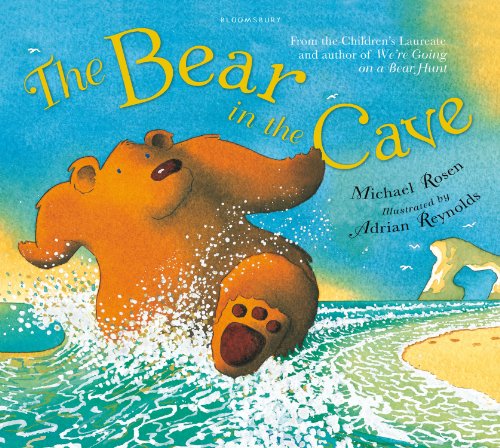
The bear in the cave by Michael Rosen and Adrian Reynolds
Bloomsbury, 2007. (Age:Junior primary)
Having just had a Teddy Bears' Picnic in my library I am surprised at the vast number of bear books that are around for the young, so I was intrigued when a new one turned up for review. The cover is lovely, warm and inviting with its yellow, orangey cuddly bear snuggling 4 children, all on a brightly coloured patchwork pillow. Inside we meet a bear who lives all alone. He hears the sound of the city and so goes there, but is dismayed at the call to buy at the market, the height of the tall buildings and the cars that go whooshing by. When people laugh at him, he runs to the park where he sits on a bench until some children, deciding he looks lost, take him back to his home by the sea. He retraces his steps, now with the children, and they sing all day.
A lovely repetitive story, this would be well suited to children in their early years at school, and the CD which accompanies it adds another dimension to using the book in the classroom.
Fran Knight
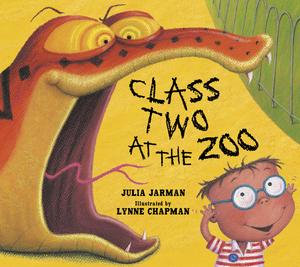
Class two at the zoo by Julia Jarman. Illus. by Lynne Chapman
What a delight to follow Class Two around the zoo as they see all kinds of animals! No one notices an anaconda slithering along behind them or the children who go missing. However, Molly is the heroine of the day and comes to the rescue.
Children will delight in the Julia Jarman's wonderful rhyming language and alliteration and are sure to want to hear the story several times. The illustrations by Lynne Chapman are a joy and the drawings of each situation and character are unique and original. Readers will find new and funny things each time they look at the pictures and revel in the humour of the story.
This picture book is a really worthwhile addition to the library or classroom collection.
Pat Pledger
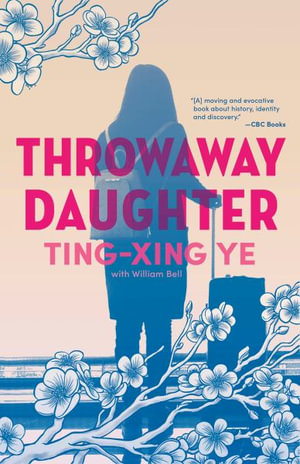
Throwaway daughter, Ting-Xing Ye
(11+) Grace, adopted by a Canadian couple, resents her Chinese name, used by her parents at home, Dong-Mei. She wants nothing to do with her past, particularly the woman who left her on the steps of an orphanage years before. Her family is insistent that she at least know something, sending her to learn Chinese, but when they watch the happenings of the Tiananmen Square in 1989, she is shocked into finding out about her heritage. A wonderful retelling of the events in China leading to the one child policy, readers will learn so much about why this policy was introduced and what effect it had on the population. Told from different points of view, her Chinese parents and their families, the Canadian family and that of Grace, the whole story is infused with a realism that is hard to ignore. Dong-Mei's mother’s voice tells us about her fears in marrying Loyal, the only son in a successful family, where his father is desperate for a grandson to carry on the family name. Even the village foreteller tells him what he wants to know, that she is carrying a son. The arrival of a girl destroys the family, sending Chun-Mei to the orphanage, causing her to breakdown, resulting in divorce and a new wife and son for her husband.
Infused with Chinese stories, sayings and teachings,Ting-Xing Ye's, Throwaway daughter is wonderful to read, but have your hanky ready. Fran Knight