Allen
& Unwin, 2008. ISBN 9781741752922
(Age 13+ ) Part of a series, Girlfriend fiction, The Indigo girls will be welcomed
by teenage girls who will relate to the characters and situations in
the book. Every year Zara, Tilly and Mieke meet up at the Indigo
campground with their families for the summer holidays. But this year
is different, as Mieke is late to arrive. Zara, a popular alpha and
Tilly the nerd, are left to find a new relationship without Mieke to
mediate.
Penni Russon has made the transition from her popular fantasy Undine
series, to a successful adolescent story about friendship, falling in
love, identity and dealing with a best friend's betrayal. There is a
dash of danger thrown in, with the perils of surfing alone in the dark.
The addition of cyber bullying on Zara's mobile phone adds some
suspense and insight into Zara's feelings. Characterisation is well
done, with Russon capturing Zara's non communicative family members and
contrasting them to the warmth of Tilly's parents and sister.
This is an enjoyable, easy read that has enough plot twists and
relationship issues to keep the reader involved until the end.
Pat Pledger
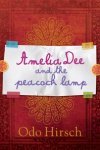
Amelia Dee and the Peacock Lamp by Odo Hirsch
(10+) A beautiful bronze peacock lamp hangs above Amelia Dee's staircase and if she stands on the banister she can see the intricate carved animals and a secret opening. When her yoga Master Master L K Vishwanath, introduces her to his pupil, the Princess Parvin Kha-Douri, Amelia discovers that she is not the only person to know about the secrets of the lamp.
Hirsch has described a set of engaging character and eccentric characters who live in suburbia. Her father is an inventor and her mother makes sculptures. Amelia Dee writes stories that no one ever reads until she presents her story about the peacock lamp to the Princess and captures her attention. The yoga master with his deeply spiritual approach to life poses many questions for Amelia to ponder about life and change
The story is written in an accessible style with lots of dialogue, and the younger reader will read on to find out about the peacock lamp and to savour Amelia's stories. However more mature readers will be left thinking about the philosophical beliefs of the Yoga master and considering the impact of life choices and life style of the people around her.
I thoroughly enjoyed this story about Amelia Dee. It is a book for thoughtful readers who will become engaged in Amelia's journey of self discovery and the road back from bitterness and hatred for the Princess. Pat Pledger
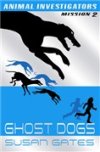
Ghost dogs by Susan Gates
Usborne, 2007 ISBN 978094608576 9
(Age 11+) The second in the series, Animal Investigations,
takes Meriel
and Ellis on a trip to a deep dark forest, where stories about ghost
dogs abound. Tied up with JJ, a cub reporter, trying to impress his
newspaper father, the two investigators use all of their amazing skills
to track the feral child Ellis has seen. But the feral boy seems to
have powers beyond the normal, as Ellis feels the air drop suddenly in
temperature when the boy arrives, and he feels his body starts to turn
to ice. But when JJ hires a hunter to find the boy, Meriel and Ellis
must act to save him before the media scrum get to him.
This exciting adventure has the two investigators using all of their
powers to find this strange boy. But Meriel remembers her days as a
feral child, and can hardly resist moving in with the dog pack. This
new series is sure to please those seeking adventurous stories with a
dose of the paranormal.
Fran Knight
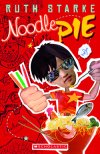
Noodle Pie by Ruth Starke
(Age 11+) Andy and his father are flying to Vietnam, Andy to see the place of his father's birth for the first time, his father, Tuoc, to see his family and friends for the first time since escaping after the Vietnam War. Through Andy's eyes the reader sees the country from an Australian point of view, and as his eyes become more attuned to things Vietnamese, the reader too, is drawn into the rituals and customs of this very different way of life. Andy makes many mistakes. He is unable to see that the family restaurant is a successful and thriving business, full of Vietnamese customers from the neighbourhood. Instead he sees a small smelly place where people squat to eat, where the food is prepared in conditions less than savory and the money paid laughable. Befriending his cousin, they hatch a plan to increase the earnings of the restaurant, and produce a flyer which they then give to tourists. The resultant influx of customers causes some problems with the neighbours. But all is resolved, and Tuoc takes his son out to explain some home truths, and open his eyes further to the debt owed by him to his family. Ruth Starke is able to distill complex issues into an understandable and neatly resolved story which is at once engaging and informative. Fran Knight
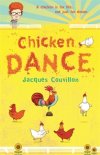
Chicken Dance by Jacques Couvillon
Bloomsbury, 2007 ISBN 978 0 7475 8930 3
(Age 11-14) Don is a loner, few other kids take to him at school, and
at
home his parents are cold and distant. When he finds his birth
certificate coupled with the name of a private investigator, he is told
that his sister, Dawn, did not die before he was born, but was
kidnapped. While at a chicken judging competition, he strives to find
his lost sister, hoping that his family will once again be whole, a
real family.
Don's capers will cause much laughter as kids will sympathise with this
loner, trying hard to be liked by friends and parents. Living on a
chicken farm, his one interest, chickens, causes him to win the local
chicken judging competition, and this brings him fame and friends for a
while. Even his mother is impressed, eventually, but he continues to
strive for her attention. Finding his lost sister becomes his aim, and
he puts all his energies into doing just that.
A funny wry look at families and what makes them tick, Chicken Dance
will appeal to middle school readers looking for something different
and quirky.
Fran Knight
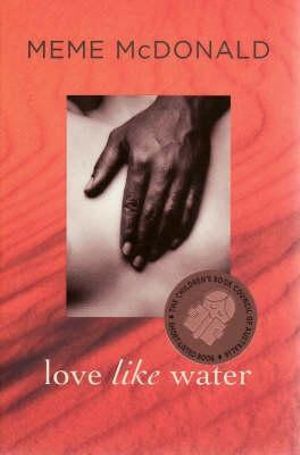
Love like water by Meme McDonald
(15+) Sometimes you read a story that keeps reverberating long after you finish it. Love like water is one such book that has stayed with me. It's always wonderful when you read a deeply moving tale that gives you insights into many things. Cathy, the young woman, arrives in Alice Springs after the death of her fiance in a crop dusting accident. Deciding to put the past behind her, Cathy leaves her country life behind to find a new existence with her friend Margie, a fun loving city girl. When she meets Jay who is working for the local radio station, black and white worlds clash and lives change. There are subtleties in McDonald's story - white binge drinking at Bachelor and Spinster balls, black suicide because of racism, colour bars at hotels. Not only has this compelling reading made me ponder racism, and given me a greater understanding of its effects, but it has made me think about white people's relationship with the land and the tradition of properties passing only into a son's hands. If you were a woman and wanted to stay on the land, you had to marry someone who had land, and younger sons often had to find a job away from their parents' properties.
A complex, confronting story about black and white relationships, love, friendship and country life, this is a book that is not to be missed. Highly recommended.
Pat Pledger
A penny to remember by Kirsty Murray
National Museum of Australia Press, 2007 (Making Tracks)
(8+) When young George is caught stealing and sentenced to
transportation, his only thought is for his sister, Hannah. On board
one of the hulks, he is befriended by an older convict who spends his
time making keepsakes for the other convicts to give their wives and
families before they sail to the other side of the world. George is
shown by Will how to rub a penny smooth, banging it first to flatten
the marks already on it, and then rubbing it constantly to make it
ready for an engraving. Using a nail, George scratches a message to his
sister, in the hope that they will meet again.
One in the series, Making Tracks, this story
retells the story of transportation in Australia's early European
history through the eyes of two young people. Full of historical facts,
the story will engage the reader, making learning about this portion of
our history anything but dull.
Fran Knight
Beowulf by Michael Morpurgo
Walker Books, 2007
Morpurgo brings the story of Beowulf excitingly alive in this richly
illustrated version of the old Anglo-Celtic legend. Michael Foreman has
given Grendel, the dragon and the sea hag life and style in this
version for younger readers. Called to Denmark to help the king,
Hrothgar, who in building a huge hall for his people, invoked the wrath
of the monster Grendel. Each night it came to the hall, bringing death
and destruction in its wake. The appearance of Beowulf meant that there
would be a huge fight to the death. After dispatching Grendel, Beowulf
settled in for the night, but Grendel's mother, the awful sea hag, came
looking for him.
Winning this battle, Beowulf and his followers take a well deserved
rest, but many years later, the dreaded dragon, asleep under the sea
for hundreds of years, comes looking. The fight to the death between
the much older Beowulf and the dragon ends with Beowulf's death, and
the end of the story shows Beowulf's funeral pyre. The story is many
hundreds of years old, and has been recently filmed in a graphic
version. The film is very gory and sexually explicit (different from
this book version) deserving its M rating.
Fran Knight
The day I was history by Jackie French
National
Museum of Australia Press, 2007 (Making Tracks series)
(8+) When Auntie Fee and Uncle Damien take Sam to the museum, they are
most surprised when Sam tells them the story of the Canberra bushfires.
Seeing a burnt hub cap, with the charred remains of a tyre still
attached, recalled for Sam the most terrifying time of his life, when
the fires near Canberra suddenly turned towards the city. Dragging the
reader into a story is Jackie French's specialty and this is no
exception. The smell, heat and drama of the fire permeate the whole
story, making the reader very aware of the danger the city and its
inhabitants were experiencing in 2003.
This series (Making Tracks) from the Australian Museum in Canberra has
at its heart the sharing of artifacts in the museum with a wider
audience. Each of the authors has taken an artifact which has some
resonance with them and written a short story about it for younger
readers, and so we have a series of about 15 books, set firmly in the
past, with an engaging young character.
Fran Knight
Teacher's dead by Benjamin Zephaniah
Bloomsbury Books, London, 2007
(Age 11+) When Jackson witnesses the murder of a teacher by two of the
pupils at his school, his life becomes inextricably linked with that of
the dead teacher's wife, and surprisingly, the killers. Refusing the
counseling offered by the school, he decides that the best way he can
deal with what he has seen is to ask questions, and try to work out why
the boys took the extraordinary step of murder. He enlists the help of
Mary Joseph, the dead man's wife, and goes to the houses of the two
boys to ask questions. The reader will identify with his need, but be
aware that he is stepping into territory where anything could happen.
An involving story of one boy's search for the truth, Teacher's dead is often
uncomfortable as Jackson takes steps which take him to places where
harm can and does befall him. Written by British poet, Benjamin
Zephaniah, the story is poignant and enthralling as we follow Jackson's
path to find the truth. A most realistic story set in the schoolyard
against a background of bullying, violence and intimidation.
Fran Knight
Apache by Tanya Landman
Walker
2007
(Age 12+) A fascinating story about an Apache woman, who, rather than
learn to prepare skins, cook and then be given in marriage, wants to be
a warrior so that she can avenge the deaths of her family. The novel
retells the trials of her training, the animosity of some of the
tribesmen and her final test to ensure she is courageous enough to join
the ranks of the warriors.
Her family was killed by a group of Mexicans, intent on avenging deaths
of their families, and on it goes, one act of revenge after another,
until many of the Apache are wiped out. It is an engrossing story, full
of historical detail of the path of the Apache in trying to maintain
their foothold on their land in the sweep of Europeans west across
America. Along the way an amazing amount of information is given about
the Apache way of life, how they survived, their rituals and customs.
What she eventually learns about her past, changes her motivation
somewhat, but she remains true to her convictions. Readers will be
taken on a fascinating journey.
Fran Knight
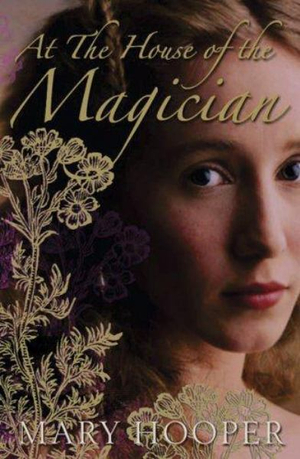
At the house of the magician by Mary Hooper
Bloomsbury 2007 ISBN 9780747588863 (Age 12+) A fascinating historical novel from Mary Hooper gives insight into Elizabeth times. Afraid of her drunken father, Lucy runs away from home to escape his beatings. On her journey to London to find work she rescues a young girl from a muddy river, and as a reward she is taken on as maid in their father's house. Dr Dee is court magician and consultant to Elizabeth 1 and Lucy is fascinated by the mysterious happenings in the house and longs to work for the Queen.
Hooper's characters are well developed and memorable with an interesting mix of fictional and real peoples. Lucy is a feisty heroine whose curiosity leads her into intrigue and danger. Tomas, the Court jester, adds spice to the tale, and the strangeness of Dr Dee and his beliefs are quite compelling.
Hooper has painted a convincing picture of Tudor England, giving details about the markets, clothing, food and the life of ordinary people as well as those connected to the court. There is even a recipe for making lavender wands at the end of the book as well as a glossary to help the reader with difficult words.
Readers with a taste for history and magic will enjoy this memorable tale. A sequel is to follow. Pat Pledger
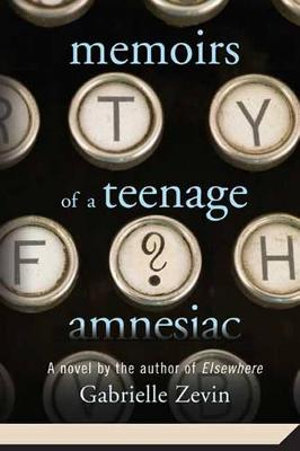
Memoirs of a teenage amnesiac by Gabrielle Zevin
Bloombury, 2007 (13+) What if you were 16 and had lost your memories of the last three and a half years? Naomi wakes up in hospital after falling down the school stairs to find that she can't remember who her boyfriend is, why her parents are divorced or anything that has happened in those crucial years of teenage life.
The back cover blurb describes this as a love story, but it is much more than that. It is a coming of age story that gives Naomi a chance to gradually rediscover her life and decide if that is the way she wants it to be now. It traces her growing feelings about the troubled James, the boy who had found her on the steps and rode with her in the ambulance to the hospital and her awareness of how she had treated her parents in their divorce. She re-examines her friendship with Will, her partner on the school yearbook and her relations with her friends. Readers following Naomi's questioning of who she is will realise that there are choices to be made and that people can gradually change their attitudes and the way that they treat people.
Teenage girls will like this story because it has so many appealing ingredients: teenage problems, divorced parents, and three love interests - the bad boy, the stalwart male friend, and the tennis ace. However the questions that Naomi faces about identity and starting teenage life afresh provide plenty of food for thought for the reader. Pat Pledger
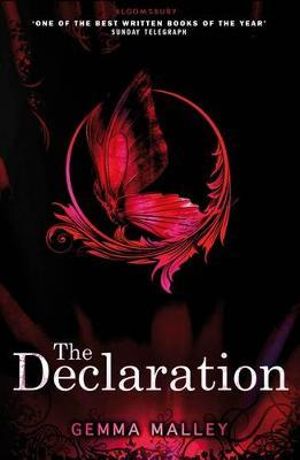
A highly original and chilling dystopian future is depicted in The Declaration. Longevity drugs have ensured that nobody needs to die, but as resources run out, people have signed the Declaration, promising not have children. The only children born are to those people who opt out of immortality and if found are seized by the authorities. Anna is one of these children who are known as 'Surpluses'. She lives a bitter life in an Institution where she is trained to be a house maid for the Legals. When a boy arrives from the outside, she hears disturbing information about her parents and is forced to make some difficult decisions.
The ideal of staying young is currently strong in our society with the media and industry pushing cosmetic surgery, drugs and potions to stave off old age. Malley has taken this further and shown the reader a world that so worships the idea of staying young that its people are prepared to give up having children. Anna's life in a stark home is brilliantly depicted with images of a ruthless matron, bullying of young children, semi-starvation and ruthless brainwashing staying with the reader.
This is a gripping tale that carried me along to finish the book in one sitting. Anna's development from a brain-washed girl to one who takes risks, is well handled. The conclusion is rather sudden but it does appear that there will be a sequel to satisfy readers.
Younger readers who liked the Uglies series or How I live now by Meg Rosoff will enjoy this and more mature readers could be guided to The handmaid's tale by Margaret Atwood or The Children of Men by P.D. James after reading this novel.
Pat Pledger
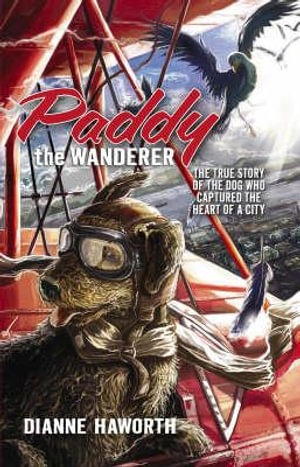
Paddy the wanderer: the true story of the dog who captured the heart of a city by Dianne Haworth
The subtitle says it all, this is the story of a dog. But not just any dog - Paddy wandered the wharves of Wellington, New Zealand for about ten years, loved by all who called him friend. At first he was a stray, but then he hung about the wharves so much that the wharfees grew attached to him, giving him a place to sleep, feeding him and giving him a name. He followed men onto the ships and traveled from Wellington to Auckland and back, sometimes around the islands and sometimes to Australia, but all the time, being watched out for and fed. He was so well known in Wellington that the taxi drivers clubbed together to pay his registration.
This is more than the story of the dog, Paddy. Behind the story is the history of New Zealand's wharves, with its down turn during the Depression years, its place in New Zealand's history of the unions and their part in keeping men in work. The setting tells us of the co-operation between the men who had little money and few prospects in a time when few had anything to be optimistic about.
Haworth has researched the story behind the memorial built on the Wellington wharves, filling out the snippets gained form the newspapers of the time, retelling stories told to her and imagining conversations between the people who cared for the dog. In this way she has built up the story about Paddy, partly told in fiction terms, but based on fact. It is sure to please students in middle school looking for a real book about animals that is easy to read and absorb. A glossary of terms, and some historical details, placed at the end of the book, complete this fascinating story.