Ill. by Sarah Massini. Nosy Crow, 2013. ISBN 978 0 85763 089 6.
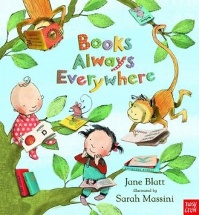
(Age: 3+) Warmly recommended. Picture book. Books and reading. With
a scattering of funny children, babies and animals, this book
promotes the sharing of books with just about everybody, anywhere
and anytime. From the first page with an enormous elephant on the
illustration of a book's page, complete with a mouse hiding behind
the book, children are in for a treat as they find contrasting words
and images brought together in books. The double fun of a book being
represented in a book will not be lost on younger readers, as they
recognise many of the books represented in the illustrations.
Sometimes it is only a title, sometimes opening lines, but readers
will have a tingle of recognition as they read the non story lines
on the pages.
In rhyming pairs of words, 'Book scary', 'Book rain', for example,
the pages reflect the phrase given as children will too, and add
their own knowledge of books around that theme. The monkeys are of
course on the page proclaiming the book, 100 Jungle Jokes, while the
giraffe is of course on a page about 'Book tall'. Younger
children will love this book as it gives them a chance to see how
some of the words can be represented and so learn what that word
means, as well as extolling the many virtues of books and reading.
Fran Knight
W.A.R.P.: The reluctant assassin by Eoin Colfer
Penguin, 2013.
Recommended for upper primary readers who are not squeamish! Artemis Fowl fans will be keen to try this first book in the latest
series from Eoin Colfer but they may be disappointed if not a little
shocked on reading the opening chapter. Though when the title is The Reluctant Assassin what would one expect but an assassination.
W.A.R.P. is the acronym for the FBI's Witness Anonymous Relocation
Program and 16 year old agent Chevie Savano has been assigned to the
London office after an embarrassing incident in Los Angeles. Her job
is to monitor 'the pod' which is a time travel portal to Victorian
England. Chevie develops an uneasy relationship with Agent Orange
aka Felix Smart, whose father invented the machine, and is prepared
to sit out her time until returning to Quantico, when 'the pod'
delivers Riley the apprentice assassin, and akin to a character from
Dickens' Oliver Twist, directly from Victorian London.
When Riley's master, the famous magician The Great Lombardi turned
professional assassin, Albert Garrick manages to also travel to the
present in search of Riley with the intention of killing him, Chevie
is determined to save both Riley and herself and prevent Garrick
from using the knowledge and weapons gained from his trip to the
twenty first century for his benefit in nineteenth century London.
The action races between the two eras and is littered with the
corpses of various individuals as Garrick pursues the youngsters and
they discover the truth about Riley's past. They also meet a range
of characters from Otto Malarkey head of the Battering Rams, a gang
of thieves and wastrels, to Tibor Charismo wealthy novelist,
composer and consultant to the Queen.
Whilst it took me a while to become engaged with the book as I
mulled over the opening chapter's implied and actual violence, I
enjoyed being privy to the inner thoughts of the main characters
written in italics and the descriptions of Victorian London. The
premise of the series gives plenty of scope for Colfer to introduce
even more characters relocated in the past, as heralded in the
Epilogue. I will continue to follow W.A.R.P. with interest but be
cautious in my recommendations to students.
Sue Keane
The wall by William Sutcliffe
Bloomsbury, 2013. ISBN 978 1 4088 3842 6.
Joshua and his friend David are playing
football when David kicks the ball into a construction site
surrounded by a high fence. When Joshua goes to retrieve the
ball he discovers a flattened house and a tunnel which goes under
the wall which divides the new town from the old. Joshua goes
through the tunnel but is pursued by some boys who clearly mean him
harm. He is also amazed at the difference between this place
and the new town that he lives in, only separated by the wall and
the soldiers that guard it. After being saved by a girl and
meeting her family Joshua begins to question the system and tries to
find a way to help them. His own family life is unhappy as his
stepfather is a bully who barely contains his dislike and his mother
is manipulated and still grieving for his dead father.
Eventually Joshua is forced to make important decisions about his
own life and future.
A thinly disguised look at Arab-Israeli relations this book presents
a view of both sides but allows the reader to draw their own
conclusions. I would recommend it for middle school students
as a good introduction that may well lead to further discussion and
study.
David Rayner
Tuesdays at the Castle by Jessica Day George
Bloomsbury, 2013. ISBN 9781408831984.
For or a different take on the Princess theme, what can beat a
feisty and determined young Princess trying to save her family and
kingdom with the help of an unpredictable Castle.
Tuesday at Castle Glower is like no other day of the week. If
the Castle is bored, that is the day it grows new rooms or towers or
even whole wings, fully furnished!
The Castle has an influence on the kingdom greater than most royal
advisers. Growing corridors, sealing rooms, or suddenly growing door
or staircases the human inhabitants are manipulated and through the
quality of the furnishing in the rooms used by visitors and
inhabitants, it has informed royal decisions for generations.
Princess Celie the youngest child of King Glower the Seventy Ninth
loves the Castle and it seems to love her back. When her
parents and oldest brother Bran are reported ambushed and murdered
on their way home from Wizard School Graduation, Celie and her older
siblings Lilah and Rolf are bereft.
Rolf as crown prince, chosen by the Castle of course, is considered
too young by the Council so they appoint themselves and Prince
Khelsh of the neighbouring Kingdom of Vhervhine as regents to advise
Rolf.
The children believe that their parents are still alive, because the
Castle hasn't altered their rooms, and set out to discover the
truth. With the Castle's help they discover Prince Khelsh and the
Emissary to Foreign Lands plotting to take over the kingdom.
Determined to save the Castle and themselves, the children and
various supporters, from the staff to a visiting Prince, embark on a
series of delaying and mischievous tactics, aided and abetted by the
Castle itself.
Celie is a strong and engaging character; however it is the Castle
which is the most interesting and influential character in the
story.
Sue Keane
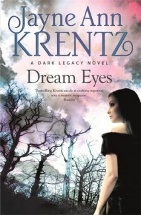
Dream eyes by Jayne Ann Krentz
Dark legacy book 2. Piatkus, 2013. ISBN 9780749956325.
(Age: Adult) Paranormal. Mystery. Romance. In the second
in the Dark legacy series, Gwen Frazier returns to a small
town, Wilby, Oregon, and finds that her friend and mentor,
Evelyn Ballinger has died. She believes that her death
is related to two murders that had happened previously and
joins together with psychic investigator, Judson Coppersmith,
to uncover what has happened. Judson has his own problems.
Haunted by dreams he is trying to recover from an undercover
investigation that went wrong.
Krentz writes another of her paranormal mysteries with her
signature flair and humour. It is not too hard to suspend
belief as Gwen goes about her business of reading auras and
curing nightmares as well as seeing ghostly projections.
Judson of course, is totally gorgeous in a very brooding way
and his ability to sense emotions at the scene of crimes helps
him as an investigator.
Very light, very quick and easy to read, this is an
undemanding book that gives the reader who likes paranormal
stories and a strong heroine a few hours of sheer escapism.
Pat Pledger
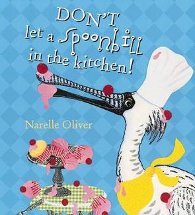
Don't let a spoonbill in the kitchen by Narelle Oliver
Scholastic, 2013. ISBN 978 1 86291 931 0
(Age: 4+) Recommended. Picture book. Australian animals. Humour.
Aching to be read aloud, this rhyming tale by Narelle Oliver, sings
with words and rhythm, while telling a tale of what not to let in
the kitchen or laundry or airport amongst other places. The
spoonbill is introduced swishing from side to side, filling his
spoon with a multitude of shrimp, gathered along the beach at low
tide. But the reader is warned, do not think that just because the
spoonbill's spoon can mix, it does not mean that the bird should be
anywhere near a kitchen. This is followed by the cormorant, the
pelican, the jacana, the stilt and the osprey. Each is given a
double page spread to start with, outlining the two stanzas about
that particular bird, with a distinctive illustration of that bird,
and then a double page follows with what instantly becomes a refrain
throughout the book, with some changes as it goes along, saying
where that animal should never be.
Children will enjoy the humour of the tale, join in with the
refrain, revel in the delightful illustrations and be informed about
some of the birds they might see in their environment.
The double pages with the refrain are exuberant, full of colour and
movement, enticing the eye with its array of things illustrated,
pleasing the younger eyes with a plethora of detail. I was only sad
that I did not have a smaller person here to practice this book on,
although my dog seemed to enjoy it.
Fran Knight
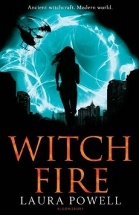
Witch fire by Laura Powell
Burn mark series, bk 2. Bloomsbury, 2013. ISBN 9781408815236.
(Age 13+) Recommended. Paranormal. Witches. Glory and Lucas return
in their second adventure following Burn mark. Both are
witches. Glory has known since childhood that she was destined to be
a witch but Lucas from a family of Inquisitors, is finding it
difficult to prove himself. Sent to an expensive private boarding
school in Switzerland to investigate rumours about a terrorist
organisation, they find that they have much to learn about
themselves and each other.
Once again Powell has written a riveting tale of witchcraft in
modern times. Her alternative world is original and very well
conceived. Her descriptions of the covens and the criminals that
lead them are fascinating as is the idea of an Inquisition that
hunts down renegade witches. Once again her description of Glory's
dream of a witch being burnt at the stake is horrifying.
The action is fast paced and kept me riveted with scenes of Glory
and Lucas sky jumping from building to building and chasing down
criminals in Cordoba, a small South American country that is vividly
described.
Powell brings depth to her characters as well. Glory is struggling
with the fact that her mother left her when she was a child and is
overwhelmed when she learns that she may be alive. Lucas has to come
to grips with the fact that the pathway that he thought he was
destined for no longer exists. Minor characters are also well
rounded and come alive for the reader, especially the driven
inquisitor, Derek who makes another appearance in this book. The
growing attachment between Glory and Lucas is also a pleasure to
read.
This series is certainly different from much of the urban fantasy
around and will appeal to readers who enjoy paranormal stories,
action and adventure.
Pat Pledger
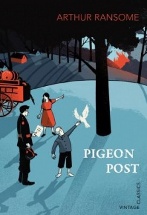
Pigeon Post by Arthur Ransome
Vintage, Random House, 2013. ISBN 9780099582540. pbk., 514pp. Pigeon Post which won the inaugural Carnegie Medal in 1937
from CILIP, the UK library association, is part of the Swallows
and Amazons series written in the early 1930s by Arthur
Ransome. Set in England's Lake District it continues the adventures
of John, Susan, Titty and Roger Walker (Swallows) and their mother
and baby sister, as well as Nancy and Peggy Blackett (Amazons) and
their uncle Jim, commonly referred to as Captain Flint. 'Swallows'
and 'Amazons' refer to the names of the dinghies the children sail
around the lake waters, with the Swallows being 'explorers' and the
Amazons 'pirates'.
The children are once again on school holidays and this time when
they learn of a lost gold seam in the hills above the lake, they
decide to look for it because of the lack of success Uncle Jim has
had in his prospecting trip in South America. Although their home
base is the Blackett's farm at Beckfoot, they move from camp site to
camp site using a pigeon to send a message back to Beckfoot each
day. During their search it appears they have a rival and when
strange things happen after they do discover 'gold', there is an
interesting conflict. However, the drought has meant the countryside
is tinder dry and a fierce fire changes the direction of the story
and interesting things are revealed.
Despite being written about 80 years ago, the Swallows and Amazons
series is one that has endured and is considered a classic in the
adventure genre. Even though at first it might seem a little
old-fashioned within a few pages the reader is absorbed into the
story and enjoying a good read while also learning about life for
children in another time, a time when pigeons were used because
there were no mobile phones.
This re-publication is part of a series of classics being released
by Random House for just $9.95, and which deserve a place on the
library's shelves because they have proven to be stories which
appeal and endure. While they may not appeal to all, I believe that
students should be able to have access to them just because they
come under that heading of classic children's literature. I could
imagine a lot of interest being generated with a display of 'Books
your great-grandparents told you about' (because I'm a grandma and
they were before my time) and even doing a comparison between the
lives of the children in the times of the stories and life now.
Asking whether a pigeon might be more reliable than a mobile phone
could be the basis of a great debate, and may even lead into an
investigation of how pigeons have been used over time, particularly
in war time, sparking a new avenue of reading for some.
Barbara Braxton
The zigzag effect by Lili Wilkinson
Allen and Unwin, 2013. ISBN 9781743313039.
(Age: 13+) Recommended. Mystery. Magic shows. Sage is really
happy when she gets a job working for the magician, The Great
Armand. It means that she can pay for the photography course that
she is desperate to do. The job sounds interesting and the fact that
Herb the stagehand is cute is also a positive. Then Armand
disappears and Herb and Sage get locked into a storeroom overnight,
and Sage must weave her way through secrets and magic tricks to
uncover the mystery that surrounds Armand's disappearance.
Lili Wilkinson always manages to surprise and delight with her
feisty heroines and original stories. The background to The zigzag
effect is absolutely fascinating and anyone who is interested in
magic tricks will be riveted by her research into what happens to
make magic tricks work on the stage. The petty jealousies
surrounding the secrecy of how tricks work and the effort that the
beautiful assistants put into the show form a unique background to
the mystery that Sage is faced with. Superstitions like Bianca
believing that breaking a wand on stage will bring bad luck provide
suspense and add to the eerie things that seem to be happening in
the theatre.
I love the development of characters that Wilkinson shows in this
book. Sage is a smart, clever girl who shows initiative and
intelligence. She is prepared to find a job to pay for her
photography course and looks after her little brother. Her romance
with Herb is realistic and often funny. Bianca the magician's
beautiful assistant is a well rounded character as well, and Sage's
parents are portrayed in a sympathetic light.
This is a book that will appeal to readers who want something
different, clever and suspenseful, with lots of funny dialogue
scattered throughout.
Pat Pledger
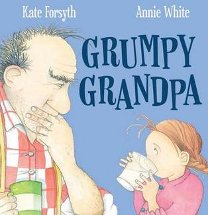
Grumpy Grandpa by Kate Forsyth
Ill. by Annie White. Scholastic, 2013. ISBN 978 1 74283 175 6
(Age: 4+) Warmly recommended. Picture book. Grandparents. Grandpa
frightens the girl when she visits the old man with her mother. He
always asks the same thing, 'are you grizzling or are you singing?'
which intimidates her even more. He takes her into the garden where
he loves to dig, but she likes to be clean and tidy, while he
prefers to dig the dirt, and get all sweaty and muddy. Once inside
he sleeps in his arm chair but the noise of his snoring rattles the
windows and causes the chimney to smoke. When he wakes he is even
grumpier but in answering 'O'm singing' to his question asked yet
again, a broad smile breaks out on his face and all is happy.
A beautifully deft rhyming story of a young girl's fears at her
Grandfather's house, of his different ways of doing things and his
invasive questioning. She takes a while to get used to this grumpy
man but once she answers his strange question, they become the best
of friends and all fear is gone. The wonderful illustrations fill
each page with soft washes of colour and the little girl is shown in
various awkward positions on each double page: blown away by his
sneeze, coughing at the smoke form the chimney, baulking a the
offered worm, shuddering at the mud on her skirt, all giving sorry
impressions of her day with Grandpa until the last pages where they
find some common ground. A wonderful tale of acceptance, of finding
an ally, of the difference between the age groups, this will be most
useful in classrooms where grandparents are being discussed.
Fran Knight
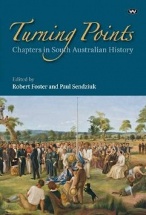
Turning points ; chapters in South Australian history edited by Robert Foster and Paul Sendziuk
Wakefield Press, 2012. ISBN 9781743051191.
What did I expect from this book before I read it? A different
opinion on South Australian history. I had read several textbooks,
fictional accounts, and even early settlers diaries. I was
pleasantly surprised when the introduction informed me that this
book was a selection of public lectures, given originally in 2011.
Each author writes addressing the theme "Turning points in South
Australian history". Thus we have chapters varying in style from
standard scholarly histories, to more free form reflections on
topics they chose. This makes this book much easier to digest, with
each piece having its own flavour.
After the introduction by the editors, each chapter follows on the
previous in time. We start with "The Adelaide district in 1836'' by
Bill Gammage. This is a well illustrated synthesis of his book "The
biggest estate on Earth" in which he argues that the Aboriginal
people managed their environment to create that parklike landscape
which the colonists found in 1836. The next chapter by Henry
Reynolds investigates the issues of the 1830s, namely the policy
towards the Indigenous people. He says 'My suggestion is that South
Australia lay, in a figurative sense, between Van Diemen's Land and
New Zealand in the way it would deal with these questions of policy
towards property rights and whether the indigenous people had human
rights in a modern sense.' The chapter by Paul Sendziuk was very
interesting in that he exposes the convict element in South
Australia, in 'No convicts here: South Australia's Foundation myth'.
Chapters 5 and 6 were very politically oriented. Chapters 7 and
8 were the authors' personal histories about their families and where
they lived. Chapter 9 About the Don Dunstan era made me think back
to that time of social democracy with some fondness. The last
chapter by John Hirst is a reflection on South Australia. He ends
with 'I began with South Australia as a distinctive colony and ended
by describing it as a small state. But under the leadership of
Playford and Dunstan South Australia punched well above its weight.
I hope it can find ways to keep that tradition alive.' A book to be
dipped into if the topic interests the reader.
Giselda Grunwald
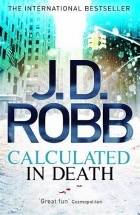
Calculated in death by J.D. Robb
In death series. Piatkus, 2013. ISBN 9780749959357.
(Age: Adult) In the 34th book in this series, a woman is found
dead at the bottom of a flight of stairs. It looks like a mugging
gone wrong but Eve Dallas knows better. The victim is an accountant,
Marta Dickenson, and she doesn't seem to be the type to be murdered
for her personal life so it looks as if it has something to do with
the accounting work that she was doing. Eve, helped by partner Peabody and
her husband Roake, delve into the seamy life of crooked accountants.
I had missed quite a few in this series and was pleasantly surprised
to find that I managed to pick up the background to past events
without too much bother. Robb has created a very smart, likeable
main character in Eve Dallas. Her partner Peabody is a perfect foil
for her and of course Roarke is not only gorgeous but very rich.
However it is the mystery, which is compelling and which kept me reading this to the end. I
enjoyed the ins and outs of the operations of an accountancy
firm as it at first appeared to be an unlikely place for a hired
killer to be operating from, and it was fun trying to work out who
the villain was.
This is a very enjoyable read and fans of this series will not be
disappointed.
Pat Pledger
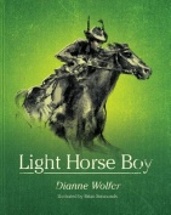
Light Horse boy by Dianne Wolfer
Ill. by Brian Simmonds. Fremantle Press, 2013 ISBN 978 1922 089 137.
(Age: 9+) Warmly recommended. World War One. ANZAC. Animals. In a
handsomely produced hard cover book with a large number of photos
from WW1, Wolfer tells the tale of young Jim, joining his older
friend, Charlie on the big adventure overseas, taking their horses
along with them. Australia's involvement in the European war has
been declared and the two present themselves to the local
recruitment tent for the medical.
With stunning illustrations by Simmonds, each page is a treat. Many
pages are presented in the form of pages torn from a diary or pages
of letters from family, each shown as carefully folded and worn to
give a better impression to the reader of what war was like for the
ordinary man and his family, opening and closing the few treasured
letters many times. Numbers of photos show the range of
animals kept by the soldiers as mascots, while others reflect the
plight of the horses taken from Australia to the Middle East in
particular.
Jim and Charlie are part of the 4th Light Horse Brigade, and so the
story follows their actions, showcasing for the reader a small part
of the whole war, enabling younger readers to get some sense of the
conditions in which they lived, the constant fear, the privations,
the loneliness amid the friedndships.
There has been a bag full of books published in the past twelve
months or so on Australia's involvement in the wars since the Boer
War. Each has taken a different perspective, be it a young boy
signing up in Alan Tucker's Gallipoli, or Jackie French's The girl
from Snowy River showing the impact of war on a rural community, or
The horses didn't come home by Pamela Rushby, the tale of the fate
of the 130,000 Walers sent to war, and To brave the seas by David
McRobbie, about the men who served on the Merchant Navy during WW2,
each has a different tale to tell, impelling our younger readers to
think more deeply about war and its impact.
This book is hard to put down, its illustrations and spare prose
will grab the readers and keep them reading. Information at the
start of the book verifies the tale of the one horse that did make
it back to Australia, and the map and acknowledgments at the end
show where some of the photos have come from, making the book most
useful if looking at war in the classroom. With the centenary of
World War One looming in 1914, and the centenary of the landing at
Anzac Cove the following year, these books are the first of many,
offering a perspective which will appeal to a wide range of readers.
Fran Knight
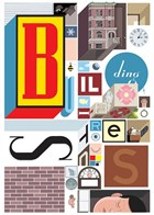
Building stories by Chris Ware
Random House, 2012. ISBN 9780224078122.
(Age; Senior secondary) 'Books' are no longer books; groups of words and sentences arranged
in a usually pleasing fashion on a set of papers bound together in a
neat package. This is an era of ebooks, graphic novels, audio books,
and books as pdfs, kindle and various other arrangements. The
bottom-line is that in a book the words, phrases and sentences work
together to tell a story, to inform or to educate. This 'book', Building
Stories by cartoonist, Chris Ware, breaks many moulds. To
begin with it is a box; a large, colourful box with intriguing
images and lettering showing clever and careful design. On opening
the satisfyingly solid box one encounters an even more intriguing
assortment of books, pamphlets and papers of different sizes, weight
and organisation covered with detailed and intriguing graphics.
Through this medium this impressive work tells the stories of
residents of an apartment block in Chicago.
As the residents go through their daily lives we are made privy to
their thoughts, dreams, actions and most intimate activities. Every
graphic is part of the larger story and leads the reader to make
connections across the 'text'. The book is part puzzle, part
graphic, part narrative and always engaging. It brings to mind the
classic movie Rear Window, where James Stewart spends his
wheelchair bound days watching his neighbours, discovering their
secrets.
Chris Ware is highly talented cartoonist who shows a Dickensian feel
for the minutiae (and misery) of ordinary life. Much of this book is
about loss - loss of ideals and dreams, youth, partners and even
body parts. For me, it is this which ultimately made the book so
depressing. The voyeurism of this type of text reveals the
intimacies between couples which many will feel belongs solely
within a trusting relationship. These qualities lead me to recommend
this book only to senior secondary students with the maturity to
understand the complexity of people's motives and actions.
Diana Warwick
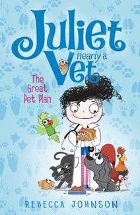
The great pet plan by Rebecca Johnson
Juliet, Nearly a Vet series. Puffin Books, 2013. ISBN
978-0-14-330704-4.
(Age: 8-10) Recommended. Juliet is a 10 year old girl who
knows her mind. She wants to be a vet just like her Mum. So eager is
she to study veterinary skills, she keeps a Vet Diary.
You can often read her diary notes throughout the book. They are
informative, reporting facts about different animals such as their
care and behavior.
With the help of her best friend Chelsea, Juliet decides it would be
a good idea to have a 'Pet Sleepover', offering a free health check
and grooming session as well. Of course this has to be a secret from
their parents. What could go wrong?
This is an easy to read smaller novel with less than 90 pages and is
interspersed with small drawings and diary entries.
The story is both humorous and educational and will appeal to 8 to
10 year olds.
The next is this series is entitled At the Show.
Jane Moore