Scholastic, 2015. ISBN: 9781760152093
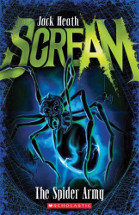
(Age 9 - 12)Recommended. Themes: Spiders - Fiction, Mysteries and
Suspense Stories, School Stories. Scream: The Spider Army by
Jack Heath delivers the same level of creepiness, shocks and scares
that Scream: The Human Flytrap did without the scream noise
when you opened the cover. The reader launches straight into the
novel, no contents or publishing information, just the first chapter
embellished with black borders, spiders and webs.
Something strange is happening in the fortress that is their school-
Axe Falls High School. After the damaging earthquake the previous
Friday night, a deadly spider army has been unleashed in their
school. The lethal blue-black arachnids lurk in the corridors and
classrooms, their venomous bites cause gross disfigurement, the
victims's screams are unbearable and terrifying. Yvette is the
central character, she loves to tinker in the garage inventing new
machines. Her high powered pressure washer will come in handy - not
just for Food Technology! Unfortunately, after a spider sighting she
causes havoc and is given two weeks detention in the library after
school. She has to help organise the books after the destruction of
the earthquake. Where is the missing librarian? Why is she locked in
the archive room with something noisy and hissing and what is creepy
Mr. Mortimer involved in?
This action-packed junior novel with short chapters and a fast-paced
story is just right for readers who have high interest levels and
lower reading ages. The dark graphic descriptions make this a novel
suited to 9+ readers. Everything from the black edged pages and
borders, the spiders images all set the mood for the chilling
narrative. Jack Heath's writing career began when he was thirteen.
Now in his twenties, he continues to write fast-paced, thrilling
adventures for his younger readers.
Recommended for readers 9-12
Rhyllis Bignell
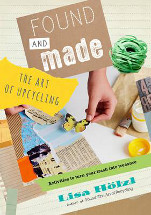
Found and Made The Art of Upcycling: Activities to turn your trash into treasure by Lisa Holzl
Walker Books, 2015. ISBN: 9781922179098
(Age: 7+) Highly recommended. Nonfiction. Subjects: Art - found
materials, Recycling, Crafts. Lisa Holzl is an accomplished artist
who runs a children's and adults' workshops at The BakeHouse in
Marrickville, Sydney. This is another enjoyable and creative book
from the author of Found The Art of Recycling.
Here are more exciting opportunities for creativity as we turn trash
into treasure. Some of her young students' work is showcased in her
second book, Found and Made The Art of Upcycling. Eleven
easy to make projects are included using upcycling, a fun way to
repurpose everyday items; a plain shoebox transforms into a treasure
box decorated with old maps, torn newspapers, stamps, free postcards
and filled with smaller boxes. The Fantasy Room Montage incorporates
pictures from old home decor magazines of similar size and scale,
with some imaginative layering a brand new room is created. The
choices of composition, placement, layering, colour or a monochrome
effect are up to the young artist.
Each project is laid out clearly and sequentially from Before You
Start, Recycled Material and Equipment through to Step by Step
instructions. Other ideas and links to websites and artists such as
Richard Hamilton, Tom Wesselman and Henry Matisse provide
opportunities for the young artist to engage and discover new ideas
and develop new appreciation of their mediums and styles. The
well-designed layout includes multi-coloured photographs of the
tools and materials needed, vibrant backgrounds and easy to read
text boxes.
This book would make a welcome gift for any budding young artist, a
great resource for schools and for fun for family activities during
the holidays.
Rhyllis Bignell
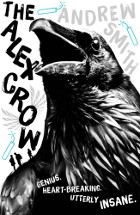
The Alex Crow by Andrew Smith
Electric Monkey, 2015. ISBN 9781405273428
(Age: 16+) Highly recommended. On cover: Warning: Contains explicit
content. Themes: Refugees, Cloning. Genetics. Genetic engineering.
15 year old Ariel is a refugee from the Middle East. He had hidden
in a refrigerator when his village was attacked and was the sole
survivor. Now living in the US, he is sent with his adoptive brother
Max to a camp for boys who are obsessed with tech. This is his story
which is intertwined with that of a schizophrenic melting man who
has bombs and survivors from an arctic expedition from the late 19th
century who had brought home a strange devil like man who had been
frozen in the ice. Weaving through this story is mention of the Alex
crow a bird that has been brought back from extinction by Ariel's
adoptive father's company.
This is a strange, compulsive and challenging story that I was
unable to read in one sitting. It has major themes of refugees and
genetic engineering and ethical considerations about scientific
enquiry but it was Ariel's story that kept me engrossed. I had to
come back to it time and again as I knew that I had to find out just
what had happened to him after his village was destroyed. It is not
a pleasant or escapist story but it has enough humour that will
especially appeal to boys to lighten the tone and it is certainly
one that stays with the reader. The Alex Crow is not a story for the faint hearted. All the
strands contain disturbing themes: the plight of refugees, abuse,
murder and manipulation of family members by scientists interested
only in their horrible experiments. There is frequent talk of
masturbation and only two women feature in the story - Max's mother
who is weird and Martha Nussbaum, the author of a tract, Male
extinction, the case for an exclusively female species. The
Alex Crow is a book that will challenge the reader to think
about issues facing society today.
Andrew Smith is an award winning author (Grasshopper Jungle
won 2014 Boston Globe-Horn Book Awards and was a Printz Honor 2015)
and he certainly lives up to the comment written at the back of the
book that careful is not his middle name.
Pat Pledger
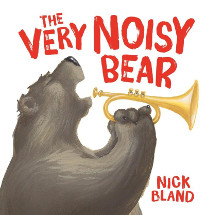
The very noisy bear by Nick Bland
Scholastic, 2015. ISBN 9781743627853
(Age: 4+) Highly recommended. Bears, Noise, Musical instruments,
Neighbours. When Bear is awakened one day during hibernation, he
asks the sheep if perhaps they would tone down their noise, but
instead is asked to stay and play. He is given a range of
instruments to try but each has disastrous results, the bear making
the most appalling noise and sometimes damaging the instrument. The
animals try him with a set of drums, then a guitar, followed by a
trumpet, until all the animals run away to avoid the noise.
Eventually someone gives him a microphone and he sings with
unexpected results.
The rhyming verses are wonderful to read out loud and will encourage
the reader to predict what might happen next, causing lots of
laughter at the antics of all the animals, and Bear's effect on
them.
Bland uses the words with great effect, some of the noises are in
large font, filling sections of the page encouraging the readers to
be loud as well, following the bear's attempts at making music.
Bland's illustrations will intrigue and delight the reader as they
watch the bear make his way through the instruments given him,
watching the animals' faces as they first are horrified at what the
bear does, and then come to some appreciation of Bear's voice. Small
images dot the pages giving another does of humour to those who spot
them - the moose with its antenna horns, the zebra's stripes, the
turtle who can hide in his shell, the violin playing sheep.
All is very funny and can initiate discussion about being good
neighbours, or introduce a range of musical instruments, once the
class has stopped laughing.
This is another in Nick Bland's series of books about Bear, starting
with The very cranky bear in 2008.
Fran Knight
Summer Rain by Ros Moriarty
Ill. by Balarinji. Allen & Unwin, 2015. ISBN 9781760112110
(Age: Junior primary) Themes: Aboriginal environment; Weather.
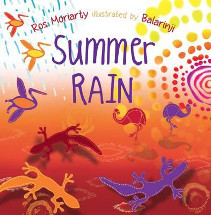
Summer Rain is a bright picture book that reveals the transformation
of the rainy season in Northern Australia. There is a simple text,
written in a lovely poetic style without pattern, but using language
for effect. A single word is highlighted on each page - usually a
verb, with the exception on the last page. This book could be used
for very young children and to highlight how the environment changes
with rain. The illustrations are from Balarinji, an Indigenous
design studio and they are brilliant. Vibrant colours appear on
every page and shadows are used to add interest. A final page
includes a translation of the text into Yanyuwa language from
Borroloola, NT.
Carolyn Hull
Molly and Pim and the millions of stars by Martine Murray
Text Publishing, 2015. ISBN 9781925095906
(Age: 9+) Recommended. Themes: Magic, Family Life, Medical Botany,
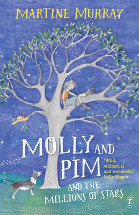
Individuality, Confidence, Friendship. Molly is torn between her
love for her eccentric mother who collects herbs and plants from the
woods and creates magical potions and her desire to live a normal
life like her best friend Ellen. She wants to eat muesli bars for
recess not pomegranates and watch television instead of foraging in
the woods for food. When their neighbours the nasty Grimshaws
complain about their rooster crowing and blame them for stealing a
large garden ornament, Molly's mother decides to conjure up a fast
growing tree to block out their neighbours and bring harmony to
their backyard.
When Molly's mother accidentally turns herself into the tree, Molly
must learn to rely on herself for food and to look after Claudine
the cat and her faithful dog Maude. She sleeps in the loving
branches and her mother feeds her with magic, nourishing fruit.
Molly needs the help of her strange and knowledgeable classmate Pim
Wilder. He provides her with food and helps rig a basket on a pulley
for Maude to sleep in the tree with Molly. He proves to be a true
friend helping Molly protect the tree from Mr. Grimshaw's chainsaw.
Molly learns to be resilient, courageous and the importance of being
vulnerable.
There is a lyrical quality to this narrative, a cadence - soft and
whimsical. Martine Murray's Molly and Pim and the millions of
stars brings a sense of magic and wonder and is beautifully
written. Readers need to accept the amazing transformation of the
mother, it is an unusual undertaking. There is a timely caution
included about the collecting of plants. Molly's notebook at the end
is filled with interesting botanical facts.
Rhyllis Bignell
Adrift by Paul Griffin
Text Publishing, 2015. ISBN 9781925240160
(Age: YA) Highly recommended as a good dramatic narrative for both
genders. Themes: Friendships; Social class; Survival. Wow! A teenage
romance across social expectations morphs into a scary survival
story on the high seas. This is brilliantly written as we explore
the lives and relationships of 5 young people from different social
spheres who are flung together - initially as the result of a simple
beach encounter, then a party invitation and finally on board a boat
as they attempt to rescue one of the young people, but ultimately
try to save their own lives in the face of extraordinary conditions
in the ocean.
As they all face their own responses to possible death, stories from
their past are shared and personality strengths and weaknesses are
laid bare. This is a powerful story with each character forced to
consider who you can rely on when you face death and disaster.
This is a book that the reader won't want to put down - how many
will survive? If they survive, how will they face the world and move
forward? Will love be enough? Is it possible to survive an extreme
event and be back to normal? This is daunting drama and powerful
writing, with occasional glimpses, past and present, into the world
beyond the boat and its traumas, which merely add to the tension.
Carolyn Hull
Newspaper hats by Phil Cummings
Ill. by Owen Swan. Scholastic, 2015. ISBN 9781743622544
(Age: 4+) Highly recommended. Age, Alzheimer's Disease, Family,
Memory. In the hands of Phil Cummings a tale of an old man with poor
memory is subtle and endearing as he shows the man, a grandfather,
living in a nursing home. His granddaughter comes to visit, and is a
little dismayed when he cannot remember her name. But she
perseveres, showing him the photographs adorning the chest of
drawers in his room. One is of the man and his brother collecting
tadpoles in a glass jar, and a memory is stirred, one of he and his
mother as he recalls the honey on his hands, and with the next he
and another man are in uniform and he recalls being frightened,
listening to the helicopter droning overhead. Each memory provokes a
response from his granddaughter and she points out another
photograph of him with his son and the girl and their newspaper
hats. She picks up some of the newspapers on the floor, reminding
him that he used to make them for her and he remembers, and they
make some together eventually taking them to the other people in the
home.
With incredible subtlety, Cummings reminds us all that we all forget
sometimes, and it takes something physical to recall it for us. He
reminds us of the closeness of family, of the life of a person going
through many stages, of that last stage sometimes in a nursing home,
where others can visit and remind them of times past. And of course,
Cummings reminds us of the simple joys of life, of making a
newspaper hat, of sharing the activity with others.
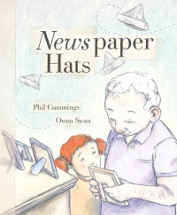
Swan has used watercolour and pencil to great effect, giving a soft
edge to this story, using minimal colour, drawing sticky tape over
some of the words, using different framing for the pictures he has
drawn, making us look more closely and asking why it is placed just
there, or turned around like that. I love his use of the end papers
with a range of newspapers to show what has happened during
Grandpa's life, and the range of footwear, while he underscores the
idea of family with a number of people at different stages in their
lives at the nursing home, either residents or visiting.
This is a wonderfully affirming book, one to be read and reread, and
make newspaper hats for everyone's head.
Fran Knight
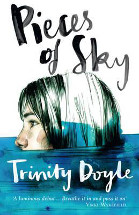
Pieces of sky by Trinity Doyle
Allen & Unwin, 2015. ISBN 9781760112488
(Age: 13+) Recommended. Suicide, Family, Death, Relationships,
Swimming. Going back to the pool for swimming training recalls Cam's
death for Lucy, his sister, and through her narrative, we feel her
hesitation as she attempts to dive into the water below. She thinks
of how her brother may have felt as the water closed over his head
and went down into his lungs, gasping for breath, and she baulks.
Her resolve vanishes and she goes on to school, tossing aside the
help offered by friends and acquaintances alike, wrapped up in her
own grief.
Doyle captures a family alienated from each other with heart aching
accuracy. Mum doesn't leave her room, her toast and cup of tea still
on a tray outside her door, Dad goes to work but is hardly aware,
her aunt, Deb has arrived to help, but often just gets in the way,
offering platitudes which Lucy pushes aside. She is full of
sincerity but it is hardly what Lucy needs.
So Lucy floats, going to the dune party where her brother Cam used
to go with his mates, but getting so drunk she needs to be taken
home. Enter Evan, new in town, cousin of Lucy's old primary school
bestie, and one who seems to be there when she needs a friend.
The angst that persists within a family after a death, particularly
when there is a possibility of suicide, is powerfully written in
this story. Each member of the family is in drift mode, grieving in
their own way, cut off from each other, surrounded by people with
good intentions, but who just don't understand the impact of their
loss. As Lucy's relationship with Evan develops she is at a loss how
to tell him, behaving oddly until he eventually asks Steffi and so
can understand. But he has secrets of his own and the mystery of
their backgrounds, of what happened to Cam, of why his best friend
disappeared after the funeral are tantalising in keeping the reader
hooked.
Although the ending may disappoint some, the writing of the family's
months in limbo is most realsitic and will make some readers think
more about death and its aftermath.
Woven around the impact of Cam's death, the story of Lucy finding
some reason in the swirl of her former swimming life makes this a
powerful debut novel.
Fran Knight
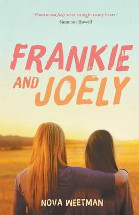
Frankie and Joely by Nova Weetman
University of Queensland Press, 2015. ISBN 9780702253638
(Age: 13-14) Themes: Friendship, boyfriends, first love, family,
small town life Australia. Best friends Joely and Frankie don't have
much in common but they recognise in each other some shared need and
they have become close as only 15 year old girls can be. Joely
invites Frankie to spend a week of the summer holidays at her aunt
and uncle's outback farm. Joely's mum is overprotective and anxious
but agrees to let them go, while Frankie's mum hardly registers if
Frankie is around, let alone if she is ok, and sometimes she is not
OK when her mother's sleazy boyfriends get too close.
The drought affected farm and Joely's boy cousins hold a special
place in her heart and she can't wait to show Frankie around but
typically Frankie does her own thing and gets to know everyone
without Joely's help. Miffed that she has lost control of the
situation Joely accepts a ride on her cousin's motorbike and they
crash into a kangaroo resulting in the death of the roo. Best
friends can't be mad at each other for long and the girls set out to
see what the small country town can offer, Joely hoping to see local
boy Rory, unaware that Frankie has already met him and he is
attracted to her.
The heat and isolation seem to intensify everything and the mix of
jealousy, boyfriends, first love and ultimately the importance of
friendship and loyalty forged through shared experience gives this
story its strength. The intense focus on the girls' relationships
leaves the rest of the characters sketchy and one dimensional but
this book's audience of 13 to 14 year old girls will love it.
Sue Speck
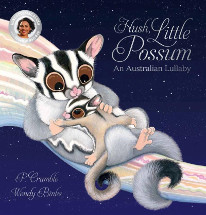
Hush, little possum : an Australian lullaby by P Crumble
Ill. by Wendy Binks. Scholastic, 2015. ISBN 9781743626436
(age: 3+) Humour, Poetry, Singing, Australian animals. The prolific
P Crumble or Paul Dumble is at it again, using an old song and
changing the lyrics to suit a modern audience, or perhaps simply
presenting an old song in a smart new version. Recently there has
been a plethora of these published by Scholastic, with the junior
primary class in mind. Brightly illustrated, a CD in the front cover
and energetic verses on each page, they must be read and re read,
read out loud, hummed, sung and drummed to enhance the words on the
page, and I can imagine groups of kids doing this with gusto and
lots of laughs.
This one has used the verse of Hush little baby, don't you cry
to produce a similar song about the strength of maternal love. Easy
to sing along to, easy to read with its bold illustrations helping
the younger reader, and lovely to listen to Deborah Mailman's voice
on the CD, the whole will be a useful addition to the classroom
where verse and music are used. The illustrator, Wendy Binks has
used the Australian landscape with effect, promoting the discussion
of things recognisably Australian, such as the tractor in a
galvanised iron shed, the eucyalypt and mallee forest, a windmill,
along with the various Australian animals.
Fran Knight
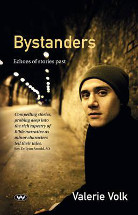
Bystanders by Valerie Volk
Wakefield Press, 2015. ISBN 9781743053799
(Age: Senior secondary) Aptly named Bystanders, Biblical
stories in this collection are told from the perspective of minor
characters and witnesses to events. Some will be familiar to those
with even an elementary Christian or general education, however I
suspect that many will be completely unknown.
The author's detailed knowledge of and careful research into
Biblical and historical events is clear from the text, however I
fear that the complexity and obscurity of the tales will limit
potential readership. The technique of recounting events through the
eyes of individuals who are otherwise ignored is a good one, yet the
book could not avoid becoming a compilation of impassioned
monologues to an unknown listener.
The historical, geographic and cultural details are very
interesting, however lineage and family relationships can be
confusing. The messages conveyed will give cause for reflection and
consideration of how fortunate we are to live in enlightened
society. Power structures are evident in almost every depiction of
ancient life and the modern reader will despair at the misery
endured by most of the female characters. The harrowing lives of
slaves is revealed whilst servants and concubines are seen to have
been at the mercy of their masters. Even wives are shown to have
been almost powerless to object to outright maltreatment by their
husbands and women in general had no form of protest against
bombastic dismissal of their views and desires by male relatives.
My recollection of the Old Testament stories having limited value
due to cruelty, violence and blinkered intolerance of the religious
views of others was not altered. Transitioning in the latter half to
the New Testament was refreshing as Jesus' teachings such as notions
of forgiveness, understanding and love for fellow human beings
promise hope. This contrasts starkly with the vengeance of the Old
Testament.
References and discussion notes are provided which may make this
text useful for senior students undertaking Biblical study and
analysis.
Rob Welsh
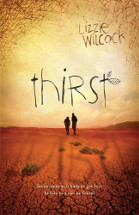
Thirst by Lizzie Wilcock
Scholastic Australia, 2015. ISBN 9781742839660
(Age: 12+) Recommended. Survival. Australian outback. Foster care.
When the car that is taking Karanda and 8 year old Solomon to their
next foster home crashes in Central Australia, and their social
worker is killed, Karanda is determined to be free of the foster
care system that she believes has been terrible for her. With just
her backpack and a bottle of water, she sets off into the desert to
escape her old life, the misery and the mistakes she has made. There
is only thing holding her back - Solomon, the solemn kid who has
barely said a word to anyone. When she discovers that he has
followed her, she decides that his survival skills are important to
keep them alive and together they trek across the desert.
I was immediately reminded of Hatchet by Gary Paulsen, and
thought that this would be a great companion novel to that popular
classic. Instead of facing the Canadian wilderness where water was
plentiful, Karanda and Solomon face the Australian desert, where
water is scarce and precious, and food is virtually impossible to
find. Fortunately Solomon has been a great fan of the TV show, The
Bush Tucker Man, and is able to find and identify some native
food sources for them and their struggle to survive makes for
fascinating reading. A quick Google search will bring up reports of
survival in the desert, so their feat doesn't seem to be too
implausible and the reader is carried along by their adventures.
Equally engrossing are the personal stories that gradually come to
light as the reader gets to know the characters. The foster care
system hasn't worked for these two children who have suffered
devastating personal loss. The themes of the importance of being
loved and belonging to a family and having friends loom large in
this book, as do the inadequacies of the foster care system and the
children's lack of ability to communicate their needs to their
foster parents.
Karanda's growth as a person and her gradual understanding of the
impact of what she says to Solomon is also central to the story. I
loved the dialogue, especially the nicknames that Karanda gives
Solomon: 'fire boy' when he makes a fire, 'fall boy' when he falls
down a cliff, and other humorous tags.
I read this book in one sitting and I am of the opinion that younger
readers would find it very engrossing. Teacher
notes are available.
Pat Pledger
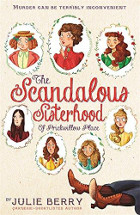
The Scandalous Sisterhood of Prickwillow Place by Julie Berry
Piccadilly Press, 2015. ISBN 9781848124370
(Age: 10+) Recommended. Humour. Mystery. When their headmistress and
her brother are murdered, Smooth Kitty and her six fellow students
decide to keep it a secret. They bury the bodies in the vegetable
garden and dress up Stout Alice in the headmistress' place. But
there is still a murderer on the prowl.
This is very funny take on a murder mystery and on the tradition of
the farce genre. Each of the seven girls are named in such a way
that the reader can keep in touch with their personality and
appearance - although the amusing illustrations on the front cover
and inside the book help as well. Smooth Kitty is the ring leader of
the plot and she is the one who comes up with the ideas while having
the ability to smooth over difficulties and tell smooth lies.
Disgraceful Mary Jane is very pretty and loves to flirt madly with
any young boy or man nearby. Stout Alice is plump but has the
ability to act really well and to mimic other people's voices so she
is perfect to pretend that she is Constance Plackett, the
headmistress that the girls disliked. Pocked Louis has been marked
by small pox when young, but she makes up her appearance with her
brains and scientific ability. Dour Elinor always thinks the worst
and is quite interested in death, while Dear Roberta is kind hearted
and Dull Martha is not the brightest of children.
Set against a background of 1890, when young girls were expected to
be prepared for marriage, even if they yearned to do more with their
lives, the book romps along as the seven girls find their feet
without adult supervision. Amid many moments of hilarity each girl
displays her strengths and weaknesses, learning a lot about
themselves and each other in the process. Underlying this is a
thread of tension, as the reader tries to work out how the murders
were committed and who might have a motive, all the while knowing
that Stout Alice masquerading as the headmistress has been placed in
grave danger.
A very enjoyable, feel good book that celebrates the different types
of personalities of the girls and the friendships that hold them
together The Scandalous Sisterhood of Prickwillow will be
appreciated by readers who like a historical mystery with unusual
in-depth characterisation.
Pat Pledger
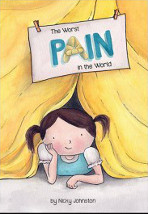
The worst pain in the world by Nicky Johnston
Arthritis Foundation of Victoria, 2014. ISBN 9780992545215
Bella is just like every other little girl with a birthday on the
horizon. She's so excited preparing for it doing all the things that
other little girls do. This is going to be a VERY special day for
her.
On birthday morning, Bella wakes up really excited, like all other
little girls, but unlike other little girls Bella's body is wracked
with pain. Her legs ache, her arms are stiff like rusty robots - it
even hurts to brush her hair! Yesterday she could do anything she
wanted, today she can scarcely move and all those things she was
looking forward to will be impossible. While everyone else comes and
has a fabulous time, she will only be able to sit and watch. For
Bella has arthritis, a disease that strikes at least 1 in 1000 kids
in Australia, particularly girls.
Arthritis is an invisible pain, so while her guests need bandaids,
and ice and sign Ethan's cast on his broken arm, no one sees Bella's
pain, particularly as she tries to hide it because even worse than
the physical pain is the pain of missing out on the fun and NOT
being like all the other girls. Even though she is in too much pain
to eat her birthday cupcakes, to play the games or even open her
presents no one notices until she bursts into tears when Dad takes
the group party photo. That changes things.
Arthritis is an insidious, invisible chronic disease with many
symptoms but it is characterised by pain and tiredness, and
sometimes the meds for it can be as horrible as the disease itself.
And the invisibility wears two cloaks - firstly there are no outward
signs of it, no marks or rashes or bruises or deformities and that
then makes it invisible to teachers, friends and sometimes families.
So often it is not treated as seriously as more obvious things like
cuts, breaks, diabetes, asthma and so forth. Yet it is very real and
debilitating. This book, which is an essential in any collection and
which should be brought to the attention of teaching staff, shines a
light on this cruelty giving it visibility and validity.
But as Bella shows, even worse than the physical pain is the pain of
being different, of being left out, of not being like all the other
kids and so at the end there are suggestions for how schools can
seek help to help students with the disease as well as ideas for
individuals to manage it. Many of these are adaptable to the school
situation such as wearing a badge so that others recognise the day's
pain level and having worthwhile, fun activities available as
alternatives to activity when necessary. Having arthritis is tough
enough without being marginalised because of the pain.
Seek out the Bellas in your school and talk to them, their parents
and their healthcare worker to make the library a welcoming and safe
haven for them on the days when the jumping castle is a bar too
high.
Barbara Braxton