Ford Street, 2016. ISBN 9781925272185
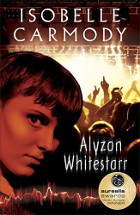
(Age: 13+) Recommended. Alyzon feels like she doesn't fit in her
family. She doesn't have her mother's artistic ability or her
father's musical ability like her brother or sisters. She is just
Alyzon. One day while holding her baby brother, the car boot falls
onto her head knocking her unconscious. After being in a coma for a
month she awakens with new sensations. She can smell feelings, her
hearing and sight are heightened and being touched let her see other
people's memories. At school she becomes friends with Gilly because
she is drawn to her seaside smell, but the boy she has had a crush
on for years smells like rancid rubbish. With these new heightened
senses she uncovers dark family secrets and hidden ambitions that
threaten to her family.
I have loved Isobelle Carmody's other books and was excited to read
this one. I found the story line interesting and easy to follow but
was frustrated with the interaction some of the characters had with
Alyzon. However as the story progressed it is explained why these
characters seemed so one dimensional. The way Carmody used Alyzon's
new abilities to describe the characters gives the reader a new way
through smells to bring them to life. This book could have been
better with a sequel as it left many loose ends. It is a good story
about good winning over evil and how a person can stand up to evil
by staying true to themselves.
Jody Holmes
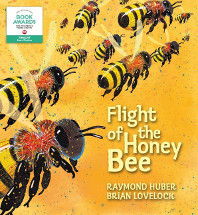
Flight of the honey bee by Raymond Huber
Ill. by Brian Lovelock. Walker Books, 2015. ISBN 9781925126266
(Age: 5+) Highly recommended. Bees, Environment, Honey. Scout's day
spent searching for a new pasture from which to collect nectar to
take back to the hive, ends happily when she finds a swathe of blue
flowers. Through her flight she must avoid obstacles: strong wind, a
hungry blackbird, a sudden rain storm, complete with hail stones and
when arriving back at the hive, she finds that a wasp is trying to
get in to eat the nectar and the eggs.
During her flight pollen in the flowers is attracted to her body and
she then takes this to other flowers, where pollination occurs. She
drinks the nectar from the flowers, using the tip of her tongue,
shaped like a small spoon. Once back at the hive, she dances, giving
instructions to the rest of her family about the place where these
flowers are. They then go out to bring back more nectar.
All the features of a bee and its part in the pollination of plants
is given in this amazing book, where every word is redolent with
meaning.
One in the acclaimed Walker Nature Storybooks series, this
like the others presents a story which is filled with information,
so insinuated within the tale that the reader assimilates these
facts readily. The story sits alongside a non fiction text, usually
towards the bottom of each page. Both texts add to the knowledge of
the reader, both compliment each other and are fascinating to read.
The reader is involved in Scout's story as she avoids threats and
searches for the flowers, while taking in the facts given about the
bees and the hive.
As with others in this wonderful series, a brief index is given at
the back of the book alongside information about the author and
illustrator, with a small piece about the importance of bees and
what we can do to help them survive.
The vivacious water colour and pencil illustrations serve the story
well, giving all readers, young and old, a firm understanding of the
look of the honey bee and making it so endearing without giving it
human characteristics, as the story is followed.
Excellent teacher
notes are given on the Walker Books website.
Fran Knight
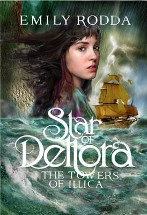
The Towers of Illica by Emily Rodda
Star of Deltora series bk. 3. Scholastic, 2016. ISBN
9781742990644
(Age: 9+) Highly recommended. Britta's dangerous journey continues
as The Star of Deltora sails through dangerous waters, surrounded by
a ghostly presence. This is the most important trade, her final
opportunity to defeat the other contestants and win the Rosalyn
Contest. Aboard the ship, Britta senses constant dangers, there are
enemies on board who wish her harm, putting her life in danger,
hiding key books that explain the secrets of Illica, how to trade
and discover the wealth of the island. Her memories of playing with
Captain Gripp's model ship as a child are extremely useful, as she
hides her two Moons purchases in the cargo hold. After a fierce
storm where Britta is pushed overboard and a daring rescue by Sky
and Jewel, she realises that she does have friends on board.
The mysterious island of Illica is dominated by three towers, each
of the contestants must stay a night with the secretive families who
inhabit these towers and complete their final trades. Of course, all
is not as it seems. After a bath in the bathhouse and a visit to
Suli the Needle, Britta is appropriately dressed and nearly ready
for the evening's adventures. However, when Jewel and Britta choose
to follow Sky who mysteriously disappears into a cave in the cliffs,
they are plunged once more into danger.
Britta is a strong female protagonist; she is brave, fearless,
although a little foolhardy at times, she makes some decisions
rashly and others thoughtfully. Rodda builds intrigue with plot
twists, the ever present wraiths, hints of a new island - The Isle
of Jade and glimpses of Britta's father's tortured existence on the
Island of Tier. The Towers of Illica ends with more
questions than answers, truly Britta's journey seems to be even more
dangerous than before.
Rhyllis Bignell
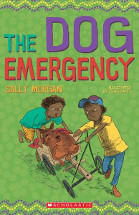
The dog emergency by Sally Morgan
Ill. by Craig Smith. Scholastic, 2016. ISBN 9781742991351
(Age: 6+) Recommended. Brothers Ryan and Dillon live in a small
country town with only one main street surrounded by cattle
stations. On their way home the boys discover a dirty, dusty cattle
dog with a broken leg. They want to rescue the injured animal, but
they know Mum would be very cross with them if they brought it home
on their billycart. She is missing their old dog Buster, who passed
away the week before. There's no vet in their small town and all
medical emergencies for people are seen by Murray the nurse at the
nursing post.
This easy to read story is just right for the reader ready to engage
with chapter books. The plot explores the plight of the dog and the
interesting way the brothers raise money to pay for the vet's bill -
painting Uncle Wilf's shed purple. Will the boys be able to keep
Dusty the cattle dog or will Max Henry take him home to the station?
Sally Morgan's characters are down to earth; she understands family
relationships, Mum's grief over losing Buster and the need for the
boys to have a new pet - it is a big decision. Craig Smith's
illustrations bring the country people to life, Aunty Jo's joey's
pouch, eating a meal by the wood stove, even Farmer Max's
appearance.
Rhyllis Bignell
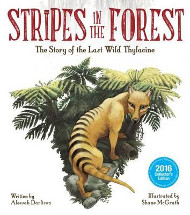
Stripes in the forest by Aleesah Darlison
Ill. by Shane McGrath. Big Sky Publishing, 2016. ISBN 9781925275704
(Age: 5+) Recommended. Thylacine, Tasmanian tiger, Extinction. A
moving tale of the demise of the Tasmanian tiger, the last of which
died in captivity in Hobart Zoo in 1936, is told here through the
eyes of one of the last animals in the wild. A female, she describes
her environment, and how she survives, finding a mate and having
cubs. All seem quite idyllic in the Tasmanian forests, but in the
background hunters can be seen. She looks on as they build semi
permanent shacks and surround them with pelts from a variety of
animals shot and killed in the wilderness. As the story moves on she
and her mate hide in the forest, their stripes used to great
advantage. But nothing can stop the hunters and her mate is killed.
She and her cubs retreat further away from the men but the reader
knows that her species shortly becomes extinct.
A page of information at the end of the book acquaints readers with
the facts about this once widespread animal and will elicit despair
as the children realise that extinction means forever and they will
never get to see this amazing animal.
Several of the illustrations are standouts. The one where the men
shoot their guns in the middle of the book is very moving as it
predicts the annihilation of this species, and the lovely endpapers
with their image of the partly concealed thylacine form a beautiful
set of book ends to a story all Australians should know well.
Fran Knight
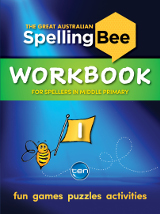
The great Australian Spelling Bee workbook for spellers in Middle Primary
Macquarie Dictionary Publishers, 2016. ISBN 9781925479485
(Age: 8 - 10) Recommended. The extremely popular Network Ten reality
show 'The Great Australian Spelling Bee' generated a large following
and raised the profile of Spelling and Literacy in Australia.
Remarkable young students with a great depth of knowledge about the
origin and definition of an unbelievable array of quirky, obscure
and Australian words proved their amazing ability. Network Ten and
Macquarie Dictionary Publishers have released this workbook for
spellers in the Middle Primary years.
The spelling bee image buzzes across the pages, introducing a
variety of enjoyable activities including finding a word, shrinking
words, 'what am I' definitions and synonym staircase.
This workbook starts with all about me which asks the child to enter
their favourite book, languages spoken and favourite word. The
activities are straightforward, easy to complete and each begins
with a clear set of instructions. A great holiday activity book,
there's something there to challenge the young spellers of
Australia.
Rhyllis Bignell
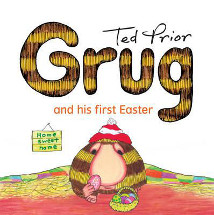
Grug and his first Easter by Ted Prior
Simon and Schuster, 2016. ISBN 9781925368246
(Ages: 4 - 6) Easter. This is not a traditional Easter story, but it
isn't one just about Easter eggs either. It is somewhere in the
middle, but with quirkiness unique to the Grug series.
However, there are some strange elements. Cara the snake's first
line is 'Soon be Easter, you might get an Easter egg'. This
ungrammatical sentence structure (is it because she is a ssssnake?)
does not fit with the rest of the story. In addition, when Grug asks
Cara about Easter, she explains that 'Easter is the time someone
special went away forever' and that people give eggs to celebrate
being born again. While the book avoids involving itself too deeply
in the religious traditions of Easter, it is inevitable that young
children are going to ask 'Who went away?' The story itself sees an
Easter bilby leave a small basket of eggs beside Grug's bed, most of
which he thoughtfully hides in the forest for his bush friends to
find, providing a nice message about giving rather than receiving.
He also creates a collage out of the egg wrapping paper, which might
give children inspiration for similar creative pursuits. It becomes
a little strange again at the end as he dreams about being born
again and having long legs and big ears; but when he wakes he is
just the same. This is a bit of a hodgepodge of a story that tries
to include multiple aspects of Easter, but it might leave children
asking more questions than you care to, or know how to, answer.
Nicole Nelson
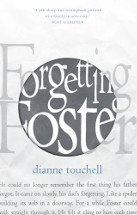
Forgetting Foster by Dianne Touchell
Allen & Unwin, 2016 ISBN 9781760110796
(Age: 11+) Highly recommended. Alzheimer's disease. Families. When
Foster's father begins to forget things, the family jokes about it,
but soon, little notes appear on the cupboard reminding him of
things he needs to do, and some of the customary routines within the
house change. Foster is told little but realises that his father
needs more attention than before. And when he loses his job and Mum
has to take on more shifts, then things change considerably. Dad
runs away from home when Foster is caring for him. Miss Watson from
next door comes to sit them, and both Foster and his Dad have no
liking for her. When she strikes Dad, she is sent away but Mum still
has to deal with him, admitting that sometimes she feels like
hitting him herself. The disease is ever present in Foster's life,
his aunt Linda is often there, despite the two women not liking each
other. Things escalate until Mum is forced to ask for help. She has
tried to cope alone but now she must admit that his dementia is
beyond her. The strangely comic scene when the two social welfare
officers come had me laughing out loud, but the effect of their
visit means that mum now has some respite.
Readers will sympathise with the whole situation seeing Fossie
trying to understand his father's decline and his mother's
situation. She is coping from day to day, not wanting to look at
things in the long term, hoping that things will improve. She
declines offers of help, wanting to care for her husband herself,
but pushes Fossie away in the process.
This book is an amazing look at a disease which many more children
will see as the population ages, and for some reason, younger people
are being afflicted. Not only is it a most readable story, but gives
readers a raft of recognisable events, symptoms and words associated
with the disease to learn. Fossie learns that his father is no
longer the man he was and needs to learn how to adapt.
Fossie's attempts to make sense of his world parallels those of his
father as he goes from forgetting, needing a locked front door and
then violence in a short period of time. Touchell recreates this
family so sympathetically that we are drawn into the world wondering
how we would react, how we would cope. This is a masterful story,
beautifully told.
Fran Knight
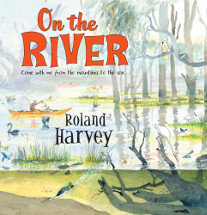
On the river by Roland Harvey
Allen & Unwin, 2016. ISBN 9781760112455
(Age: All) Highly recommended. River Murray. Conservation. Humour.
Each year as the snow melts in the Snowy Mountains of eastern
Australia, small tributaries join other small streams, bubbling
together down the mountains until joining to become the Murray
River. Roland Harvey and his pelican friend traverse the river from
its source to the sea in South Australia, and along the way inform
the readers about the flora and fauna, man's uses of the river, the
craft which sail on her, the people and towns which live on the
banks, the industries, irrigation, locks and weirs. Sometimes the
view is beneath the water, sometimes we are shown the river from the
bank, sometimes a bird's eye view is given, but whatever perspective
is shown, the pages are filled with information.
I love the double page spread showing the bottom of the river: a
quiet wetland, where fish swim undisturbed, a Murray Cod hides in a
tree root, some birds dart for a feed while a fisherman sets up on
the bank and a small canoe winds its way between the trees. Along
the bottom of the page some of the things you might find on the page
are given with their names, urging the reader to find them. Over the
page is the spectacular Echuca Wharf, built to still be used at
times of flood, and we see more examples of human activity on the
river, with paddleboats, canoes, power boats, tinnies and houseboats
cluttering the pages. The endpapers give a view of the river from
its source to the sea, and invite readers to read every word as they
follow its journey.
Small hints are given along the way of the river's overuse, of its
degradation, particularly in the pages about the Darling River
joining the Murray. And some text is devoted to the Aboriginal use
of the river, its history and some less well known stories. All of
this is told alongside Harvey's very recognisable drawings,
particularly the people as they go about their lives along the
river, inviting all eyes to peer into the world presented, and
marvel at how the river and its flora and fauna has survived. The
book is a marvelous addition to the range of books promoting the
conservation of this river inviting everyone to be more aware of its
important place in our world.
Fran Knight
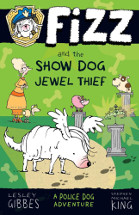
Fizz and the show dog jewel thief by Lesley Gibbes
Ill. by Stephen Michael King. Fizz series bk 3. Allen and
Unwin, 2016. ISBN 9781760112882
(Age: 7+) Highly recommended. Dogs. Thieves. Police. Fun and games
abound with Fizz the police dog in the third book in this very funny
and appealing series starring Fizz, the very cute little furball and
his friends. This time there is a jewel thief at the Dog Show who is
after the winning prize, a sparkling tiara. Fizz goes undercover as
a show dog, styled exquisitely with curls and bows and with a show
name, Angel, to impress the judges. He has to follow a number of
clues before he is able to work out just who the thief is and how
the tiara is hidden away before it is moved off the premises of the
show.
Fizz is a most appealing little character - he is brave and clever
and loyal to his friends and is happy to stand up to the bully
Amadeus, whose snappy dialogue provides much of the humour in the
book. The mystery is subtle enough to draw in the inquisitive reader
who likes to follow clues but there are some surprises on the way!
A lot of fun can also be had from King's illustrations of the Dog
Show, and the different breeds are depicted all beautifully styled
in bows and jewellery. The reader will immediately sense that King
just loves to draw different dogs in different disguises and
costumes.
This is a wonderful series that will appeal to emerging readers,
with its short chapters, intriguing plots and engaging characters.
Pat Pledger
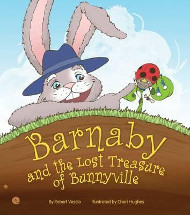
Barnaby and the lost treasure of Bunnyville by Robert Vescio
Ill. by Cheri Hughes. Big Sky Publishing, 2016. ISBN 9781925275643
(Age: 4+) Rabbits. Environment. Barnaby had collected many seeds
from his travels and wanted to grow a lush vegetable garden, but the
mayor had decreed that no one was to grow anything in the village.
So Barnaby decided to do what rabbits do, dig. Surprisingly a few
days later the mayor found an old treasure map showing that there
was something to be found in the earth near the village. Soon all
the rabbits were out digging, giving Barnaby all the holes he needed
to plant his seeds.
Rain the next day ensured that the seeds sprouted and within a few
seasons, Barnaby was eating yummy fresh apples and taking the spare
to the market. Here the mayor remarked on the wonderful fruit and
Barnaby told him that this was the lost treasure of Bunnyville.
This could be used as an introduction to talking about fruit and
vegetables, or where these things come from, encouraging a school
group to set up their own garden.
Fran Knight
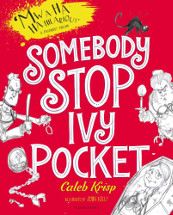
Somebody stop Ivy Pocket by Caleb Krisp
Ill. by John Kelly. Bloomsbury, 2016. ISBN 9781408858677
(Age: 9+) Recommended. Caleb Krisp's quirky heroine returns in Somebody
stop Ivy Pocket. She is now the adopted daughter of Ezra and
Mother Snagsby, owners of a thriving business that offer generous
discounts for pre-measured coffins. Ivy's role is to read a
suitable, sombre funereal poem for the nearly departed and leave
her parents to complete the transactions. Ivy is still guilty over
the loss of her friend Rebecca and is helped by mysterious
librarian, Miss Carnage, in her quest to find her whereabouts. Ivy
must also protect the Clock Diamond from the evil Miss Always, who
seems to be skulking around every corner!
Ivy's conversations are filled with irony, sarcasm and witticisms;
she marches through her difficult life with aplomb. Being locked in
her room is not a challenge, just the start of another adventure.
She meets problems head on and always seeks to find the truth, even
searching for the Snagsby's long lost daughter Adelaide. When the
beautiful heiress Estelle asks Ivy to investigate the mystery behind
her brother's death, of course she accepts the challenge.
Here is another fast-paced plot, filled with spies and villains, set
against the backdrop of Victorian England, with dusty drawingrooms,
solitary graveyards and a workhouse where Ivy is locked up. Magic
and mystery abound, fate and fortune follow the brave heroine. This
second book draws closely upon the threads of the first book Anyone
but Ivy Pocket; they must be read in order. This narrative takes a
little longer to engage with and is suited to a more confident
reader who is happy to be drawn into the multi-layered plot.
John Kelly's fun black and white cartoons add a depth and insight
into the difficult situations and quirky characters that Ivy Pocket
faces.
Rhyllis Bignell
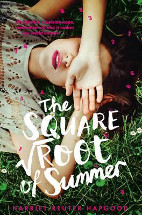
The square root of summer by Harriet Reuter Hapgood
Macmillan 2016. ISBN 9781509808281
(Age: Adolescent) Grief. Love. Quantum physics. Time travel. Family.
Gottie's mother died when she was born and she lives with her German
Dad and older brother, uni student Ned, in a small seaside village in
Norfolk. Her charismatic grandfather, Grey, had been the one to hold
the family together until his sudden death and 17 year old Gottie
has found it difficult to adjust, becoming withdrawn and isolated.
'...ever since the day Grey died, talking exposes me. As though
I'm the opposite of invisible but everyone can see right through me'
For Grottie maths and physics offer answers to fundamental
questions she has about the world and she starts to research
spacetime, black holes, and wormholes for a pre-university essay
suggested by her teacher. Trying to figure out quantum physics
combined with a wish to wind back time to before her grandfather
died starts to have some disconcerting effects. In revisiting last
summer she gradually puts together a new perspective on the events,
including falling in love and having sex with her brother's best
friend Jason who rejected her when she needed him most after Grey's
death. Working through her memories, reconnecting with her friend
Sof and the reappearance of her childhood best friend Thomas who has
been living in Canada, helps her to properly grieve, to fall in love
again and to grow closer to her family. The narrative weaves
together past events and alternate realities which can be confusing
but Gottie's relationship with the other characters builds
continuity and ultimately it all seems to fall into place
organically resolving a complex story of grief, growth and love.
Essentially a first love romance, it will appeal to adolescent girls
looking for a bit more complexity. Marisha Pessl's Special
topics in calamity physics has similar appeal.
Sue Speck
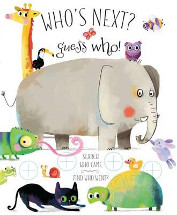
Who's next? Guess who? by Anton Poitier
Ill. by Sophia Touliatou. The Five Mile Press, 2016. ISBN
9781760403133
(Ages: 3-5) Recommended. This is another search and guess book
similar to the previous Five Mile Press publication Who's had a
poo? However, this one has softer, more detailed
illustrations, and is more pleasurable and appealing than the other
offering. The structure of the book is a little I went walking,
with a new animal joining the group on each page; however, on each
page one of the animals also leaves the group. The reader is told
who joins the group each time ('A silly seal came next, with a
scaredy-spider') but is only given clues (you can see a portion of
the animal at the side of the page) about who has left and who will
come next. Each page prompts, 'Who left? Guess who came next?' So,
in this way, the group grows until a crocodile comes along. Who
left? Everyone did! As with Who's had a poo?, all the
animals are also labelled and pictured on the final endpapers, so
children can name them. This is a simple, but effective interactive
book for parents and children to share. It encourages conversation
and careful observation, and will test the memory and concentration
of parents as well as children!
Nicole Nelson
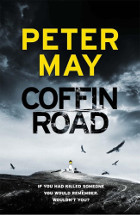
Coffin Road by Peter May
Quercus, 2016. ISBN 9781784293093
(Age: Senior secondary to adult) Highly recommended. Crime fiction,
Scotland, Bees. Washed ashore on the island of Harris, a man has no
idea of who he is or why he is where he is. He can recall being in
the sea and knows that he has a head wound, but beyond that,
nothing. He struggles up the beach and heads towards a cluster of
houses, and realises that one is his. Here he searches the place for
some clue of his identity and finds nothing. A woman who comes into
his house and later into his bed, obviously knows him intimately and
when they follow the dog the next day up the hills from his house,
they stumble over a group of beehives. He finds small pieces of
information grabbing his attention but none is able to create a
proper memory of who he is and why he is there.
When a body is discovered on the island off shore, an island he has
been seen at, DS Gunn takes him in for questioning, but he stalls,
not willing to say that he has no memory. Meanwhile in Edinburgh, a
young girl works out that her father, believed to have suicided two
years ago, is alive and sets out to search for him. She knows that
his research student is near Harris and thinks she may be able to
find her father through him. Along the way she meets her father's
old friend who tells her about the research that her father was
involved with before his 'suicide'. He and several others were
researching the effect of neonicotinoids used in crop sprays upon
the bee populations around the world, linking their decline to the
effect of these sprays on their memories. Without remembering where
to find pollen, the bees die, which means that the pollination of
our major food sources will not occur and so we will die.
This research is being undermined by the global spray manufacturers
and so several men, after losing their positions in laboratories
funded by these companies, have decided to do the research in
secret.
Karen in searching for her father stumbles into the secret research
and so the strands come together, of Karen looking for her father,
of the secret research, of the death on the island.
DS Gunn is a wonderful ploy to the amnesiac, asking questions,
liking the man but aware that he could be a killer, giving him the
opportunity to work things out. The exciting last chapter where all
the threads come together on a bleak night off Harris, is
mesmerising as May's description of the weather and the surrounds
grabs attention. His presenting of the theme of the suppression of
data by big companies is mind boggling, and a short trawl using
Google will add to the readers' knowledge.
Fran Knight