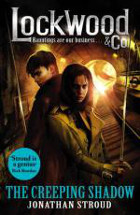
Lockwood & Co. bk 4. Corgi Books, 2016. ISBN
9780552573153
(Age: 11+) Highly recommended. Fantasy. Ghosts. Horror. The fourth
in this fabulous series about a group of intrepid ghost-hunters,
sees Lucy hiring herself out as a freelance operative, after leaving
Lockwood & Co. She had seen in a vision that she would be
responsible for Lockwood's death and was determined to keep away
from him. However a surprise visit from Lockwood convinces her that
she can do one tough assignment with them finding the Source of the
legendary Brixton Cannibal. When the talking skull is stolen and
Lucy's life is threatened, she goes to Lockwood and Co for sanctuary
and from there the team becomes involved in the sinister activities
of the Rotwell and Fittes Agencies.
The creeping shadow does not disappoint. Lucy is an audacious girl,
who goes about the business of listening to and securing ghosts in a
very courageous way. The loss of the talking skull leads to
complications and she and the dashing Lockwood as well as the rest
of the team follow clue after clue trying to retrieve it.
There are some dark moments as they retrieve the Source of the
Brixton Cannibal, as Stroud describes what the Cannibal did to his
victim, but this is alleviated by the usual humour that pervades
Stroud's writing. The feelings between Lockwood and Lucy are only
slightly touched upon, but are an important thread throughout the
book as Lucy tries her best to ensure that she doesn't harm
Lockwood.
Some exciting moments in the final chapters of the book will have
the reader on the edge of the seat, and a cliff-hanger ending will
ensure that the next book is read as soon as it is published.
This is a series that is scary, funny and highly addictive.
Pat Pledger
Literature to support the Science curriculum Foundation - 7 by Fran Knight and Pat Pledger
Pledger
Consulting, 2016. ISBN 9781876678470
Teacher Reference.This publication is an outstanding tool for the
study of science for these year levels.
Fran Knight and Pat Pledger are committed to providing insightful
and intelligent reference material for use in the classroom. This
title is part of the LinksPlus support program and highlights the
excellent role that fiction can play in supporting the study of
Science in the classroom. Too often fiction is overlooked as
providing an invaluable addition to the understanding of concepts in
many subject areas. For some individuals, reading a picture book
related to a scientific topic, may be the means of acquiring more
insight to that topic. A good example is the value of including
Katrina Germein's Big Rain Coming, and John Heffernan's Two
Summers in teaching and 'experiencing' the fickle nature of
Australia's climate. Fiction and some non-fiction titles are listed
for developing Science Inquiry skills, supporting each of the four
Foundation Sciences and addressing the topics for each of the
primary school years. An excellent index is included too.
Julie Wells
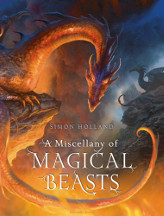
A miscellany of magical beasts by Simon Holland
Ill. by David Wyatt and Kate Walker et al. Bloomsbury, 2016. ISBN
9781408881958
(Age: 7+) Highly recommended. Magic, Mythology, Legends, Monsters. A
coffee table book with the most glorious of illustrations will not
be out of children's hands for long. An enticing table of contents
tells the reader that inside they will find information about a
range of mythical beasts, including Harpies, Basilisks, the Chimera,
Pegasus as well as Giants, Werewolves and Elves. Many are not well
known so a double page spent on each is very welcome and most
informative. Opening to the section on Merpeople, the information
gives readers an idea of this mythological being from the
perspective of several countries. In Japan they are called Ningyo
and are said to be the bringer of bad luck, some European stories
tell about Melasine, and in Canada the First People have a story
about a half fish half person who creates storms, while many people
have stories about the Selkie. The double page gives a fascinating
overview of this being with rather touching illustrations by Helen
Ward. Another page which I was most interested in is the one about
the Basilisk. I have always associated this term with a hissing
sound, but I found out that the Basilisk is a serpent with the head
of a cockerel, whose stare can kill.
The slavering mouth of the Cerberus greeted me as I turned a page,
and so I had to stop to read about this ferocious animal, noticing
that the frightening illustration by David Demaret shows the animal
with two heads. I read on, finding that this animal has three heads
(I needed to flatten the book more) and is the keeper of the
Underworld in Greek mythology. Over the page more information is
given about other Gatekeepers, Ammut in Egypt, Yama's hounds in
India and Garmir in Norse mythology.
At the end of the book is a glossary of terms, ending off an
engrossing read about all sorts of beings accompanied by luminous
illustrations which will capture the interest of all who read the
book.
Fran Knight
I don't want to go to bed by David Cornish
Angus & Robertson, 2016. ISBN 9781460750582
(Age: 4+) Highly recommended. Bed time, Family, Problem solving. The
age old problem of getting a child to go to bed is given a new lease
of life in David Cornish's very funny picture book.
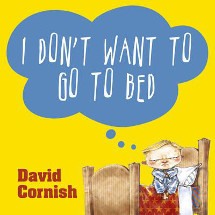
Who could do anything but laugh out loud at Cornish's drawings of
the cross looking boy on the front cover, with sleepy eyes telling
the reader what he wants. Not to go to bed! Opening the book the
reader will instantly recognise all the delaying tactics used by all
kids at bed time. Rollo knows that bed time means all those things
he does not want to do: having a bath, getting into his pyjamas,
cleaning his teeth then finally getting into bed. But once there,
more delaying tactics appear as he demands a story then food, and a
drink then he needs to go to the toilet. At each demand Cornish
paints a wonderful scene full of interest to delight the younger
reader which shows what Rollo has in mind. Finally f course, there
is a monster beneath his bed which must be dealt with, until finally
he falls asleep.
Younger readers and adults alike will sympathise with Rollo and his
long suffering parents at this recreation of the nightly routine. It
is at once familiar, but Cornish' illustrations give it all a
magical twist.
The four fantastic images of the storyteller, the feast, the
enthrone toilet, the fountain and finally the monster are wonderful
images sure to delight the readers as they search out the many
intricacies shown. A rib tickling sequel to the equally funny, I
don't want to eat my dinner (2014).
Fran Knight
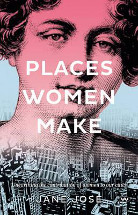
Places women make - Unearthing the contribution of women to our cities by Jane Jose
Wakefield Press, 2015. ISBN 9781743053942
(Age: 12 years +) As part of the busy city lives most Australians
lead, there seems to be reference made each day by the media to a
new urban development, or the Government of the day announces an
innovative urban project. Jane Jose considers the role that women
may have played in the design of these cities and suggests that they
need to be playing a more significant role in the dynamics of the
future urban environment. Jose focuses on the familiar and not so
familiar faces of the past and present: woman such as Elizabeth
Macquarie, who greatly influenced architectural standards in her
day; Jane Griffin, the wife of Hobart's Governor, who gave to the
city Australia's first botanic garden; and Clover Moore, the dynamic
reformer of current inner city Sydney.
Informed and readable chapters highlight the women who created
places with a womanly flair, who brought about new ideas through the
influence they had with husbands in positions of power, and women
who fought for heritage and cultural understanding. These are women
with passion and imagination but also common sense and compassion.
This is a very interesting and enlightening book, sure to provide
inspiration to others and promote a better understanding of the
importance of good city design.
Julie Wells
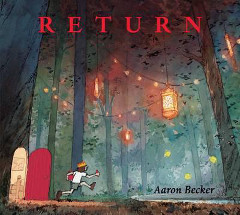
Return by Aaron Becker
Walker Books, 2016. ISBN 9781406368437
(Age: 6-60) Highly recommended. Return concludes Aaron
Becker's picture book trilogy that began with the 2014 Caldecott
Honor Book Journey. His rich visual narrative once more
explores a child's escape from their everyday life. The fantasy
world in Return blends artistic and architectural styles,
turreted palaces, fantastic flying creatures and extraordinary
underwater scenes drawn from diverse cultures and imaginative
worlds. Becker's dramatic pen, ink and watercolour paintings are
intricate and multilayered; there is something to observe for all
ages.
This story begins with a young girl escaping her dark, boring life
by drawing a red magic door on her bedroom wall and entering a magic
world. Her busy father finally notices her red kite by his desk and
follows her into the colourful kingdom beyond. He soon discovers his
daughter with a neighbourhood boy and all three are soon drawn into
a dangerous quest. Using their magic markers to fashion a dragon for
escape, they become immersed in exciting and perilous adventures,
requiring their imaginations to survive. The dad becomes as invested
as the kids in vanquishing the bad guys. After an amazing journey, they return to the magic door, where the girl expresses her love for her father with a big hug. The red kite flies high above the bright city in contrast to the darkened empty house and presents a poignant ending.
Aaron Becker's wordless picture books are wonderful tools for educators. They encourage learners to create their own narratives, write literary texts, and explore the fantasy genre - the narrative arc, characterisation and experiment with their own artworks. Return is a wonderful book for families to share as well.
Rhyllis Bignell
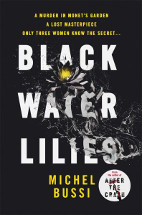
Black water lilies by Michel Bussi
Translated by Shaun Whiteside. Weidenfeld & Nicolson, 2016.
ISBN 9781474601757
(Age: 15+) Highly recommended. Mystery. Art. The beautiful setting
of Giverny, the home of Claude Monet was what first caught my
attention, and once I started reading, the complexity of the story
was totally engrossing. Jerome Morval has been found dead in the
stream that runs through the gardens. He has a postcard of Monet's
painting of Water Lilies with the words 'Eleven years old. Happy
Birthday' in his pocket. Entwined in the mystery are three women: an
old widow who watches everything, a beautiful school teacher and a
young girl who is an exceptionally talented artist.
The setting of Monet's garden is beautifully depicted, and the
reader has a wonderful time imagining not just its wonders, but also
the havoc that constant tourists can have on the small French
village. The reader also gets to learn much about art, art awards
and art collections which is a boon for anyone who enjoys learning
about famous paintings and artists. The theme of the painting of
black water lilies winds its way through the whole book, making its
presence a second mystery in addition to the murders.
The mystery itself is very complex but the lives of the interesting
characters seem so real that it is easy to become totally immersed
in the story. And the final revelations were certainly a surprise to
me, making the story even more engrossing as I had to go back
through all the clues and think about all the implications of the
murder.
This is an outstanding detective story, with a wonderful location
and exceptional prose. It is one not to be missed by lovers of the
mystery genre.
Pat Pledger
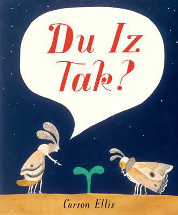
Du iz tak? by Carson Ellis
Ill. by Carson Ellis. Walker Books, 2016. ISBN 9781406368413
(Age: 3+) Recommended. Language. Insects. Seasons. Read aloud.
Insects will never look the same again after readers have wandered
through this inviting book, eagerly sharing the language that the
insects are given to speak. From the title, to every word on every
page, children are encouraged to work out what is being said, and it
is not that difficult for eager minds to do this, imagining what is
being said and developing their own responses.
The amazing changes in a garden are explored with insects speaking
to each other, many asking questions of the other about the garden
they are in and what is happening in it.
Over the whole year, many things happen in the garden: a caterpillar
strolls to the end of a stick where it becomes a chrysalis,
eventually becoming a moth which has one bright night to find a
mate, a small shoot appears above the ground and then grows into a
plant which flowers and then dies when the snow falls, only for the
seedlings to appear again the following year, ladybirds fly into the
garden along with small insects, ants, spiders, birds and beetles,
mushrooms rise up and then fall away, flowers appear then die, and
all the while the insects make use of the plant in the centre of the
garden, using their unusual language.
The arresting and highly detailed illustrations make full use of the
white of the page, with the same plant and stick placed on every
page, showing how they change over the year. Readers will have fun
following images as they change, replicating the changes made
through the seasons while reading the book aloud will add another
level of humour to the classroom. A wonderful introduction to a
class garden encouraging children to look more closely at what
surrounds them and how things change over a year.
Carson Ellis' first novel, Home
appeared on the New York Times bestseller list and her work can be
viewed on her website.
Fran Knight
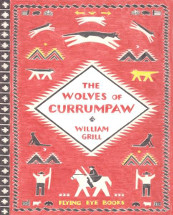
The wolves of Currumpaw by William Grill
Flying Eye Books, 2016. ISBN 9781909263833
Wolves. Hunting. Conservation of wildlife. New Mexico
History. At the turn of the century in New Mexico, European settlers
not only clashed with the native population but they also brought
farming methods which displaced native animals. Wolves were
particularly targeted for their attacks on stock. In the contest
between man and beast it is inevitable that the wolves were hunted
almost to extinction using cruel methods like trapping and
poisoning. One of the last was a legendary wolf which came to be
known as King Lobo. Wolf hunter and naturalist Ernest Thompson Seton
is called in, eventually trapping his cunning prey, but at the last
moment he questions the killing of such noble animals. In this
graphic retelling of Seton's short story, Lobo: The king of
Currumpaw 1898, William Grill beautifully puts the story in
perspective with a lovely sense of place and time. The pastel
illustrations graphically tell the story both in series of small
pictures and double page spreads. The text lightly links the images,
inviting sharing the large format book and reading aloud; there is
much to look at while listening to the story. Seton's legacy is that
his changed attitude led to him devoting the rest of his life to
conserving American wildlife especially wolves. His inspiration,
nearly 100 years later led to the reintroduction of wolves into
Yellowstone National Park.
Younger readers will find the pictures easy to follow but may need
help with the text. Older readers may find a lot to discuss in the
evolution of man's relationship with wild animals and how attitudes
may be changed over time and through experience. There is a lot to
learn too from the graphic storytelling in the illustrations.
Sue Speck
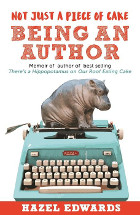
Not just a piece of cake, being an author by Hazel Edwards
Brolga Publishing, 2015. ISBN 9781922175809
Recommended for budding writers, adult fans and anyone who loves to
read autobiographies. Memoir by author of best-selling There's
a hippopotamus on our roof eating cake and author of
over two hundred picture books and novels. Hazel Edwards' writing
journey has taken her from Nepal mountaineering with spirited women,
walking the Milford Track in New Zealand, to Antarctic adventures.
Her approach to life's challenges shows her spirit of adventure and
her passionate desire to encourage readers from a very young age.
She loves to share her love of literature with all ages.
What a delight to read all the humorous hippo antics and adventures.
Imagine being stopped by the police with a large stuffed toy hippo
strapped in the passenger seat. Many little grubby hands cuddling
the animal have required some very ingenious cleaning solutions.
Hazel's one hundred random hippo memories are funny, poignant and
show just how much the character is loved around the world. A
country mum learnt to read sharing them with her Prep child whilst
the Australian Government gifted a set of books to Princess Mary on
the birth of her daughter. These much-loved books printed in
Braille, shared in Auslan, became plays and even a film.
An important part of her writing career is publicity, packed days
sharing her stories with parents and toddlers, kindergartens and
primary and secondary schools. The carefully planned days are filled
with author talks, book signings, question time - just how much does
an author earn, and creative writing sessions. Book Week
is one of the busiest times of the year, a logistical challenge,
sometimes a navigational dilemma as well. Losing her voice is a
common occurrence and Hazel even provides tips to soothe a sore
throat - bananas perhaps.
This autobiography is an enjoyable read and provides motivation and
gives insight into the life of a busy author.
Rhyllis Bignell
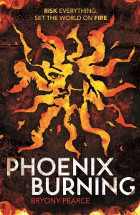
Phoenix burning by Bryony Pearce
Little Tiger Press, 2016. ISBN 9781847156709
(Age: Young adult) Highly recommended. Themes: Revenge; Junk-Punk;
Dystopian; Religious cults; Survival; Challenge; Trust and betrayal.
The first book in this series, Phoenix Rising, introduced
the reader to the world of post-cataclysmic environmental disaster,
where the ocean is a seething mass of caustic junk, roiling in the
corrosive waters that take life rather than support it. In Phoenix
Burning, the second book of the series, we join the junk pirates as
they variously fight one another and work together to solve a
mystery and to recover the missing component to enable their
salvaged energy system to become functional. In the process Toby and
Ayla must work through their sabotage and distrust of each other to
complete the task that they cannot achieve alone. This takes them
into the enclave of the sun-worshippers - a cult that engages in
bizarre rituals as part of their religious fervour. They must work
together to steal what they need, while being involved in complex
challenges, where loss means they become silent monk-like devotees
and winning means they become blind but 'holy'. (This is a little
like a Hunger Games fight to avoid death and where winners bear the
burden of their win.) Toby and Ayla's relationship is always going
to be challenged because of their family history, but Pearce has
cleverly woven a tale where we are able to detect a growing but
fraught dependence on one another and a hint of closeness, but with
trust in jeopardy.
The winner of this text is the very different setting, where
normality has been so badly damaged by environmental disaster. The
ocean is a chemical wasteland, detrimental to life. The problem this
has created for the world and the survivors has created a fantasy
environment that is unlike any other. Sailing on a pirate ship where
everything is cobbled together using junk salvaged from the sea or
the spoiled shores allows for some impressive imagination leaps.
Pearce writes in a compelling and exciting way and from the prologue
we realise that there is danger to follow.
This is a book that can be highly recommended to YA readers (male
and female), particularly those who have enjoyed Hunger Games
and other dystopian literature.
Carolyn Hull
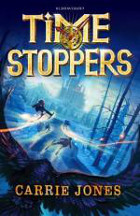
Time Stoppers by Carrie Jones
Bloomsbury, 2016. ISBN 9781408872581
(Age: 9-11) Recommended. Annie Nobody's life is truly sad; she has
survived placements in eleven foster homes, and now she is placed
with the Wiegles in their filthy trailer with their pack of dogs.
Her carers treat her like a slave and make her sleep outside into
the snow, where she is forced to sleep with the dogs. Things become
worse for her, when an evil force chases her through the forest. In
the same town Mount Desert, twelve-year-old Jamie Alexander's family
life is also difficult. His grandmother and father are really
trolls, waiting for him to turn thirteen because trolls love to
feast on human's bones and brains!
At the very last minute, Annie and Jamie are rescued, then swept
away on snowmobile-hovercraft to the magical city of Aurora. Their
rescuer is a dwarf called Eva, who is rather opinionated and sassy.
This supernatural place is filled with magical creatures protected
by a woman named Miss Cornelia. Annie Nobody has a purpose, a
special role - she is a Time Stopper with magical powers. The
townsfolk expect her to save them from the evil Raiff.
Carrie Jones' novel is one of darkness and light, of action-packed
adventures, fantastical creatures and is filled with a range of
quirky characters. The protagonists rise up to meet the challenges,
as they begin to draw on their inner strength, their resilience and
start to believe in their own capabilities. The story ends with a
cliff-hanger and sets up the beginning of the Time Stoppers
series. The exposition and rising arc of the narrative are extremely
dark and confronting, and this may be of concern to a younger
reader.
Rhyllis Bignell
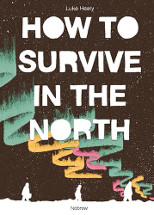
How to Survive in the North by Luke Healy
Nobrow, 2016. ISBN 9781910620069
Themes: Arctic exploration, survival, Inuit/Eskimo women,
resilience. This graphic novel interleaves three stories, two based
on factual accounts of expeditions to the arctic and one
contemporary fictional thread about a disgraced academic who happens
to find the arctic accounts in the university archives. All three
are about poor decision making, endurance and survival by taking
control and making the best of a bad situation. The book opens at
the lowest point of each storyline, differentiated by colours which
help the reader throughout the book. The two arctic exploration
accounts are linked by Wrangel Island somewhere between Canada and
Russia (a map would have been informative). The first captained by
Bob Bartlett who heroically trekked over the ice to Russia to get
help when their ship was crushed and the crew marooned on the
island. The second expedition 7 years later was to claim the island
for Canada. Again the group was trapped on the island and the Inuit
seamstress, Blackjack, was left to look after an injured member of
the party (who later died) while the others went to get help. Her
story makes this worthwhile reading, with only a cat for company she
endures extreme hardship, teaching herself to use a gun to hunt for
food, resilient even though she has no idea if anyone knows she is
there. The account of the first expedition was less well articulated
and the fictional thread has the complication of the academic being
disciplined for having had a homosexual relationship with a student,
not something a young reader may understand. Older students might
find some life messages in these flawed characters and the book is
interesting for its graphic design and accessible illustration
style.
Sue Speck
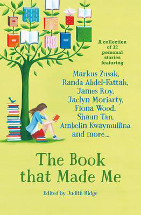
The book that made me edited by Judith Ridge
Walker Books Australia, 2016. ISBN 9781922244888
(Age: 14+) Although the publishers suggest an age range of 14 up I
feel that it is
going to be adults who will enjoy this most. Judith Ridge has
compiled a
wonderful collection of anecdotes from thirty-two of Australia's
leading
storytellers. Each describes the impetus for them becoming readers
and
indeed writers with many engaging childhood memories or
reminiscences of
that moment when a book transformed the reader.
Some of us have been gobbling up books since the age of three but
others
have come later and by various paths. For booklovers this is a
delightful
retreat into the thoughts of other avid readers. And it is not just
the
aspect of reading that I found fascinating. For instance, when I
read Simon
French's piece (I have always admired his writing) I felt
immediately
connected when he told of his father being a wireless operator in a
Lancaster bomber based in the north of England - as was my dad. I
wondered
if the two fathers had known each other and then marvelled that both
of
them survived what was the most dangerous role in Bomber Command.
Of course it was also resonant to read of shared 'book loves' such
as Kate
Constable describing her passion for Tom's Midnight Garden
(Phillipa
Pearce) - these are the threads that bind us together as humans.
Alternatively, reading of someone's great love of a book such as
Emily
Maguire's choice - Grand Days by Frank Moorhouse - which
made me think 'I
should try that out.'
Some of these pieces are amusing, some serious, some lyrical, some
more
prosaic but all are truly engaging. Shaun Tan's quirky illustrations
between each offering are both funny and apt.
Some of our girls in secondary book club might enjoy this but I have
no
doubt that it will be most popular with our avid reader staff. And
aside
from the joy of the reading, knowing that the royalties will go to
the Indigenous
Literacy
Foundation is a huge incentive to add this to your collection.
Sue Warren
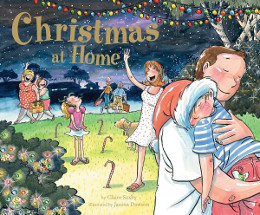
Christmas at home by Claire Saxby
Ill. by Janine Dawson. Five Mile Press, 2016. ISBN 9781760402952
(Age: 4+) Highly recommended. Christmas. Diversity. What a lot of
fun is to be had when the author and illustrator get together to
make an Australian version of O Christmas Tree, O Christmas Tree.
The whole family gets together to decorate the tree, filling the
branches with baubles, and wrapping up presents. Christmas lights
are highlighted when the family goes on an excursion and drives past
houses that have huge Christmas lights decorating their gardens. A
stroll through the neighbourhood also shows the myriad of Christmas
lights in neighbours' gardens, with Santa on the roofs of houses and
toy kangaroos waving from the grass. All culminates in a shared
feast with relatives and neighbours bringing loads of food for the
Christmas lunch, everyone sharing presents and then home to bed
exhausted.
The narrative will have enormous appeal as children and adults will
be able to sing along with the story or could have fun making up
their own verses. The pages are filled with Christmas cheer, with a
warm and loving family, friends and neighbours gathering together to
rejoice in sharing during the festive season.
I love the illustrations by Janine Dawson. Each page is filled with
happy and diverse individuals all enjoying themselves so much and
children will be able to recognise the familiar traditions that have
evolved in Australia - the lights on houses, the long table set up
in the backyard and the children going to sleep in a tent on the hot
summer's night.
This heart-warming Aussie version of Christmas is sure to be welcome
in all libraries and classrooms.
Pat Pledger