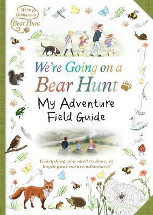
Walker Books, 2017 We're going on a bear hunt: My adventure field guide. ISBN
9781406375954 We're going on a bear hunt: My explorer's journal. ISBN
9781406375961
(Age: 8-12) Highly recommended. These two companion titles based on
the We're Going on a Bear Hunt animated film offer children
a wonderful opportunity to find out about their environment while
giving parents and carers a great tool to make excursions more
interesting. My Adventure Field Guide is divided into the following
sections: High in the sky, Down in the ground, Further afield, Tiny
plants and tall trees, Incredible Creepy Crawlies, Extraordinary
creatures, Keeping on Track and The Big Wide World. There are many
facts contained here with easy to understand explanations of many
things that children wonder about: Why is the sky blue? Why is the
sea salty? What is an insect? There are also projects that children
can do like building a worm farm and making a bird cake to feed
birds in winter. Some recipes that children can make with adult help
are also featured. The Big Wide World section looks at ways that
children can look after their environment by recycling and
conserving water My explorer's journal is a companion to the field guide and
gives information on how to keep a journal. Children are given ample
opportunity to record what they have seen on their outings. The book
is sturdy with thick paper with plenty of room for children to write
down their observations and draw what they have seen. Some
activities include pasting in flowers and leaves and making a back
garden den. Blank pages at the end mean that children can come up
with their own ideas, drawings and collections of natural objects.
The activities are not for very young children but the familiarity
of the We're going on a bear hunt book and film will still appeal to
older children. The illustrations are based on the soft water colour
palette by Helen Oxenbury and are very appealing.
These two books would be ideal to take on holiday as they have so
many things that children would find interesting. They provide not
only activities about the natural world but a wealth of information
that will stimulate learning and could also be used in the classroom
as a tool to encourage curiosity about the natural world.
Pat Pledger
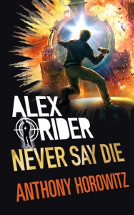
Alex Rider: never say die by Anthony Horowitz
Walker Books, 2017. ISBN 9781406377040
(Age: 12+) Highly recommended. Spies, Thriller, Action adventure,
Suspense. What a read! all the trademarks of a highly sophisticated
adult thriller are here to delight, entrance and entertain. Hard to
put down, I was engrossed with Horowitz's ability to get Alex Rider
into the most dire of circumstances then extricate him with flair
and just a little suspension of belief. I found myself saying, 'oh
come on' with disbelief at some of his escapades, but it is all
written with such tongue in cheek awareness, that I had to remind
myself that it was just a story. And a brilliant one at that, the
eleventh in the series.
Alex has been sent to San Francisco with the Pleasure family,
ostensibly to start a new life after the deaths of his uncle and
mentor, Ian Rider, and friend, Jack Starbright.
But he receives a cryptic phone message. Knowing Jack as well as he
does, he sets out on a journey to find her, convinced that she is
still alive. He flies to Cairo returning to the place where he was
hideously tortured and forced to watch Jack being killed. Here he
meets again some of the thugs he met before, but MI6 is also on his
trail, wanting him to keep out of their business, and return to San
Francisco. But again he evades them all, going to the South of
France to find a ship. Sneaking on board he fights for his life with
the impressive Dragana Novak who had recently stolen a Lightning
Strike helicopter from a demonstration in the south of England,
ready for the Grimaldi brothers to use in their outrageous plan.
And this is only half way through.
Fifteen year old Alex has been used by MI6 before, but they feel
morally bound to keep him safe and in school, so the continuous
tension between them makes a neat contrast with the journey he is
actually taking.
The plan to use the massive helicopter to steal a school bus full of
children with obscenely wealthy parents is mind boggling, as Alex
works out just a little too late what the brothers plan to do. He
leaps from the car's ejector seat grabbing the undercarriage of the
bus and is then carried into Wales where the children are kept
captive in a disused coal works. Alex of course, saves the day with
panache and not a little skill, and at the end where he is about to
be sent back to school, Mrs Jones at MI6 realises that he is the
only person who can solve her current problem. The next installment
of this highly entertaining series awaits.
Fran Knight
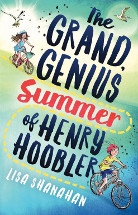
The grand genius summer of Henry Hoobler by Lisa Shanahan
ISBN: 9781760293017.
(Age: 8-11) Recommended. Themes: Fear; Overcoming difficulties; Family; Friendship; Holidays. Henry Hoobler is full to the brim with doubts, fears and the wobbly tummy feeling that accompanies them - and the family camping adventure that the family has planned will bring all of these to the forefront for Henry. Henry is a delightful, sensitive lad - a middle child squeezed between an older brother with the confidence of early teens and a younger pre-school aged sister whose collection of 'little ponies' and precocious personality makes her an absolute joy. This is a family tale set in a happy family camping holiday that explores family relationships, friendships and overcoming the things in life that get in the way of joyful exuberance - like being afraid of riding a bike without trainer wheels.
Lisa Shanahan has written a beautifully sensitive exploration of fear and perseverance to overcome the tough things in life. Young readers will recognise themselves and the portrayal of family is overwhelmingly healthy. The delight of the book is the character Cassie who is a permanent resident of the Holiday Park that Henry and his family are visiting. She is wonderfully feisty and wise and 'more alive than a normal person' despite a life with its own struggles and hurdles. The delightful shared family holiday is also portrayed as a wonderfully positive experience with children exploring new things that demonstrate their own genius moments in an atmosphere of freedom and gelato tastings.
This is a book to recommend to readers aged 8 to 11 - or a great book to share as a read-aloud shared text for aged 7+ because of its social and emotional discussion potential.
Carolyn Hull
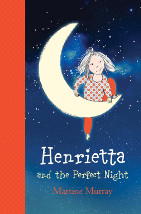
Henrietta and the perfect night by Martine Murray
Allen and Unwin, 2017. ISBN 9781760290245
(Age: 6+) Recommended. Family, Siblings, Birth. The effervescent
Henrietta notices the her mother is getting fatter. Her parents
explain that Henrietta is going to have a baby brother or sister,
but not now, later in the year when the apples ripen on the trees.
Her father tells her about the seeds growing in the ground and how
they develop and grow. When the apples are picked and they make
apple crumble, the baby will arrive. She is elated but a little
nervous about being an older sister and goes to a neighbour's house
to practise on their baby. Here she finds some of the things which
amuse a young child, but when it does not do what Henrietta wants,
it begins to cry, the mother telling Henrietta that it is tired.
The book is divided into five easily read chapters detailing aspects
of Henrietta's life. Going to school for the first time, she is
unsure until she sees someone else less sure than she. She comforts
the girl, finding that by staying with her she becomes more at ease
at being in school, and the two together have a good first day. The
story takes Henrietta and her new friend, Olivia through their first
months at school, having a sleepover and being in the school play.
All the while the delightful illustrations show the change of
seasons and the change in mum's appearance. One day they motor to a
friend's house and look at some puppies. Henrietta would dearly love
one but other things happen to change the day for the family. Mum
must be taken back home, and the midwife called. Dad and Henrietta
watch a movie, and Dad goes off to help Mum. When the baby arrives,
Henrietta is introduced to Albert and everyone is smiling.
This wonderful story of one family and its journey to having a
second child will have instant appeal. Not only does it reflect a
close, loving family, but it shows the stages a family goes through
in life. Physically Mum changes shape, but Henrietta's awareness
develops too. She becomes more aware of what she will be expected to
do as an older sibling: practising on her neighbour's child, and in
going to school, learns to be compassionate to those around her.
In a small hardback format with engaging print, the book fits well
in the hand and will be rarely on the shelves. As an explorer of
life, Henrietta's warm, funny commentary is most entertaining.
Martine Murray is able to reflect a child's view of what is
happening around her with humour and panache.
Fran Knight
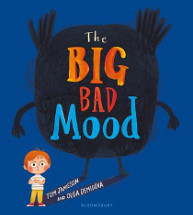
The big bad mood by Tom Jamieson
Ill. by Olga Demidova. Bloomsbury, 2017. ISBN 9781408839201
(Ages: 3-6) Recommended. Feelings. Having spent most of his time
writing for television and radio, this is one of the author's first
forays into children's literature and is the illustrator's second
picture book (her first was Usborne's Peep inside the Farm).
Their relative newness to the field is not apparent as this
collaborative effort pairs witty and age-appropriate writing with
attention-grabbing illustrations that successfully capture the
emotions of the main characters. An appealing and well-designed
front cover with bold colours draws the eye immediately and children
will want to find out more about this big, dark creature (the
personified Big Bad Mood who looks a bit like a blue Mr Chicken).
The story features George, who is having a particularly bad day.
When his mum tells him that there is a big bad mood hanging around
him he goes looking and finds 'a curious fellow, rough like
sandpaper and smelling of socks which REALLY needed changing'.
Children will identify with George; everyone has had one of those
days and done their fair share of stomping, shouting and huffing and
puffing. They will also love hearing about the mischief George is
dragged into by his Big Bad Mood: making a Big Bad Mood Sandwich
with caterpillar legs and spider mayonnaise, and filling the
swimming pool with jelly and custard. The Big Bad Mood is having a
great time but George is getting a bit tired of being grumpy (it is
hard work and his friends aren't very happy) so off he goes to tidy
up, to say sorry to those he might have hurt, and play happily with
his friends. Making the Big Bad Mood an incredibly happy,
enthusiastic character (rather like Drop Dead Fred), whose job is to
make everyone grumpy, is great as it adds a life and humour that may
have been missed if it had been a grump itself. This is a great
reminder to children that it is ok to have grumpy days when they
don't want to share or play nicely with their friends but that their
friends won't want to play with them if they are in a bad mood all
the time. It also shows young children how to deal with the
aftermath of a grumpy episode (saying sorry, tidying up) and gives
them the language to talk about their emotions and frustration with
their parents, teachers, and friends.
Nicole Nelson
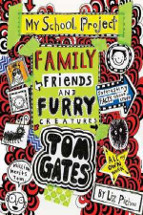
My school project: Family, friends and furry creatures by Liz Pichon
Tom Gates series, book 12. Scholastic, 2017. ISBN
9781743816523
(Age: 8-11) Recommended. Boys. Family life. School
activities. Family trees. Drawing. Tom Gates is back with another
humorous diary packed with furry creatures, silly doodles, fun
cartoons and a running commentary about school and home life. What
happens when his shoes make loud raspy sounds on the way to school,
on the newly polished hall floors and in class? Tom tries
unsuccessfully to make everyone believe it is no shoes day at
school, but Mr. Fullerman sends him to the office and Tom has to
wear a pair of dazzling white gym shoes. Class 5F are building their
family trees, interviewing their family members to find stories of
their lives for this project. Tom creatively draws his baby picture
when he forgets his photo.
Of course, nothing is ever straightforward with Tom Gates, even
though he tries hard. He's a great procrastinator; he'd rather be
eating snacks or creating furry creatures with sticky tape and
pencil lines. Tom uncovers loads of interesting facts about his
family and his friends. There is the Wrinklies - his grandparents
who have been travelling around the world for the past seven years,
even swimming with sharks. There is lots of humour in Tom's unique
school project, he reveals family secrets, embellishes his
grandparent's careers and includes some rather embarrassing moments.
Liz Pichon's Tom Gates series is perfect for reluctant
readers who enjoy stories told through visual presentations,
cartoons, doodles and sketches. The text is minimal, presented in a
variety of formats, styles and sizes, handwriting, bubble writing,
emphasized words, block writing and words made out of patterns. My
school project : Family, friends and furry creatures is
another fun addition to the popular Tom Gates books, recommended for
a readers from 8-11.
Rhyllis Bignell
Running on the roof of the world by Jess Butterworth
Orion, 2017. ISBN 9781510102088
(Age: 10+) Set on the top of the world in Tibet and India we follow
the adventure of Tash, a 12 year old girl who is intent on meeting
the Dalai Lama, who she believes can help rescue her parents who
have been arrested by Chinese soldiers. Her father publishes an
underground newspaper. The brave girl escapes her hometown with her
best friend, Sam, and together they set out on an epic journey
through the Himalayas armed with two yaks and her Dad's backpack
that contains mysterious but important papers. The pair are hoping
to escaped a persecuted Tibet and cross the border into India where
they will be safe.
Friendship, perseverance, overcoming adversity and never losing hope
are strong themes that run throughout the book.
This book is suitable for children aged 10 and upwards and would
make a perfect read aloud.
Kathryn Schumacher
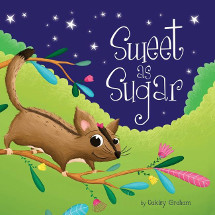
Sweet as sugar by Oakley Graham
Big Sky Publishing, 2017. ISBN 9781925520033
Picture book. Highly recommended. A beautifully illustrated book,
telling the story of a young sugar glider who has to make her own
way in the world. Sugar finds herself a place to live and works hard
to make it a home. Sugar's new neighbours make her feel welcome.
Sugar notices she is different to her new friends and she didn't
like it, until one day when she learnt why she was different and
used this difference to save her new friends.
Sugar learnt that we are all different for a reason, we just need to
work out what that reason is.
Karen Colliver
Boy by Phil Cummings
ISBN: 9781760277055.
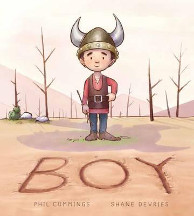
(Ages: 4-8) Highly recommended. Perception, communication, deafness, power. From the author and illustrator of Wang Wang and Funi comes this modern fairy tale that cleverly conveys important moral messages. The title character, Boy, lives in a small village on the edge of a forest. He also happens to be deaf. He communicates with his 'dancing hands' and by drawing pictures in the sand, but only his parents are able (or want to) understand him. The dragon that lives in the forest is always fighting the king and their battles are always noisy ('Cling clong clang!', 'ROAR!'). While Boy can't hear the endless fighting he can feel and see the fear. One day, when he accidentally finds himself in the middle of the battlefield, he writes a question in the sand: “Why are you fighting?” When the dragon and the king start talking, they discover that their fighting is the result of misunderstanding and a lack of communication. Because of his influence in solving the problem, the villagers finally see Boy as a person worthy of their time and make an effort to communicate with him. There are many layers of both simple and complex messages here; the most obvious being that we need to make an effort to understand others and that we shouldn't make assumptions. Boy may not communicate like the other villagers but he does have important things to say and the dragon may be big (and called a dragon) but he is not scary or mean. It reiterates that the pen is mightier than the sword and that power can be silent rather than loud and aggressive. There is potential to use this story to discuss issues faced by those with a hearing impairment as well as how society often overlooks or ignores the voices of people with disabilities (and even just those who are not as loud or who don't communicate in the dominant manner). It may also open more general discussion regarding different forms of communication and the importance of communicating effectively. The overall tone is one of hope and optimism; it implies that if we communicate and make an effort to hear the voices of everyone in our community everyone will get along better. This is supported by the rounded, soft illustrations in which even the dragon is cute rather than scary. There is a lot of symbolism in both the text and the illustrations and it will engage and stimulate children of different ages on different levels.
Nicole Nelson
Dr Karl's little book of space by Dr Karl Kruszelnicki
Ill. by Russell Jeffery. Pan Australia, 2017. ISBN 9781925481235
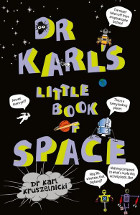
(Age: 10+) Junior Non fiction. Dr Karl's Little Book of Space
is a small book full of fun activities (quizzes, puzzles, drawings,
etc) related to space. As such it is not a text book, but a fun and
interesting way for children to learn facts and concepts related to
space.
Examples: Space race: determining which of 3 spacecraft navigating
their way through various routes will be the first to reach a
planet; It's a sign activity where a sign language is used as a
method of attracting attention in space (since screams cannot be
heard in space).
Chapters cover most of the planets, sun and other stars and some
historical aspects eg what Ancient Egyptians believed about space
with a related Egyptian hieroglyphic decoding activity.
There is an answer section which further enhances the value of the
book.
It would be a great little book to keep children (about 10 years of
age and over) usefully occupied during journeys, holidays, etc).
The book is in the form of fill in activity book in which users
complete drawings, quizzes, etc so, if teachers wish to use some
pages, and are able to gain duplication consent, the activities
could be incorporated into science lessons and/or used as extension
exercises.
The book by a famous Australian would be a great gift for children
who have an interest in anything related to space. It would also be
a useful addition to a Junior Library non fiction collection.
Ann Griffin
Goodbye Mr Hitler by Jackie French
Angus and Robertson, 2017. ISBN 9781460751299
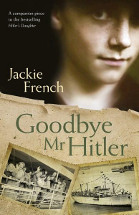
Historical war fiction. This story follows on from Hitler's
Daughter andPennies
for Hitler, however I read it as a stand alone story.
This may explain why I initially found the terms such as Mutti and
Vati confusing.
The story was deliberately set towards the end of 1944 so that the
main characters who are incarcerated in Auschwitz concentration camp
have a chance to survive for the story. It ends in 1972 in
Australia.
Each chapter is set within a specific time and place and about the
experiences of the main characters: Ten year old Johannes separated
from his parents when sent to the concentration camp and German Frau
Marks whose English husband is killed but she is able to send her
son George to England before being discovered by the Germans. She
then resumes her maiden (German) name and nursing occupation.
Through their narratives, the chapters detail the horror of life and
survival or death for their families and others at the hands of the
brutal German soldiers.
Most web sites label this book for 10+ aged readers. It is arguable
whether 10 - 13 year olds have the emotional maturity or historical
context to make sense of the inhuman treatment detailed in the book.
For example early in the book, a two year old boy and four year old
girl being hidden from the Germans in the basement of the hospital
where Frau Marks works are discovered and bayoneted to death while
on Frau Marks' lap. If this were a film the violence would probably
ensure it was rated PG or higher.
Despite the horror there are acts of courage as people like Sister
Columba attempt to save and protect Jewish children - without hatred
in her heart.
Besides Johannes and his parents and Frau Marks another significant
character is Helga and her 'mother' and 'brother'. Helga finds and
helps Johannes after he escapes the camp just before the Allied
liberation. There is a mystery about her.
After the liberation of the concentration camps, the main
characters, find and are reunited with their families in the
displaced persons' camps. Eventually Johannes and his parents, Helga
and Frau Marks (whose son had been sent by his relatives to
Australia for safety) all migrate to work and live in Australia. So
there is a happy ending.
It is when the hate the characters still have for Hitler (the ogre)
can be released and forgiven that the characters are truly free from
the nightmare.
The book is suspenseful with a twist at the end regarding Helga.
According to the end notes, Jackie French based the stories on true
events told to her by survivors of the concentration camps. I found
the horrors too much at times and had to stop reading (while still
wanting to know what happens to the characters and story).
If used as a school text, there is great scope to study the themes
of: The Holocaust and anti Semitism, Friendship and love versus
hate, Hitler's Germany and Nazism, Morality and choice.
The teacher's
notes would be of use to teachers.
Ann Griffin
Pride by Lazaros Zigomanis
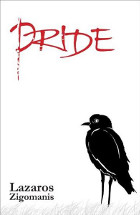
Busybird Publishing. ISBN 9781925585247 (Ages: 15+) Highly recommended. Luke is an 18 year old country boy
who loves the regular footy game with his mates, and there is a girl
he's interested in, the daughter of the footy coach. Footy training
has always been casual, nothing too demanding, and he and his mates
enjoy a good drinking session afterwards. The girl, Amanda, has
other ideas, she has serious plans for the future and little
interest in people who seem to be just wasting life away. Luke is
challenged to step up, and the new talent on the field, newcomer
Adam, may be just the person to inspire the team to really commit to
the game and take out the notorious Scorpions, led by the vicious
Rankin. The Ravens coach would also like just once to lead a really
great football team to victory.
It sounds like a simple enough story about teenage life in a country
town, but there is a mystery at the heart of the novel, a mystery
surrounding Adam, the Aboriginal player who just turns up to play
one day, and then after each game disappears to his country the
other side of the playing field. The more that Luke and Amanda try
to find out about him, the stranger his story seems. Who is Adam
really? Where is his family? Where does he go to each night? And why
does Rankin, the Scorpion coach, seem so obsessed with him?
The twists in the story kept me engaged until the end. The mystery
gradually reveals the undercurrent of racism and dispossession that
haunts the Aboriginal player. The descriptions of the football
matches are very gripping and I am not even a football fan, but I
was thoroughly caught up in the action. The writing style is easy to
read, the conversations sound authentic, and the portrayal of the
relationships between people are very realistic; Luke's relationship
with his silent stoic father is especially poignant.
There is a lot to like about this novel, it has humour, action,
mystery, and football! This is the first Young Adult novel by
Zigomanis. Hopefully there'll be many more.
Helen Eddy
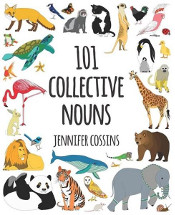
101 collective nouns by Jennifer Cossins
Lothian, 2017. ISBN 9780734417978
(Age: Primary) Recommended. Language. Collective nouns. A list of
animals and their collective nouns in alphabetical order from
aardvarks to zebras, is given an entrancing backdrop of endearing
illustrations by Cossins. Lists of these nouns appear now and again,
and sometimes the phrase is used in a book but to see them
altogether is stunning. Children will see the humour behind some of
the words given for a group of animals, and be intrigued to try and
work out just why that word is used. In her introduction, Cossins
tells us that collective nouns have their derivation in
onomatopoiea, or describe behaviour or habitat, but of course, some
do not fall neatly into these divisions.
Children will be able to discuss why a word may be used, and perhaps
suggest some of their own descriptive nouns, as she tells us that
Australian animals are quite often referred to as a 'mob'.
Several took my interest. Those using onomatopoiea as a collective
noun include a flamboyance of flamingo and a parcel of penguins,
while those describing behaviour include, a siege of cranes and a
paddle of platypus, while some reflect their habitat as in a caravan
of camel and a rookery of albatross. Many do not fit these divisions
and it would be fun to try to work out just why that noun has been
given, so reiterating the parts of speech with a class.
I enjoyed it greatly.
Fran Knight
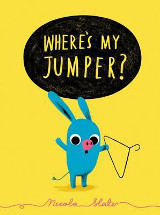
Where's my jumper? by Nicola Slater
Simon and Schuster, 2017. ISBN 9781471146213
(Ages: 2-5) Counting. This fun and humorous book with cut-outs and
flaps counts backwards from 10. It features bold text with number
words in capital letters and retro illustrations of orange, yellow,
blue, pink, red and green. We see Rudy on the front cover, a bright
blue rabbit holding an empty coat hanger and asking 'Where's my
jumper?'. So, off we go, hunting around Rudy's house for his
favourite jumper that was 'a little bit short and showed his tummy'.
In each room he encounters a group of animals, from ten tumbling
cats to two passing foxes. This isn't your average counting book
with 'five kangaroos bouncing, four leaping lizards' though and it
doesn't carry a repetitive or predictable pattern like most other
counting books either. There are fancy-pants llamas jiving under a
disco ball, prima pigerinas pirouetting in the kitchen and dogs
riding ski lifts up the stairs. There are humorous and crazy
illustrations that children will appreciate (a cat wearing jocks, an
octopus taking a selfie in the pool, a shark in the swimming pool
and a crocodile on the toilet). Children will enjoy following the
trail of wool, opening the flaps and exploring the cut-through
pages. The ending is actually a little bit confusing, especially for
the younger end of the target age group: his youngest sister has
taken his jumper but the trail of wool he was following was being
knitted into a new jumper for him. It is great that there is nothing
predictable about this book and that children need to discover for
themselves where there are flaps and to follow the wool trail. It
will be enjoyed by children as young as two for its rollicking
rhythm and bright illustrations but those of preschool and
school-age will get a lot more out of it and be more engaged.
Nicole Nelson
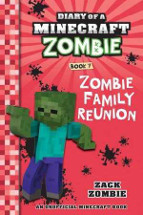
Zombie family reunion by Zack Zombie
Diary of a Minecraft Zombie series. Scholastic, 2017. ISBN
9781743818336
(Age: 7+) What is next for Zombie? He's on his summer scare-cation,
just back from camp and all he wants to do now is stay home, eat
cake and play video games. Unfortunately, it is the time for the
Zombie Family Reunion held every one hundred years. Just for fun, he
invites his human friend Steve who needs a disgusting makeover to
fit in with the zombie way of life. Steve pretends to be Zven an
exchange student from Zveden. Accompanying them on this train trip
to Grand Zombie Canyon is their smelly cousin Piggy. This rail
adventure takes them across familiar Minecraft landscapes.
When they wake up early Monday morning from a night sleeping in
their body bags, little brother Wesley has pulled the pin and
detached their carriage from the rest of the train. Zombies need to
hide from the sun, so they shelter in a cave. Along the way, they
are kidnapped, land in jail and learn to rely on each other.
Familiar places from the Minecraft game are included as screen
shots: there is the Mesa Biome, the Desert Temple and the Steep
Cavern. Little Wesley finally comes to the rescue during a cave-in
and with the help of Mutant and some family members, Zombie, Steve
and Piggy are saved. Zombie family reunion is another humorous junior novel, just
right for Minecraft fans that enjoy reading about their favourite
characters and their zany lives.
Rhyllis Bignell