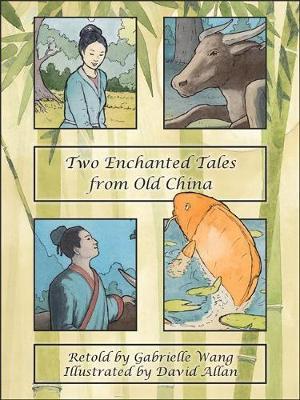
Two enchanted tales from old China retold by Gabrielle Wang
Ill. by David Allan. Christmas Press, 2017. ISBN 9780994528025
(Age: 6-8) A must have for the library. In the starry heavens two
young people fall in love, only to be parted. A lonely mistreated
girl finds herself at a ball in a dress made of silk . . .
Two beautiful, magical tales from China, The Weaver Girl and the
Cowherd and The Magic Fishbones enchantingly retold by
Gabrielle Wang and elegantly illustrated by David Allan.
The book contains two entertaining tales accompanied by beautiful
illustrations. The Weaver Girl and the Cow Herd, is about
two stars in the heavens that fall in love. The granddaughter of the
Heavenly Empress, Zhinu, the weaver girl, is responsible for
separating the two lovers. Niulng is sent to the land of mortals
where he finds himself in a farming family, having no memory of the
past. However he does feel a connection with the stars. Niulng's
loyal Ox is not ordinary and he finds himself guided by its wisdom
in search of a bride. The Magic Fish Bones is set in Chin, an ancient country where
Ye Xian was a slave to her stepmother and stepsister after her
father dies. I hear voices drawing similarities to Cinderella.
However, this story stands alone on its own merit with a totally
different ending. Ye Xian has a fish with golden scales which she
loves and tends too. As the fish grows too big, she releases it into
a nearby pond. Each day Ye Xian calls the fish to the edge of the
pond and gives it treats. Her dreadful stepmother kills the fish,
but Ye Xian realises the bones are magic.
I can see these Chinese traditional tales fitting in beautifully
with units about Ancient Civilisations. They are presented in easy
to understand language - although the sentences are long and
descriptive. These tales will entertain children from six years old
and up. These stories will linger and would appeal to 6 - 8 years
although they are in picture book form. The sentences are long and
detailed. A must have for the library that will sit nicely on the
shelf alongside other books in the series.
Kathryn Schumacher
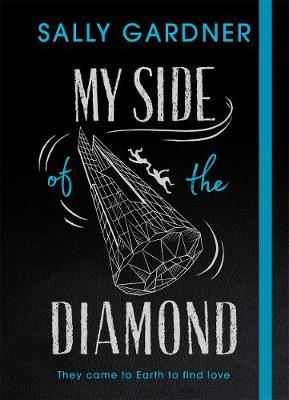
My side of the diamond by Sally Gardner
Hot Keys books, 2017. ISBN 9781471406430
(Age: 11+) Highly recommended. Themes: Fantasy, Science fiction,
Friendship, Anorexia, Artificial intelligence. A lone girl at
school, Becky writes in her journal constantly, so much so that
Jazmin grabs the book and reads it. She comes across an amazing
story, one she insists the girl should share online. But when
Becky's mother, Ruth reads it she gives it to a publisher and it is
published, selling millions of copies, making the family well off,
Becky retreats. Becky and Jazmin no longer see each other so when
Ruth invites Jazmin to spend the holidays at the beach with her
daughter, she is at first reluctant, but on seeing the state of
Becky relents and goes, adamant that she will make her eat.
This very unusual story takes many turns, inviting the reader to
think they are perhaps reading a supernatural novel, a mystery,
science fiction, a story about UFO's, a romance, or tale of
anorexia. It is none of these, and yet contains elements of each. So
be prepared for the unexpected.
The story centres around sessions between several of the
protagonists and a researcher, Mr Jones, who listens to each of
their stories in turn, Gardner putting us in the place of the
researcher; listening to, weighing up and judging each of the
stories, sifting through each of their perspectives on what really
happened.
Becky is transfixed by the story of Skye and Lazarus who disappeared
after jumping from the dome of St Paul's Cathedral some years
before. Their bodies never hit the ground and yet a man, Icarus, is
in prison for their murders. It is he that Becky wants to interview
while they are on holiday in Suffolk. And she does, becoming
involved with him in the oddest of ways. She and Jazmin become
involved with his story and when letting a stranger out of the
locked cupboard, must run for their lives.
Icarus must leap into the unknown and wants Becky to go with him,
and in so doing, relegates Jazmin to a life of suspicion and
rejection by her peers. The reader is hooked into reading to the end
to find out just what is going on.
Fran Knight
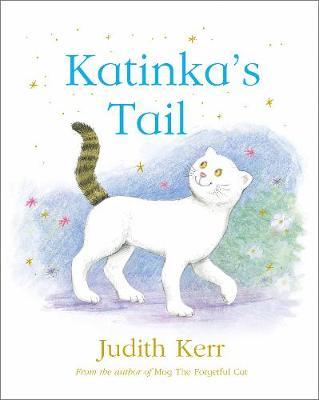
Katinka's tail by Judith Kerr
HarperCollins, 2017. ISBN 9780008255299
(Age: 4+) Cats, Difference, Fantasy. An older woman and her cat live
an uneventful life. Each morning the cat climbs the creeper on the
outside of the house so that when the woman opens the curtains,
there she is. They play together, then cat follows the woman to the
shops and waits for her to return, helping her unpack the groceries.
At night Katinka goes out into the forest and in the morning the
woman must clean up the dead mice on the kitchen floor. As they walk
people often stop to admire the cat, commenting on its tail. Some
are even rude about the cat.
But the two are fond of each other and do all sorts of things
together. One night the woman wakes and looks out of the window to
see her cat being chased by a number of other animals. She follows
the throng to find that Katinka's tail has become a golden beacon,
and they fly up into the clouds.
The woman eventually lands back in bed and when she wakes the next
morning, Katinka is there, outside her window with the same golden
tail that she saw during the night.
This magical tale will enchant younger readers for whom magic is
simply a part of their world. The ordinary cat becomes something
more when during the night the tail takes on magical qualities and
the group flies into the sky. The woman is easily recognised by
readers as an archetype Grandma, in her sensible shoes, fluffy
slippers, and teapot on the table. Children will be enchanted by her
as they appreciate the attributes of the woman and her companion.
Fran Knight
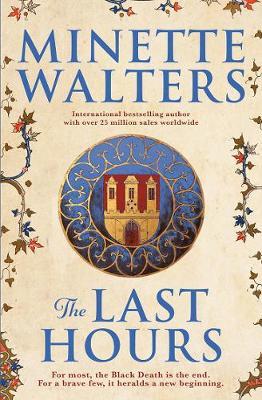
Last hours by Minette Walters
Allen and Unwin, 2017. ISBN 9781760294984
(Age: secondary to adult) Highly recommended. Themes: Crime, Black
Death, Medieval life and times, Murder. Long time crime fiction
writer; Minette Walters, has turned to historical fiction in this
new book, destined to be a series about the advent of the plague in
rural England in the fourteenth century. Set in the small community
of Develish, where Lord Richard rules with an iron fist, some two
hundred serfs farm the strips of land outside the manor walls, owing
allegiance to their lord in the sharing of grain and produce from
their labour. His wife, Lady Anne hates her husband and is in daily
conflict with their haughty, spoilt daughter, Eleanor, but when the
plague comes to the village, the girl's spitefulness seemingly has
no bounds. When Lord Richard leaves for the neighbouring manor
house, there to trade his daughter in marriage his entourage is
racked by the pestilence that has moved over the county of Dorset.
He and a few of his retainers make it back to Devilish, but are
stopped at the moat. Hearing of the ravages of the disease, Lady
Anne has issued orders that no one will be allowed in, lest they
spread the plague to her people, now all crowded into the manor
house and its surrounds within the wall and the moat.
From here, Lady Anne manoeuvres her way into ruling the manor and
the villagers, nominating one of them, Thaddeus, as a steward, and
fighting the machinations of her daughter, those opposed to what she
is doing, the former steward recently hired by her husband, and
Thaddeus' lazy family. Having some two hundred people living
together, and knowing little of what is happening outside, a murder
causes intense concern and it is up to Thaddeus to unravel the
mystery. But it appears that Eleanor may be too close to the murder
for his comfort, so he takes the five young men implicated in the
affray and they leave the manor to look for food and information.
This is a wonderfully involving look at one community and its
attempts to keep the plague out of its midst. The minutiae of life
lived in such close confines, with people at once suspicious and
very fearful, struggling to fill their long days, each day seeing
the food supplies running down, and a priest who is little help,
shows readers what life for many must have been like in 1348 when
probably half of Britain's population died.
This story is a marvelous reconstruction of life in Medieval times,
recalling the harsh lives led by the serfs ad their families, owing
their lives to an insensitive, ignorant and over bearing man who
only sees them as his slaves. to do with as he bids.
A fascinating insight into the background of Walter's writing of the
book is given in this interview.
Fran Knight
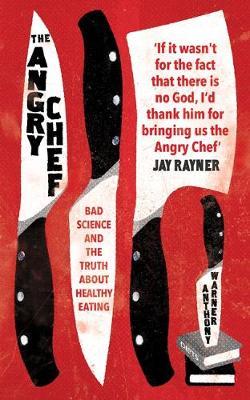
The angry chef: Bad science and the truth about healthy eating by Jay Rayner
One world, 2017. ISBN 9781786072160
(Age: 16+). Recommended. Diets. Nutrition. Scientific thinking. Jay
Rayner is the angry chef - he is angry about the false claims and
misconceptions peddled by the fad diet industry. He begins the book
with the story of the Easter lapwing. He describes the spring-time
discovery of hares often alongside scraped nests of colourful eggs -
giving birth to the medieval myth of the Easter bunny. However the
eggs had not been laid by the frolicking hares but by the elusive
wetland bird, the lapwing. People were fooled by the correlation of
hares and eggs and jumped to their own conclusions. It is human
nature to see correlation and assume causation - overlooking the
many possible confounding factors.
In his explose of fad diets, Ray presents many examples of mistaken
beliefs and pseudo-science, examples of mischievous hares sat next
to a pile of colourful eggs. He exposes the false science behind
each diet: from gluten-free, alkaline, detox, sugar-free,
carbohydrate-free, paleo, to the promotion of the wonder foods of
coconut oil and antioxidants, the dangers of the facile ideas of
clean eating, GAPS diet and cancer cures, the demonisation of
processed foods, the simplistic concept of good vs bad food. He
rants with anger at the false claims, the bullshit, and the fake
gurus that people seem to blindly follow, but his anger is tempered
with a good dose of humour that often made me laugh out loud.
And if there is anywhere to lay the blame for all this - it is our
education system. Instead of teaching scientific facts, he argues
that our science courses should be teaching the scientific method -
the need to look for and respect evidence and an understanding of
what constitutes proof. Science should teach children to doubt and
to question, and to learn about concepts such as 'regression to the
mean'. He says
'We should be trying to produce children who understand that
correlation is not always causation, that anecdotes are not
evidence, that a theory is not something dreamed up in a pub, and
that interesting results are often wrong.'
If you are curious about the food theories, he lays it all bare, in
an easy to read manner. I could imagine any of the chapters being
taken as a case study for a science class to examine the theories
and test the evidence. Rayner presents the statistics, the theories
and the laughs, and above all he promotes guilt-free enjoyment of
one of the great pleasures of life - food.
Helen Eddy
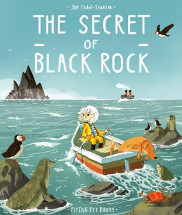
The secret of Black Rock by Joe Todd-Stanton
Flying Eye Books, 2017. ISBN 9781911171256
(Age: 5+) Highly recommended. Environment, Interdependence,
Lighthouses, Shipping, Mountains. Erin Pike lives with her mother
and dog, Archie, near by a large fishing village. Here sailors tell
tales about Black Rock, stories that make people's hair curl. It is
said that the mountain in the sea could move at will, and when it
does it scratches ships as they pass by, its sides as sharp as a
swordfish. It is able to smash a ship to pieces and is something to
be feared. But Erin wants to see for herself. Often she hides on
mum's boat but Archie always sniffs her out, but one day she hides
herself so well, he misses her. When the boat passes by the rock,
Erin topples into the sea, falling straight down into the gloomy
waters by the rock. She is amazed to see such a variety of fishes
and anchors, and when a hand reaches down and lifts her back up to
the surface, and returns her to shore, no one believes Erin's story.
But one day the ships go out with equipment needed to destroy Black
Rock.
Erin rows out to the rock and stands on the claw that is ready to
chew up Black Rock. Suddenly all the fish that live beneath and
around Black Rock come to the surface shimmering in the moonlight.
The sight changes the fishermen's plan, and the rock is saved.
This delightful story tells of the interdependence between people
and their environment, of the duality of our relationship with the
earth on which we live
A modern folk tale, the story has a mythic quality that will be
eagerly read by younger readers, relishing being part of the
adventure undertaken by Erin to see something for herself, and then
bravely going out to save the rock.
The illustrations reflect the old movies of Saturday afternoon
cinemas in the suburbs, with the circles of pictures, the
highlighting of the action within a circle, the large bleak shots of
the ships coming with their appalling equipment to destroy the rock.
The retro appearance of the book is eye catching and will appeal to
younger readers.
Fran Knight
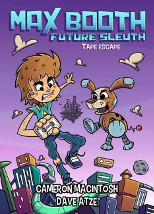
Max Booth Future Sleuth: Tape escape by Cameron Macintosh
Ill. by Dave Atze. Big Sky Publishing, 2017. ISBN 9781925520606
(Ages: 7-9) Themes: Future, Detectives, Dogs, Robots. We dive right
in to the future with orphan Max Booth and his robot dog Oscar; it
is 2423 and they are about to become detectives. They have escaped
from the Skyburb 7 Home for Unclaimed Urchins and now live in the
storeroom of the Bluggsville City Museum for old technology. Jessie
the museum supervisor is their friend and she presents them with
challenge to find out information about a mystery object.
Oscar's handy projector allows Max to search the Splinternet for the
name of the object and they discover it was made pre 2037. We find
out that a book is needed for further research and paper has not
been used since 2021, so it is up to the duo to find an expert to
help. They first visit the library where Oscar makes a 3D impression
of the guard's tongue to gain access. Here, they must avoid laser
beams and eight-legged guards, climb to the top shelf, find a
specific book and look through pictures of ancient musical machines.
Their object is a cassette tape and needs a cassette player to
listen to the music. After a quick escape down the library roof,
they meet up with Jessie back at the museum. With the help of
Oscar's fast moving tail and an ancient barcode reader, they hear
the long lost songs from a popular mega-star David Snowie.
To authenticate their find, they travel to District 6 where an
unscrupulous forensic muzicologist steals the cassette tape. Max and
Oscar's sleuthing skills, quick thinking and creative disguises help
them rediscover the missing tape and return it to the museum.
Cameron Macintosh includes many puns and funny references to old
technology as he brings a realistic future world to life. David
Atze's cartoons add fun to the easy to read text for younger readers
as they begin engaging with chapter books. Max Booth Future
Sleuth is suited to high-interest lower reading age students
as well.
Rhyllis Bignell
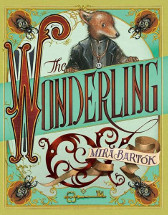
The Wonderling by Mira Bartok
Walker Books, 2017. ISBN 9781406370645
(Age: 10+) Highly recommended. Welcome to the home for wayward and
misbegotten creatures, run by the evil Miss Carbunkle, cunning
villainess, who believes her terrified young charges exist only to
serve and suffer. For the Wonderling, an innocent, one-eared
'groundling' - a mix of fox and boy - the Home is all he has ever
known. But when unexpected courage leads him to protect a young bird
groundling, Trinket, from being bullied, she in return gives the
Wonderling two incredible gifts: a real name - Arthur, like the good
king in the old stories - and a best friend. With the help of an
ingenious invention by Trinket, the two friends escape from the Home
and embark on an extraordinary quest into the wider world and down
the path of Arthur's true destiny.
This is a beautiful story where two very different creatures are
drawn together out of need and end up developing a strong bond where
they are searching for their destiny beyond the walls of the awful
orphanage. Bartok has cleverly incorporated humans, regular animals
and the hybrid human/animals named 'groundlings'. She uses rich
descriptive language that creates a magical mood where even the
smallest details seem important. Arthur is an extremely likeable
main character with a kind heart. He is extremely brave and
desperately searches for anything beautiful or good that he can
cling to.
The book is absolutely beautiful, with quaint pictures interspersed
throughout the pages. A true masterpiece that will be a must for the
library collection. As some of the storyline can be somewhat dark, I
would recommend the book for more mature readers, 10 years old and
up.
Kathryn Schumacher
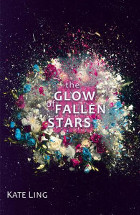
The glow of fallen stars by Kate Ling
Little Brown Books for Young Readers, 2017. ISBN 9781510200180
(Age: 13+) Recommended for people thirteen and up who have an
interested in sci-fi/romance. Like the previous novel in the series,
The
loneliness of distant beings, The glow of fallen stars
has a slow start. Seren, Mari, Ezra, and Dom have landed on
Huxley-3, a planet with the potential for supporting human life
after escaping from Ventura, the ship on which they were all born.
Seren and Dom are celebrating their freedom, meanwhile Mari and
Ezra's thoughts turn more practical - how are they going to spend
the rest of their lives stranded on an island on an alien planet?
After an encounter with some glowing coral, both Seren and Ezra are
struck by a relentless sickness which renders them unconscious and
close to death. Having both recovered, but being rendered weak by
the sickness, lack of food, and torrential rains, the four are
driven by desperation to take the boat and make for the mainland.
Days pass, and luck brings them to a coastline where they soon find
a pioneer settlement from the ship Concordia. The people of
Concordia, like Ventura, originated from Earth. But what will come
of their lives now, living on planet for the first time? It seems as
if everything has changed, but has it really? Have Seren and Dom
achieved their goal of being together, or will Concordia's breeding
program spell disaster?
While quite a bit of Seren and Dom's relationship is portrayed as
lust, problems caused by lies, trust, and outsiders are also
explored. Friendships are formed, broken, and transformed across the
pages and the importance of forgiveness, acceptance, and talking are
all approached. I would recommend to people thirteen and up who have
an interested in sci-fi/romance.
Kayla Gaskell, 21
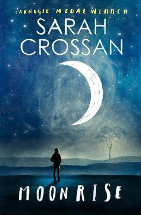
Moonrise by Sarah Crossan
Bloomsbury, 2017. ISBN 9781408878439
(Age: Senior secondary - Adult) In this stunning new work, an
extended lyrical work reminiscent of 17th century lyrical poetry,
Sarah Crossan plummets the reader into the lives of one family and
the outcome that looms for one member. As she leads us into the
complex, violent, dramatic and immensely sad lives of the family, we
are drawn deeply into the events of the past that have led to this
point. The story is discomforting, its tale alternating between love
and neglect, loyalty and rejection. Here we have a family that did
not nurture the children, where there is violence, and the parents
seem to have been careless of the wellbeing of their children. One
of the children is to be executed for his crime, of manslaughter,
and his sister is determined to offer him love and understanding.
Harsh and deeply moving, the reality that Crossan presents becomes
discomfortingly comprehensible both in the crime and the punishment.
Told in its bare essentials through a gentle, poetic structure, this
narrative offers us the shocking contrast of neglect and love in one
family, and disturbs us with a harsh state response that is
unforgiving. It is constructed in an unusual manner for a story
placed clearly in the modern world of narrative literature, the
story told as an extended poem. Crossan, in her creation of warmth
and in her deft handling of the angst felt by the family, uses the
bareness of this poetic narration to draw us into the family's
disturbing past and present.
Captivating and powerful, Crossan's work tells nothing outside of
the events and interactions that are crucial to the narrative, yet
the emotions, the drama and the characters are evoked in a
surprisingly lyrical manner. Unexpectedly, as we are drawn into the
world of the text, Crossan builds a feeling of calm, elicited in the
delicate brushstrokes that paint the love of one sibling for
another, in its bare details. This extended poem, in its gentle
tone, is clearly quite at odds with the brutality described and the
violent punishment that is about to occur, yet it is difficult to
ignore her unwritten plea for forgiveness and understanding, for
clemency and non-violent punishment. It is apt for adults, suitable
for older adolescents, but its topic difficult to understand and
disturbing in reality for younger adolescents.
Elizabeth Bondar
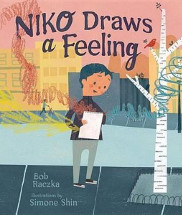
Niko draws a feeling by Bob Raczka
Ill. by Simone Shin. Carolrhoda Books, 2017, ISBN 9781467798433 (Age: 4+) Recommended. Emotions. Feelings. Drawing. Writing about
emotions and feelings is always fraught but the author and
illustrator here have presented a book about emotions that younger
readers will grasp. A gentle book filled with line drawings Niko has
made to represent how he feels, children may not understand what
Niko is trying to show with his drawings, but will appreciate that
he loves to draw and each drawing represents something he has heard,
seen or felt. Children will recognise with ease the
misunderstandings between children and adult as each person puts
their own interpretation on Niko's drawings. He draws the ting-
a-ling of the icecream truck, for example and his peers tell him
that it looks nothing like the icecream truck. He explains that it
is the ting-a-ling, not the truck, and still they do not understand.
Moments like this appear throughout the book, causing laughter of
recognition amongst children as they recall being unable to explain
things to other people. They will certainly understand the feeling
of being misunderstood, and of trying to communicate ideas with
other people.
The mix of media used in the illustrations will attract younger
readers, seeing things in the stylised children's art work that they
will recognise and attempt to emulate. I love the spirals and lines
of colour weaving their way from one endpaper to another, covering
the whole of the book from start to finish. Children will love
following the lines as they seem to pull the pictures together, and
they, like Iris will be drawn to Niko's work. A most unusual and
engaging picture book for art lovers.
Fran Knight
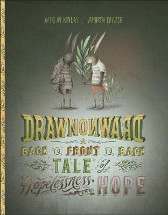
Drawn onward: A back to front to back tale of hopelessness and hope by Meg McKinlay and Andrew Frazer
Fremantle Press, 2017. ISBN 9781925164848
(Age: Upper primary - Lower secondary) Recommended. This book starts
out very dark and negative, there is no hope. The faceless creature
in the book is slowly burdened by all of the negativity as it grows
with each page, until you reach the centre of the book where it is
almost overwhelming him. Then the words are turned around and the
emphasis is changed which changes the whole meaning of the words,
the burden is slowly lifted from the creature and he is able to
slowly emerge with a face and hope.
This book highlights the power of positive thought and that anything
can be changed for the positive.
I would recommend this book for upper primary, lower secondary. It
is a good example of how the same words can have very different
meanings depending on how they are used and in what order they are
put together. It could be utilised as a teaching tool looking at how
words can change their meaning depending on the order and context
they are used in.
Karen Colliver
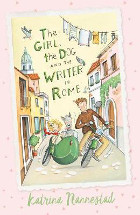
The girl, the dog and the writer in Rome by Katrina Nanestad
ABC Books, 2017. ISBN 9780733338175
(Age: 10+) Highly recommended. Themes: Family and friendship,
Travel, Dogs. When Freja's scientist mother, Clementine has to go to
Switzerland for treatment, she leaves her only daughter with an old
friend, crime writer, Tobias Appleby. Clementine and Freja have
never been separated: when mum goes on her expeditions to the
Arctic, Freja goes too, when looking at animals in the wild, Freja
is by her side. She has never had to deal with people, content just
to be with her mother, but now she must live with someone she does
not know. She is distraught. But Tobias turns out to be funny and
not a little unlike herself.
When she breaks into tears, she feels that she cannot upset Tobias
by telling him she misses her mother and tells him a lie, resulting
in the two along with Finnegan the dog, going to Rome, when she
spurts out the first thing she can think of after reading Tobias'
new crime book, Rome's Reward.
This is a delightful story, full of witticisms, wonderful imagery,
delightful characters and superb names. The language will envelope
the reader, making them feel they are tucked up by a wood fire, with
no need for a mobile phone or stories about testy relationships with
other children of the same age or issues! Freja does not want to go
to school where she must deal with other children, or be made to
write an essay, I am an avocado, as she is gaining quite an
education in Rome. She learns to make pasta, drawn a map of Rome,
visits all sorts of historic places, and leans some Italian. She has
an education, and does not need school.
As their stay in Rome extends, Freja becomes aware that she has made
friends without realising it: the old couple downstairs, the cafe
owner, the monkey grinder and his monkey and a priest. She learns
that making friends is not as hard as she thought, but the question
always nagging her is her relationship with Tobias. Several people
remark on him being her uncle, and even though he denies this she is
desperate for him to be her uncle.
Meanwhile, Tobias spills ink over the white habit of a passing nun,
and so a priest chases him, being very unpriestlike in his pursuit
and threatening behaviour. A neat mystery ensues, equally as
involved as some of Tobias' plots. But as the trio wanders about
Rome, readers will ingest much information bout that city and some
language as well. I loved it and it leaves the way for a sequel
which will thrill the readers.
Fran Knight
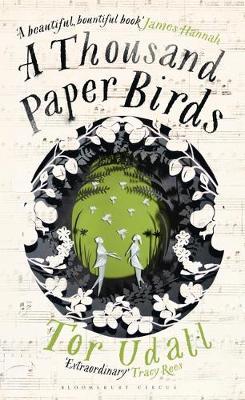
A thousand paper birds by Tor Udall
Bloomsbury, 2017. ISBN 9781408878644
(Age: Senior secondary - Adult) This lyrical story captures the
imagination in its characters, its garden setting, its wonderful
language and in its story-telling. From the beginning we are plunged
into a world of sensory experiences, of smell particularly. Place
matters in this text, and the gardens (based on Kew Gardens in
London) feature prominently as a place of retreat of delight, of
background, foreground and as a place that is so strongly real it
justifies living.
Udall writes so lightly, it is as if his characters were the paper
birds fashioned in origami, the art so passionately followed by one
character. Her creations are exacting and beautiful, and express the
depths of her being in a way that she cannot do herself. Chloe is
young, an adolescent inexperienced in love, and unable to comprehend
the adult world of anxieties, driving ambition and love. The
physical she can do, and she brings her sense of wonder to a
relationship with Jonah, and he begins to be healed after his tragic
loss.
Loyalty and love, the warmth and exploration of the physical and
mystical aspects of the joining to one other in sex, and the
possibility of healing predominate in this lushly written novel of
companionship, joy, friendship, love and nature. Udall's lilting
prose is joyous, his characters complex and often troubled, but the
world into which he places them is so green, majestic yet gentle,
soft and calming that the unravelling of their individual worlds
slowly seems to be controllable. A truly wonderful piece of
literature, and a joy to read, Udall's work lifts the spirits,
restores feelings of soundness to human life, and is utterly
captivating.
Elizabeth Bondar
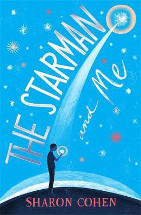
The Starman and me by Sharon Cohen
Quercus Children's Books, 2017. ISBN 9781786540089
(Age: 10+) Highly recommended. Themes: Adventure, Origins, Science
Fiction, Communication/Mind-reading. The title suggests something
out of this world! To a certain extent this is a book about things
outside of the normal realm - about where we come from, and what we
can become. Kofi is the young protagonist - a thoughtful,
sometimes-bullied young student whose perception of a strange
apparition on the local roundabout leads him to an adventure of
mind-blowing proportions. The 'apparition' is more than a magical
moment, it has a name (Rorty Thrutch) and an unusual identity. Rorty
Thrutch communicates with Kofi in strange ways and with a
captivating grasp of English, and then leads him into a rescue
mission that requires additional support. Cue his friend Janie and
some unexpected helpers. With school discussions highlighting
personal origins and DNA and a father that has a scientific project
that involves thought-control, the direction of the narrative is
quickly high-jacked and taken on its own helix of twists and turns
that are warm and uplifting, but also exciting and unexpected . . .
and a little bit dangerous as well. There is action that is
impossible to comprehend, characters that behave in ways that are
cruel, and scientific, cutting-edge moments akin to magic.
This is not your average school-based adventure, and it will appeal
to a wide range of ages. The relationships and adventurous action
suggest a high-school base, but Primary school readers will also be
impressed by the warmth of Rorty Thrutch, and his endearing and
naive dialogue adds touches of humour throughout the parts of the
story that are quite serious.
Carolyn Hull