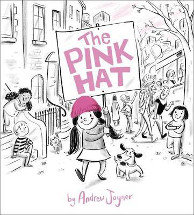
Random House, 2018. ISBN 9780143789369
(Age: 4+) Highly recommended. Themes: Women's rights, Power. An
older woman knits a pink hat. She uses it in a number of ways until
one day the wind sweeps it out of her window and into the street. A
cat plays with it as it flies up again into a tree. Several children
try to get it down, and it falls into a pram where a baby hugs it.
It flies off again and is chased by a dog, until it is found by a
young girl. She takes it home and washes it, wearing it while she
boxes at the gym, goes shopping with her dog, goes swimming, uses it
as a pillow as she lies on the lawn and then joins a parade where
everyone is wearing a pink hat.
The pink hat stands out on every page in its different guises and
uses, being chased by various people and animals, finding a home in
many different places and finally being washed and cared for by a
young girl.
The pink on top of every head in the parade evokes a coming
together, a solidarity of opinions and aims as the large group
marches for women's rights.
Each page is full of movement as the hat travels from one place to
another, being shared by a diverse range of people and animals,
forming a cohesive bond between them all. The line illustrations are
beguiling in their simple message of women's rights.
This stunning picture book grew out of the march held across the
world in January 2017, in which an estimated five million people
marched in eighty two countries, promoting the idea that women's
rights are human rights.
It is a book designed to encourage discussion and interest and it
does that admirably.
Fran Knight
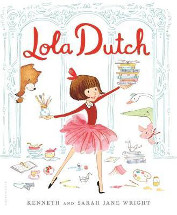
Lola Dutch by Kenneth and Sarah Jane Wright
Bloomsbury, 2018. ISBN 9781681195513
(Age: 4+) Highly recommended. Themes: Humour, Adventure, Art,
Friendship. Lola Dutch loves to do different things, to have
adventures with her friends, Bear, Crane, Gater and Pig.
Bear travels along behind her, telling her that sometimes she is
just too much, as she flings herself into yet another scheme.
When they wake in the morning, Bear is ready for tea and toast, but
not Lola. She asks her friends what they want and makes up an
extraordinary feast of pancakes, pastries and grits. Going for a
walk, the group descends upon the library where she revels in books
about inventors, scientists and great writers, taking home a
cartload of books about art and artists. With that in her mind, she
starts painting all the walls and even the ceiling. "Too much" says
Bear. After all that effort, it is time for bedtime and the group
all get into their nightwear. But bedtime for Lola is never ordinary
and children will laugh with glee as they see what she does and how
the story resolves.
Readers will love following Lola's zany activities through the day
beginning with breakfast, a time at the library, painting the house
and then bed time. Her day parallels the day of many of the readers,
but with a vastly more interesting overlay of actions. Children will
love her quirky take on the familiar and follow her actions with
gales of laughter.
The illustrations add another level of humour to the tale, asking
readers to look in more detail at each page. I particularly liked
the pages where she and her friends are painting the house,
referencing many known artists and their work. It will be fun with a
class to check out each of these paintings and their artist. The
whole book resonates with delight, and readers will love Lola and
the Bear as they clean up after breakfast or go to the library and
then to bed. Bear is always there to help Lola complete her schemes.
A friendship to be savoured.
Fran Knight
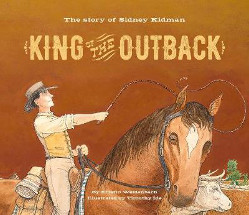
King of the outback: The story of Sidney Kidman by Kristin Weidenbach
Ill. By Timothy Ide. MidnightSun Publishing, 2017. ISBN
9781925227246
(Age: 7+) Sir Sidney Kidman was one of the most successful
pastoralists in Australian history. Kristin Weidenbach has told his
story from the night he left home as a thirteen-year-old runaway, to
the celebration of his 75th birthday with a rodeo on the former
Jubilee Oval next to the University of Adelaide.
The text is a straightforward narrative which introduces readers to
German Charlie who employed the teenage Kidman and taught him stock
management. It also explains Kidman's realisation that if he bought
a chain of stations rather than just one, he could move his stock
over large distances during times of drought. Eventually, as
Weidenbach tells her readers, Kidman's cattle stations together
covered more land than England. A life rich in varied experiences is
a challenging subject for a picture book. However, the omission of
both Billy, the Indigenous man who taught the budding pastoralist
bushcraft, and Sackville, who bought his brother's cattle for his
butchering business, may underplay the extent to which Kidman
learned from and was assisted by others. A page of detailed
information at the end of the book will help adults to answer
questions or prompt older children to find out more. The author uses
short but effective sentences which convey the sensations of hard,
physical labour, riding in the outback and sleeping under the stars.
Her narrative is complemented by Timothy Ide's skilful
illustrations. Some of the pictures evoke the vastness and colours
of the terrain, while others capture the chaos at the rodeo when the
cattle panicked because they were alarmed by the crowds. King of the outback will introduce young readers to a man who
owned an empire in the outback, and to a way of life which is
outside the experiences of people who have not lived in the bush. It
will also help to explain the role of pastoralism in the making of
modern Australia.
Elizabeth Bor
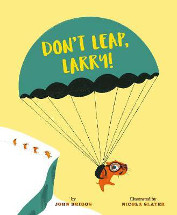
Don't leap, Larry by John Briggs
Ill. by Nicola Slater. Pavilion, 2017. ISBN 9781843653387
Lemmings are small rodents that live in the Arctic regions and are
best known popularly known for the misconception that they commit
mass suicide by jumping off cliffs, So when one little lemming
decides to stand out from the crowd and not do as they do, there is
great confusion and consternation.
This little lemming, who wants to be known as Larry, does not want
to look like, sound like or act like his peers. When he is asked if
he would jump over a cliff, he says, "No, " but fronting up wearing
a mask and fins just in case he has to. Instead of digging a tunnel
to keep warm, Larry goes sledging with the puffins; while the others
squeak and squeal he plays bongos with the seals; and while they
nibble moss from under a rock he prefers pepperoni pizza with extra
cheese and hot sauce! He is certainly a very different lemming who
stands out from the crowd. So when the other lemmings call a meeting
and unanimously decide that all lemmings should be the same, Larry
knows it is time for him to move on. But he finds life with his
other friends a little different from his expectations - sometimes
the grass is not always greener. Is there a new and better life for
Larry or is he doomed to join them on that inevitable, fatal leap
over the cliff?
Humour and appealing illustrations which begin with the front cover
with Larry firmly attached to a parachute as he leaps off the cliff
make for a quirky tale that nevertheless has a strong message about
remaining true to yourself and encouraging others to question,
interpret and think for themselves too. A great discussion starter
about being individuals even in a culture that has children dressing
alike, looking alike and learning alike.
Barbara Braxton
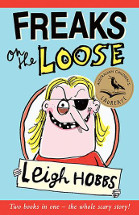
Freaks on the loose by Leigh Hobbs
Allen and Unwin, 2018. ISBN 9781760294311
(Age: 6+) Highly recommended. Humour. Schools. Teachers. Subtitled,
'The whole scary story', Leigh Hobbs' hilarious stories, 4F for
freaks and Freaks ahoy! have been collected into one
volume.
The first outing for this class, 4F, with little aptitude for
learning, is presented when Miss Corker confronts them on her first
day ever as a teacher. Their behaviour is appalling and she develops
a great idea to control the group, but in the sequel, Freaks
ahoy!, her disguise has become stuck, and so it is up to
One-Eyed Eileen to try her hand at unmasking the villain. But with a
busload of teachers to poke fun at, anarchy reigns supreme and kids
will not be able to stop themselves laughing.
Each of the stories is presented in short, easily read chapters,
most of each page filled with very funny illustrations. The large
print, 'Warning to teachers', in the introductory pages and the
cavalcade of portraits at the end will help engage the most
reluctant of readers.
A third section, 'Freaks line up', rounds off the volume, and
presents pictures of each of the characters in the book, including
the long suffering Miss Corker, and the permanently broken armed
Headmaster, along with One-Eyed Eileen, Scary Mary and Feral Beryl
amongst others.
Leigh Hobbs is well known for his wonderful picture books featuring
Old Tom, Horrible Harriet, Fiona the Pig, Mr Badger and Mr Chicken.
Old Tom is now a loved TV series, and Hobbs has won many Australian
children's choice awards. Shortlisted for the Prime Minister's
Literary Awards, my favourite, Mr
Chicken goes to Paris is a bestseller at Paris's Louvre
Bookshop, was adapted for the stage by NIDA, and was shortlisted for
the CBCA Awards - as were Horrible Harriet and Old Tom's
Holiday. A stage adaptation of Horrible Harriet
premiered at the Sydney Opera House in 2017. Hobbs is a wonderfully
entertaining author with an array of characters designed to appeal
to every reader from pre-school to adult.
Fran Knight
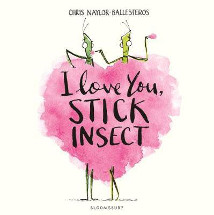
I love you stick insect by Chris Naylor-Ballesteros
Bloomsbury, 2018. ISBN 9781408869925
(Age: 4+) Highly recommended. Themes: Stick insects. Butterflies.
Friendship. Recognition. When the stick insect spies another of his
kind, he falls in love. She is the most beautiful stick insect he
has ever seen and he dreams of their life together. They will have
fun and laugh together, join a band and make some marvelous noise,
dip their toes in the ocean, surf and fly with the birds. In the
background the butterfly keeps warning, 'It's a stick!'
Without drawing breath our ardent lover tells his beloved that they
will ride on motorbikes, and hop on a rollercoaster, go to the
pictures together with a huge bag of popcorn.
When he finally leans towards her he finds that butterfly is correct
and he bemoans the fact that no one told him, eliciting a wonderful
line from the butterfly.
Children will laugh with the stick insect as he imagines their
wonderful life together, becoming more aware that butterfly is
correct in her assertion.
It begs the question of things not being all they seem, or of
judging books by their cover, or taking a step back, of the saying
'fools rush in'. These could be discussed with children as they read
this book.
Teachers and students will take the opportunity to further research
this insect and possibly set up a stick insect tank in the
classroom.
The arresting illustrations use only a few lines to get across the
stick insect's ardour, sometimes filling in the background with
water colour wash that creates part of the setting. His highly
original illustrations took my eye when I read, I'm
going to eat this ant(2017) and I am hopeful that more
will appear from this engaging and creative author.
Fran Knight
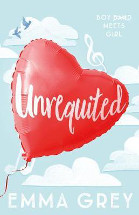
Unrequited by Emma Grey
Angus and Robinson, 2017. ISBN 9781460755044
(Age: 13+) Romance. Music. Friends. Kat Hartland is studying
for her final HSC exams and has no time for a social life, though
she does need a partner for the upcoming Formal and to satisfy her
passion for music she manages to fit in rehearsals in the chorus of
a musical. Her twelve year old twin sisters are fans of world famous
boy band 'Unrequited' and have tickets to their Sydney
concert. Kat thinks their music is predictable and formulaic and
would join an anti-fan club if there was one but when Kat's mother
asks her to take them to the concert she reluctantly complies. Their
train breaks down leaving the girls distraught until a good looking
boy, Kat's age, travelling in their carriage, orders them a taxi, but
not before he retrieves her dropped ticket and sees her seat number.
To the delight of the twins they just get to the concert in time but
Kat pays no attention, listening to her own music selection on her
phone, wishing she had got the name of the boy on the train.
Unrequited lead singer Angus Marsden notices her in the crowd and
tries to find her after the concert, searching for the girl in seat
L26. When his search is posted on social media it takes off and
everyone is talking about "Elle 26". Joel, the boy from the train
tells his best friend about his encounter with a girl he thinks
about all the time, the only thing he knows about is her seat
number! Both boys are searching for their unknown girl and it seems
the whole world is taking an interest while Kat, oblivious, finds
herself absorbed in creating her own lyrics dreaming of one day
having her music heard on the world stage. Of course there are
coincidences, misapprehensions and a villainous rival ensuring we
are kept guessing which boy will win the girl of his dreams. However
the story is fast paced, smart and funny and it is easy to suspend
disbelief and enter into the fairy tale world where dreams just
might come true. The story is told from multiple points of view
cleverly shifting perspective allowing insight into the aspirations
and insecurities of all the characters. Kat is a smart and
responsible heroine and she is treated with respect by both of the
male characters. There are some romantic scenes but nothing that
would keep it off any school library shelf. A delightful book
suitable for teenage girls and older readers looking for a bit of
escapism.
Sue Speck
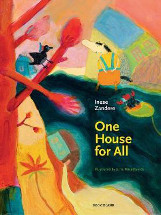
One house for all by Inese Zandere, adapted by Lawrence Schimel
Ill. by Juris Petraskevics. Book Island, 2018. ISBN 9781911496069
(Age: 4+) Highly recommended. Themes: Compromise. Consensus.
Discussion. Friendship. Difference. Three friends, Crayfish, Raven
and Horse are all grown up, having been the best of friends all of
their lives. They wish to remain together, sharing their lives as
they have done in the past. They all plan to marry and want a place
together where their wives and families can reside as well. But they
each have different needs. Crayfish draws a house with very wide
doors, underwater. Horse wants a place that is three acres big with
a living room made of thick juicy grass. Raven wants a place high in
the tree tops.
They look at the three drawings and the horse says that he cannot
fly to Raven's house, and Crayfish says he cannot live in a tree,
while Raven says that he and his wife cannot live underwater. They
each realise that they have only been thinking of their own needs
and so put their heads together for a solution.
A wonderful tale of sharing opinions, of thinking of others when
making decisions, of consensus, it has the feel of a fable in its
tightly packed sentences, full of resonance.
Children will adore the solution reached and many will love to draw
the house the three decide upon. The sparse text is beautifully
rounded, making it easy for young children to read themselves or an
older person read out loud. The illustrations are wonderful, quirky
and colourful, very different, full of interest and thought.
Children will spend a lot of time reading the illustrations while
listening to the tale.
Fran Knight
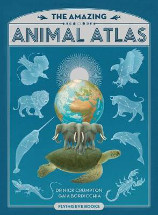
The amazing animal atlas by Dr Nick Crumpton and Gaia Bordicchia
Flying Eye Books, 2017. ISBN 9781909263116
Little people love big books so this one that is 375mm tall will
certainly appeal. Add to the size is the content which is also a
favourite of little people and this new publication will be a
welcome addition to the collection.
Beginning with a huge double page spread that shows the animal side
of the tree of life in pictorial format which is followed by another
double spread of their key habitats around the world, it then starts
in the Arctic and makes its way through all the continents showing
the iconic creatures of each region with some pages opening out to
magnificent double double-page spreads! Information is in short
paragraphs which will encourage further exploration in more detailed
texts.
Having whet the appetite with the amazing variety of creatures that
share the planet with us, there are four pages devoted to
identifying why they are at risk and what we can do about it - very
much a case of "Now that I know this, what can I do about it?"
Complete with a contents page, index, and references this is also a
great resource for helping young readers use the cues to find the
information they want - no one is too young to begin their
information literacy.
A sound investment for either the library or the home collection.
Barbara Braxton
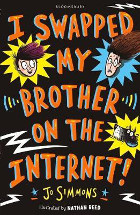
I swapped my brother on the Internet by Jo Simmons
Ill. by Nathan Reed. Bloomsbury, 2018. ISBN 9781408877753
(Age: 7+) Highly recommended. This laugh out loud novel starts with
a pop up ad that immediately grabs the attention of nine-year-old
Jonny, and also the reader. Who hasn't dreamed about getting rid of
their annoying sibling at one time or another? For Jonny, of course
he was going to click! The SiblingSwap.com website opens and is
filled with pictures of brothers and sisters playing and laughing
together. Jonny begins to fill in the form . . . but in his haste
fails to tick the box that says "living", and the one that says
"human" (I mean that was obvious, wasn't it?) so SiblingSwap.com
begin to send Jonny a line of increasingly bizarre replacements for
his brother Ted. Jonny finds himself trying to make do with a
merboy, a boy raised by meerkats and then the ghost of Henry the
Eighth! The only person Jonny can trust with his secret is his best
friend George, who finds all of it very interesting compared to life
helping his Dad in a fish finger factory.
This story will have young readers, or whole classrooms full of kids
in peals of laughter. Every child will be able to relate to wish
fulfilment gone wrong. As the brother replacements begin to get more
and more weird, Jonny begins to figure out that Ted is really okay
after all . . . at least compared to his replacements. Teachers
could use this as a gateway for talking about relationships, sibling
rivalry, trust or jealousy. Jonny is forced to look at some of his
annoying habits too, so could be used as a means for self
reflection.
The story is easy to read, and well put together. Readers will find
it hard not to giggle as King Henry tells Jonny off for being a
potty-mouth about his Cockapoo named Widget.
This book is highly recommended, please read it to your children or
your class.
Clare Thompson
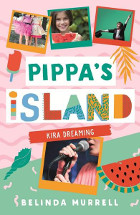
Kira dreaming by Belinda Murrell
Pippa's Island series. Random House, 2018. ISBN 9780143783701
(Age: 10+) Recommended. Themes: Humour, Talent quest, Friendship.
The beach side cafe is the first in a sparkling series for mid to
upper primary school girls, Pippa's Island. The main character Pippa
and her family have arrived from England, and have taken up
residence in a caravan at the back of her grandparent's place at
Palm Cove. All the problems of making new friends is behind the
first in the series as Pippa develops a group: Meg, Charlie, and
Cici. Single mum must now make a living and has an idea of turning
an old beach shack into a cafe, with an upstairs to live in. Pippa's
story continues with number two in the series: Cub reporter,
and the third in the series, Kira Dreaming has the girls
preparing for a talent quest run by Cove Public School, Pippa's
excited trio of friends prepare their dance and song but Pippa is
unsure of performing and a strong case of butterflies holds her back
when the time comes to audition in front of the whole school.
All the while the beach shack cafe is doing well until the girls
decide to paint the upstairs to further the day when Pippa and her
family can move in. But someone is causing havoc at the cafe and it
is up to Pippa to investigate.
The stories move along easily, with incidents that all girls can
relate to, involving friends and family. Mum's need to make a living
has the family working together, while the grandparents play an
important role in caring for the siblings, a circumstance many will
recognise. Told with humour against the background of living on an
island off the coast of Australia, the series will have wide appeal.
Fran Knight
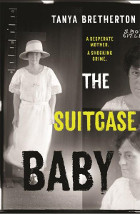
The suitcase baby by Tanya Bretherton
Hachette, 2018. ISBN 9780733639227
(Age: senior secondary to adult) Recommended. Themes: Murder, Post
natal depression, Migration, Sydney, Australia 1920's. Paralleling
the escalating love of crime fiction is an intense interest in real
life crime, and The suitcase baby falls into this realm, a
non fiction book telling a story of a horrible crime, but at the
same time showing the background that led to this murder and others
like it. In the 1920's Sydney was experiencing an increase in the
number of dead babies found in places like train stations and in the
sea. This particular one, found in a suitcase in Sydney Harbour in
1923, set in place investigations, here described in detail, until
the murderer, the child's mother was found and detained.
The media at the time was enthralled with the detecting that led to
the arrest and eventual trial of the mother, Sarah Boyd. But nothing
is that simple, as Sarah and her friend, Jean Olliver were embroiled
in the court case.
Bretherton delves into society's attitudes to women at the time,
with no women on the jury, able to offer a more sympathetic ear to
the proceedings, and the medical profession holding some very odd
ideas about post natal depression. Chapters on the immigration of
these desperate women from the poverty of Ireland and Scotland gives
the reader an insight into the difficulties they faced. Often
physically smaller from malnutrition, they were treated with scant
attention, few finding the jobs they expected and having to live in
sub standard conditions with little hope of climbing out of the
poverty they knew so well. Little wonder that many turned to alcohol
and prostitution.
Politicians then used them to further their own ambitions and Sara
Boyd was a victim of political expediency and sentenced to death, an
unexpected verdict as most women were given light sentences at that
time.
Sociologist Tanya Bretherton tells us the story of Sarah, just one
of many women coming to Australia for a new life early in the
twentieth century, but finding themselves in straightened
circumstances. This situation led to an increase in the number of
babies abandoned and killed, and this was instrumental in developing
ideas about adoption as a policy in Australia.
Tanya Bretherton has a PhD in sociology and is particularly
interested in social history, working at the University of Sydney
where she published a book about the conditions of modern nursing.
In 2016 she published a book about families living below the poverty
line in Australia, and her association with organisations such as
Mission Australia, The Smith Family and Adopt Change saw her publish
Journeys to Permanency telling real stories of foster
children and adoption in modern Australia.
Mark Knight
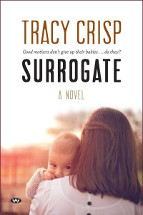
Surrogate by Tracy Crisp
Wakefield Press, 2017. ISBN 9781743055083
(Age: Adult) Themes: Surrogacy; Motherhood; Adoption. Life is
complicated, but the complications for the central character
Rachael, a young nurse, become intense when an encounter with Dr
Cate O'Reilly leads her to emotional, psychological and sexual
foreign territory. This is the story of loss and barrenness, of
taking extraordinary steps to resolve problems that lead to other
complications. It also tells of the psychological webs that we find
ourselves tangled in, when life's journey meets an obstacle or takes
an unexpected path. Although this is a journey into Surrogacy and
the difficulties this raises for all parties, it is also an
exploration of adoption, stress, secrets and family connections. At
no stage is the reader sure what will happen for Rachael and Cate,
and this uncertainty adds power to the story laced with the pathos
of doubt and ambiguity. And all female readers will wonder what
would they do, and do good mothers give up their babies?
This is not a book for young readers as it explores adult
relationships and issues, but it is compelling in its exploration of
the lengths to which some people will go in order to create family
or to keep a secret. Set in Adelaide and redolent with the charms of
all that Adelaide offers, it is also an insight into the parenthood
struggles of past generations as well as modern issues.
Carolyn Hull
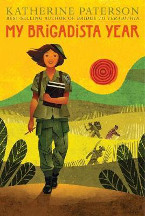
My brigadista year by Katherine Paterson
Walker Books, 2018. ISBN 9780763695088
(Age: 10+) Highly recommended. Themes: Cuba, Literacy, Gap year,
Volunteering, Civil war, Corruption. After Castro took power from
the corrupt, USA supported leader, Batistia, things changed for
Cuba. Castro wanted the country to become more literate and
thousands of teens were recruited to go into rural Cuba and teach
people to read and write. In this absorbing novel by the award
winning Paterson, she tells the story of these brigadistas through
the eyes of her central character, Lora. At thirteen she is caught
up in the fervour of helping Cuba become literate, trained to be a
teacher, given her supplies and a hammock and a brief knowledge of
first aid, then sent to a village in the mountains, a place where
anti Castro forces still exist, where one of the brigadistas was
killed in the previous year. This is the first time she has left the
safety of her home, and her parents are fearful for her, but she is
determined to go.
Lora's story is deftly told. Paterson is able to diffuse complex
ideas into an easily absorbed story. The reader learns about the
background to this highly volatile situation, with arms supplied by
the Americans to the anti Castro forces as Castro is seen as too
Russian leaning for the USA, where the teachers sent are viewed with
suspicion and must earn the trust of those they live with. Behind
Lora's year in the jungle is the invasion of the Bay of Pigs (1961)
and so the reader is able to absorb a different view of a little
known historic incident.
Brought up with an anti Castro western view of Cuba, this little
book offered me a a chance to reassess ideas held in the past, and
for younger readers this is an historical novel of immense interest
and research which will give readers a new perspective on why Trump
and Obama have such differing views of the USA's relationship with
Cuba.
The central character leads the way, developing skills necessary to
live with an unknown family, learning their way of life, learning to
fit in and to teach them the skills necessary for a modern Cuba.
And all the while is the threat from the terrorists in the mountains
behind the village.
A wonderfully involving coming of age story, Paterson shares a
background unique in children's literature.
Fran Knight
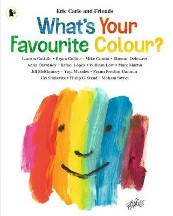
What's your favourite colour? by Eric Carle
Walker Books, 2017. ISBN 9781406356526
(Age: 5-Adult) Highly recommended. Themes: Colour. Children's book
illustrators. In this beautiful book 15 outstanding illustrators
have chosen to let the reader know what their favourite colour is
and have drawn a picture to illustrate this, telling why they have
chosen that colour and why they love it. The contributors include:
Eric Carle, Lauren Castillo, Bryan Collier, Mike Curato, Etienne
Delessert, Anna Dewdney, Rafael Lopez, William Low, Marc Martin,
Jill McElmurry, Yuyi Morales, Frann Preston-Gannon, Uri Shulevitz,
Philip C. Stead, and Melissa Sweet and readers will be fascinated by
the colours chosen and the wonderful illustrations that accompany
them. Each artist has a double page spread with a usually short
piece about the colour and then a gorgeous drawing in that colour.
I was particularly taken with the two illustrators who chose grey as
their colour as I had not personally considered it as a favourite.
Melissa Sweet wrote a haiku for grey: Foggy morning grey
Makes other colours glimmer.
Even the gull's beak And then gives a list of different greys and an illustration of
Maine, its boats and water. In comparison the grey chosen by Rafael
Lopez "dares to be different" and knows how to make the other
colours sparkle and a cheeky grey octopus proves this in the
illustration. Marc Martin chose crimson red because "it is the
colour of the crimson rosella" and vibrant rosellas fly across his
double page spread. Other pages are equally as interesting.
This book will inspire readers to consider their own favourite
colours and why they have chosen them. In the classroom children
could do their own drawing and writing and all readers will be
inspired to find books by these wonderful artists to see more of
their art work. There is short biographical information about them
at the back of the book with a photo of each artist as a child and
this is fascinating as well.
Pat Pledger