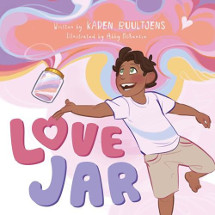
Little Steps Publishing, 2018. ISBN 9781925545357
(Age: 4+) Themes: Emotions, Love, Family. Reading rather like a
reader in a set of books about emotions, Love jar shows a
family which actively works at teaching their children to be aware
of the reciprocal nature of love. Into a jar go the hearts which
make up the love shown between family members. When someone is sad,
a love heart comes out of the jar for that person, helping them to
overcome their sadness and know that they are loved.
In kind, a girl shares her last biscuit with her brother, showing
him she cares, and in return receives a hug from him, showcasing the
love between them. The boy shows his love for his mother by tidying
up his toys, even though he wants to play with them, the girl sits
and watches football with her father showing him how much she cares.
Even when the girl is very sad, and the love jar so heavy it is hard
to pull out a heart, her parents show her their love for her.
A family full of love, reciprocated and shared is shown all the way
through this little book, reminding readers of the everyday love
that is showered on them by their families and needs to be given
back. This book may have a place in schools where values and
emotions are explicitly taught.
Fran Knight
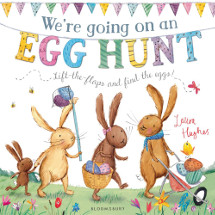
We're going on an egg hunt by Laura Hughes
Bloomsbury Children's Books, 2018. ISBN 9781408889749
(Age: 2-5) Recommended. Lift the flap book. Themes: Easter,
Counting, Egg hunt. The Easter bunnies are off on an egg hunt,
determined to find all the eggs. There are ten of them hidden under
flaps, but there are other surprises on the way.
Children will love to chant along with the refrain that is repeated
throughout the book: We're going on an egg hunt.
We're going to find them all.
We're REALLY excited . . .
HOORAY for Easter Day!
Lifting the flaps reveals the eggs, and children can count along as
they find them. There is another refrain for children to join in Oh, no - . . .
Can't go over them.
Can't go under them.
Can't go around them.
The bunnies are very cute and readers will delight in seeing all the
farmyard animals that they come across in their search for the eggs.
This is a fun board book, sturdy in construction and a great read
aloud in preparation for an Easter egg hunt.
Pat Pledger
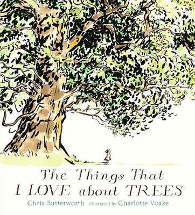
The things that I love about trees by Chris Butterworth
Ill. by Charlotte Voake. Walker Books, 2018. ISBN 9780763695699
(Age: 4+) Highly recommended. Themes: Trees, Environment, Seasons.
With the sparest of words, Butterworth encapsulates the reality of a
tree as it has leaves in spring, blossoms and forms fruit in the
summer, which is ready to pick in the autumn and then becoming bare
in the winter. Each season is described in spare prose, making it at
once easy for younger readers to understand and impelling older
readers to find out more. The illustrations bear testament to the
tree and its life cycle through the four seasons, reaffirming the
words as they travel with the tree over its year.
Each page has a new adventure with the tree that is loved. The first
double page shows a young girl coming out of her front door of the
flats to see the bare branches of the plum tree hovering over the
balcony. The tree is covered in tiny sprouting leaves with buds
forming and getting bigger.
We see the buzzing bees as the tree wakes. It is spring.
Later in summer, trees are dressed in their finery, covered with
bright green new leaves. The plum tree has small round fruit
appearing.
As autumn approaches the trees develop coloured leaves as they begin
to shed, and the nuts and fruit ripen for the animals to find and
eat or store.
Winter sees the wind has blown the leaves form the trees, leaving
them bare and stark in the cold. The last double page shows the girl
outside her flat looking at the tree as it waits for spring to come
around once again.
Children will love reading of the trees and their cycle of life, the
contribution they make to their surroundings, and the animals that
benefit from their being there. On each page is the story of the
tree and its life cycle, but also on each page in a different font
are sentences giving facts about the trees. Children will readily
absorb the details as they read the book and its illustrations, a
distinctive style which perfectly suits the words with its lightness
of touch, spare colour and use of white space. I love the branches
arching over the pages, and the floating leaves scattered across
many of the pages, and the perfect stillness of the bare trees in
winter, their magnificence barely needing to be mentioned will make
the reader gasp as they turn the last pages.
At the end of the book is a brief index, allowing children to learn
how to use an index and giving them a reason to go back and look
again at what they have read.
Children will be encouraged to take longer looks a the trees around
them, noting their changes through the seasons, seeing what animals
depend upon the tree and its produce, seeing what they can do with
the tree. Next to the index is a range of things children and
classes can do: collect leaves and nuts, make outlines, collect
leaves, make a shelter etc. I am sure readers and teachers will be
able to think up a pile of other things that children can do when
they finish reading this stunning book, encouraging children to look
anew at what is found outdoors.
Fran Knight
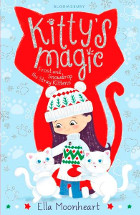
Kitty Magic : Frost and Snowdrop the stray kittens by Ella Moonheart
Kitty Magic book 5. Bloomsbury, 2018. ISBN 9781408887684
(Age: 8+) Highly recommended. Frost and Snowdrop the Stray
Kittens is a magical story about friendship, helping others
and cats. Kitty is a young girl with the ability to turn into a cat.
She is a cat guardian who helps the cats in her village. At the Cat
Council meeting, a beautiful cat named Emerald asks some questions
about stray cats which get Kitty thinking. When Kitty sees Emerald
carrying cat food in the park, she sets out to investigate. Kitty
discovers Emerald has been caring for two stray kittens that have
lost their owner. All of the village cats come together to help find
the missing owner. Finding a tall lady with pink hair proves to be
tricky. Can the cats help the kittens? Winter is nearly here. Will
they run out of time? Frost and Snowdrop the Stray Kittens is an easy to read novel
with wonderful role models for girls. Kitty is helpful and goes out
of her way to help others. Emerald is brave and looks out for
others. The cats are a great team who pull together in a crisis. The
story moves quickly, making it engaging for readers and the
vocabulary is descriptive. Readers will visualise the cats meeting
together, talking together and scaring away a scary fox. This book
is also part of a series and readers will enjoy reading about all of
the adventures. They can read the books in any order as there is
enough back-story to help readers know what is going on. It is
highly recommended for readers aged 8+.
Kylie Kempster
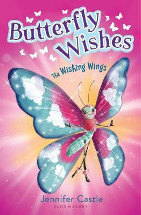
Butterfly Wishes : The wishing wings by Jennifer Castle
Bloomsbury, 2018. ISBN 9781681193717
(Age: 7+) Recommended. The Wishing Wings is the first
instalment in a new series. The lead character is Addie, a young
girl. Moving to a new house and a new town can be scary but Addie is
brave. She is brave enough to chase her beloved dog, Pepper, into
the woods when he escapes. Unknowing to her, Addie was being watched
by a butterfly princess. Sky Dancer and her butterfly kingdom need
help and Sky Dancer has chosen Addie to help her. A magical
enchantment has caused problems with the newly born butterflies.
When born, the new butterflies need to grant a wish for a human
child to help the butterfly get its colours. The enchantment has
made the new butterflies scared and unable to grant a wish. Who
would place such a terrible enchantment? Can Addie and her sister
help save the butterfly kingdom? The Wishing Wings is a lovely story promoting bravery and
helping others. The girls are strong minded and ready for an
adventure despite big changes in their lives. Sky Dancer is will to
fight for her home and her family. They are wonderful role models
for young girls. The story is easy to read and moves quickly, making
it an engaging read. Readers will want to find out what happens next
as well as see what other adventures Addie and Sky Dancer get into. The Wishing Wings is recommended for readers aged 7+.
Kylie Kempster
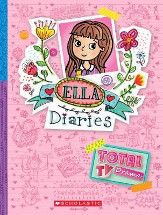
Total TV Drama by Meredith Costain
Ella Diaries. Scholastic, 2018. ISBN 9781760279066
(Age: 7+) When Ella's teacher announces that their class will be
appearing in the TV show Quiz-zam, she and her friends all want to
take part. The problem is that not everyone can be on the panel -
only four of the twenty-six students in the class can be involved.
Each of the children needs to audition by taking part in a quiz in
the classroom. Ella goes home and drives her family crazy as she
begins to devour as much information as possible, constantly
spouting interesting facts, to ensure she will be part of the team.
Finally, after the team is announced, costumes discussed and
practise complete, filming begins. Teams are sworn to secrecy and
not allowed to discuss the outcomes with families or friends. Which
team will win and will the show strengthen the girls' friendships
make them a cohesive group or create more tensions?
The diary type format, large and varied font sizes and copious
illustrations peppered throughout the text make this an easy series
for emergent readers but the content makes it engaging enough for
middle primary students as well. Personally, I found the purposely
misspelled words quite frustrating. I know there are numerous
students who struggle with spelling and may be inclined not to even
pick these errors up as being incorrect. Despite this fact, I am
well aware that books from this series are rarely on the library
shelves, as they are so popular, and will continue to recommend them
as a stepping stone for our younger readers.
Jo Schenkel
The Mediterranean by Armin Greder
Allen and Unwin, 2017. ISBN 9781760630959
(Age: all) Highly recommended. Themes: Refugees, Mediterranean Sea,
Drowning, Corruption, Civil war, Wordless stories. In a scathing
attack on the almost faceless men who sell guns which support war,
in turn producing a constant stream of refugees, Greder forces every
reader to stop and take notice, to reevaluate, to empathise with
those who through no fault of their own, are pawns in the hands of a
group of men whose sole aim is to make money; the sharks of our
society.
Guns are produced and then shipped in large containers, almost
clandestinely to men waiting at the other end. They use the guns to
force people to fight for them and people are killed and villages
are burnt down in their wake. People stream away from the danger in
their midst and find men who sell them a way out, passage on a boat
across the Mediterranean Sea. But they do not make it.
The men who sell the guns, then sit down in the most expensive of
restaurants to eat the fish that have grown fat on the bodies washed
down deep into the sea after their boats have failed to take them to
safety. The sharks who sell their guns, or war, or safe passage are
no different from the sharks which eat the bodies in the sea.
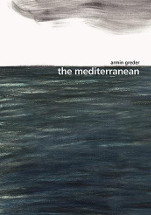
Greder's breathtaking mixed media illustrations delineate the
problem: the making of money overrides everything. We are all at the
mercy of the sharks for whom money is king, and it is no mistake
that these faces who sell the guns, rouse the people into fighting,
sit at the restaurant to eat their fish meal and sell safe passages
to the displaced, are all the same.
Greder's illustrations are arresting. The cover shows the sea, black
and forbidding, overhung with grey clouds. Opening the book we find
a body floating down, down to the bottom of the sea where it becomes
fish food. Every page is filled with sombre greys and blacks, white
used to accentuate the bleakness of the situation for those trying
to survive.
Alessandro Leogrande's afterward tells the tale in all of its
horror, the throwing back into the sea of bodies found on the beach,
the many thousands which wash up each year, the very dehumanising of
these people as we use statistics to define what is happening. And
we are all complicit in our silence. This heart wrenching book is
not designed to sit on shelves. It must be shared and discussed. Teacher's
notes are available on the publisher's website.
Fran Knight
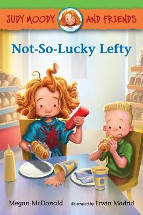
Not-So-Lucky Lefty by Megan McDonald
Judy Moody and Friends series. Candlewick Press, 2018. ISBN
9780763696054
(Age: 7+) Highly recommended. Not-So-Lucky Lefty is part of the Judy
Moody and Friends series. It is Left Hander's Day and Judy is
feeling a bit left out - she is a righty. Her dad and her brother,
Stink, are lefties and they are off to the pretzel factory to
celebrate. Judy is trying her best to use her left hand for
everything but it is harder than it looks. However, Judy is invited
to the pretzel factory as long as she promises to use her left hand
all day. The factory is great despite Judy getting sauce all over
her shirt. The family wins tickets to play mini golf thanks to their
very gluey pretzel invention - Judy was in charge of using the glue
with her left hand. Being a lefty is tricky, especially when you are
really right-handed. Will Judy be able to play mini golf
left-handed? Not-So-Lucky Lefty is a lovely story for emerging independent
readers. It is about persistence when trying something new as well
as accepting your own strengths. It is a first novel when moving on
from readers and the bright coloured and sometimes funny pictures
help tell the story, making it appropriate for all readers moving
into first novels. The vocabulary is descriptive and easy to read
for confident readers and the small amounts of text on each page
will build reading confidence as well. It is highly recommended for
readers aged 7+.
Kylie Kempster
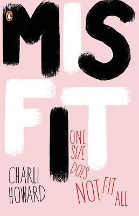
Misfit - One size does not fit all by Charli Howard
Penguin Books, 2018. ISBN 9780241328828
(Age: YA and older) A highly readable memoir style book -
almost reads like fiction and hard to put down.
The book details the journey of British girl, Charli's feelings of
abnormality beginning at age 8 through primary school, boarding
school, university and a modelling career.
This includes obsessive compulsive disorder, anorexia, bulimia,
among other mental disorders - all the while keeping the behaviours
'hidden' in Charli's attempts not to be seen as a 'misfit' by her
peers and family.
Social media and model industry expectations, and a sense of not
belonging and wanting to be loved are explored as causes of her
behaviours.
There is only one chapter on Charli finally admitting she needed
help and getting rehabilitation and finding 'happiness'. More on the
recovery process would have been useful in putting perspective on
the memoir and the difficulty of recovering from such major
disorders.
The use of capital letter abbreviations which older adults may not
understand was annoying.
The author on the Dear Reader first page section warns young people
not to read the book if they are susceptible to suggestion or
triggers for depression, OCD, anorexia, etc. I agree and would only
recommend the book for young adults and older.
The modelling industry in particular should read books like this to
be made more aware of (and accept responsibility for) how young
girls' lives are being harmed mentally and physically by the actions
and standards advocated.
Ann Griffin
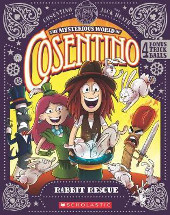
Rabbit Rescue by Cosentino, Jack Heath
The Mysterious World of Cosentino series. Ill. by James Hart.
Scholastic, 2018. ISBN 9781742765433
(Age: 6-8) Themes: Magic, Humour. Cosentino, the Grand Illusionist
returns in another exciting whirlwind story, filled with magic,
illusions, rabbit rescues and daring escapes. Cos the magician at
Copperpot Theatre, his friends Locki the padlock, Snuggles his
rabbit and Professor Camouflage master of disguises are always ready
for a new adventure. When Cos calls Matchman up to the stage he's
unimpressed by Cos and his Nonna's magic routines, a watermelon
sliced by a chainsaw and a trick sword pushed through the magicians
heart. Matchman's revenge involves setting the theatre on fire and
Cosentino's skills are needed to save the audience and escape from
the flames.
Meanwhile at royal zoo, the evil two-headed Kings has locked up
nearly all the Magicland rabbits ready for a special feast featuring
rolled roast rabbit on the menu. Snuggles Cos's rabbit friend who
lives in his hat, asks the illusionist and his friends to help
rescue all his furry friends. The king had banned magic in
Coppertown and relocated all of the rabbits to Warren.
Cosentino and his friends conjure up a special plan involving a
disguise, secret tunnels and tricks to sneak into the zoo and
release the rabbits. Rabbit Rescue by Cosentino and Jack Heath is an easy to read
graphic novel filled with fun dialogue, colourful text, bold words
and colourful cartoons, bursting with splashes of orange. Four foam
balls are included with tips on magic tricks as well.
Rhyllis Bignell
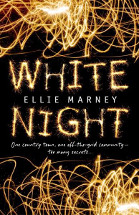
White Night by Ellie Marney
Allen and Unwin, 2018. ISBN 9781760293550
(Age: 14+) Highly recommended. Themes: Rural communities,
Alternative communities, Secrets, White Night. Returning to school,
Bo's year eleven career advisor asks why he is giving up cooking
when he is so talented. But Bo is torn, should he go with what he
really likes and possibly wants to do when leaving school, or stick
with sports, and his father's aim of being a professional player.
Back at home in his close knit family, things are unusually tense:
Mum is seven months pregnant, with Bo having more responsibility,
his parents surprisingly argue, and Dad takes a phone call which
leaves both parents anxious. There is an unaccustomed tension in
this strictly organised house.
Into his world comes Rory, a new girl in the small rural school
where all the students have known each other for years. From an
alternative community, Garden of Eden, she has been home schooled,
and arrives unprepared for fitting in. She and Bo ride their bikes
to school along the same roadway and one day he stops and helps her
with her old bike. He becomes protective of her, deflecting some of
the flak aimed at her because of her willingness in class and odd
clothes and ideas. Things come to a head when several girls,
including Bo's friend, Sprog, put shit in her locker, and Bo, going
to her place on the weekend feels more than friendship.
Bo is quite taken with the place where she lives; an alternative
community of eleven people, living without plastics, mains water and
electricity, growing all the food they need and recycling all they
can. The ideas they promote seem invigorating to Bo, but his father
warns him about going there, and when he arrives home late one
night, he is banned from visiting Rory and Eden.
Sprog hates the idea of the closure of the skate park, and is
encouraged to talk to the council to change its mind. When this
doesn't happen, the students organise a White Night, a celebration
with a DJ, light and music to raise finds to support the skate
park's renovation, but the night coincides with things happening at
Eden. The meaning of the term White Night is double edged: one as a
celebration involving light and music, the other a mass suicide, as
happened in an alternative community in Guyana in 1979. The reader
is now transfixed as the two ideas come together.
Great characters make this a good read: the setting is beautifully
delineated, minor characters hold their own against the stand out
main ones and the community's secrets are engrossing. I found myself
thinking out loud, 'ring the police' or 'just talk to each other'
several times as I read, so involved was I with some of the issues
the teens of the town had to deal with.
Fran Knight
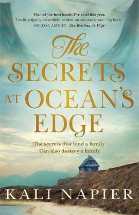
The secrets at Ocean's Edge by Kali Napier
Hachette, 2018. ISBN 9780733637919
This book is gripping from the first words to the end. Releasing
only as much information as we need to know, Napier keeps us
hanging, knowing, like her characters do, only some of the details.
Who is the mother of the 'adopted' daughter, who do they see
themselves as in their relationships, and why are there tensions
between families and other residents of this seaside town in Western
Australia? These questions dominate this narrative set in the 1930s
in Western Australia. Napier slowly releases some answers, often by
inference and rarely do we get more, although we are challenged to
build up our own understanding of what has happened and to whom.
Ironically, it is as if this enigmatic story reflects the lack of
answers experienced by almost all of the characters. Napier
positions us in much the same way, tortured by our need to know and
understand the facts and to grasp why each character responds in the
manner in which they do.
Essentially this is the story of one family whose complex
relationships are rarely revealed and for whom the secrets form
their story. Keeping these is seen as the key to success, especially
when falling wheat prices and simple bad luck force the main family
to seek their fortunes away from the farm. Beginning a new life at a
seaside town, setting up a summer guest house and establishing
themselves as worthy people, challenges them, and their extended
family, to be acceptable members of the local area, the golf club,
the local school, the women's groups and the town.
Little by little we gain a greater understanding of the motivation
and behaviour of each character as Napier implies reasons, suggests
motivation, and allows us to intuit what might be truth. For truth
is very much in question, her implication being that we write our
own stories through what we tell, letting others know only what we
would wish them to know so that we keep ourselves intact, our
'stories' acceptable as truth, and the darker sides of our stories
so often hidden. Tension and confusion underlie this narrative, and
we are drawn into the lives of the protagonists deeply through
bearing this tension as they do, whether it is to tell the truth,
conceal the darker secrets, or to reveal just enough to explain
their behaviour. It is very hard to put this book down.
Elizabeth Bondar
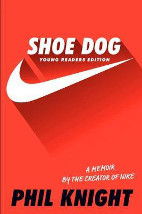
Shoe dog by Phil Knight
Young reader edition. Simon and Schuster, 2018. ISBN 9781471170119
A memoir of the origins of Nike by its founder Phil Knight (an MBA
graduate and Accountant), it is written in a highly engaging manner.
I was expecting a 'dry' account of the creation of a successful
business but this is a warm, at times humorous, account of his life,
loves, friends, hopes, travels, setbacks as well as successes.
At a time in the early sixties when running was not popular and
running/sports shoes were not generally worn outside track events,
Knight's consuming interest in competitive running and his
admiration for his coach spark the idea for a running shoe.
The memoir details Knight's life from travelling the world post
university and importantly to Japan for a meeting with a Japanese
sport shoe manufacturer to gain the right to exclusively sell its
Tiger sports shoe in the USA. Providing constant feedback and
suggestions to improve the shoe led to its popularity with runners.
Forming a partnership with his coach and taking risks and working
longing hours initially from his bedroom at home, eventually lead to
success.
The memoir would be good case study for Business Studies students as
it covers the cultural differences impacting business dealings as
well as the financial risks and workload associated with
implementing an idea into a successful product.
The Epilogue is a final letter to the reader of this Young Reader
edition. One does not need to be a 'shoe dog' (person passionately
devoted to shoes) to enjoy the book.
Ann Griffin
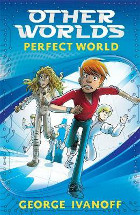
Other Worlds: Perfect World by George Ivanoff
Penguin Random House Australia, 2018. ISBN 9780143786191
(Age: Primary 8+) Keegan finds a junk shop running an errand for his
Mum. In one of the cupboards inside he finds a computer chip which
he feels drawn to. The store curator tells him it is key to another
world. She also warns him that once he goes in he might not come
out. Naturally he opens the cupboard, touches the key and goes
through the doorway.
In this science-fiction story, Keegan then finds himself in "Perfect
World" where humans are cloned in groups of 5 and everything and
everyone that doesn't fit the rules are quickly disposed of. The
concept of "The Refuse" was interesting: that clones with
imperfections were disposed of into the sewage tunnels. Keegan
befriends several of the clones who decide to revolt and in the
midst of a mini-revolution he meets characters who are key in
helping him get home.
While this novel explores new concepts of digital tech science
fiction, it also fits the mold of many alternate world stories
before it. Perfect World reminded me of a Doctor Who
episode; it was fast paced and cinematic moving but at the same time
was quite a short book and felt a bit rushed in parts.
Children aged from about 8 will enjoy the novel, particularly those
who are into sci-fi. From the look of things, there are several
others in the series coming out this year featuring a new character,
different world and a different key in each one.
Clare Thompson
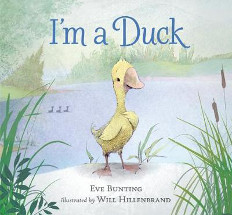
I'm a duck by Eve Bunting
Ill. by Will Hillenbrand. Candlewick Press, 2018. ISBN 9780763680329
(Age: 4+) Themes: Fear, Overcoming fear. In simple rhyming lines,
Bunting tells the tale of a duck, which when an egg, rolls into the
pond. Mother duck rescues her errant egg, but when it hatches, the
resulting duckling is afraid to go into the water.
The story of how the duck overcomes its fears takes up the rest of
the story, as other pond animals support the duckling in its
attempts to take the plunge, giving a range of different advice.
The owl, the frog, and its siblings all offer suggestions, but in
the end it is the duckling which does something about its concerns.
In simple rhyme, useful for introducing younger children to the idea
of rhyme, and soft pastel like illustrations, the story the readers
will have no difficulty understanding the message of the story and
be able to share stories of their own fears and how they overcame
them.
Fran Knight