Black Inc., 2021. ISBN: 9781760641139. (Age:10+) Highly recommended.
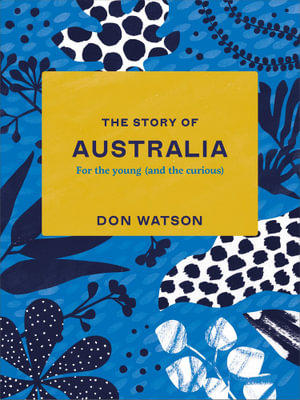
The striking gentle blue cover of The Story of Australia: For the young (and the curious) draws the reader in to a very special and important book. Don Watson, who has written previously for adults, has created an easy-to-read non-fiction book that covers all aspects of Australia’s history, from ancient times to our contemporary era. What sets this book apart and more in tune with today’s thinking is that it explores and explains our history from both an honest and meaningful indigenous perspective, interlaced with a non-indigenous perspective. Reading the first two chapters about Ancient Australia and Aboriginal Australia sets the reader on a chronological path to finding out how Australia grew over time and the successes, struggles and injustices that ensued. Throughout the book, the author has written openly about landmark events such as the massacre at Myall Creek NSW in 1838 of twenty-eight Aboriginal men, women and children or World War Two in which nearly 40,000 Australians died and the great Eddie Mabo and the land rights debate of the 1990’s. He shares the plight of women convicts in colonial times and the effect of the Great Depression on the Australian people. The diverse topics covered provide a wonderful snapshot of how our country has grown and changed. Each chapter ends with a profile of a famous Australian including the likes of the Mungo Woman, Caroline Chisholm, Mary Gilmore, Albert Namatjira and even Kylie Minogue. The book has a detailed contents page and extensive index, as well as photographs and illustrations on each page to break up the text into manageable chunks. The clever use of footnotes displaying the dates ensures the reader can either follow the history through from cover to cover or research a certain period.
This book is an important read for late primary to upper secondary students as well as adults who may need to rethink Australia’s history from a different perspective. The Story of Australia: For the young (and the curious) would be a valuable addition to a classroom, public or home library.
Themes Australia, History - Ancient, Indigenous, Colonial, Contemporary.
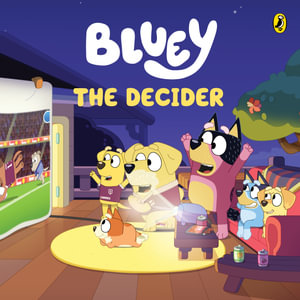
All the avid fans of Bluey, the very popular ABC children’s show, will be thrilled to see another book about Bluey and her family. This time Mum is going off to a baby shower and Dad will be putting Bluey and Bingo to bed. Even though Mum promises to kiss Bluey goodnight when she comes home, Bluey is unhappy and apprehensive because it is always Mum who puts them to bed. Will Dad be up to the task, and will Bluey overcome her fears?
The story line will resonate in families who have children who are worried about change. Bluey is so used to Mum putting her to bed that it takes a lot of effort on the part of Dad to keep her occupied. He organises playing follow the leader and then pushes the duo on the swings. But it is not until Bluey uses her imagination and sets up her own baby shower to play with that she settles down.
With a durable cover and thick pages, Bluey: Daddy Putdown will withstand much use from young children. Illustrated with the iconic Bluey characters, the bright colours are gorgeous, and the details will be ones that children love. Bluey’s baby shower is so cute, with all the toys sitting in a circle, each with different expression on their faces. And for carers there are some very funny moments that they will appreciate.
Another happy, feel-good book in this series that is sure to be popular with young children.
Themes Change, Bedtime, Families.
Pat Pledger
Stop the Dad jokes! by Adrian Beck. Illus. by Simon Greiner
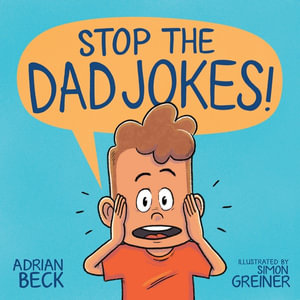
Anyone who has had to listen to corny jokes will empathize with this young boy who is off too the zoo with his dad. He thought it was going to be fun until Dad told a joke. Dad insists that it is every dad’s mission to tell Dad jokes, and goes on to demonstrate how the giraffe, lion, crocodile, elephant, leopard and other animals all like to tell jokes. And then on a double page spread, are some very weak, funny jokes ('What do you call a pig doing karate? A pork chop!') that will have the young set giggling themselves silly.
The rhyming narrative lends itself to being read aloud and will be a source of much fun and laughter in the family. Greiner’s illustrations, in bold colours, outlined in black, are also a source of amusement, especially the long-suffering expressions on the faces of all the young offspring, both human and animal. It is not difficult to imagine the author and illustrator getting together to laugh about the jokes that they share in this very funny book.
Ideal for Father’s Day, reading the Stop the dad jokes! will be a source of happiness and will have everyone laughing.
Themes Humour, Jokes, Fathers.
Pat Pledger
Allergic by Megan Wagner Lloyd and Michelle Mee Nutter
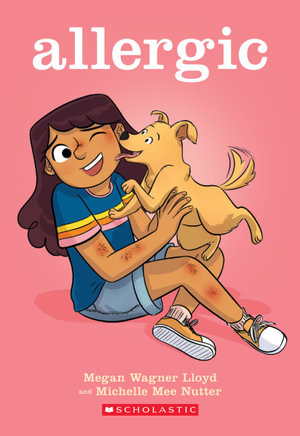
It is Maggie’s tenth birthday and she has been promised a puppy but when they go to get it she has an allergic reaction. She had set her heart on having a dog; her twin brothers have each other and her parents are expecting a new baby; a dog would be hers, filling a gap in her life. However allergy tests show she has a severe reaction to anything with feathers or fur and having a dog is out of the question. To make things worse Maggie is anxious as a boundary change means she has to start at a new school leaving her friends behind. Determined, Maggie sets out to find a pet alternative that doesn’t have fur or feathers and a new neighbour turns out to be a new friend to help with the quest. Meanwhile a course of injections over the next few months aims to alleviate Maggie’s severe allergic reactions. There is no instant cure for Maggie’s allergies but she learns to manage her condition with help. There are a lot of setbacks as she negotiates a difficult period in her life but a loving family and a good friend help her through the difficult times. She is able to develop stronger relationships and move towards a rich and fulfilling future.
This colourful comic style graphic novel is well paced with some strong characterisations particularly in the depiction of a loving family being supportive of each other. It is an engaging story with some valuable information about allergic reactions. Megan Wagner Lloyd's website has a page of ‘Megan’s Comics/Graphic Novel Writing Resources” that some might find useful and Michelle Mee’s website has some inspirational examples of her illustrations.
Themes Allergies, Pets, Family, Friendship.
Sue Speck
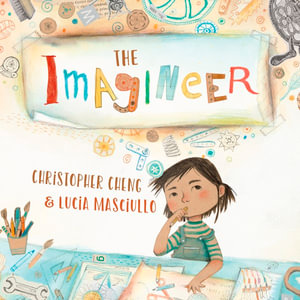
The Imagineer by Christopher Cheng and Lucia Masciullo
National Library of Australia, 2021. ISBN: 9780642279682. (Age:3+) Recommended.
Penny was an imagineer - one of those clever people who can create in their head and then craft with their hands. All day long she would look at the everyday things around her and imagine how they could be used in a different way, like turning an umbrella upside-down to catch the rain and use its unique shape to funnel the water into a mug with a tap. She was always pulling things apart and then twisting and turning, screwing, taping tying until they were back together again - sometimes as they were but usually not.
Her imagination knew no limits as she sketched and planned but sadly the little apartment where she lived was not as large. However, Grandpa lived in a much larger house, one where he had lived for a very long time and the rooms were packed! When Penny first visited, she was in seventh heaven. The treasures to be explored... And then she discovered the shed!
Between them, Christopher Cheng and Lucia Masciullo have used their imaginations and their incredible skills with words and pictures to craft a thoroughly entertaining tale that is rich in all those elements that make the very best stories for children - I had to check there were only 34 pages because there was just so much packed in even though the text is just the right amount. The final foldout page is just adorable and young readers will spend hours just poring over its possibilities, lighting their own imaginations.
And because it is a publication from the National Library of Australia, there are vignettes of the tools that are mentioned in the story with brief explanations of what they are and how or why they were used (because even the grown-ups sharing the story won't be old enough to remember, let alone use them, unlike me who still has some of them). It is such a clever way of taking youngsters back to Old Worlds so they can see how things have evolved over time and allow them to speculate on how their own imaginations might develop them further. Teacher's notes are available.
To use Chris's own words, this is a "most wonderful, phantasmagorical, increibleacious, stupendorific" read.
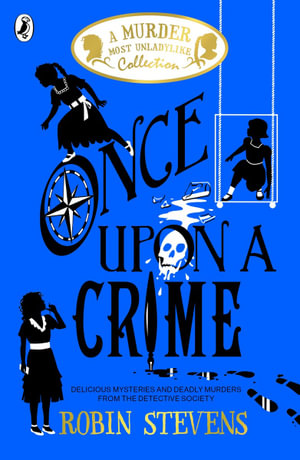
For those who can't get enough of the A Murder Most Unladylike Collection here are six more mysteries in the one book entitled Once upon a crime. There is a waiting list for this book at our school already and all of the previous books are out on loan. In Once upon a crime, Robin Stevens serves up more "delicious mysteries and deadly murders" involving the same characters: Daisy Wells, Hazel Wong, The Junior Pinkertons and Hazel's little sister May. Daisy and Hazel are now just that little bit older, fourth formers at Deepdean School, with older girls' concerns emerging including love interests. May is following in their footsteps with the ambition to be the greatest spy ever.
The murder cases in Once upon a crime occur between January 1936 and September 1939. Locations of the murder cases are quintessentially English and include St Pancras Registry office during Uncle Felix and Miss Livedon's marriage, the mummy room in the British museum, Saltings Beach, the hills country outside Weston Boys' School, onboard the SS Strathclyde and a flat in London. The second world war is a backdrop to the stories. It seems distinctly likely that Hazel's uncle and aunt are involved in the spy game during the war and their attitude to life is a fertile and encouraging influence on the young detectives. In The case of the Missing Treasure, Uncle Felix actively delivers progressive clues in the form of riddles for the children to decode.The children involved in each specific detective case narrate their story in first person. As in the previous books in the A Murder Most Unladylike Collection, methodical case notes are kept where murder suspects lists include active observations, witness reports, times and motives. Most cases are solved through a process of elimination and often there is a dramatic confrontation between the murderer and the young detectives.
These books are very funny. They are, as The Daily Mail states - "simply spiffing" and as The Telegraph states - "A feelgood blend of Malory Towers and Cluedo." Robin Stevens is the Agatha Christie for younger readers of today. Part of the fascination for today's readers is the era depicted and the life and adventures of English boarding school girls and boys growing up during wartime in England. At the back of Once upon a crime is a timeline that depicts the cases solved by the detective society from 1934 through to 1939 and there is a letter from the author... " At the moment I'm writing a brand-new series called The Ministry of Unladylike Activity...
Look out, Robin Stevens is writing more of these very English, very thrilling stories, full of fiendish villains, codes to crack and crimes to be solved. Once upon a Crime is recommended to readers who enjoy light hearted whodunits.
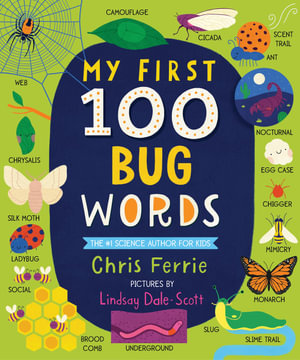
The duo Chris Ferrie (physicist and mathematician) and illustrator Lindsay Dale-Scott have come up with another fascinating book containing 100 bug words. Each double page spread of this brightly coloured board book features a category of insects and 8 to 12 words associated with those insects. The book opens with the familiar group of Bees, wasps, and ants and contains the word colony, showing ants taking food to the nest following a scent trail. On the opposite side of the page are the words Yellow jacket, Spider wasp, Honey bee, Bumble bee all illustrated, while there is a brood comb for the honeybee and the bumblebee is shown pollinating a flower. The spider wasp is solitary while the honeybee is social. An amazing amount of information is given just on these two pages, with the gorgeous illustrations expanding the reader’s knowledge.
The following pages include Centipedes and Millipedes, Worms, Gastropods, Spiders, Scorpions Ticks and Mites, Flies, Beetles, True bugs, Mantises and grasshoppers, and finally Butterflies and Moths. All follow the same structure, with appealing illustrations. There are simple words for the very young and more complicated scientific labels that will engage the interest of the older reader, while adults will enjoy learning more vocabulary as well.
Young children will be introduced to new words and concepts about bugs, while recognising familiar insects like butterflies and spiders. This sturdy board book will stand up to a lot of handling and its padded cover will intrigue the user. Reading this book with young children is a clever way of increasing vocabulary and encouraging curiousity and learning.
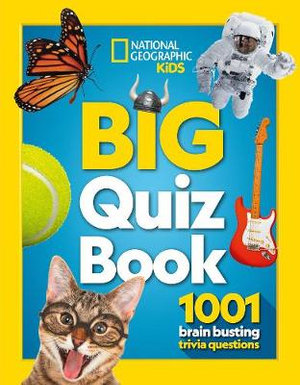
Big Quiz Book: 1001 Brain Busting Trivia Questions
National Geographic Kids, 2021. ISBN: 9780008408961. (Age:8+)
Twenty years ago, while hanging out the washing, I had an idea for a quiz for students in Year 5 and 6 that would be about Australia and Australians and be made freely available online so students all over Australia could participate to develop their information literacy, their digital literacy and communication skills. The Quizzard of Oz was a huge success both online and off when I eventually offered it on CD so schools weren't tied to my timeframe of marking 150 quizzes each Monday night!
When the name and concept were hijacked and patented by an app company, the quiz eventually morphed into Backpack Bear (because I didn't have the means to fight a legal battle) and to this day, students are demonstrating their love of these sorts of trivia contests by eagerly competing.
So this new publication from the ever-popular NatGeoKids is the perfect addition to any teacher's or family's collection if they want to tap into this fascination. Arranged in 9 categories (covering geography, history, creatures, science and technology, space, sport, music and the arts and food) there are 69 separate quizzes of multiple choice or true-false questions (including answers and a lot of fun facts) as well as a monster tie-breaker. While participants might guess at the answers, there is also scope to investigate them thoroughly and perhaps discover a whole lot more about the topic at the same time.
Properly credited, the questions could become the basis of a new quiz set by a teacher to occupy students during this time of lockdown, encouraging both the student and their family to get involved in the research, or for those what-do-I-do-when-I'm-finished? moments as an alternative to the 'read a book" answer. I know from my experience the hours it can take to build quizzes with questions so to have 1001 on tap would be very welcome. And a link to the Nat Geo Kids' website would be a bonus as there are even more quality activities there. Suddenly, staying at home is looking very entertaining!
Barbara Braxton
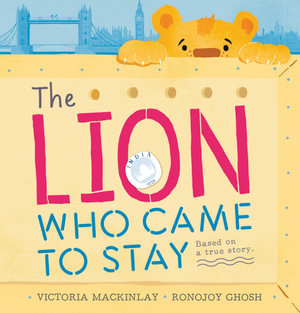
The lion who came to stay by Victoria Mackinlay and Ronojoy Ghosh
When Francis’ parents returned to England from India, they brought with them a present from the Maharajah. Francis had asked for a baby elephant, but this proved to be too large, so when Francis opened the animal crate on Christmas Day, a baby lion popped out its golden head and charmed them all. Francis and the lion, called Singh, the Sanskrit word for lion, did everything together: they looked at the sky above them, searching for falling stars, wandered around Singh’s new home in London, looking at the sights and after many unsuccessful attempts, Francis eventually taught Singh to roar. But one day when Francis needed to go back to boarding school and his parents to return to India, a fateful decision had to be acted upon. The family made its way to London Zoo in a black taxi cab, there to leave Singh in his new home.
After that Francis visited frequently, Singh pushing himself up to the bars to be petted and stroked. The lion died in 1940, but lived on through the cubs he fathered with the lioness, Bessie. He was always a popular and polite exhibit in the zoo, as stories of his background were told.
This charming tale, beautifully illustrated by Ghosh, with a level of humour behind the images which will make readers laugh, will also bring tears of recognition to readers who have had a pet and known the sadness of separation. Readers will sympathize with both characters, Singh and Francis as they make the best of the fate that is placed before them. But it is a happy tale, one of love and friendship, companionship and togetherness, themes that will stay with the reader after the book is closed.
Some may like to look up a similar story, that of Christian the lion, bought at Harrods in London in 1969.
Themes Lions, Friendship, Zoos, India, Family, Separation.
Fran Knight
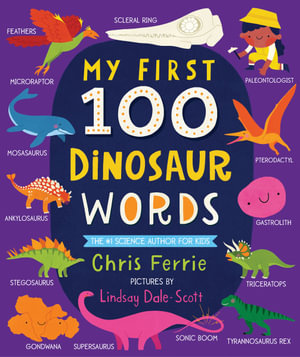
My first 100 dinosaur words by Chris Ferrie. Illus. by Lindsay Dale-Scott
Chris Ferrie is a physicist, mathematician, and father of four children, and as you would expect with this background, has produced a fascinating list of 100 words that relate to dinosaurs and their world. Each double page spread in this colourful board book focuses on one type of dinosaur and then gives 8 to 12 words relating to them. An example is the two-page spread on Stegosaurs, which has a picture of a huayangosaurus, with an arrow to the word 'spines', a picture of Coprolite (fossilized poop), and on the opposite page has a picture of a stegosaurus, with the words, 'beak', 'scutes', 'thagomizer,' and picture of a fossil stegosaurus with the words 'spikes' and 'plates'. Other sections include Mesozoic Era, Sauropods, Carnosaurs, Coelurosuaurs, Ankylosaurs, Pachycephalosaurs, Ceratopsians, Ornithopods, Ichthyosaurs and Mosasaurs, Pterosaurs, and finally Plesiosaurs.
Children who already are familiar with the names of many dinosaurs will be thrilled to learn the more difficult names of the categories, while very small children will be able to easily identify the more common dinosaurs and their attributes. The work of a paleontologist and paleobiologist is also introduced and pictures of fossils are featured.
The illustrations are bright and colourful and there are plenty of interesting details for young readers to look at and talk about. The board book is perfect for little hands, with a shiny padded cover that is sure to appeal. My first 100 dinosaur words will be grabbed by eager readers who love dinosaurs and adults who read to their children are going to learn a lot about dinosaurs as well.
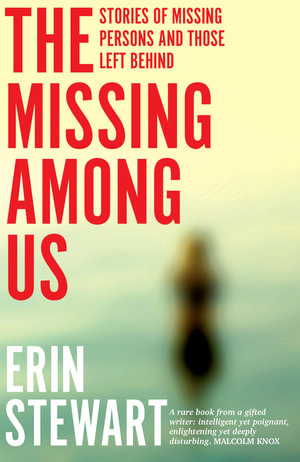
People go missing all the time, and while some cases have a happy ending with the lost person(s) being located, the majority of missing are never found. This book explores the nature of these missing cases, ranging from personal issues, kidnappings, accidental cases, war, natural disasters, murder, refugees, Stolen Generations and any other kind of disappearance. Stewart has researched cases that are widely known, including Madeleine McCann, cases that originate from wars, cases that are unknown to the wider public but still have a deep impact on those who knew the person and dozens of cases in between. Stewart explores the pain and ambiguity of loss for those left behind, as well as the systems that have been put in place to prevent missing persons cases, or to assist with searching.
Thoroughly researched, this book is incredibly descriptive and detailed, as well as disturbing and depressing. This is simply due to the staggering numbers of those who go missing, as well as the rate at which this can occur, and the issues that those involved face. The author has researched using a variety of methods, including face to face interviews with people who have lost loved ones, never knowing where they went, as well as people who have been lost themselves. Travelling across Europe as well as Australia, Stewart has dedicated time and effort to ensuring the stories are accurately recorded and the complexities are reflected. A really well written book that would be beneficial to those researching missing persons, and for those interested in the topics covered in the book.
Themes Missing, Loss, Real Life, True Crime, Cults, Stolen Generation, War, Australia, Europe, New Zealand.
Melanie Pages
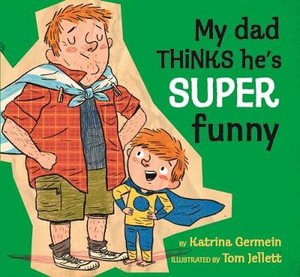
My dad thinks he's super funny by Katrina Germein. Illus. by Tom Jellett
The family in My dad thinks he’s funny, has grown. There is now a baby in the mix, which gives dad another layer of jokes to tell revolving around the new addition. Kids will groan as they read dad’s hilarious offerings, delighted at the puns, but at the same time, sighing with embarrassment as the man tries so hard to be funny. And he has an endless supply. He can pun for Australia, making asides, quips and double entendres with words like mosquitoes and ants, spiders and worms, fans and paper plates. Nothing is outside his orbit for a play on words, as he seems to have a response or every occasion.
With the new baby in a sling across his chest, dad and the two boys go off to the supermarket, a storehouse of puns as he spies the biscuits and tells them not to take the plane ones as they might fly away, while he is pleased to meat the butcher, and says the bread is just loafing around. Nothing on the television, says one boy, but dad retorts, ‘yes there is dust’.
All through the puns are funny and will appeal to the younger audience who will think up lots for themselves.
Jellett’s hilarious illustrations, featuring dad in his shorts with hairy legs, falling down socks an old sneakers, will bring the house down. Kids will revel in the way the older man is featured, smiling at the similarities between their dad and the one represented.
He is a super dad: sharing the work needed around the home, taking the kids shopping, minding the baby, hanging out the washing, cooking tea, and on every page, caring for his kids. He wears a cape just like his younger son, eats with them at the table, meets their gran with them. He is a super dad, and is super funny, a charming model for families coming up to Father’s Day.
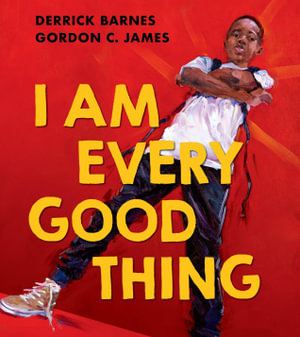
I am every good thing by Derrick Barnes and Gordon C. James
Egmont Books, 2021. ISBN: 9780755502707. (Age:3+)
I am a non-stop ball of energy. Powerful and full of light. I am a go-getter. A difference-maker. A leader.
"Step inside the mind of the confident narrator of this book! He is proud of everything that makes him who he is. He's got big plans, and will see them through. He's creative, adventurous, smart, funny. A good friend. A superhero. Sometimes he falls, but he always gets back up. And other times he's afraid, because he's often misunderstood. So, slow down, look and listen as he shows you who he really is …"
Oprah Magazine says this book is "one of its essential books for discussing racism with kids" and other quotes from reviews all refer to the main character above all else. Yet, when I read it I didn't even notice his colour, although the illustrations are so lifelike and full of energy, because I saw it through the lens of the performances at the Olympic Games - and not just those by Australians. So often, as I watched (as an alternative to the ad infinitum of COVID 19 and lockdown), the back story of the athlete was shared and so often it was a story of triumph over tragedy, of hard work, perseverance, resilience, overcoming hurdles and obstacles, staring the impossible in the face... and that is what I took from this book.
So many of our students would have seen performances that have inspired them - the silver lining of lockdown being the access to real-time coverage rather than a news snippet - and dreams will have been dreamt, particularly with some of the sports being so accessible, like skateboarding, and the age of the competitors so close to their own. And within this book is the sort of motivational, inspirational language that will fan the flames of the spark of those dreams.
So while this book may have been intended to help young black children to rise above the racism and be the person they are, and sadly, will resonate on that level with some of our students, it can be used in lots of ways to affirm and reaffirm, to challenge and to change, to build not just dreams but hope and expectation.
There are so many cliches about it being the inner person that counts, and while that is true, we all know it's not that simple. So help students see their potential by having them identify the highest wall facing them right now, whether that's understanding a science formula or improving their lap time, and then help them put in place a plan to climb over it. Dreams. beliefs and goals can be the driving force but sometimes we need some strategies to make them happen. Have them add a page to the book that celebrates them.
Themes Self-perception.
Barbara Braxton
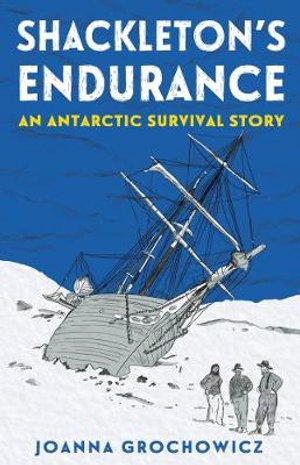
Shackleton's endurance: an Antarctic survival story by Joanna Grochowicz
Allen & Unwin, 2021. ISBN: 9781760526092. (Age:10+) Highly recommended.
The story of Shackleton and his crew, who in 1914 endured the most horrific of shipwrecks, is one of the most thrilling of survival stories, ensuring that one ship, Discovery, that Shackleton helped fit out, stationed in Dundee, Scotland, will always be a tourist mecca, inviting people to look over the ship and marvel at the story of his life and others in the flurry of Antarctic exploration prior to World War One.
Shackleton and his twenty seven men set off for the Antarctic in August 1914, on board Endurance, aiming to walk across the last unknown continent by foot. It was to take three months. They did not return to any semblance of civilisation until August 1916, surviving two Antarctic winters, a feat unparalleled in the history of Antarctic exploration.
In this absorbing book, Grochowicz retells their story, with maps and diagrams to support the text. A list of the members of the Imperial Trans-Antarctic Expedition, followed by two pages of thumb nail sketches of each member of the team introduces the story, dubbed ‘the last great polar journey’.
A useful timeline and maps of the voyage ready the reader for what is in store. And a non-fiction narrative follows - absorbing, heart stopping and intimate.
When their ship was crushed by pack ice, they had no alternative but to make a much more dangerous journey. With no way of contacting anyone with the First World War in its throes, they had to battle extreme hunger, exhaustion, despair, and unimaginable cold. Their leader, Shackleton, was the one man who could pull off such a feat. Determined, inspiring, dogged, courageous, Shackleton fought against insurmountable odds to get all of his men home.
This story bears rewriting over and over again, a testament to endurance, and this book, told in the style of a fictional story will enthral readers of all ages. Teachers' notes are available.
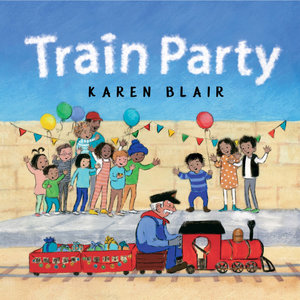
For the many little train lovers out there comes this delightful story about a birthday party at a miniature railway. It even features the well-loved train cake from the classic Australian Women's Weekly Children's Birthday Cake Book. A beautiful map of the train track features on the front and endpapers, complete with roundhouse and signal box; young children will delight in following the track with their finger. The illustrations depict a culturally diverse spread of people and the landscape features the greens and browns of Australia, with lots of gum trees and big blue skies. There are small groups of families gathered all over the train park, all celebrating birthdays of differing ages. They are sitting down and talking together, playing, eating and riding on the minature trains. 'We're at the park. Time to unpack. What can you hear? Clickety-clack'. Children will love joining in with the 'clickety clack' repeated on each page and the train-like rhythm of the short and simple text. After the train ride the families can be seen gathered around, each birthday child blowing out the candles on their cake. 'One more train, but this one's a snack. Blow out the candles! Clickety-clack'.
This is a warm, gentle book depicting a special family day out and the magic of birthday celebrations. It is perfect for train lovers and those who have visited a mini railway, but will delight any preschoolers.