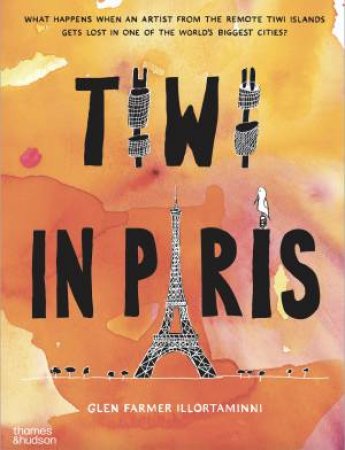
I was recently gifted this stunning picture book which has opened the door to a whole new area of reading and learning for me. Whilst knowing of the Tiwi Islands, I am unfamiliar with literature from that region and for me personally this delightful narrative is a wonderful introduction.
Based on a true and unique adventure, Glen Farmer Illortaminni, born in Milikapiti on Melville Island, travelled to Paris to act as an interpreter for his uncle, artist Timothy Cook. Restless during the night, Glen decides to go for a walk and becomes lost. He is missing for a period of time and experiences true homelessness as he wanders from place to place.
Drawing on his limited knowledge of Paris, he tries to navigate the cityscape to find his way back to the hotel. With no understanding of the French language and limited funds, Glen spends time at the airport, walking around Paris, staying with a group of homeless people, boarding the Metro, following a tour guide, is fed in a market, sleeps in a church, and after falling and hurting his head, is taken in by a young French girl and her Papa. He is taken to hospital but leaves once more, meets a Moroccan family who feed and provide shelter for him before he is eventually directed to the Australian Embassy.
Glen’s story is told in a gentle and straightforward manner with descriptions of Parisian landmarks shared throughout including the Eiffel Tower, the Arc de Triumph, the Metro, a huge church, canal, and markets. The belief Glen has in finding his way safely back to Country comes across strongly during his journey.
The striking double page illustrations consist of black and/or white line drawings on black or white backgrounds with watercolour washes. This appealing naïve style provides the perfect accompaniment to the highly accessible text. Tiwi in Paris will be a fabulous addition to a home, school or public library.
Themes Tiwi Islands, Paris, Journey, Lost & Found, First Nations Peoples & Culture.
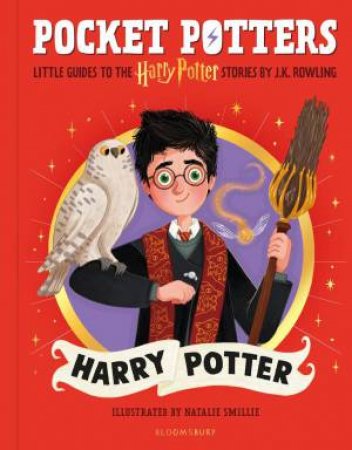
Perfect for those just embarking on their Harry Potter journey or for those who simply can't get enough, comes this new series of informative picture books all about the main Hogwarts crew. The first three (Harry, Ron, and Hermione) have already been released, with a further two,Luna Lovegood and Dumbledore, available on 24 February 2026 with more on their way later in 2026. Each book is beautifully illustrated by a different illustrator and includes labelled pictures, quotes and character, setting and storyline information. Each double-page spread has a different focus and guides us through the character's background, notable events, skills and personality traits. The pages are informative and cover the span of the Harry Potter series, without ever spoiling the plotlines for those who haven't made it through all the books yet. Each page is heavily illustrated and heaving with details, however the text is large and approachable and there is still enough white space on the page to make it easy to weave your way through. There are often young Harry Potter fans whose only real experience is with the first movies or through secondhand retellings. These are great for those who want an introduction to the world but aren't quite ready to listen to or read the whole story. They are also great for collectors who want to relive the stories or best bits without rereading.
Harry's book guides the reader through his past with the Dursley's and along his Hogwart's journey including his role as Seeker on the Quiddich team and the mischief he gets up to in each book.
Themes Harry Potter characters.
Nicole Nelson
The hits and misses of Melody Moss by Helen Dallimore
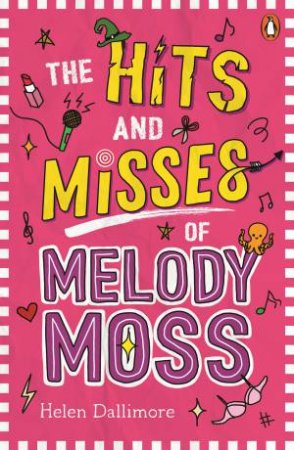
Melody Moss is a 12-year-old girl who lives in suburban Australia and is about to start her first day of High School. She is so obsessed with musicals that her best friend from Primary School, Abby, decides to ditch her for cooler friends. Melody is alone and friendless, and her eccentricities make it very hard for her to find new friends. Luckily, she meets Victor who is also a social outcast, and he is a talented musician and musical lover. Together they write a musical about octopuses falling in love and win a school competition to co-direct the musical as the annual school play.
Tyler, the lead actor, is heart throbbingly good looking and Melody has a huge embarrassing crush on him. To make it worse he is not interested in Melody. Victor is upset by Melody’s betrayals in her efforts to impress Tyler and refuses to be involved in the play at all. The story is peppered with the funny, silly moments when Melody says and does things without considering the consequences. Such as when she is crying about Tyler and tells her teacher she is allergic to paper.
This is a funny and engaging read. Since it is written as a diary, we understand Melody’s thinking and personality. It reminded me of books like Dork Diaries and the classic, Hating Alison Ashley. The key themes of friendship, valuing creativity and embracing our differences are critical for younger readers. Helen Dallimore has created a variety of other quirky characters who are central to many humorous situations. For example, Melody’s mother invents dishes such as seaweed sorbet.
Melody and Victor are supported in their trying situations by loving supportive families. Melody also has sympathetic imaginary friends she discusses her problems with. Importantly the main characters develop to be confident and happy, without losing their essential selves. It is a visually appealing novel too. There are fun touches like drawings, text messages, and suggestions that the reader google things like the camouflaging behaviour of octopuses. “This is totes worth a google they’re incred.”
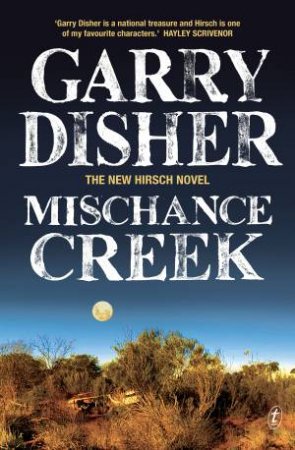
Garry Disher is one of my favourite crime writers and I was thrilled to see Mischance Creek, the 5th book in the Hirsch series. I was quickly drawn into the life of Hirsch, a rural policeman travelling long distances to check firearms on isolated farms and performing welfare checks to ensure that lonely people were safe. Another of his jobs is to help tourists when they get into trouble on country roads and he sent to Mischance Creek to help Annika Nordrum whose vehicle has gone into a ditch. But Annika is not your normal tourist; she has come to the outback in search of her mother who disappeared seven years ago. She knows that her mother could not have been involved in her father’s murder and the scant information left by the police does not add up. Hirsch is drawn into the cold case, while keeping an eye on altercations about parking at the school and trying to find the culprit who is illegally abandoning rubbish in the park.
Life in a small country town of outback South Australia is vividly brought to life by Disher. I got to know about the politics surrounding the mayor and the local council, the protection of a sacred site by a strong woman and the impact that merging rural schools can have on a community. The distances between farms, the heat, the desert like conditions as Goyder Line is crossed, the differences between the struggling small landholders and the very rich graziers are subtly explored by Disher and provide a wonderful background to the story.
Hirsch is a calm man, endeavouring to do his job under difficult circumstances. He is trying to keep in touch with his grieving mother in the city, while maintaining a relationship with a local woman and her daughter. His knowledge of his community is invaluable and his intelligence gathering leads to a stunning conclusion.
There are lots of threads and twists in the story, some very unexpected and dark, and these kept me reading avidly. I can’t wait to see what Disher writes next.
If Martha Mayfield was represented as an animal, she would be a turtle or a snail - a quiet creature that lives inside its own shell, rarely making a headline of itself. In this tender story we feel the torture of shyness and grow in respect for Martha who eventually raises her head (and her voice) so that others might see and hear her. With a very small pool of friends and a tendency at school (and at home) to keep her ideas to herself, she is always afraid of the reactions of others. Her battles with ‘What if ..?’ and her interior negative dialogue are a constant companion, and she is often overlooked. In this remarkably insightful story, we see Martha … a situation that is rare for her, and discover that she has much to offer, but it might look different to the standard ‘Class Captain’ or school leader.
I absolutely loved this story, recognising my own former classmates, family members, and students that I have taught. Not everyone thrives on public speaking, publicly revealing their thoughts, or conversations with strangers, and Martha (and her mother) must find ways to succeed while being true to themselves. The striving to be more than the overlooked one is presented with great compassion in this school-based story. The story has moments of humour but is also a gently winsome journey into the emotional struggles of the shy child. This is a book that is an absolute delight - get it into the hands of the shy child as an expression of affirmation, but also into the reading journey of the loud and confident kid so they can learn empathy and perhaps will learn to listen more. Martha is a year 5, readying herself for the ‘senior’ year of Primary school and this would suit a target audience of 10–12 year-olds, but the inclusion of an older sister already in the land of dating and formal dresses will also enable readers up to age 14/15 to enjoy the story too. I loved this book as an adult reflecting on the challenges of overcoming fear and anxiety and the sensitive handling of the topic, but young readers will absolutely love the ‘remaking of Martha’.
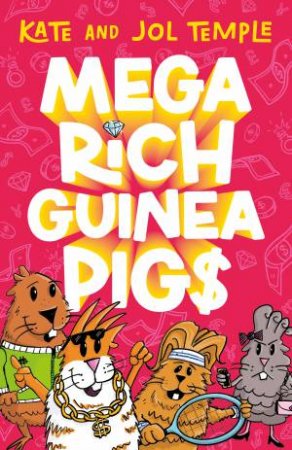
Mega Rich Guinea Pigs by Kate and Jol Temple is a highly amusing, fast-paced adventure that blends humour, heart and high-stakes antics into a fun and fabulous read for young independent readers - or even as a read aloud. Written in a lively, conversational style, the story unfolds as though an amused outsider is whispering the tale directly into your ear; an approach that adds both charm and comedic punch.
At the centre of this quirky caper are three guinea pigs and one very hungry capybara who is convinced he’s simply an “extra-large guinea pig.” Their lives take a dramatic turn when their fabulously wealthy owner dies unexpectedly, leaving behind not only a mansion filled with creature comforts but also an astronomical fortune; given entirely to these four animals. What follows is a hilarious clash between pampered pets and greedy human relatives who had been expecting the inheritance for themselves.
These devious humans attempt to do away with the furry heirs in ways that are both outlandish and zany, resulting in slapstick mayhem and unexpected twists. Meanwhile, the guinea pigs and their oversized companion must summon all their creativity, courage and collaboration to outsmart the money-hungry relatives. Their problem-solving strategies, misunderstandings and moments of bravery keep the plot moving at a brisk pace. The capybara’s insatiable hunger and the guinea pigs’ energetic personalities provide a steady stream of giggles; making them irresistible heroes to cheer for.
Mega Rich Guinea Pigs is a thoroughly engaging novel that is a perfect balance of comedy and adventure. For readers who adore animals, enjoy mischievous plots, or simply want a laugh with a feel-good book, this novel ticks every box. It’s witty, entertaining and delightfully imaginative - an adventure that will bring a smile to everyone.
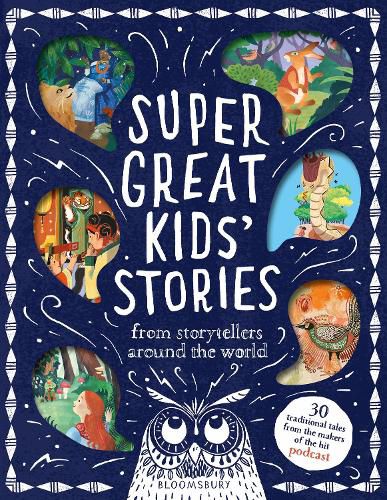
Springing from the award-winning podcast of the same name, this collection of traditional tales and folk stories from around the world is nothing short of read aloud perfection. Each story starts with a solid hook, engages the reader throughout with carefully-curated suspense and just enough detail and then finishes things off neatly and usually with a reader appeal that encourages thoughtful conversation or contemplation about the onus to continue the oral storytelling tradition. As Normanton said: "Telling traditional tales has been a neglected art, but there's growing interest in celebrating diverse cultures, and a raised awareness about the need to improve our children's speaking skills". These stories have rich language and encourage retelling and reinvention.
Normanton is an early-years expert and radio producer and has compiled this book from the podcast stories told by a diverse array of expert storytellers from around the world. These are expert, celebrated oral storytellers, which makes both the podcast and the written versions, incredibly punchy stories purpose built for reading aloud. The Year 1 and 2 students that I have tested these stories out on are desperately hungry for more, sit enthralled and hang on each and every word and even enjoy the tidbits of factual information about the origins and cultural history of each story.
Organised into 5 continent sections, each continent has about 6 stories from various countries. Some are funny, some are magical, many are moralistic, some are creation or origin stories and all are well-told. Beautiful illustrations accompany each tale and they are all of a similar length, making for about a five- to ten-minute read. There is a follow-up book scheduled for publication in 2027. Information about the storytellers and the podcast are available here.
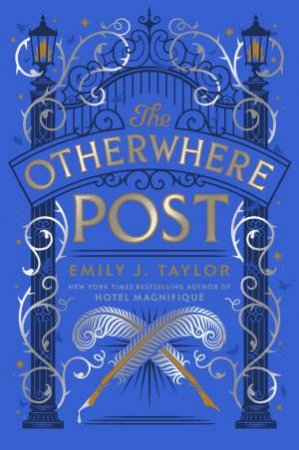
A fan of dark academia and fantasy, I couldn’t resist trying The Otherwhere Post by Emily J. Taylor, especially as the blurb said that it was perfect for fans of Divine Rivals by Rebecca Ross which I had enjoyed. It is a cleverly crafted novel that will appeal to readers who like to escape into strange worlds where young people pursue justice with courage and intelligence.
Maeve Abenthy has been living under a false name for seven years, after her father was accused of a terrible crime allowing a deadly plant to invade Iverly and closing off access to nearby worlds. She constantly moves on, never allowing anyone to get close to her. Iverly is a strange world where the magic of scriptomancy allows couriers to deliver letters to other worlds. When she receives a letter from an anonymous author that says 'Your father was innocent', she fakes her way into the Otherwhere Post, a magical school where her father had worked, hoping to find the truth. Here she meets Tristan the son of the Postmaster, a gifted scriptomancer, who is given the task of teaching her – and she finds it increasingly difficult to cloak her identity. Who can she trust? Is her father innocent? Will she be able to escape capture? Who wrote the anonymous letter?
Taylor has built a fascinating and unique world where people can travel from one place to another by scribing magical words. The couriers can find the owners of the letters even when they are hiding. The background of the school, the Otherwhere Post, drew me in, as I wanted to find out how it worked and then the suspense surrounding Maeve’s dangerous quest had me finishing the story in a couple of sittings.
The search for justice, unexpected plot twists, a slow burning romance, and Maeve’s growing friendship with two other apprentices, all set in a unique world, make this a novel that is sure to appeal to fantasy lovers.
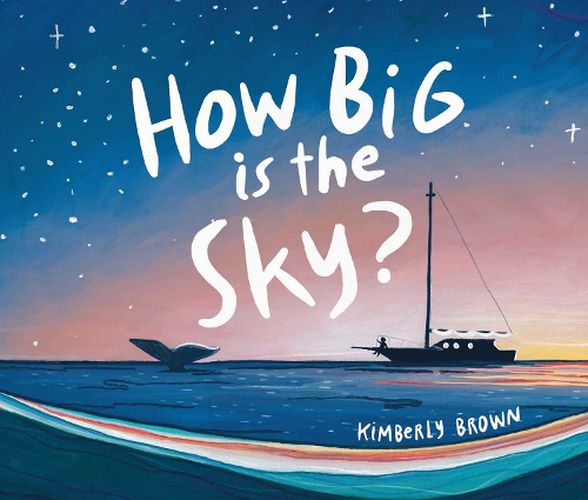
Asked by her two year old son, how big is the sky, has led to many years of thoughtful investigation and research, culminating in this exciting picture book which presents all sorts of measurements which young children will enjoy seeing told within a story about a family’s sailing adventure. I loved opening the book finding the endpapers covered with a range of measuring devices from a clock to a plumb bob, a slide rule, compass, scales and measuring cups, the range was fascinating and several different ones given on the last endpaper, to keep readers hooked.
The story tells of a young boy and his family going on a sailing trip. They have built their boat, with the help of a measuring tape, and now give the measurements, height, depth, circumference and width as they prepare for their adventure. Measurements form part of the story and I can imagine young children working out the boat’s measurements in their classroom or yard.
Over the page is a scale and readers learn that a scale measures mass and weight, i.e. how heavy something is. A comparison is given between a blue whale and the little boat on the seas above. Next is a nanometer, a small tool which measures wind speed, a necessity on the seas. There is also a thermometer for temperature and a watch for time. Even the bucket used for mopping the decks is a measuring tool. There are ways for measuring everything, and scientists have developed many tools to help. Readers here will love finding all the things in the classroom or at home which are for measuring.
And so follows a few things that cannot be measured. Fear, family, laughter, courage, wonder and awe are all things felt by people but cannot be measured. But they do show how we feel about the wonder of the world we live in, how big it is, how deep, how far and how wonderful. All it takes is observation.
This is a lovely starter to discussions about measuring, as it gives a whole range of implements which can be used to measure, but also poses the question that some things cannot be measured. A wonderfully illustrated picture book sure to entice, encourage and prod young minds.
Themes Measurement, STEM, Sailing, Family.
Fran Knight
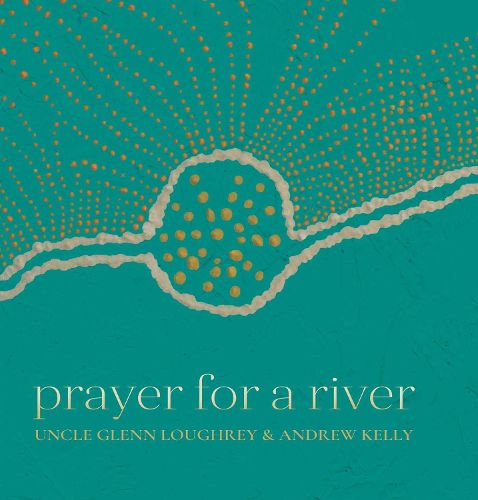
Prayer for a river by Uncle Glenn Loughrey & Andrew Kelly
Wild Dog Books, 2025. ISBN: 9781742036915. (Age:3+) Recommended.
The endpapers show the fingers of a river, reaching out over the land, covering far more than the main trunk of the river itself. Tributaries take the water to Country where people tell stories, passing on information about the river, embedding it in their hearts and minds. River is water and water is life, bringing the parched brown land to life, watering the red river gums and kangaroo grass, while platypus and cockatoos drink. Water holds the stories of life: where to hunt turtles and frogs, or fish and birds and ducks. It is the basis of all things living, it weaves us altogether, linking our lives and the stories, ensuring both work together.
From the water rising up form the sea, to being blown by the wind over the land where it falls as rain, the cyclic nature of rain and river is engrained in the minds of those who rely on it.
The taut simplicity of the mantra: River is sacred, respect river and river will respect you, will speak to the readers of this book, as many examples of stories about rivers will be told, as children bring their knowledge and understanding to the group. Many Aboriginal stories are embedded in rivers and water, and a quick search in the library will enable these to be shared.
Stunning illustrations carry the images of the river from cover to cover. Going from the rain soaking the earth beneath the trees, to mountains with water cascading down their sides, to the river snaking through vistas of blue grass, the turtles swimming with the smaller creatures in the river, to the beautiful kaleidoscope of colour and movement of the river when it is thanked, each image is complete in itself, differing methods used to develop the images, making them something to be pored over and wondered at.
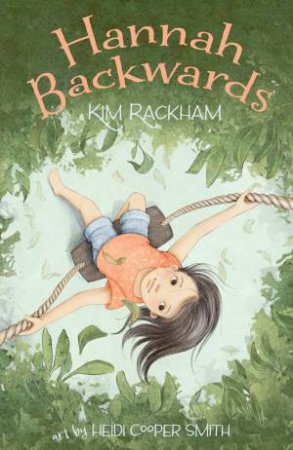
Hannah Backwards by Kim Rackham is a beautifully crafted, whimsical verse novel that offers young readers a relatable window into the world of a Year 4 student learning to navigate connections, change and courage. Told entirely from Hannah’s perspective, the story captures both the tenderness and turbulence of childhood as she faces two big upheavals at once: the departure of her favourite teacher and the sudden news that her best friend, Izzi, is moving far away.
Rackham’s choice to write in verse gives the story a lyrical rhythm that mirrors Hannah’s thoughts; sometimes tumbling, sometimes still, always honest. The poetry format allows readers to step right into Hannah’s heart as she tries to make sense of feelings that don’t always fit into neat sentences. This intimacy is one of the book’s greatest strengths; it encourages empathy, reflection and a deep understanding of how children process change.
One of the most poignant elements of the story is the special shell-stone Hannah carries, a gift from her grandmother. This small treasure becomes a quiet but powerful symbol of comfort and courage. When Hannah rubs the stone in her pocket, readers can almost feel its smoothness, as it anchors and supports her through challenging situations.
The novel explores its themes with warmth and emotional clarity. Hannah’s fear of new beginnings slowly shifts into a recognition that change can bring unexpected brightness. Rackham delicately balances moments of sadness with threads of humour, hope and childlike wonder. Hannah’s journey is not about avoiding difficult feelings but learning to walk through them; discovering joy on the other side.
Young independent readers, especially those experiencing transitions, will find comfort and connection in Hannah’s story. Teachers and parents will appreciate the gentle conversations the book encourages about resilience, friendship and trusting oneself.
Ultimately, Hannah Backwards is a heartfelt and uplifting read. It reminds us that even when life feels like it’s moving the wrong way, bravery, love and a spark of adventure can help us find our way forward again.
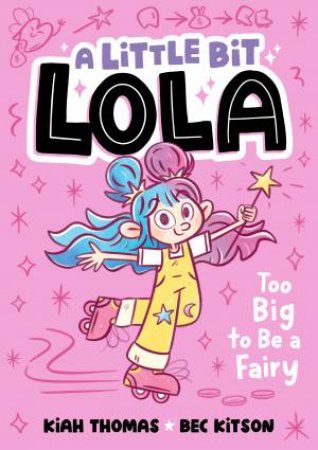
Too Big to Be a Fairy, the first instalment in Kiah Thomas’s charming new series A Little Bit Lola, is a wonderfully witty and fast-paced adventure; perfect for young readers stepping into the independent reading stage. With full-colour illustrations by Bec Kitson appearing throughout, this lively story bursts with personality, humour and heart, making it an irresistible choice for newly confident readers.
The story follows Lola, a spirited and imaginative youngest child, who longs for a set of wheels - just like everyone else in her family. But, in true Lola fashion, she has her own idea about what those wheels should be: a gloriously sparkly pair of roller skates she spots in the local op shop. Determined to buy them before someone else snaps them up, Lola launches into a series of quirky, creative and comical ideas to make her wish come true.
Deciding the best way to get her fabulous roller skates is to shrink to fairy size, Lola sets out with high hopes and dreams. Each chapter creates another layer filled with humour, imagination and heartfelt longing to her mission. This blend of desperation, innocence and unshakeable belief in the impossible makes Lola’s character especially endearing, and young readers will delight in the way her fairy fantasies intertwine with her real-world problem-solving.
Thomas’s writing is bright and engaging, capturing Lola’s voice with warmth and humour while keeping the pace brisk and exciting. Each chapter is short and accessible, supported beautifully by Kitson’s colourful, expressive illustrations that bring extra vibrancy and playfulness to the narrative. The combination of easy-to-read text, plentiful visuals and an engaging storyline makes this book an excellent steppingstone for children transitioning into chapter books.
Imaginative, funny and full of heart, Too Big to Be Fairy is a whirlwind of fun and laughter. Lola’s determination and creativity shine, offering readers a delightful adventure and a hero to cheer for. This beginning novel is sure to captivate early readers and leave them eagerly awaiting Lola’s next escapade.
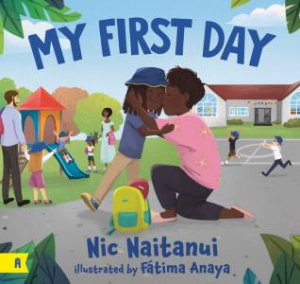
My first day by Nic Naitanui. Illus. by Fátima Anaya
Albert Street Books, 2025. ISBN: 9781761182488. (Age:3+) Recommended.
When Nic wakes up, Mum reminds him that today is his first day at school. There are new friends to meet and new games to play. But Nic is reluctant to get out of bed, he feels a little unsure. Even eating breakfast he asks his mother about the strangeness of this new place. She reminds him that they are very different from each other, they may look the same, but one likes to get up early, one likes to sleep in, one likes to cook and the other likes to eat. In the classroom, the teacher asks the children to tell Nic what they like doing. One likes to dance, one to grow things, one has a per fish, one a puppy. The teacher asks them what language they speak other than English, and there is a wide range again: French, Farsi, Malay, signing, and one just yells.
At lunchtime, the children share three lunches. And after play together. Back in the classroom, they illustrate the things they want to do when they are bigger. Again a whole range of things are chosen, underlining the differences between us all.
At the end of the day, the teacher ask them to sit down quietly and close their eyes, with everyone calm she thanks them for being patient and kind during the day. Outside parents are waiting for their children, and they all go home, Nic looking forward to the next day, sleeping very well that night.
This is a charming story about a child’s first day at school, modelling the behaviour of mum in being encouraging, and of the teacher being inclusive and the students being calm, helpful and patient.
The rhyming lines encourage readers to predict the rhyming word, and the short stanzas are easy to listen to. A good read aloud story, children will eagerly identify with Nic, remembering their own first times, and sharing their concerns at the coming first day at school.
The bright full page illustrations will have wide appeal, showing a home, school and suburbs that are identifiable and known. These give a warmth to the story that is about a young person’s concerns, showing that the concerns are a minor part of a safe, happy, known environment. I love the small details: the very cute stuffed toy on Nic’s chest of drawers, the breakfast nook, the patterns on the rug, the range of people taking their children to school, the range of food being eaten and shared at lunchtime, the quiet time at the end of the day.
Themes Diversity, First day at school, School, Family.
Fran Knight
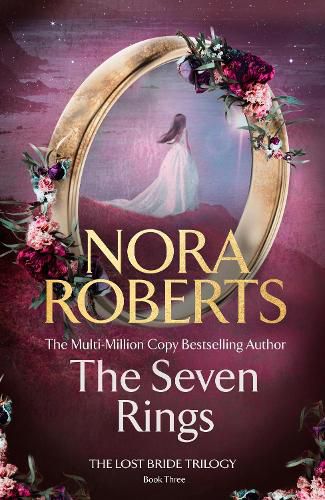
The seven rings by Nora Roberts
Little, Brown Book Group, 2025. ISBN: 9780349437569. (Age:Adult) Recommended for Roberts' fans.
Following Inheritance and The Mirror, The seven rings, the final in The lost bride trilogy, is another book that will engage fans of the hugely popular Nora Roberts. Sonya Mactavish is living in the mansion that Arthur Poole had built generations ago, a house that is haunted with the ghosts of seven brides who have been murdered, and their gold wedding rings stolen. Hester Dobbs needs the rings to keep her grip on the house and Sonya knows she must find them all to break the curse that has been put on the house. Together with boyfriend Trey, her best friend Cleo and cousin Owen, she searches the mansion for all the portraits of the brides and tries to puzzle out how banish the evil witch.
The story has all the elements for enjoyable escapism. Who wouldn’t want to live in a mansion where friendly ghosts do all the housework and gardening, as well as playing with the dog? These ghosts provide a break from the suspense as Hobbs uses her power to try and terrorise Sonya into leaving the house. But Sonya is a determined young woman who refuses to give into fear and gradually with the help of her friends begins to find clues to the mystery that surrounds the house. As usual in Roberts' paranormal books, she builds up the suspense with some frightening episodes but then ties all the threads together in a satisfying conclusion.
While the Prologue to The seven rings introduces the trilogy, it is best to read the three books in strict order to understand the events and history of the house. Fans of Nora Roberts books will enjoy the ghost story as well as the emphasis on friendship and family and may want to pursue her Eve Dallas mysteries written under her pen name of J.D. Robb.
Pan Macmillan, 2025. ISBN: 9781761773976. (Age:2+)
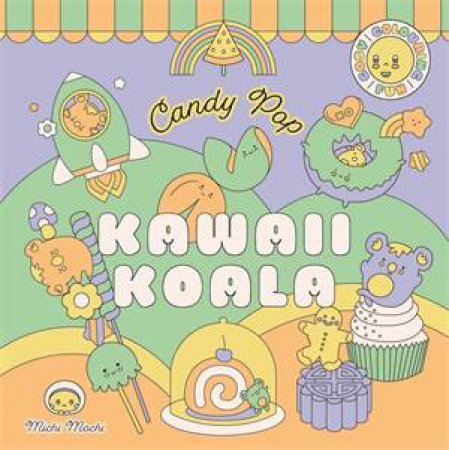
Two colouring books in this series, Beach babies and Candy pop are offered to the younger readers who loves colouring in. And some older people may like to use them as well.
Each book contains 40 single page illustrations to colour with the added bonus of learning a few things along the way. Candy pop, the second book, offers 40 pages of illustrations about sweet food. Kids will drool over the range of sweets offered: cupcakes, sorbets, cakes, boiled sweets, donuts, sweet drinks, candy canes and ice cream. Kids will love colouring them in, and look for the Australian animals on the pages. A relaxing way to spend some time, perhaps with a meditative aspect for older people with a coloured pencil in their hands.
Lots of pinks, purples and pastels will cover these pages as they are coloured in, and kids will love naming them and the things they contain. Older people with a coloured pencil will find colouring in meditative.
Michi Mochi ís a Melbourne based designer and illustrator with a deep fondness for anything Japanese resulting in 12 books about that country.