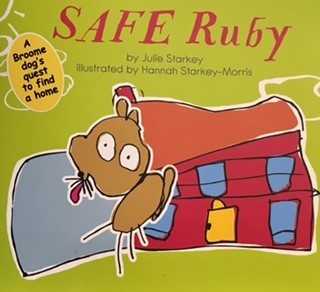
Searching for a home and all that a home converts: love, warmth and safety, Ruby’s ad in the local supermarket attracts a number of willing new owners. But Ruby just outlives her welcome with them. Mrs Docker takes her home, but Ruby loves the washing on the line. Then Mrs Lane has a go, but Ruby digs up her vegetable garden. Anastasia tries to offer her a home, but Ruby hides her juggling balls. Stefan offers Ruby a home, but Ruby chases kangaroos on her walks and so is returned. Then Mrs Parish takes her home, but when she chews her slippers, she is again returned. Finally Sarah and her dog, Ket take her home and here she pulls washing off the line, digs up the veggie garden, chases kangaroos, hides Keeta’s ball, chews Sarah’s slippers and wags her tail. When Keeta wags her tail the trio knows they will live together forever.
This heart warming story of finding a home will enthral younger readers as they work out what a home means to them. All the warmth of companionship, of belonging and of safety comes through the story of Ruby searching for a place to be herself.
Delightful illustrations penned by the author’s granddaughter when she was four, cover many pages. Full of colour and movement, younger readers will be tempted to try out this style for themselves, illustrating their own idea of home.
Information about the author, illustrator and Ruby can be found at the end of the book, where we find that the word, SAFE is an acronym for Saving Dogs From Euthanasia, an organisation which tries to save as many dogs as possible. A salutary reminder of the importance of finding Ruby a home. Teacher's notes are available. Safe Ruby is available from the publisher.
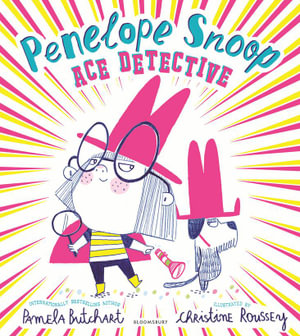
An adventurous dive into the imaginative world of a 4-year-old child’s life, where the mystery of the disappearance of Sidney the sock snake is needing to be solved. Sidney is Penelope's special toy that goes with her everywhere - while she brushes her teeth, as she is eating etc. Penelope is the best “finder outer” in the world and, with her side-kick Carlos the dog, she gets her Finder-outer kit and goes through the clues to realize that Sidney must have been stolen. We are then treated to a delightful romp through the house, the garden, the treehouse, and even to the moon, and back again, only to discover that Mum knows more about Sidney’s disappearance than the frog fountain in the garden. Christine Roussey has used child-like pencil drawings to create bright and busy illustrations with generous splashes of neon pink that make Penelope’s lively personality pop out of the book.
A quirky fun book that will encourage children to use their imaginations and explore the world around them during play.
Themes Play, Mystery.
Gabrielle Anderson
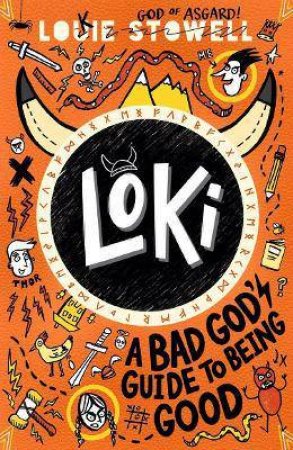
Loki: A bad God's guide to being good by Louie Stowell
Loki: A bad God’s guide to being good is about Loki who has been banished to earth by his father, Odin as punishment after he performs one nasty trick too many in Asgard. Louie Stowell has taken the Norse god of mischief from mythology and written a very funny story to explain the steps Loki must take while on Earth, to clean up his act and avoid eternal life in a torturous pit of angry snakes.
Loki uses the first part of the book to explain what life is like for a Norse god who is trying to make do in a very human household as a weedy 11-year-old boy, what school is like, and how a family works. Although he is monitored closely by an interactive diary that keeps his score, Loki finds it difficult to stop playing pranks, and soon his score is so low he has to find a very grand gesture to redeem himself and avoid eternal unpleasantness. Along the way, he learns about friendship and loyalty, and what it means to trust someone to be a friend.
The book is in diary style, part text and part cartoons that will appeal to Middle primary students, with lots of illustrations, jokes, and speech bubbles. Stowell is releasing a sequel to this book later in 2022 called Loki: A bad god’s guide to taking the blame. The publisher has provided detailed Teacher notes which are helpful when using this book in a classroom situation.
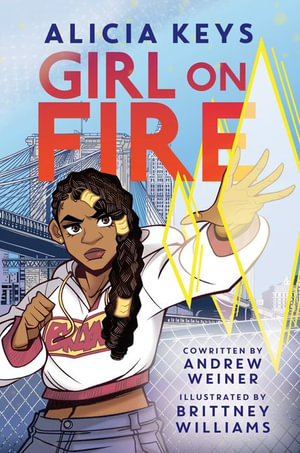
Lolo Wright is a bright, 14 year old living in a Brooklyn public housing neighbourhood with her 16 year older brother James, her grandma and her father who has started a business “The Wright Movers”. At school Lolo gets some name calling for being a good student but nothing like the rejection Michael “Runt” Warner experiences when he wants to join the football team and is told by the coach to come back when he has grown. The rejection leaves him angry and open to the offer of joining the gang of powerful “Skin” who is planning to expand his local protection and drug ring. When Michael bumps into Lolo in the school corridor on his way to confront Skin’s gang, Lolo has a moment of mental connection with him and she experiences his anger and power. Later, when James and Lolo call in to a local shop on their way home they are unaware that it has just been held up. When the police arrive they assume James is the criminal and wrestle him to the ground. Lolo is so angry she explodes with power forcing the officer to release her brother. The supernatural powers shock and scare Lolo and her brother tells her that their absent mother told him baby Lolo had energy flowing through her, "The Holy Current”. Lolo dismisses this as her mother was crazy, however Skin soon becomes aware of Lolo’s powers and wants to sign her up to his gang, using pressure on the family she loves. As Lolo learns to master her power and navigate the threats to her family she also has to deal with the expectations of school and friends. As she grows into her powers she learns to stand up for herself and others while making the right decisions. Her father’s high expectations and firm but kind upbringing see the family reach out to the less fortunate and withhold judgement while offering support.
There is enough violence and action to appeal to comic lovers and move the story on at a fast pace but it is always balanced by more thoughtful interactions. The strong colours and quality production make the most of Brittney Williams’ excellent graphic style with interestingly detailed urban backgrounds and settings with dark, menacing bad guys and consistent, well developed characters. Keys and Weiner offer teenagers a hardworking heroine finding her power in a difficult world, a good role model attractively packaged.
Themes Identity, Family, Superpowers, Gang violence.
Sue Speck
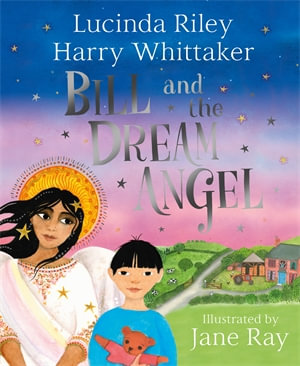
Bill and the dream angel by Lucinda Riley and Harry Whittacker. Illus. by Jane Ray
Award-winning author of adult books, Lucinda Riley wrote this picture book with her son Harry Whittaker as part of the Guardian Angels series of picture books before her death in 2021. The books are based on stories she used to tell her children when they faced challenging situations. Bill and the Dream angel is the second book in the series, the first being Grace and the Christmas angel and a third called Rosie and the Friendship Angel. This story involves a young boy called Bill and his family, who have moved from a small flat in the city to a large, converted barn on a farm. Bill is frightened by some strange noises he hears during the night and wishes to return to his old home in the city. The Dream angel hears his call for help and puts in motion the events that prove to Bill that the monsters he thought inhabited his new home are just noises that will turn out to be a wonderful, heart-warming discovery. Moving house can be a stressful time for families and this book could help to reassure children and assist them to settle into their new environment.
The illustrations by Jane Ray are beautifully executed, showing in great detail the process the family uses to unpack and arrange things to make Bill feel comfortable in his new surroundings. The inclusion of some wordless double-page spreads encourages discussion and provides details for young readers to come back to time and time again. An angel place marker ribbon is an added feature of this gift edition hardback book.
Themes Moving house, Fear, Owls, Farm life.
Gabrielle Anderson
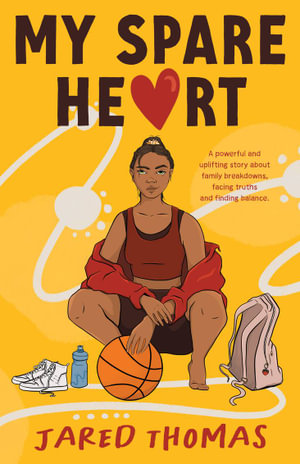
My spare heart by Jared Thomas
Allen & Unwin, 2022. ISBN: 9781760631833. (Age:14+) Highly recommended.
Phoebe has a lot of problems. Following her parents’ separation, she is resentful of having to start a new school, living with her father and his yoga-health-freak girlfriend Caitlin. Aware of her mother Bronwyn’s risky drinking, Phoebe has to hide her worries for fear of her father’s explosive anger. Anxiety builds as she is led to lie and cover up for mother. The new school is also a challenge – it is different to anything she is used to, and being the only Aboriginal student there are no obvious supports when she has to deal with racist comments.
Thomas confronts stereotypes in this novel: Phoebe’s father is Aboriginal, a university lecturer, and not much of a drinker, whilst her non-Aboriginal mother is sliding into alcoholism. At the same time the adults all around Phoebe like to have a drink, and even her friends are starting to experiment with alcohol and drugs. It is hard to know where the line is drawn. These are all issues that many teenagers have to navigate.
Thomas’s depiction of Phoebe’s love for her mother, and her resentment and hostility towards her stepmother Caitlin is incredibly realistic, especially the way she spurns Caitlin’s efforts at friendliness, and deliberately seeks to annoy her. But the reality of her mother’s addiction and unreliability sees the tension build until Phoebe has to accept the support of people she has kept at arm’s length.
Thomas deliberately sets out raise awareness that there are support groups available to help young people cope with an alcoholic person in their close circle. It is not about changing the alcoholic, but of finding ways to manage the relationship. He quotes the Al-Anon mantra to ‘accept the things I cannot change, courage to change the things I can and wisdom to know the difference’.
The values that come through strongly are of belief in Country and culture, and the benefits of participation in sport and music. Phoebe finds her inner strength and builds ways of coping with the problems that beset her. Those life lessons would hold true for every young reader.
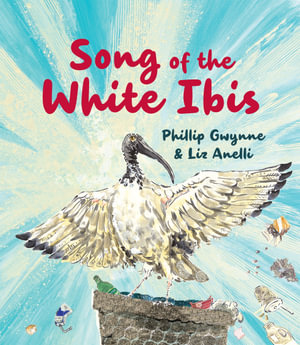
The White Ibis is not just a Bin Chicken or Tip Turkey, or even a Picnic Pirate found over Australia, but an animal of which we would do well to take more notice. With a lightly humorous touch, Gwynne tells the tale of this majestic bird and supported with wonderfully detailed illustrations by Liz Anelli, the whole is a celebration of an often overlooked, underrated and dismissed bird now found everywhere.
The three lines, calling to mind the negative words by which it is known: Bin Chicken, Tip Turkey and Picnic Pirate, are used on each page, a refrain kids will know and repeat by the second page, joining in the fun of it being read aloud. Their expectations of a story about a scavenging bird are put to rest as we hear of its other attributes. It is related to the Scared Ibis of Ancient Egypt, and to the Egyptian God of Science, Thoth.
Its pedigree makes it a useful bird for farmers, using their long beaks to dig into the soil looking for worms, turning over the sods as they dig, eating the many insects which plague the crops. In the wild, they do not have to resort to the rubbish we leave behind, but feast on crayfish and mussels, using their beaks as a tool to crash open the shells on the rocks. They once lived in wetlands, but like many birds our encroachment upon their environment has seen them adapt to the urban environment we have created.
It is learning to live with us that has caused them to scavenge and feed from our rubbish. And we have left a lot of it about.
Amid the urban environment with its ugly pollution and smog comes a tender moment when the male Ibis offers the female a twig and she accepts it, using it as part of a nest high above the city, ready for their young.
A panorama of the city reveals the Ibis in all corners of the town, eating from bins, stalking people in the park, drinking from old containers. Closer inspection will reveal some people doing the right thing: planting trees, picking up the rubbish, recycling and over the page we get to the main thrust of this book as the Ibis whispers some sage advice. The three words, Renew, Recycle and Replenish are shown because we do not want to end up as Bin Chickens like the Ibis.
This is a salutary reminder that we have created the problem that attacks our overflowing bins, following children for the food in their hands, sitting on picnic tables waiting for the food to be set out. And it is up to us to follow their lead and put things right by Renewing, Recycling and Replenishing.
Themes Ancient Egypt, STEM, Thoth, Humour, Scavenging, Australian animals, Pollution, Environment, Recycling.
Fran Knight
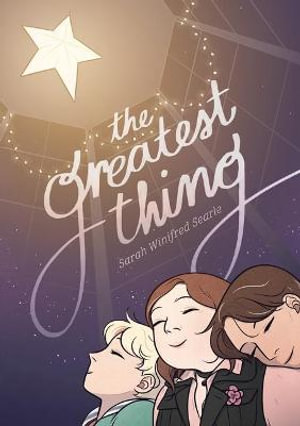
The greatest thing by Sarah Winifred Searle
Allen & Unwin, 2022. ISBN: 9781250297235. (Age:12-17) Recommended with guidance.
Winifred is a shy year 10 student and the start of this school year is even more difficult without her two best friends who are attending different high schools. Feeling alone and anxious she is approached by Mathilda Martel, who asks her to join their group. Tilly and Win used to be friends but had drifted apart, now she introduces Win to her friends and takes an interest in her wellbeing. The highlight of Win’s day is her independent study period with a favourite teacher who will mentor a personal project, making comics, in return for Win helping out other students in photography class. Her other love is Art class. Unexpectedly Win finds she enjoys helping other students and develops a new friendship with outgoing confident students April and Oscar who break through Win’s armour of anxiety, depression and low self-esteem, while acknowledging their own. The three harness their individual talents, Oscar the writer, Win the illustrator and April publisher to create a series of zines. Although they all are wrapped up in their own problems, the stories are a great success. The darkroom becomes a safe zone where they can discuss some of their issues with supportive friends, but sometimes that is not enough and outside help is needed. Supportive teachers, parents and professionals make an important contribution to their wellbeing.
Art is central to this graphic novel and the quiet colours are central to the emotional tone; night scenes and the rosy glow of the photography darkroom are important in the characters’ journey as they go through the uncertainty of discovering who they might be. Win’s self-effacing posture is consistently portrayed and her round face and big eyes contrast with the slender, beautiful people she admires. This is a colourful, complex, engaging story about troubled teens with a raft of issues but there is an overarching bravery in the characters courageously facing an uncertain future. There is a content note at the beginning warning of triggering aspects and at the end there is a page of mental health resources and a note from the author about this being a fictional account of some issues she had in high school. There is also a page about her zines and a section of the book describes how a zine is produced. Some guidance might be wise when recommending this book as the challenging content is not immediately apparent.
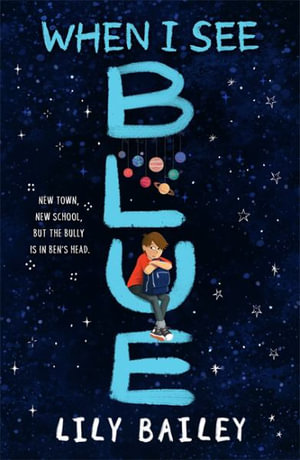
Ben is 12 years old and he has OCD (obsessive compulsive disorder). His family have moved to London for his father’s new work and they all hope for a fresh start. Ben’s OCD manifests itself in his constant need for things to be in multiples of 4, wearing particular clothes and arranging food on a plate so it doesn’t touch. These behaviours are done to prevent bad things from happening. At his new school he struggles to not draw attention to himself so he can avoid the bullying he experienced in the past. However, his mother is an alcoholic and no amount of attending to his rituals can save the worsening family relationships. Fortunately, April, a fellow student, has some insight into Ben’s situation. She takes him under her wing and encourages him to take risks and get counselling. Gradually he challenges his own thinking, has greater self-acceptance and inner strength. Things come to a head when April becomes very distressed and ends up in a life-threatening situation.
I found this very serious story compelling reading. The author, Lily Bailey, has personal experience with OCD and campaigns for people to understand it better. She writes respectfully and convincingly and since it is written in the first person you can really get into the way Ben thinks and changes. At times the neglect of his mother and father and the cruelty of other students is believable and heartbreaking. However, the friendship with April, care by some of the teachers and the therapist are heartwarming. Ben and April are such great young people. This story is an important vehicle for developing empathy for those with OCD and for sufferers themselves to have hope. Considering the mature themes of When I see Blue, I believe this book is best suited to young middle years readers. It is similar in themes and tone as Kate Gordon’s book Aster’s Good, Right Things.
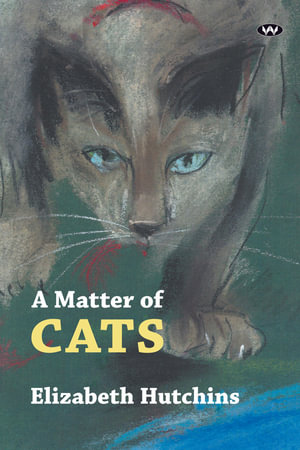
A matter of cats by Adelaide author Elizabeth Hutchins, was first published in 1994 by Hyland House publishers and reprinted in 1995 and 1996. The revised edition is published by local Adelaide publishers - Wakefield Press. It is an earnest book of its times. In the year it was first published it was shortlisted for the Wilderness Society's Environment award for Children's Literature - Younger Readers Section. A substantial percentage of royalties for this book are contributed to the Warrawong Sanctuary around which this book is based. This sanctuary still exists today.
The cover picture and illustrations throughout the book are eye-catching. Australian artist Ann James has created a powerful painting of Bunyip the cat who stalks the pages of this book. Andrew Best has accompanied each chapter with either simple drawings that could have been drawn by the main character (Kate) or illustrations using an old fashioned and time consuming technique called scraperboard.
Elizabeth Hutchins is a former Adelaide teacher, a member of Adelaide writer circles and writer of many books and articles for both children and adult readers. She lives in the Adelaide Hills and much of her work is inspired by the natural environment of this area. For Adelaide readers, many of the places that are written about in A matter of cats would be very familiar.
A matter of cats was published around the same time as Gillian Rubinstein's Foxspell. Both books are directed at a late primary/ Middle school readership and both share the same Adelaide Hill's location. Foxspell, to this reviewer, is the more compelling read, even today.
A matter of cats is centred around the main character Kate, who loves cats and lives in the Adelaide Hills with a cat. She is a likeable character who carries a load because of a broken family and a young brother who is exhibiting behavioural problems. She befriends the daughter of a new family to the district who have just purchased "Mala" sanctuary. Therein lies the looming problem.
A matter of cats is conscientiously written. It is a slow burn novel where facts are fed about the environment in a somewhat teacherly style and mingled with somewhat stilted conversations, happenings and relationships between adults and children and between children themselves. The original book was written almost thirty years ago and although it addresses extremely worthy topics and themes and now appears in an updated revision, something about the style and plot development feels slightly dated. Even so, children who are residents of the Adelaide Hills may find the book interesting but not captivating. They may find it hard to become really invested in the characters or the story. Right at the end things become more exciting and the closure is satisfactory for the reader.
Because A matter of cats is set in the Adelaide Hills and deals with an ongoing environmental issue (that of domestic and feral cats killing wildlife) school and local libraries could consider purchasing copies. Whether the writing style and plot development appeals after nearly three decades willl be interesting to see.
Themes Environment, Family dynamics.
Wendy Jeffrey
Macquarie Junior Atlas of Indigenous Australia
Pan Macmillan Australia, 2022. ISBN: 9781760984717. (Age:10+) Highly recommended.
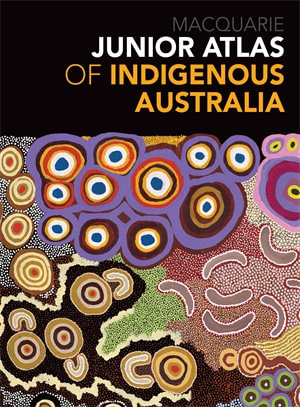
The Junior Atlas of Indigenous Australia is a wonderful resource that will be highly valued in both primary and secondary schools and public libraries as it gives a much-needed visual representation of 60 000 years of Australia’s First Peoples.
The front end papers feature a locations map as well as a brief explanation of the areas labelled and highlighted on the map. The contents pages list 27 chapters with the first chapter titled ‘Exploring the Atlas’ with an explanation of different types of maps as well as special terms and helpful tips. The layout of the book provides the reader with clearly presented segmented information surrounded by displays, images, photographs, maps, diagrams, beautiful artwork, as well as Word Alert, Fast Fact and How Do You Say It pop ups. Chapter 2 focuses on Deep History and the first peopling of Australia. Further chapters include information about Indigenous mapping of place and space, Watercraft, Performing arts, Clothing and shell adornments, Sports, Education as well as many other varied and important topics. The final chapter, Health and wellbeing, discusses recent and relevant health issues for Indigenous Australians in great detail.
The Appendixes section has a note for teachers on mapping conventions and geographies, pronunciation guide, abbreviations, list of authors and acknowledgements for each chapter plus a detailed index. The CBCA New Illustrator of the Year 2020, Jasmine Seymour, a proud Dharug woman, is the educational and cultural consultant for the Junior Atlas of Indigenous Australia. The striking cover design is a collaborative painting called Kungkarrangkalpa Tjurkurpa.This significant book is an important addition to all schools and public libraries.
Editor's note: After a comprehensive, independent examination of the Junior Atlas of Indigenous Australia by Professor Dr Marcia Langton and Professor Aaron Corn; the book has been reintroduced for sale after it had been temporarily withdrawn.
Themes Australian Indigenous Peoples, Reference, History, Archaeology, Geography, Aboriginal Culture.
Kathryn Beilby
Bluey: A jigsaw puzzle book by Bluey
Penguin, 2022. ISBN: 9780143777878. (Age:3+)
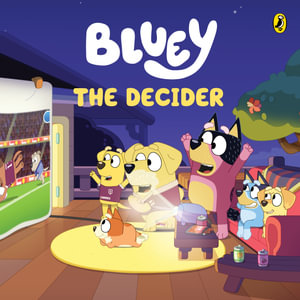
The award-winning Bluey is back with a jigsaw book that will be fun for fans of the TV show. Each double page spread has a small section of text describing the puzzle and asking the reader to see what happens when the puzzle is turned over. The four puzzles are of familiar Bluey episodes. There is a fairy ring, Bluey and Bingo play Mum and Dad, a cheeky bin chicken watches Bluey and Bingo sneak up on Mum and Dad and finally Bingo is dreaming about an adventure in space.
The puzzle pieces are large and made of heavy cardboard and fit into the page. Adults might have to be careful to keep the pieces of each puzzle separate so that young children could do the puzzle.
I can see grandparents who love jigsaw puzzles having a lot of fun with this book, teaching their grandchildren how to complete a puzzle, and in this case, have the fun of turning it over and having a second picture completed.
Themes Jigsaw puzzles, Games.
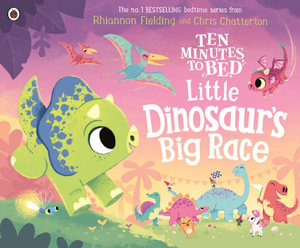
Ten minutes to bed little fairy by Rhiannon Fielding and Chris Chatterton
The Ten minutes to bed series is very popular, and the latest in the series, Ten minutes to bed little fairy is sure to captivate little children and send them off to bed in ten minutes. Poppy is a little fairy who has very small wings that make it hard for her to fly high. She flies low to the ground, then onto a flower and finally when it is only a few minutes to bed her confidence grows and she can fly into the night sky. Then she spies a little gnome who is lost and can light his way home, just before the ten minutes to bed is over.
This series is very appealing. The rhymes make it an enjoyable read aloud and the idea of ten minutes before it is time to get into bed is one that parents could enjoy. It is good to see that Poppy grows in confidence and begins to challenge herself as she flies and the fact that she can help the gnome find his way home is joyful.
The illustrations are bright and cheerful and have lots of minute details that children can find. There are tiny fairies on mushrooms, frogs in a pond and a ladybird and bees to find on many pages. Spiders lurk amongst the leaves and Poppy’s happy expressions as she flies higher are lovely to follow.
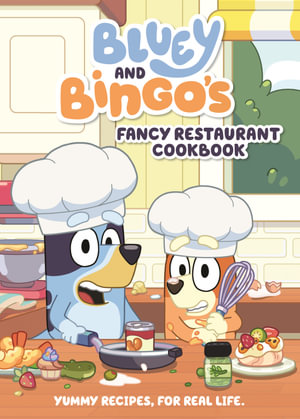
Bluey and Bingo's fancy restaurant cookbook by Bluey
Penguin, 2022. ISBN: 9781761045769. (Age:4+ with adult support) Recommended.
Parents, grandparents and children will be familiar with the well-known and much-loved Bluey series on ABC KIDS. All over the world, the Bluey phenomena is further heightened by the huge marketing range of books, toys, clothes, games and more. Now there is a newly released cookbook titled Bluey and Bingo’s Fancy Restaurant Cookbook. This bright, colourful and humorous book is presented in a spiral bound format with easy-to-wipe-clean pages. The book begins with tips to be read with an adult about safety, hygiene, allergens and mess. This is followed by a page of all the things needed including a whiteboard marker to tick off the ingredients. Recipes included are omelettes, Shadowland cupcakes, poffertjes, Nana’s ice blocks, Bingo’s fairy bread, sausages and salad, fish and chips, prawn kebabs, pizzas, spring rolls, curry, ice cream, pavlova and a challenging duck cake. All recipes have a difficulty rating, a list of required ingredients, plus clearly set out numbered steps to follow the recipe. Throughout the recipe pages are engaging illustrations and comments from Bluey, Bingo and friends. There is a page for creating your own menu as well as your own recipe.
An entertaining cookbook best shared between an adult and young child.
Themes Bluey, Recipes, Children, Cooking.
Kathryn Beilby
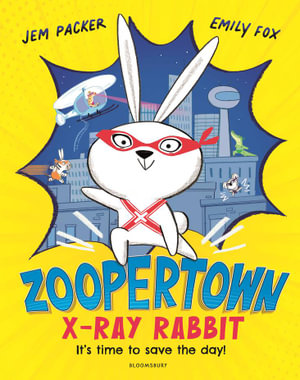
Zoopertown X-Ray Rabbit: it's time to save the day! by Jem Packer and Emily Fox
Bloomsbury, 2022. ISBN: 9781408898338. (Age:3+)
The Zooperheroes are on the mystery of the missing food. After their breakfast disappears and Go Go Gorilla’s giant banana birthday cake cannot be found X-Ray Rabbit is on the case. She spies a banana skin and that sets her off on the trail of the thief who is stealing all the food. Will her amazing x-ray zooperpower be enough to solve the case?
Children who love superheroes will discover some very unusual ones in this book. Not only is there X-Ray Rabbit but Crash-Bang Koala, Zip-Zap Giraffe, Snap-Crack Croc, Zoom-Zoom Zebra feature too as well as the Zoopercopters that come to the rescue! The adventure is fun, and the narrative flows along building up the tension of the adventure. X-Ray must meet the Forest of Fright, dodges super-creepy critters, jumps over hissing, slithering snakes and comes to the Atrocious Tower of Terror, and finally all the Zooperheroes solve the mystery.
Readers will have fun guessing who the villain might be, the story reads along smoothly and is very enjoyable. The cartoon like characters are delightful and the illustrations contain humour and wit.
Children who enjoy this book may like to look at the BumbleBunnies series by Graeme Base.