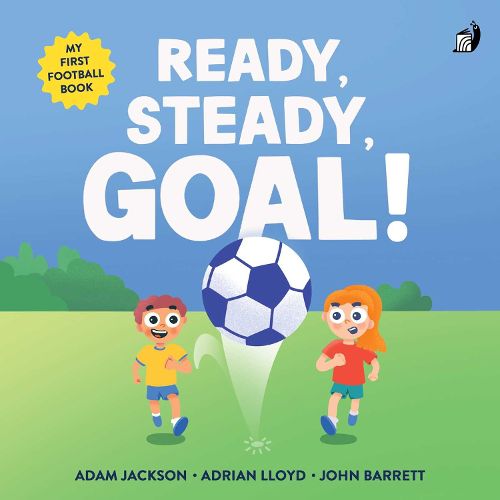
Ready, Steady, Goal! by Adam Jackson & Adrian Lloyd. Illus. by John Barrett
Little Book Press, 2026. ISBN: 9781923141650. (Age:3-6) Highly recommended.
For the youngest readers just beginning to learn rules and skills in soccer, Ready, Steady, Goal! will be a very popular read. With sharp, short phrases on each page, the simple rhyming text flows consistently and is perfectly complemented by the bold, colourful images.
The sun is up. The grass is green. It's time to play – are your boots clean? We’ve got the ball. Who goes in net? Ready, steady…but not just yet!
It is time to play – one, two, three! The whistle blows. Quick pass to me!
Control the ball, with a TRAP Turn. Dribble, dribble. Tap, Tap, Tap!
Each carefully considered illustration is thoughtfully placed, whether as a full-page spread, a half-page moment, or a series of vignettes. The visual appeal is immediate, and the dynamic movement of the ball and characters as they travel across the pages creates an energetic rhythm that readers of all ages will enjoy.
This book would make a fabulous gift for a young child starting out on their soccer journey.
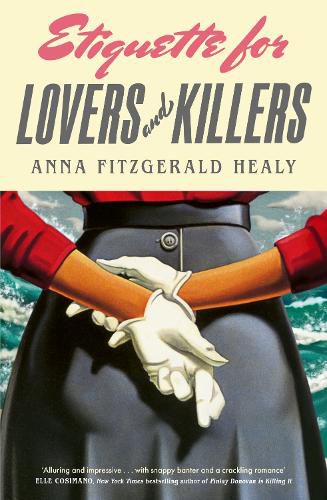
Billie McCadie is living a quiet life in 1964 Eastport, Maine. She works in a tiny clothing alterations shop, and borrows crime romance novels from the local library for some excitement - she's basically being bored to death. After the death of her parents, she's living with her grandparents for a time, even though she's old enough to be considered an 'old maid'. Her mother always taught her good manners, and so she lives life by these manners, until one day she receives a cryptic love letter and engagement ring - addressed to 'Gertrude'. Then she meets one of the summer visitors, a yacht-club member, the handsome Avery Webster, and starts participating in high society events - where she meets Gertrude and is the last person to see her alive... and the first to see her dead... Life then becomes a mix of cocktails, stalking, champagne secrets, more dead bodies and a whole heap of suspects and secrets.
Anna Fitzgerald Healy has written an interesting historical murder mystery with occasional footnotes (definitions on particular words, often humorous), that is evenly paced, packed with interesting characters and plenty of witty banter. Set in the 1960s, the story references events throughout the book that were big or relevant at the time, and plenty of references to fashion at the time. Perfect for readers who are keen fans of the 1960s, or those who would like to reminisce, and a good cosy mystery for those who enjoy the genre.
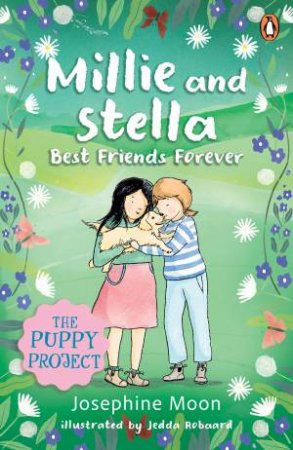
Stella unexpectedly becomes a short-term and fill-in carer for a puppy that potentially will become an assistance dog … but first he must be trained. With her best friend Millie, they decide that training the puppy will mesh nicely with the need for a task or topic for a school project. Stella and Millie attend an alternate school with less rigid structure than most, but a puppy at school comes with all sorts of interesting challenges, including negotiating Gwynyth’s mindfulness project. Can the friends train a puppy and cope with the things that go wrong along the way?
This is a delightful story with all the sweetness of a rolling and rollicking puppy and indicating the challenge of meeting its needs, and with all the feelings that might be felt. Millie particularly is prone to struggling with big feelings and her strategies for coping under pressure are made plain. This aspect of emotional intelligence would be good for young readers who struggle with anxiety. The ‘mean girl’ interaction with Gwyneth is handled sensitively with a measure of understanding possible. This is a book that young independent female readers aged 6-10 will love, it is written with a simple vocabulary and enough real-life connection to attract readers in this age bracket. There are sweet and naive illustrations scattered throughout the book, but less frequent than in many early chapter books.
Renowned Australian author Claire Saxby has once again written a stunning and profoundly reflective narrative non-fiction picture book that will leave a lasting impression on the wide range of readers it will definitely captivate. Combined with the striking and dramatic illustrations by Peter Cheong, Through the Darkening Sea, is a deep dive to the depths of the ocean floor where life exists far below the surface.
As the dead whale slowly falls, it passes through a myriad of sea life including ‘swarms of migrating krill, flit-and-skitter schools of silvery lightfish, threaded chains of see-through salps’, all perfectly imaged against a deep blue-black background. Each layer of ocean passed through by the whale is lyrically described and the explanation of how sea creatures' colouring changes the further from light, is creatively shared alongside the haunting visual images. As the whale settles on the ocean floor, it becomes a source of food for those that dwell there. The circle of life is once again complete when a female whale travels though tropical waters and a new calf is born.
Through the Darkening Sea is magical journey into the shadowed darkness below the ocean’s surface where even with little light, life is teeming. This is a picture book to read slowly, savouring the words and images, creating discussion and encouraging curious readers to dive into further research. A fabulous read.
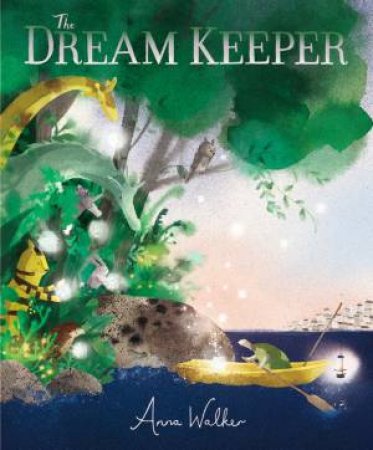
The Dream Keeper is a strikingly whimsical picture book that will surprise readers with its deep meaning, incredible detail and glorious images. A young child is afraid of the dark and has trouble settling into sleep. Meanwhile a wondrous turtle travels to places carrying a small jar of illuminated dreams to those who need them. The turtle’s journey to give hope to the child afraid of shadows and darkness is not always smooth sailing but the destination is reached in the end. It is only then that the child and her toys drift gently towards slumber.
From the stunning cover and outstanding endpapers this is a book to be treasured. With minimal text, it is the compelling images in softly muted tones that tell this story of fear, courage and hope. Full page illustrations paired with panels, all rich in texture and movement, each highly detailed drawing revealing a thoughtful and imaginative narrative one section at a time.
Anna Walker has created an exceptional picture book. It is distinctive in its presentation showcasing the skills of a gifted author/illustrator as well as in the complex layers of the story behind the words and images, and how they are perceived and understood by each reader. Highly recommended.
Themes Young children, Dreams, Overcoming Fear, Courage, Self-confidence, Hope, Imagination.
Kat found success as a writer by telling the story of her parents’ own love story. Her entry into the publishing world was easy, but now after drafting her second novel everything seems to be tumbling down around her. A rewrite is necessary, but Kat is filled with dismay at her own inability to refashion her second story to make it anything but boring. Was it too much like her own life? A last-minute place on a writer’s workshop in France might be her chance to break the fear that she cannot write at all. Inside the writer’s craft and meshed with the sensuous joys of French cuisine and culture, Kat discovers more than she expected and it is not all romantic.
Written as a combination of a writing journal inspired by workshop prompts, and a bare-bones novella that seems to reveal a mystery involving the workshop hosts, the story is revealed as a combination of fiction, an investigation report disguised as fiction and an overarching mystery. The strange weaving of these things creates a muddied plot path that is sometimes a little uncomfortable in its progression. What is delightful is the French cultural landscape and the description of every meal creates moments of salivatory appeal. At times this seems a strange way to tell this unfolding mystery, and it is not always satisfying. There is romance, mystery and self-discovery all wound together in knots. Some of the techniques for creative writing are intriguing and the excerpts shared by the collection of retreat attendees can be admirable, but mostly this book feels puzzling. No one and no one’s story can really be trusted, and the narrative structure and style is slightly off-centre. Written for adults, but readers aged 16+ could find the Creative writing aspects of the story interesting.
When Jackson stands up his childhood sweetheart Sarah at their Sydney society wedding it is clear something has gone seriously wrong. All the rich and famous are there and no expense has been spared but the bride’s family connections to the Sydney underworld and the way they had always despised her relationship with Jackson has given the event an edge that preempts the non-arrival of the groom. Rumours are rife about what has happened, but Sarah discovers that Jackson and his friend Benny have left the country. What follows is a hunt where Sarah uses all her family connections and wealth to track Jackson down and seek vengeance. It seems Jackson’s talent for art might save him. A copy of a Picasso he made comes to the notice of a rich collector who has a proposition. He can be spirited away without trace if he can use his talent on a project close to collector Sebastian Lee’s heart.
We learn about Sarah and Jackson’s developing relationship and characters through timeline shifts, gradually building up a picture of Sarah’s athletic aspirations and Jackson’s developing art talent. We hear lots about the trappings of wealth and the cutthroat nature of elite sports and associated media attention but the characters didn’t develop beyond their respective talents. There is certainly enough action to satisfy the reader but at times I had to work hard to follow the timeline. The imagery was often laboured and held back the pace. When it came down to it, I didn’t care enough about the wealth, the sporting achievement (why was that at all relevant?) or the characters and the ending was very far-fetched. This one was not for me.
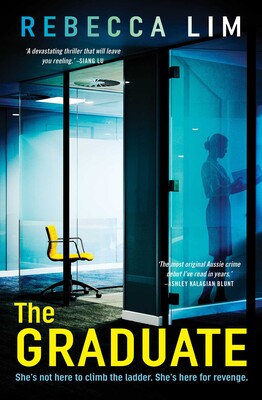
Fei Fei Chou is the diversity hire, the token Asian in the graduate intake to a conservative, highly prestigious, law firm. Little do they know, her real name is Evelyn and this is exactly the role she has been working towards for years. Beneath her quiet, unassuming and heavily made-up appearance, there is fiercely determined woman intent on revenge for a horrendous crime, which saw her, as a child, become the victim of the Eastern Suburbs Paedo (ESP). She was one of three young girls targeted by the still unidentified paedophile; only two of whom survived, Evelyn and Hailey. Hailey retains the only clue from her imprisonment, the memory of a box labelled ‘Paukeaho’. Loosely based on the Mr Cruel crimes in Melbourne in the 1980s, Rebecca Lim’s mystery thriller imagines the determination of a victim, now a graduate lawyer, who is focussed on discovering any trail to Paukeaho, to make the monster pay.
Rebecca Lim draws on her experience as a lawyer and exposes the challenges for a shy young Asian Australian graduate trying to take her place in a highly competitive, even toxic legal environment. But she shows that the outsider can succeed; the graduate is a seasoned survivor and proves herself capable and resilient, brave enough to venture into danger and get what she wants.
Lim’s crime novel is set in urban Australia, rather than the popular outback noir, and her investigator is a scarred Asian girl. Along the trail Lim exposes the crimes of Australian colonialism, the unprincipled mining of Pacific nations such as Nauru and Christmas Island, the exploitation of coolie labour, and the long-standing abuse of women and children. It is a unique blend of enthralling thriller and historical research, an interesting new brand of crime fiction.
The graduate is a new genre in Lim’s repertoire. Best known for the highly awarded young adult novel Tiger daughter (2021) and Two sparrowhawks in a lonely sky (2023), she is also the author of the Children of the Dragon fantasy books and a picture book Our family dragon (2023). The graduate is her first foray into adult fiction, but her sensitive non-graphic handling of the themes of rape and sexual abuse means that YA readers of crime thrillers may also appreciate this novel.
Themes Paedophilia, Revenge, Law, Crime.
Helen Eddy
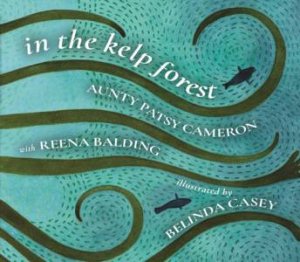
In the kelp forest by Patsy Cameron & Reena Balding. Illus. by Belinda Casey
On first viewing of the glorious blue-green cover of in the kelp forest, an immediate connection is made. With embossed kelp fronds traversing both the front and back, the reader will be drawn to the striking water colour images inside paired with the quietly informative text in this stunning narrative non-fiction book. Each page is a wonder of artistic design with the both the attached and unattached kelp providing a rich source of food, habitat and safety for those that it shelters and supports.
The skilful use of traditional words from Oyster Bay and Coastal Plains languages, anchors and accentuates the Country where this narrative takes place. The Patterleener (abalone or muttonfish), Neertattenner (crayfish), Payenratter (sea horse), Lowernume (sea urchin) plus other varied creatures all live and feed within the kelp forest. Throughout the book are important ecological and relevant facts gently woven into the narrative providing readers with more knowledge and understanding about the importance of kelp forests in marine ecosystems.
In the final pages there is further information about kelp plus a description of four members of the kelp family as well as a glossary. This is a beautifully written and engaging book that would be a wonderful addition to a home, school or public library.
Themes Kelp, Tasmania, First Nations People, Cultural Knowledge, Creatures, Food Chains, Ecosystem, Narrative Non-fiction.
Kathryn Beilby
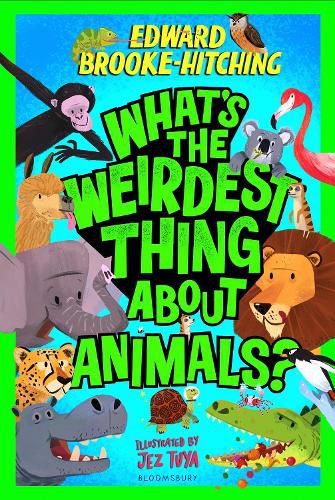
What's the Weirdest Thing about Animals? by Edward Brooke-Hitching
This novel-sized non-fiction text will be a handy and humorous quick read for children who love to find out strange and interesting facts about animals from all over the world. The book begins with a clearly set out contents page highlighting six chapters with catchy titles:
This is followed by the introduction and then an engaging chapter on How To Talk to Animals Around the World. For example, cows moo but they also ngoah (Arabic) boe (Dutch) um-bo (Vietnamese) and horses neigh but they also iihihihi (Albanian) vrinsk (Danish) wiehiehie (German). There is a double page spread with numerous collective nouns such as an unkindness of ravens, a zeal of zebras, a maelstrom of salamanders.
Each chapter introduces the particular group of animals and then presents facts in bite-sized chunks differentiated by change of font. For example, elephants are not frightened by mice but they are scared of bees or penguins can’t pee but they are powerful poopers! Key words are highlighted, examples are given and black and white images are spread throughout. At the end of each chapter is quick quiz. In the final pages are space to fill in some of the weird facts learnt through reading the book.
While this book is not a glossy, large format publication with multiple colour images, it remains highly accessible and easy to browse.
Themes Animals Worldwide, Facts, Nature, Humour.
Kathryn Beilby
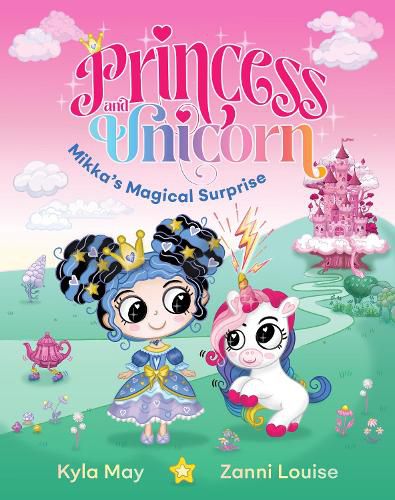
Princess and Unicorn: Mikka's magical surprise by Kyla May and Zanni Louise
Mikka is a young princess who really wants a pet and her birthday is approaching. The pet she does receive is magical and amazing, but the young, untrained unicorn creates some unusual, colourful and messy moments during Mikka’s birthday party. Learning to train the unicorn presents some more intriguing moments and Mikka must convince everyone around her that a magical unicorn in the palace is a positive thing.
This is a simple chapter book with some magical sparkles and action that moves quickly. Everything happens with only short passages of text on each page and chapters that move at pace. Black line illustrations are cute and would assist early readers to understand the magical mayhem that an untrained unicorn can create.
For 5-7 year olds who are beginning their independent reading journey.
Themes Unicorns, Birthdays, Pets, Magic.
Carolyn Hull
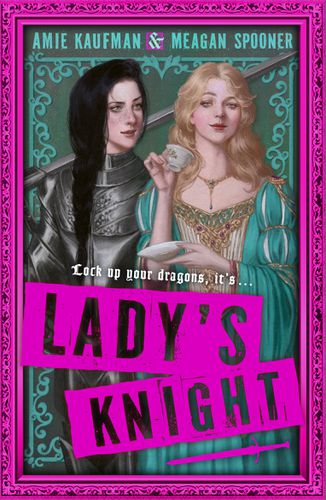
Lady's knight by Amie Kaufman and Meagan Spooner
Allen & Unwin, 2025. ISBN: 9781761069284. (Age:13+) Recommended.
Gwen lives in hiding - running her father's blacksmith shop in secret while dreaming of being a knight, and also being attracted to girls - all a dangerous mix in the small village she lives in. Lady Isobelle is almost the opposite - not really in the shadows as a Lady, always running around, talking her way out of trouble - until now, when her guardian puts her and her dowry as the prize for the winner of the Tournament of Dragonslayers. Whichever knight wins the tournament, wins her. When the two girls meet, sparks fly and a daring scheme is concocted - Lady Isobelle could win her freedom and Gwen could win glory - but losing? Could mean the end of everything... And love? It wasn't part of the plan...
Amie Kaufman and Meagan Spooner have written yet another fantastic book, full of witty banter, quick action and excellent characters. Well paced and swapping between the two lead characters points of view, the book moves swiftly and there will be enough predictability and guessing that readers will feel comfortable and on the edge of their seat. Readers will enjoy this tale set in medieval times, with an added LGBTQIA+ twist, instead of the usual lady and knight - and the nod to early feminism. Kaufman and Spooner together are always a winner, and Lady's Knight is right up there with their previous collaborations.
University of Queensland Press, 2026. ISBN: 9780702271045. (Age:10-14)
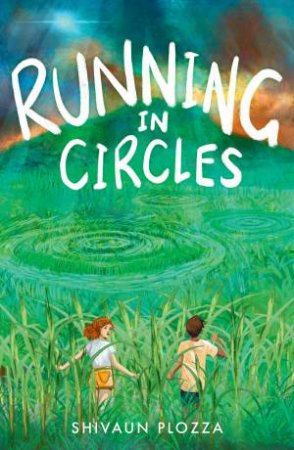
Twelve year old Dell (aka Adelaide) is the second child in a family of four girls cared for by their father. All of them have been dealing with the emotional difficulties that follow their mother’s departure from their family to chase alien contact and pursue the appearance of crop circles. Tully in North Queensland is renowned for its own cyclonic torments and Dell has become an avid climate and weather watcher while her mother wanders the country throwing promises of her return to the family in random bursts. When a local crop circle appears it creates a wave of interest and brings their flighty mother back and ignites emotional turmoil in the family. Can Dell and her sisters survive the torment of having their alien-focused mother back in their life and can they trust her promises? And can Dell sort out what is the battle she should really fight? Who should be believed and who can be trusted?
This is an emotionally-charged story, and one feels the weight of the storms that are brewing for the family. Alongside the family drama, Dell and her friend also deal with school-based bullying and Dell seems to be carrying the weight of the abandonment by her mother for all her family. A neighbour also is impacted by the local crop circle interest with some loose parallels to Dell’s story. Each chapter is headed by a weather report to highlight Dell’s climate interests and the issues of climate change and animal species under threat are mentioned as well. (Dell’s mother thinks that aliens will be able to help solve climate distress, while Dell is focusing on more scientific research.) Dell’s grandmother has had her own relationship chaos in the past but has finally settled with affable Grandpa-number-Four (this seems excessive and unnecessary in the development of Grandma Mo-mo’s character) and is now a calming influence in the family. Sometimes the highly charged relationship drama seems a little too fraught and strangely out of the ordinary for a comfortable read for readers aged 10-14, but the chasing after aliens has an edge of humour amid the seriousness.
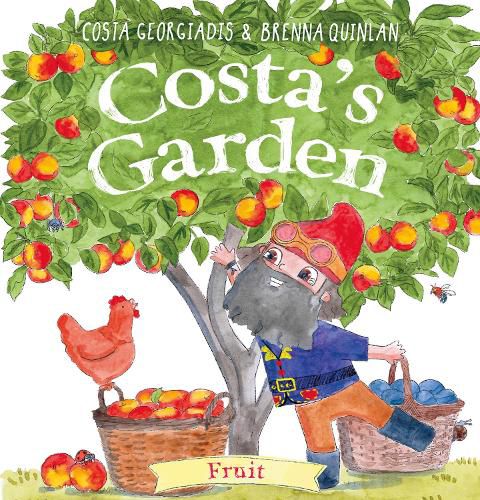
This delightful narrative non-fiction picture book is a joy to read. It offers young readers a creative and interesting glimpse into all things fruit related. With Costa Georgiadis’s trademark humour, enthusiasm and colourful style, he takes children on an adventurous ‘fruity’ journey where they will discover and learn all sorts of interesting and fascinating facts about fruit.
The clever showcasing of the life cycle diagram provides a gentle introduction and perfect teaching moment even for the youngest readers. It is a simple way to explain how fruit grows. Following this is a page children will love especially the mention of bum, undies and poop! The ‘Guess the Fruit’ game where the characters are deciding if fruit is bitter, sweet or sour could lead to discussions about what a fruit is – especially those we know as vegetables, and like and dislikes amongst young children.
First Nations communities share stories and traditions about fruit. It is part of their daily life whether used a food or medicine. Coming together and sharing fruit is an important part of all cultures. Children may be familiar with the season of preserving fruit. Many cultures do this as a family tradition when there is an abundance of fruit.
The vibrant and engaging illustrations paired with Costa’s thoughtful and personalised approach will encourage Costa’s Garden: Fruit to become a favourite for educators, parents and children.
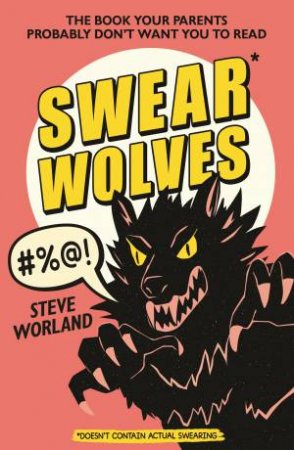
It is two months since Luna Wilkinson and her family have moved to a house with a spooky forest at the bottom of the garden. A new area means a new school and 12-year-old Luna has a plan to break into the tight knit friendship groups by taking part in the school vampire musical ‘Bite Me'. She doesn’t currently have any friends so needs to bribe her younger brother to help her learn her lines. The price is to practise soccer with him and when the ball disappears into the scary forest Luna must retrieve it. In the forest she is bitten by something and what follows is bizarre. Luna thinks swearing is not cool, just an indication the swearer can’t think of a more interesting word, but that evening at home it starts, involuntary, intermittent swearing she can’t control. (The swear words are redacted). The only control she has is to stop speaking, not a good start to preparation for an audition. To make matters worse, at school Vivian Dally-Watkins and her cohort of musical hopefuls warn Luna off auditioning in no uncertain terms. Luna doesn’t give up, she decides to research the swearing phenomenon at the library, find out how to lift the curse and still ace the audition for the musical despite the bullying girls. All doesn't go to plan but in doing so she makes a friend, uncovers bigger adversaries and finds the power to defeat them.
I was a bit worried about this book when I read on the back that the curse 'forces her to blurt out every swear word in the dictionary' with its uncomfortable association with Tourette’s syndrome. I am still not sure about it but the story is great, cleverly plotted and unpredictable with a balance of fun and scary bits, writing which will extend vocabulary, lots of action and a brave central character.