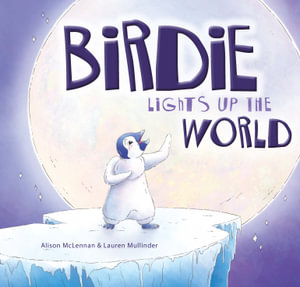
Birdie lights up the world by Alison McLennan and Lauren Mullinder
EK Books, 2023. ISBN: 9781922539489. (Age:3+)
Each evening at sunset, Birdie the penguin would sing to the sky, enticing the stars and the moon to come out so the other zoon animals would not be left in darkness. She believed that she was the chosen one, and this was her sole purpose. But she is dismayed when she gets sick and cannot sing, and depressed when the sky lights up in its evening show regardless. Clearly, she is not as important as she thought she was. What is her purpose if not to sing the night in?
This is a sensitive story that opens up opportunities to discuss some philosophical questions with young readers about purpose and responsibility and coping with disappointment. The teachers' notes suggest some of the questions that could be posed and how Birdie's situation might be related to their own lives, particularly if ambitions or expectations are thwarted somehow. In a world where every little thing is rewarded with praise and celebration, some children are not learning how to deal with things that don't work out the way they want and so this is a chance to ask, "But what if..."
"The author has said that she wanted to deliver the message that we all have special, unique gifts and it's our responsibility to share them with the world. If we have a song to sing, we should sing it, whether it fills a stadium or only brings joy to one person. It all counts."
Barbara Braxton
Granbad by Penny Tangey. Illus. by Peter Baldwin
University of Queensland Press, 2023. ISBN: 9780702266232. Recommended.
Rebellious Grandpa is not too keen on rules, so that is why the kids call him Granbad. One day they all go along to a protest about saving the forests. Granbad puts on his greater glider costume, hands out his lollies to the kids, despite mum’s protestations, and climbs a tree, ignoring the do not climb notice, to photograph the protest. He houses his grandson on his shoulders, ignoring mum’s reminder about the doctor’s advice. On the way home they look at Granbad’s photos despite dad reminding them of their limited screen time. That night Granbad read them stories long past lights out.
But next week they hear that the protest did not work and the forest was to be cut down. So Granbad planted himself in the tree, something very illegal, daring anyone to cut him down. Others protesters passed food to him and eventually the bulldozers left and the greater gliders were safe. ‘Sometimes you have to break rules to do what’s right’ Granbad tells them.
A very telling story about conservation and what we need to do to save things in our environment, Granbad tells this tale using humour, and the illustrations add another level of humour to the text. Each page shows the family in a different situations, mum and dad trying hard to restrict Grandpa’s extreme points of view and the lengths he will go to to save the glider.
His image will make kids laugh showing his wild hair, sunglasses and clothes. I love the books the kids are reading, the detail is absorbing. Teacher's notes are available.
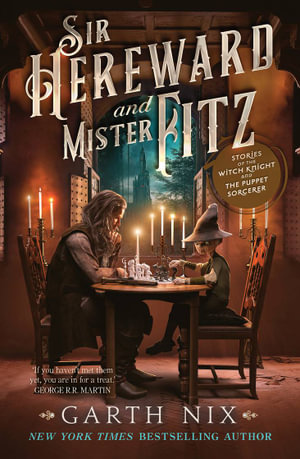
Garth Nix is a favourite fantasy author of mine – I especially loved Sabriel, the first of the wonderful Old Kingdom series, and The left-handed booksellers of London and I was thrilled to find that there was a collection of short stories that I had not read. Sir Hereward and Mister Fitz comprises of eight stories gathered for the first time, plus one new story “The Field of Fallen Foe,” to whet the appetites of those who are familiar with those previously published. Featuring Sir Hereward and Mister Fitz, readers will be drawn into their world, where they function as agents of the Council of the Treaty for the Safety of the World. The pair are tasked with finding and removing gods who have been listed as dangerous. Sir Hereward is the son of witches, a knight, skilful at swordplay and artillery, while Mister Fitz is a sorcerous puppet, who wields magic needles. And what a combination they are! Travelling from place to place they encounter adventure and danger in a magical land.
It was very easy to fall into these short stories and grow to like the main characters. Each one saw the pair face a different sorcerous god, and both had to draw on their skills to overcome the danger. There are scenes of derring-do, with the pair facing pirates, using gunpowder, and riding strange creatures across difficult terrains. By the end of the collection, the reader is familiar with some of Sir Hereward’s background and the family of witches he is related to, and how Sir Fitz was created.
This is a must have collection for Nix’s fans, easy to read and enjoyable, and is likely to appeal more to adults and older teens. George R.R. Martin mentions on the back cover that Sir Hereward and Mister Fitz “are the best partnership in the world of fantasy since Fafhrd and the Gray Mouser’’ by Fritz Leiber, and readers may want to check out that collection too.
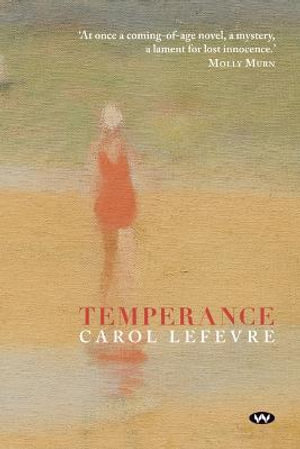
At the heart of this story is a bizarre event that has impact on the lives of all who were there. Nine year-old Fran and her younger brother Theo are awakened from their sleep on a camping trip by bright lights that seem to lift the car and their tent up into the air. There is a fire somewhere and a burning figure, but their mother Stella clamps her hands across their eyes so they do not see more.
No explanation is ever offered to them for what happened that night outside the town of Temperance. All the children know is that their mother drove them back home in a terrified hurry, and her friend who had been with them, the beautiful Mardi, has disappeared. It is a mystery, like the disappearance of their father, years before, when his car went over the side of a bridge. For Theo, especially, it is another bafflement, to be added to the departure of his beloved elder sister Tess from their home.
Stella becomes taut and aloof, Fran develops a stutter, and Theo is haunted by nightmares. The consequences of that strange night extend into their lives, and impact the paths they each take. Lefevre perfectly captures the fear, confusion and complicit silence around events the children cannot make sense of, and shows how those events shape their characters and their futures. It is only later in life that they dare to search back over what happened.
This is a fascinating story of mystery and of coming of age. Predominantly told by Fran, but also by Theo, it focusses on the concerns of the children in the exhausting life of a single hardworking mother in 1960’s Adelaide. Stella’s sole parent status and her relationship with the sassy free-spirited Mardi are met with disapproval by many watchful eyes. There is also the danger of pushy men and hooligan drunks. But within the community there are sparks of kindness in some unexpected places; the generosity of Mrs Caparelli and the friendship of Hughie the homeless man relieve the loneliness and insecurity of the two children.
Many Adelaide readers will recognise the places described in this book, and enjoy the story that is woven around them. Many will also recognise the less enlightened attitudes of a past era, and the prejudices that continue to manifest today. And most definitely readers will be absolutely drawn in by the unravelling of the mystery of that strange night in Temperance.
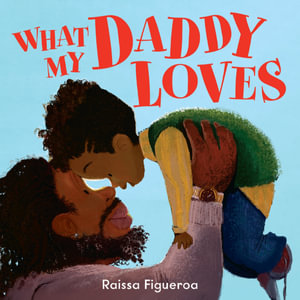
An array of different dads and their children are shown in this story: playing, talking, having fun, eating and drinking, studying. Each page reflects the love felt between the two as they wake in the morning, eat breakfast together, then go through the day at the playground, at the supermarket, walking though a field, playing in the back yard, mending the car. Each image shows the love felt between the two, offering different dads and their children. One dad is in a wheelchair, one is hearing impaired, there are different body shapes and ages, while the children depicted are just as diverse. I loved looking at the different hairstyles of the young and old. The bold illustrations will attract the eyes of the readers as they scan each page, working out what the child and their father is doing, how they are interacting and what it shows about their relationship. Some pages are standouts; I love the double page of Dad cooking eggs, his daughter sitting on the kitchen bench, and the double page showing them in the supermarket, doing what all of us love to do, the indistinct shelves giving the impression of speed, and I love the image of the pair on the roof watching the night sky.
A delightful story of the link between fathers and their offspring, the book shows a group of diverse fathers interacting with their children, embracing the love that exists between them all, modelling a loving and strong relationship.
Text Publishing, 2023. ISBN: 9781922790330. (Age:16+) Highly recommended.
What makes a woman stern and forbidding towards her children? Why would they grow up feeling unloved? Kate Grenville’s grandmother was a woman like that. And when in her later years she regretfully asked the question of little 5 year-old Kate, “Do you love me Cathy?” the child’s answer was “No”. Grenville’s latest novel Restless Dolly Maunder is an attempt to understand that aloof and unloveable woman that was her grandmother.
Dolly Maunder was a young woman in the late 1880’s, living in rural Currabubula, NSW. As a child she liked going to school, she was “clever little Dolly”, rewarded with the teacher’s star. She thought she might like to be a teacher too, but the response from her father was a resounding “Not over my dead body”. She was a girl, her place was in the home, there was work to do, and one day she would be married, and carry on with the household work and rearing children.
Grenville masterfully captures the drudgery of women’s daily work at that time. One of the first jobs was to prepare meals for the men on the farm.
But before you could put the butter on the bread you had to churn the cream, and before you could churn the cream the milk had to be set out …, and before that the cow had to be milked, and before you could milk the cow you had to … etc.
The long litany of tasks turns into a chain of syllogisms, which drag on to be repeated day after day. And then one day you married, and you started the same chores over again. Dolly becomes bitter and resentful of the freedom that man take for granted, and that feeling of entrapment finds its outlet in her relationship with her children. In wanting better choices for her daughter, she finds herself repeating the same mantra “Not over my dead body”, overriding her daughter’s wishes and insisting that Nance study pharmacy. Nance might be offered a different future but the overriding forcefulness is the same.
Restless Dolly Maunder is a reminder of the struggle that women had to undertake to be recognised as individuals with the right to make their own choices and their own future. Dolly Maunder may not have got it completely right, but she struck out as hard as she could to make it happen. With the result that today Kate Grenville is a woman making her own career with wonderful books that highlight the experiences of women in the past, their struggles not forgotten.
Headline, 2023. ISBN: 9781472299352. (Age:Adult young adult) Recommended.
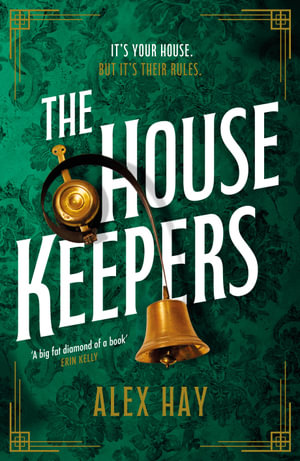
The new, sumptuous mansion in Park Lane London is the height of 1905 modernity, packed with every luxury imaginable, the home of the de Vries family, built with money from their diamond business and it is stuffed with artworks and objets d’art. The house comes with a well-trained staff to keep it running smoothly including Mrs King, the housekeeper, Mr Shepherd the butler, and there are maids, manservants, housemaids, the cook, chauffeur and groomsman. But all is not well, the master has died, his daughter is planning a ball and the housekeeper has been dismissed after being found in the men's quarters. Now in charge of the mansion, Miss de Vries (mama died when she was young) is in search of a marriage alliance and tasks her lawyer with finding a suitably blue-blooded husband for her as she plans her ball, a sumptuous affair to catch the world’s attention albeit while she is dressed in mourning black. Meanwhile Dinah, aka Mrs King is doing a lot of planning herself. It seems Mr de Vries, real name Danny O’Flynn, was not only Dinah’s father but he also has a sister, Mrs Bone whose pawn shop is the centre of her own underworld empire. Mrs Bone too has a score to settle, having lent Danny the money to set up his diamond business, and is open to Dinah’s audacious plan to settle the score. They plan a magnificent heist, stripping the mansion entirely during the ball and pre-selling the contents on the black market. As the days are counted down, intricate arrangements are made to infiltrate the house servants and guest list. They carefully plan the operation, bringing in specialist help like the twin trapeze artists called Jane, the flamboyant actress, Hepzibah and the talented and ambitious seamstress Alice, also a relative, keen for her share to pay off unscrupulous loan sharks. There is great dialogue, often with an undercurrent of private understanding, and wonderfully described characters such as Mr Shepherd the butler, who smelled of grease and gentleman’s musk, “was like an eel, heavy and vicious, and he moved fast when he wanted to” p3 or Mr Lockwood “the lawyer seemed smooth, but he only seemed it. Really he was serrated all over, knicked and ridged from top to toe and you could prick yourself if you got too close” p13. But there are so many characters and sub-plots the story falters and loses pace. The much-anticipated ball eventually arrives but by then it seems less like a well-oiled plot than a farce and winding up the multiple sub plots means the ending fizzles out. First time author Alex Hay draws on his extensive knowledge of the era with its undercurrent of shifting social change and brash new architecture so there is much to like if you are prepared to be entertained and suspend disbelief.
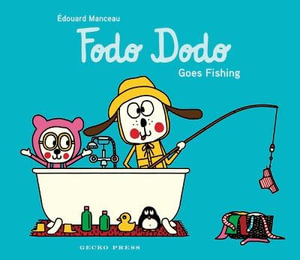
A gently humorous look at relationships and friendships is explored in this fishing story. Fodor Dodo and Noodle go fishing. They are dressed for fishing and have their lines ready, so readers will be amused when the page is turned to reveal them sitting in the bath. Fodor Dodo throws out his line and very soon he catches a fish. Noodle asks what sort of fish it is. He replies that it is an underguppie and goes into the kitchen to cook it. While Food Dodo stirs the pot, Noodle sets the table.
When all is ready, Noodle calls in Dimple to eat the fish with them. All their imaginative play is overturned when Dimple calls out that the fish is his and demands his underpants back. Fodo Dodo placates Noodle, taking her back to the bath to watch a movie, Return of the Underguppies.
Gecko Press publishes curiously good books, and this is one that exemplifies their promise.
Readers will love working out what is going on: they will engage with Fodor Dodo and Noodle as they use their imaginations to create a space in the bathroom emulating a boat and catching a fish. They extend their story to the kitchen where they cook the fish, readying to sit down and eat it. But Dimple deflates their story by pointing out the fish is not a fish but his underpants. He undermines the friendly imagining but they have the last laugh, returning to the bathroom to watch the dryer as the underpants go around.
Children will relate to the imaginative playing of the first pair of friends and be dismayed when Dimple deflates their story. They will see that the two can shrug off their disappointment and return to the game they are playing. In this way readers will learn that they can be strong despite disappointment even from their friends.
Themes Role playing, Games, Imaginative play, Undermining, Humour, Friendship.
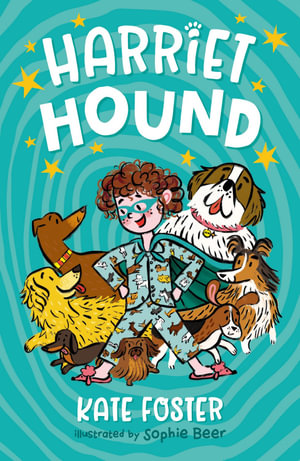
Harriet Hound is pretty much like other girls her age - she is eight years old; she has short curly hair; her favourite letter is H; she lives in a town called Labrador; and she loves dogs. She lives with her grandparents, her mum, and her older brother Hugo in a huge home especially built to be dog-friendly and now it is a dog rescue shelter. BUT - she is also autistic and has a superpower that allows her to summon the dogs from her family's rescue shelter every time there's trouble afoot... Whether it's a carnival catastrophe, a sudden storm, or vanishing vegetables, Harriet and her best dog friends use their super special talents and problem-solving skills to save the day!
Told in a series of short stories, this is a delightful book from the author of one of my favourite recent releases, The Bravest Word and again, she makes Harriet's autism such a natural part of her life, something Harriet and her family are comfortable with, and it is this authenticity that not only allows those on the spectrum to read a book about themselves but for those around them to understand the condition better. As Harriet says, "I stimmed. I flapped my hands out to the side and clicked my fingers out in front of me over and over again. It's okay. There's no need to be worried. Stimming is something I do ALL THE TIME. I do it when I'm worried and when I'm angry. Sometimes I can't stop my hands from doing it, but I also do it when I'm excited or when I'm happy. I stim to calm myself down." Can there be a better, more straightforward explanation By showing that being autistic is just a different way of being human, that there is nothing wrong that needs to be "fixed", and certainly nothing to be ashamed or frightened of, Foster advances the cause of acceptance immeasurably. Indeed, she continues this focus on kids with special needs in her book, The Unlikely Heroes Club.
Autistic or not, this is a wonderful set of stories for young, independent readers who love dogs and who would desperately like to live where Harriet does, and have her superpower.
What are people for? This is the question that Leeva Thornblossom wants to find the answer to.
Her mother is obsessed with fame and her father is equally obsessed with making a fortune. They are the Mayor and Treasurer of the small town they live in and are very unpopular as they charge more and more taxes and don't look after the citizens of the town.
Leeva is their servant, only born as her mother heard babies helped you become famous, which didn't work so now Leeva has to work to ensure that she isn't costing the family money. Leeva is eight or nine but isn't sure as no one has ever celebrated her birthday. Her employee manual prohibits her from leaving the property and although she has found small things that bring her joy, including the word of the week she wants to know what people are for.
The only people she knows are the people on her parents' TV shows and the ones she observes from her windows, crossing the road to avoid walking past her home. And then the newspaper mentions school, Leeva hopes that she will be able to attend but her father forbids her but in the process phrases his statement in such a way that Leeva finds a loophole that she uses to visit the library. This sets off a chain of events that helps Leeva to find answers to her question.
This book was a great read with a lot of parallels to Matilda and Pollyanna in that Leeva keeps a positive attitude, uses her brain to create workarounds and is helped by the people around her who know who her family is but recognise her as a person in her own right who is not a reflection of her parents.
This is a brilliant book that would work as a class novel, read aloud or read alone. It will appeal to a wide range of readers and become a firm favourite.
Themes Family, friendship, community, animals.
Mhairi Alcorn
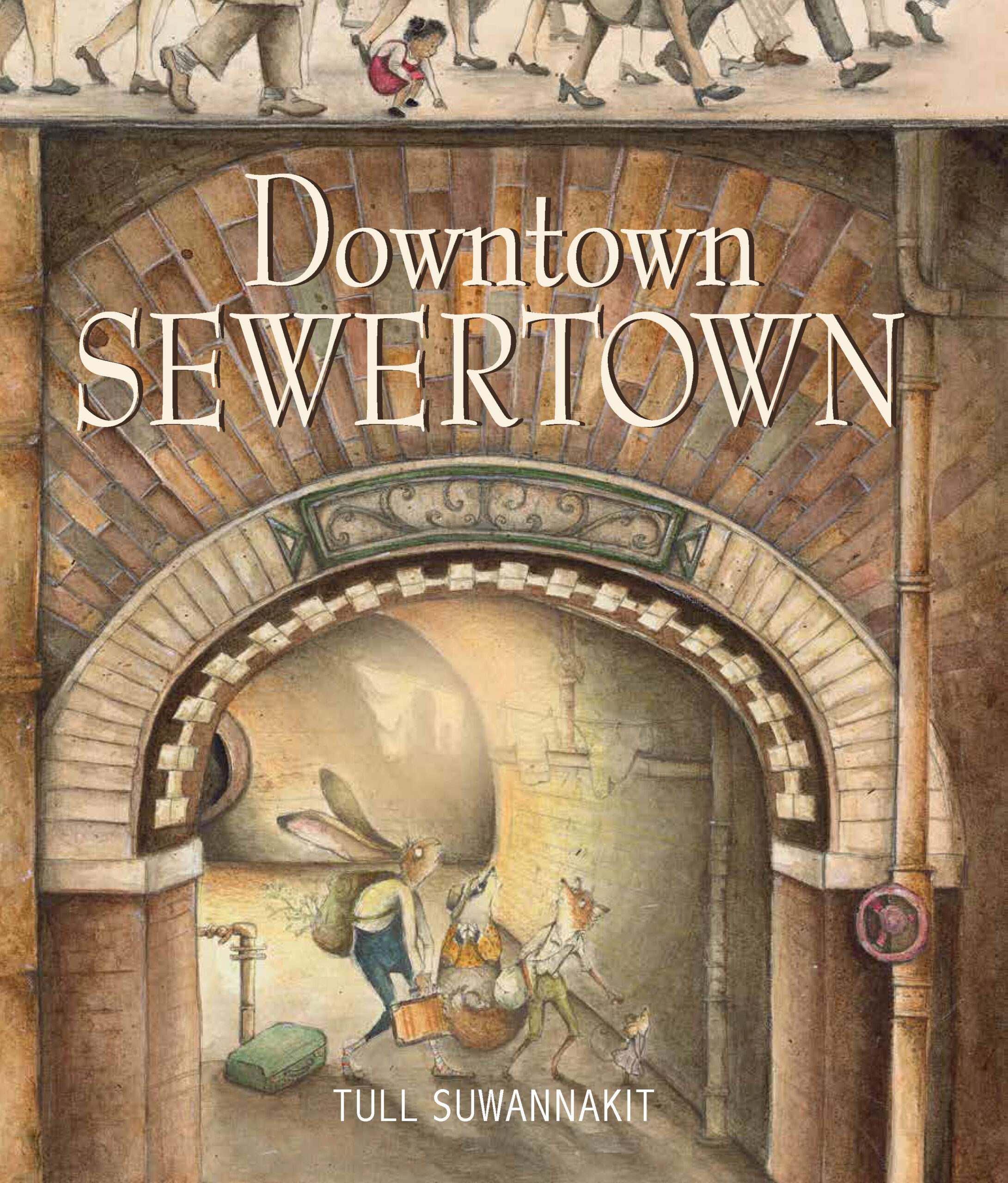
Downtown Sewertown by Tull Suwannakit
Ford Street Publishing, 2023. ISBN: 9781922696250. (Age:3+) Highly recommended.
The front cover is spectacular, full of detail and questions, enticements and wonders as a group of suitcased animals look up hearing feet walking over their heads. What is going on, readers will ask. The first page sees the animals being turfed out of their homes as construction comes closer. The welcomes signs to the new city do not apply to them: the pavements hurt their feet, the people are unfriendly, there are too many cars and a lot of smoke, and having no place to stay, they find refuge in the Downtown Sewer. They are all disappointed with their new home but Mouse prompts them into cleaning it up, certain that all will be right. So the four friends, Fox, Hare, Badger and Mouse set to work mopping, sweeping, scrubbing and polishing until in no time at all a city is built underground and they call it Sewertown. Others join them as the city grows.
But one day those above ground find the city below and tell the animals that they must leave.
A young girl stands up for the animals and encourages all to live together finding instead, kindness, friendship and heart.
And they do.
The watercolour and pencil illustrations are lovely, evoking a time in the near past, reflected by the old suitcases and clothing and the building styles. I love the touches of well known paintings such as Nighthawks (Hopper) and the detail included in each image, encouraging a feeling of involvement in the animals’ plight.
Younger readers will easily understand the theme of being pushed out of your home, as so many examples are seen on the news. Whether it be climate change causing islands being inundated, or war causing people to leave their homes, or civil unrest moving people from their villages or developers moving people from their homes to build apartments for the wealthy, each is an impetus behind people being on the move and in this century it seems to have escalated.
This is a rhyming picture book with a multi layered story which readers can see as a simple story of the animals finding a new hope or a more complex story of displacement and refugees.
More information about the author can be found here. Teacher's notes are available.
Themes Development, War, Refugees, Displacement, Home.
Fran Knight
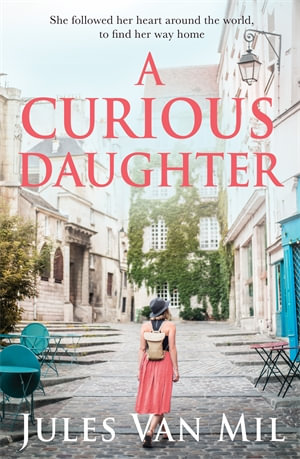
A curious daughter by Jules Van Mil
Macmillan, 2023. ISBN: 9781761263767. (Age:16+)
Readers who enjoyed the story of Avril Montdidier in A remarkable woman, will eagerly pick up this sequel about her daughter Joy, another independent female. Joy is eighteen, wanting to assert herself against a mother she finds distant and confining in the way she plans and organises everything. Joy fails to realise that it is these skills that have made Avril the successful fashion designer that she is, and it is Avril’s business acumen that has supported their life on the Queensland cattle station. Joy is at an age where she rebels against her mother's control.
The author’s style is to carry the story along with conversations that tell us what the characters think and do. It makes for easy reading, and the chatter is pleasant. Readers who enjoy romance may enjoy Joy’s gradual discovery of different loves. However, it seems rather shallow. Independence seems to be about Joy choosing what she wants and doesn’t want. The fault is always in the man, and there is little analysis of her own role in relationships.
Nevertheless this is a light and entertaining read, a family saga set in the 1970s, with travels from Australia to England and France. It includes scenes from the music scene, the fashion world, and horse-riding at the homestead, so probably plenty to appeal to the right reader.
Themes Romance, Rock band, Independence, Travel.
Helen Eddy
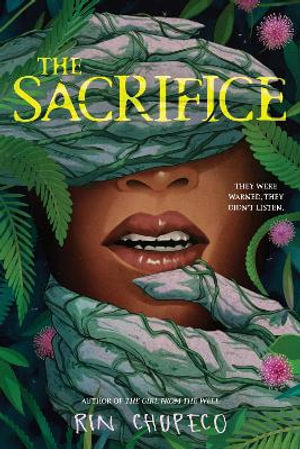
The sacrifice by Rin Chupeco
Fire Reads, 2022. ISBN: 9781728255910. (Age:Young Adult) Recommended.
When a gung-ho Hollywood film crew storm the reputedly haunted Philippine island of Kisapmata and come across the enigmatically aloof local youth Alon and his dog Askal, they quickly realise they need his help to evade the island’s ghosts.
A history of unexplained deaths and disappearances plagues the island but this does not deter the film crew. They have to decode a sacrifice-related riddle and avoid a multigenerational curse, to avoid following the fate of a gold-plundering adventurer and a cult-leader, and becoming the next victims. It becomes evident that the curse has been laid on those who are not kind-hearted and fair, and the Hollywood crew, which includes amongst others, an alcoholic, an accused abuser and a selfie-obsessed influencer, must ask themselves whether they fit this bill.
The characters must try to evade a vengeful sleeping god, dangerous sinkholes, murderous trees and enigmatic ghosts and spectres from their own pasts. All these plot devices seem to require blow-by-blow descriptions of supernatural confrontations and fight scenes and so The Sacrifice never lets up the fast-paced action as various crew-members are condemned to their gory deaths.
Add in a faltering gay teen romance and some inter-cultural and inter-generational exchanges and misunderstandings, and you have a sure-fire page-turner with a final twist that in retrospect, seems inevitable, if sad.
This is not high-brow literature; there are a number of inconsistencies in the plot, some issues with the unauthentic use of Philippine and teen language, and most disappointingly, no strong female characters. However if you don't take it too seriously, The Sacrifice is overall an engaging read from an author of five series that all draw heavily on Asian folk tales of vampires, witches and ghosts.
Themes Mystery, Paranormal, Asian legends.
Margaret Crohn
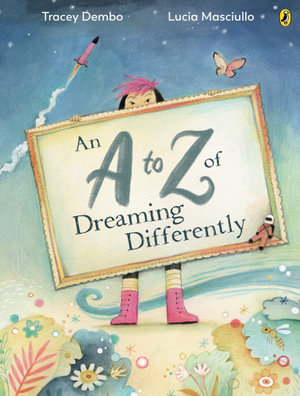
An A to Z of dreaming differently by Tracey Dembo and Lucia Masciullo
Penguin, 2023. ISBN: 9780143778905. (Age:5+)
A beautifully illustrated alphabet book which will empower, support and intrigue the readers, has instant appeal as they rush to add positive words to those offered. Each letter comes along with a sentence containing words that start with the letter, offering grounded advice about its place in people’s lives. I love O, as it tells of two words, Oh no! and Oops! leading on to the P as things do not go to Plan. O could have many other words attached, OMG being a very often used phrase although the word that starts with G seems to be changing as more people are saying Gosh or Goodness. Readers will love how the letter O goes across the page to P, showing that all Plans are not always successful but you can Pick yourself up and try again.
Each of the 26 letters has words attached that are positive and bold, entreating the reader to be themselves, and proud of it. Y is for Yourself and Z tells that some day will be Zig, and other days will be Zag, while many others will Zip along.
The book reminds children to be themselves, that its okay to act differently and to question. Positivity exudes on every page, encouraging the readers to take charge of their lives and be happy.
The soft, engaging illustrations reveal four friends and we follow their lives through the alphabet, supporting each other as they try to achieve their dreams. Teacher's notes and an activity are available.
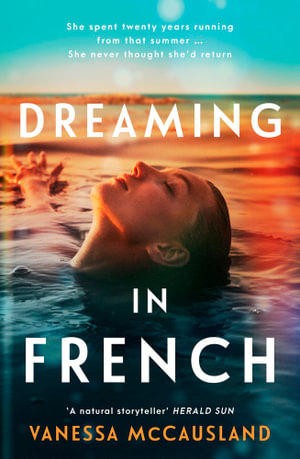
This is a book that gives the reader a mysteriously warm feeling and yet an intensely sad memorial of a past that is too raw to revisit; it is redolent of passion and the scent of oranges served with baguettes and the buttery saltiness of French cuisine. The fragrance of this book will linger long after the last page is turned!
Saskia is an Australian wife and mother in her 40s, lightly struggling with anxiety and her relationships, and exercising her artistic tendencies with her paper cut-out art sculptures. Into her medicated normality arrives the interruption of the announcement of an inheritance that forces her to confront her past. She has inherited half of a villa from a wealthy woman she met in the year she worked as an au pair on an idyllic French island. The villa must be visited to sign legal papers, but that also means she must confront her past and the man she thought may have loved her before the moment of awfulness of that year in her youth. Time has passed and Saskia has kept secrets from everyone in her present, and the things she had tried to forget are now confronting her stability, her sense of self as a mother and the things that she struggles with in her marriage. Can she revisit the past with her family in tow and stay on an even keel, or will everything in her life be repaired by re-examining that part of her life from a different perspective?
This is an incredibly rich and layered story, switching between the past and the present, and with both French and English language and culture woven through the story. Relationship struggles across generations rear their head in different ways, and truth and lies are told for complex reasons. The story is told both in the present, but also through the resonance of the account from Saskia’s past told from her friend and benefactor’s perspective and from her own long suppressed memory. The scent of the past hangs mysteriously over the secrecy of Saskia’s present. There are whiffs of the power of ambition, charm, great wealth and their influence to subvert life. But there is also just a story of love and betrayal that could so easily have changed the paths of all the characters in the story. I loved the story and the complexity, and even the challenge of not having French language skills did not impede my enjoyment of this adult story. Vanessa McCausland knows how to weave a story that is both romantic (occasionally sensual and almost erotic) and profoundly moving. Adult relationships are revealed with many layers of complexity and problems that younger readers may not yet be world-wise enough to understand.
Themes France, Romance, Mystery, Relationship dysfunction and abuse, Mood disorders, Eating disorders, Same-sex attraction.