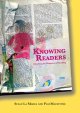
Teacher reference. Susan La Marca, experienced teacher librarian and
Pam McIntyre, editor of the journal Viewpoint, have combined to provide
a useful, thought provoking and well researched book that will be an
invaluable tool for both teachers and teacher librarians. It is divided
into three sections: Connecting with theory; Connecting with readers
and Connecting with resources.
Margo Lanagan introduces the book with an essay called: Doing your own
stunts: Grown-ups, children and the reading Phantom, where she
challenges us to know our readers. Paul Jennings talks about testing
times:
'Children who don't like books are deprived of one of our most
powerful humanising influences.... You can't push a boatload of
refugees out into the sea to drown if you survived the terrors of the
torture chamber and the unforgiving ocean as a fellow traveller - in a book.' Pg 14.
Section 1 goes on to look at the intrinsic value of reading, enabling
engaged readers, building relationships and creating a physical reading
environment. There are many practical, thought provoking ideas here
which will assist adults to provide the right environment for reading
to flourish.
Section 2, Connecting with readers, gives many practical suggestions and
lists of up to date and interesting reading material around the themes
of Reading for story, reading to know, reading to see as well as giving
thematic frameworks. There are classroom strategies including webquests
and literature circles and further reading.
Section 3 Connecting with resources gives a wealth of websites that
include general reference as well as promotional ideas, webquests,
blogs, storytelling, awards and graphic novels. Further reading is also
included.
This book is highly recommended as it not only puts reading into an
educational context but also gives advice and ideas for teacher
librarians and teachers about setting up an atmosphere and choosing
appropriate texts to encourage reading.
Pat Pledger
A respectable girl by Fleur Beale
Simon and Schuster, 2007
At the settlement of New Plymouth in New Zealand, the whole community
waits for war. The British settlers have bought a piece of land and the
Maori chief has made it clear that the seller had no right to do so.
The settlers out in the valley have come in for protection, the
soldiers have formed a militia from the local men, and the women and
children wait. It is a position many must have known in the empires of
the nineteenth century. Fleur Beale has recreated this tension between
the original peoples and the new arrivals well.
In the middle of this, life goes on. Hannah has discovered that her
father may not really be her father, she has questions about her
friend's marriage to one of the officers, she has heard of the ideas of
Mary Wollstonecraft and wants answers about women's role in society.
Her life is as tense as that of the little colony around her. She is a
head strong character, who questions and thinks about what is going on.
Her worlds are changing fast, life is a river, ever moving on, and she
must change with it. . When Hannah and her brother move to England to
pursue their parentage, the novel unfortunately loses its freshness and
strong setting based upon the author's experience, the previously
involving plot becomes cliched and predictable. But this absorbing
novel tells of a period rarely explored in Australasia's history. It
will certainly appeal to those in lower to middle secondary who love a
good solid read.
Fran Knight
Billy by Kate de Goldi
Allen and Unwin Subtitle: a Lolly Leopold story Illustrator: Jacqui Colley
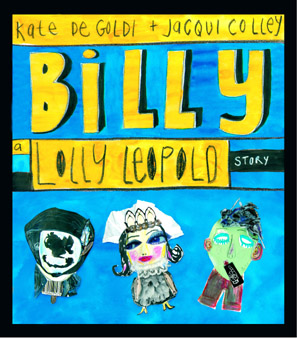
Ages 7-12. Billy is a delightful combination of engaging story and pictures that demand a second look. Lolly Leopold recounts how Billy, a boy who can't control his temper or what he says, is always being sent to The Quiet Club by his incomparable teacher, Ms Love. The story revolves around the often hilarious preparation that the class does for Pet and Produce Day.
Using Lolly's words, Kate De Goldi sensitively captures the frustration of an ingenious boy who doesn't fit the mould and a teacher who is unique. Jacqui Colley's fabulous illustrations add a wonderful dimension to the story. When the story ends the reader is compelled to start again, this time examining in detail the pictures that portray each character and incident so well. Billy follows the award winning Clubs, and its originality and humour will sure to have appeal for readers.
Pat Pledger
The lottery by Beth Goobie
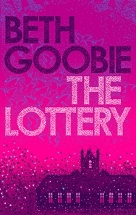
13+ A compulsive psychological thriller, The Lottery is a powerful exploration of bullying and peer pressure. Each year the Shadow Council, (9 of the most popular students at Saskatoon Collegiate), hold a lottery, choosing the name of a student to be 'The dud for the year'. Sally Hanson, a 15-year-old who plays third clarinet in the school orchestra, is this year's victim and she faces a miserable year as slave of the Shadow Council. She is totally ostracised from the whole student body, with all her friends forbidden to talk to her or face suffering at the hands of the Council. She is devastated when she realises that even her best friends, Kimmie Busatto and Brydan Wallace have deserted her and she is left with only the members of the Shadow Council talking to her. Sally initially does the Council's bidding but its increasingly vicious attacks on people like the overweight Diane Kruisselbrink and vulnerable Chris Busatto lead her to attempt to expose the Council's power.
There are many themes that could be used for class discussion in this novel. Goobie acknowledges Robert Cormier's The Chocolate War in her dedication and has one of her minor characters, Chris Busatto, reading it. It could be used in conjunction with it if studying as a class. The author pulls no punches in this novel: Chris ends up in hospital as a result of the Council initiated bullying, after attempting to stand up to them.
Characters are well drawn, and the reader gains a real insight into how it feels to be alienated from the student body, while showing the worth of autistic Tauni and overweight Diane. Even Willis Cass, the Shadow Council president, is shown as a complex character who says he has no friends. There is no happy ever after ending, although Goobie clearly shows the importance of resisting peer pressure and how even one friend can make a huge difference in the life of the victim.
Readers will enjoy the music thread throughout the book. The author has Sal, her main character using music as a means of release. She dances to the Waters' CD in her basement, and finds that playing the clarinet brings her some refuge as she tries to overcome the despair at being the Lottery's victim and her father's suicide.
This is a compelling story, which is difficult to put down. Anyone who has been bullied by an individual or by an institution will gain insights into what has happened to them, and hopefully other readers will gain a feeling of empathy for the victims of bullying and an understanding of peer pressure. Highly recommended.
Pat Pledger
Worse than boys by Catherine McPhail
Bloomsbury.
Age Lower to middle secondary. The Lip Gloss Girls have it all. A
tightly knit group of four confident girls who do everything together,
they make fun of others at their school, a Scottish secondary school,
and feel that everyone wants to be part of their group. Erin, the
leader, makes the rules, and is the one they emulate and copy. When
Erin's sister marries, the three friends are invited to the wedding,
and it is here that things go awry. Erin under the influence of alcohol
reveals a secret she has kept hidden from all of her friends. When the
secret is broadcast at school, the group blames Hannah, and blanks her.
How Hannah reacts forms the rest of this well constructed novel. Hannah
falls into depression, no longer having the security of being within
the group, and she is taken in by the Lip Gloss Girls' rival, the Hell
Cats. In the past none of the Lip Gloss Girls would be seen dead with a
member of this group, and the two gangs have often fallen out, causing
a great deal of tension within the school. But Hannah is desperate to
belong, and as the whole school has made up its mind as to how Erin's
secret was revealed, Hannah has no choice but to join.
McPhail's books never fail to please. They are always up to the minute,
engaging and credible. With this novel, the issues of bullying and
belonging are explored within the framework of Hannah's distress.
Hannah is wretched that her once close knit group is now so distant.
She is appalled that no one will believe her, and her many efforts to
get back into the gang are exploited by Erin as further testament to
her duplicity. Lower to middle secondary girls will love this book, and
it could well be compared with Alyssa Brugman's Walking Naked or Kate
McAffrey's Destroying Avalon.
Fran Knight
Dreamquake by Elizabeth Knox
Fourth Estate, Harper
Collins.
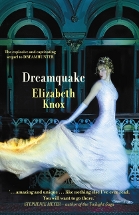
Age 14+ Dreamquake is the
second in Elizabeth Knox's quality fantasy duet for young adults and
follows Dreamhunter where the
young protagonists, Laura and Rose were introduced. It is set in 1902
in a familiar country called Southland which has an unique, alternative
land called The Place, where only dreamhunters can visit. There they
find dreams which they bring back for people to experience, much as
films are used for entertainment today. However a government minister
has not only been using dreams to control convict labour, he has
decided to dominate the country's population with this mind control.
Rose and Laura are determined to thwart his plans and the story
continues with Laura on the run with the Sandman, her companion from
The Place. Hunted by the police and rangers, Laura faces many hardships
and adventures, while Rose continues the struggle in a determined way
with classmates and society.
This is beautifully written story. The dry, barren landscape of The
Place is vividly portrayed and contrasts with the activities of society
like the beauty of Rose's coming-out ball. Characters are well rounded
with strengths and weaknesses developed. The descriptions of
alternative futures are haunting and frightening.
This is a demanding story which readers of fantasy will enjoy for its
sheer originality and the questions that it poses. Its conclusion is
challenging and leaves the reader asking whether dreams can change the
world and what has to be given up for the world to change. Many may
wish to try adult books by this author.