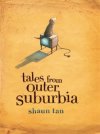
Allen and Unwin, 2008.
ISBN 978174114917 3
A story and picture book for adults and children alike, Shaun Tan draws
a mirror to the face of Australia, with lonely people, houses where
constant bickering between parents causes the boy to sleep on the lawn,
communities where people use the missiles in their yards for practical
purposes and an exchange student who lives in a house where little
exchange takes place. Each story provokes thought about how we live and
entreats the reader to give more serious consideration to our lives and
the lives of those around us.
His incredible pictorial style, making references to art from the
Renaissance world, Raymond Briggs, Geoffrey Smart, as well as nodding
to Terry Gilliam, among others, gives an intellectual layer to the
illustrations, urging the reader to reflect and ponder on what they are
viewing. From the dog on the TV (dog on the tuckerbox?) to the car of
people, looking for a place to sleep amongst a crowd of hotels, all
showing a 'no vacancy' sign (Mary and Joseph perhaps?) each offers a
suggestion of what is going on in outer suburbia. Tan's observation of
life around him, particularly growing up in an outer suburb of Perth
has given him a rich field from which to draw his stories.
To choose several stories from the wealth offered in this book is
difficult, but I loved Grandpa's story which tells of the
trials of a
marriage, where after almost insurmountable difficulties, resulting in
a no holds barred argument, the two find they must work together to
find the common goal. Eric, too resonates with ideas.
For a perceptive look at the Australian suburban lifestyle, interjected
with humour, pathos, allegory, and an amazing array of detailed
illustrations then this book is a marvelous addition to anyone's
library.
Fran Knight
Rain by Kate Le Vann
Piccadilly, 2008.
This novel by Kate Le Vann is set in London over a summer holiday when
16 year old Rain goes to stay with her trendy young grandmother in the
house in which her deceased mother grew up. Here she uncovers her
mother's diaries, written when she was the same age as Rain, and
believes she has discovered that her mother had an affair with an older
pop musician and became pregnant before ever meeting the man Rain
believes is her real father. Is she his 'love- child' and if so how
will Rain deal with that and how will it affect her close relationship
with her scientist academic father?
Throughout this crisis in her life she develops an increasingly close
relationship with Harry, a student who has been employed to help her
grandmother sort out her house in Notting Hill before selling it. He
helps Rain in her quest to uncover the truth but jealousy rears its
head as she assumes Harry and a fellow student have a close
relationship already and that her growing feelings for him are misled.
Switching between emails, the personal diaries of Rain and those of her
mother, written 20 years before, as well as the narrator's voice makes
for a slightly difficult tone but I was gripped and had to read on and
find out if true love triumphs in the end. This is a sensitive,
perceptive and complex exploration of the nature of love explored via
the intense feelings of a 16 year old girl discovering her independence
for the first time in a new environment.
Laura Taylor
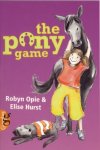
The pony game by Robyn Opie
Lothian Children's Books, 2007
(Ages 7-10) The second in the Giggles Series from Lothian is absorbing.
Lucy
wishes her dog, Beauty was a horse. Together they play the pony game,
where she uses a tea towel on Beauty's back as a saddle and they frolic
all over the back yard, imaging they are riding over the hills. When
Lucy gets to look after a real horse for a week, she is too tired to
play with Beauty and the dog feels neglected.
When the owner of the horse sees Lucy's dog she is just as jealous,
because she cannot have a dog. Lucy realises that she has the best of
both worlds. Young readers will love this story and its illustrations
and the ability to read it for themselves. The Giggles Series is sure
to be a winner with the target audience.
Fran Knight
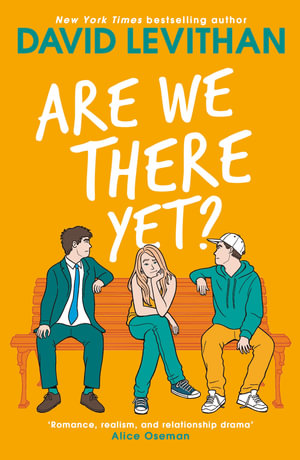
Are we there yet? by David Levithan
Harper Collins, 2013 (Age 15+) Two brothers, tricked into holidaying together in Italy, find that they are worlds apart. Together they drift through Venice, Florence and Rome, seeing the same sights but from a totally different perspective, recalling the happier days of their shared childhood, when the older brother, Danny, looked out for his sibling, Elijah, ten years younger. When Elijah meets a girl, Julia, the hesitation between the two brothers becomes more openly hostile, and an approach by Julia towards Daniel, becomes a secret he keeps from his brother. Elijah and Julia meet and have dinner, staying at Julia's hotel, leaving Danny to fend for himself, but when Julia has dinner with Elijah on Independence Day, her toast is 'to the end'. Elijah, set adrift, must reunite with his brother. Danny in the meantime has run into an old friend, and has realized what little he has apart from work. The two brothers meet again at the Pantheon and here their journeys come together. The descriptions of the sights they see are wonderful. Levithan uses imagery which is at once familiar, and startling. His familiarity with the journey through Italy's past creates a marvelous backdrop to the story of the two brothers, as they meet at museums and galleries, eat together and then alone or with Julia, regurgitating the slights of the past. The story recreates the tension between them, slowly building as they journey towards the inevitable coming together when they realise what they have lost and how easy it is to repair the rift. A wonderful coming of age story, both Elijah and Danny are complete characters, with foibles and behaviours that are as endearing as they are annoying. A treat for upper secondary students and adults alike. Fran Knight
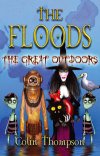
The Floods: the great outdoors by Colin Thompson
Random House, 2008. ISBN
9781741662535;
(Age: Middle and Upper Primary) This is the sixth story of the Flood
family and their adventures but
the stories do not need to be read in sequence. The Floods are a family
of Wizards who would like to be more human. They decide to take a
family holiday with their human neighbours and they do try to fit in at
Port Folio, but there are some things that take a bit of getting used
to – like not using magic to win the sandcastle competition! A funny
story that students who enjoy a sense of the ridiculous will enjoy.
Sue Johnson
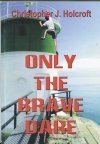
Only the brave dare by Christopher Holcroft
Poseidon Books, 2008
(Age 12+) Described by the author as a modern Biggles, Only the
brave
dare is the story of a group of Venturers who uncover a drug deal
by
the Russian Mafia while exploring a wrecked submarine. Taken captive by
the gang, it is up to Scott, an unassuming Venturer, to find a way to
save his mates.
The action switches from the Venturers to the Russian Mafia in
alternate chapters or sections, helping to identify the characters and
what is happening. A more sophisticated reader may find the italics for
different speakers distracting and the conversation rather heavy handed.
A fast paced adventure story, this will appeal to boys who are in the
Scouting movement and the descriptions of the advantages of being a
Venturer would perhaps encourage young boys to join the group.
Pat Pledger
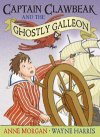
Captain Clawbeak and the ghostly galleon by Anne Morgan
Random House,
2007
(Age 9-12)
Jack's father is building a ship in the back yard, and Jack can't wait
to launch it and sail away to adventure. But his dreams come true most
unexpectedly, when a petrel flies by with a message from Stormie Lou
who tells them that his parrot, Clawbeak has been capture by the
notorious pirate, Van Den Dekker. Later that night a storm causes Dad's
boat to loose from its scaffolding and the boys float away. They find
Stormie Lou and Clawbeak and the mysterious pirate, but they are all
aboard the Flying Dutchman, and the boys must be careful lest they
remain on board it for ever. An exciting if unusual pirate story, (one
of so many currently in print), Captain Clawbeak is the first in a
series and is aimed at middle to upper primary students.
Fran Knight
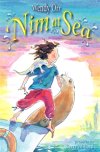
Nim at Sea by Wendy Orr
Harper Collins, 2007.
(Ages 8+) When Nim tells Alex what she really feels, thus forcing Alex
to leave
the island, Nim feels distraught. Her feelings are even more tangled
when she sees the boat from Tourist Troppo stealing her beloved seal,
Selkie. Without thinking she stows away on the cruise ship, determined
to bring Selkie back. Her father then realises both the women in his
life have gone so he sets sail on a raft, with several coconuts and
some water, heading for the next island where there is an airport of
sorts.
With Nim on the cruise ship, Alex battered down in a cabin not talking
to anyone and Dad at sea on a raft, the stage is set for some great
adventures, as Nim realises that the ship has a vast collection of sea
animals that need releasing. A very funny adventure story, the sequel
to Nim's Island, this story with environmental themes, will
please
middle to upper primary kids (8-12).
Fran Knight
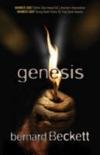
Genesis by Bernard Beckett
(Age 14+) Winner of the NZ Post Young Adult Fiction 2007 and the Esther Glen Award 2007, Bernard Beckett has written a powerful and thought provoking science fiction novel which raises important issues that beg to be discussed after the reader has finished the book. In a future New Zealand, the rest of the world has been fenced off to keep out plague. Anyone approaching the land is shot, whether it is a military aeroplane or a single refugee. The story of the Republic, where individuals are strictly controlled, is told through the answers that Anaximander, a young candidate, gives in an examination when trying to join the Academy. Her recital about the life and times of Adam Ford, 2058-2077, who tried to rescue a young boat girl, opens up all types of philosophical questions. Should individuals be allowed to have independent thought? What is the place of artificial intelligence? What is a soul? What does it mean to be human? This is a demanding and gut wrenching read with a twist at the end that leaves the reader breathless. It is certainly a book that could provoke wonderful classroom discussion and expand the horizons of the thoughtful reader. A teacher's guide is available. Highly recommended. Pat Pledger
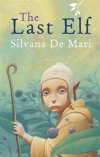
The last elf by Silvana de Mari
Bloomsbury, 2007.
(Age 10+) Yorsh is a little elf who lives in a world that is drowning.
After the death of his grandmother he realises that he must leave the
Camp and find somewhere dry before he dies. Sheltering with a woman and
her dog, and joined by a hunter, Yorsch comes across a prophesy: 'When
the last dragon and the last elf break the circle, the past and the
future will meet, the sun of a new summer will shine in the sky.'
Yorsh, convinced that he is the last elf, decides to set out on a quest
in search of the last dragon.
De Mari builds this story with a deft hand. Action and adventure fill
the pages and the characters are original and vivid. The reader aches
for Robi, the daughter of Yorsch's rescuers, left half starved and
overworked in a grim orphanage and identifies with the plight of
Yorsch, left to look after a huge baby dragon.
Filled with gentle humour and play on words, this book would be
excellent to read aloud. It is an intelligent and enthralling fantasy,
with many ideas for the reader to digest, such as the persecution of a
minority race, the abuse of power and what types of laws a new country
should have.
Pat Pledger
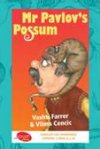
Mr Pavlov's possum by Vashti Farrer
Lothian Children's Books, 2007 ISBN
9780734409546
(Ages 6+)
The Giggles Series of books has been released by Lothian
(Hatchette) for the newly independent readers. This is an area under
catered for in the publishing world, so it is good to see a new series.
The two I have read are funny with a light touch, appealing and
revealing something about living together successfully.
In Mr Pavlov's possum, the main character, beautifully drawn by Vilma
Cencic, loves dogs. He has 6 dogs that he has trained to respond to his
whistle. They can sit, stand, heel and roll over. Each day they go for
a walk. He fills his day organizing them and teaching them tricks. But
one by one they die, and so Mr Pavlov is left alone and with nothing to
do. But a possum appears at his window, and try as he might he cannot
train the animal.
One day the possum uses the whistle, and it is Mr Pavlov who is
trained. The lovely illustrations add to the story which could be
read aloud with much glee.
Fran Knight
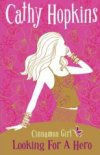
Cinnamon Girl: Looking for a Hero by Cathy Hopkins
Piccadilly Press, 2008
The third book in Cathy Hopkins third series for younger teenage girls
features India Jane (Cinnamon Girl) and her 3 friends at school
in London all desperate to find a boyfriend and a perfect date by
Christmas. However it is not all escapist frivolity - there are some
serious issues - talk of one teenage boy overindulging in drugs and
alcohol, and a mugging (which ironically provides India Jane with
one of her potential 'perfect dates'). Throughout our protagonist is
also exploring the serious issue of what is real love and how do you
know it when you meet it.
This is chick-lit for younger teens - witty and well written. Cathy
Hopkins has a real ear for the conversations, interests and concerns of
teenage girls which obviously appeals to a wide cross-section of
them. Even the inner city students in schools I have worked in
adore her books even though they live in a very different world from
her characters in this series - who seem to frequent
Starbucks, live in Holland Park and trendy Notting Hill, have
holidays in Italy and mothers who work in Mayfair art galleries and
drink herbal tea!
The book carries on from the previous two in the series so if you buy
this you will undoubtedly be asked for the previous two.
Laura Taylor
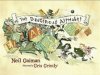
The Dangerous Alphabet by Neil Gaiman
lllustrated by Gris Grimly.
Bloomsbury, 2008.
(Age 10+) A combination of Neil Gaiman's incredible imagination and
Gris Grimly's wonderful illustrations makes this book a winner. Two
children and their pet gazelle go adventuring in a boat, ('B is for
Boat, pushing off in the dark'), and enter the frightening dark world
of
pirates and monsters.
Each letter of the alphabet pushes the children further into the sewers
to face danger and fear ('F is for Fear and its many devices').
This is certainly not an alphabet for the small child but has been
written for an older audience that likes to be thrilled by horror and
mayhem. Grimley's illustrations are intricate and detailed and the
reader will find much to pore over time and time again.
This would be a good book to leave lying in a secondary school reading
area and would be sure to catch the eye of the reluctant readers.
Pat Pledger
Danny Allen was here by Phil Cummings
Louis Braille Audio,
2008, 4
hours, 4 discs
ISBN 9781742120027 (first published PanMacmillan, 2007)
The delightful story of Danny's childhood in tiny Mundowie in South
Australia's mid north is brought to life with this reading by Stephen
Pease. Danny and his sister, Vicki and brother, Sam get up to all sorts
of mischief on their farm, watched over by their loving and ever
present Mum. Any child reading or listening to this book will have all
sorts of adventures recalled as the children go to the dam, which is
forbidden, to catch tadpoles, or surf the local sand hills, sliding
down on pieces of galvanized iron, or building a tree house. Children
today will feel envious of the freedom experienced by children in the
sixties and seventies in the bush, so different from the cloistered and
cosseted experience of childhood in the city today.
When Danny, Sam and Vicki go to the dam, they have great fun catching
tadpoles until Vicki spills the can full of the creatures. But when Sam
and Danny run back to escape the rain, they inadvertently leave Vicki
behind. All hell breaks lose as mum runs barefoot towards the scary
place, with Danny running behind having awful images drumming through
his mind. The anxiety and fear is marvellously created for us by
Cummings, and vividly read by Pease.
All through this endearing tale of childhood, we are treated time and
time again with images of an idyllic life, one to be savoured and
treasured, but like Colin Thiele's Sun on the Stubble, the end of such
a way of life is coming, not because Danny is being sent away to school
(as happens to Bodo in Thiele's masterpiece), but because the bank
forecloses on a insolvent farm.
Pease's reading is infused with childhood and fun, as he recreates the
voices of the children and their mother. He has a clear, unsentimental
voice, full of the life and colour of the bush, and he brings an extra
resonance to an already wonderful story.
Fran Knight
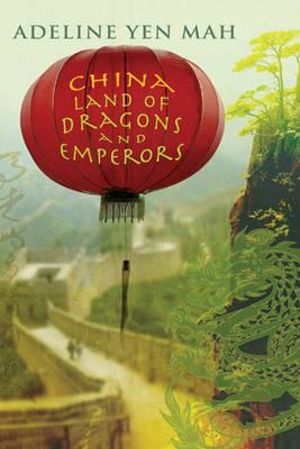
China Land of Dragons and Emperors by Adeline Yen Mah
Allen & Unwin, ISBN: 9781741754674.
This book by Adeline Yen Mah will have classes enthralled. Not only is it a spirited history book, but it contains dozens of entertaining asides and anecdotes which will thrill and titillate the reader. I found myself wholly engrossed in this chatty history book, revealing the scope of China's history from the time of the first emperor to today.
Beginning with the first emperor, Quin Shi-huang, ascending the throne in 247 BC ready to amalgamate the seven states, the reader is given an overview of just how he maintained power, deciding to build the Great Wall, and using 700,000 men from all over China to build his tomb. His tyrannical rule saw canals, highways and bridges built, and he stipulated that every book before his rule be burned and that history should begin with him. Within this chapter is also a double page spread about the Terracotta Army and a scattering of astounding facts about the tomb.
Each of the 10 chapters goes on in this vein, giving a potted history, an amazement of facts and inserts which reveal more information about specific subjects. In chapter three concerning the Han dynasty, we read of the Silk Road, in chapter five, within the Tang dynasty appears a double page spreads about Printing. Each chapter has a specialist section within its pages, expanding on something for which China is famous.
For the specialist or for the interested reader, for the student, class and teacher, this book is a winner. Its profusion of photos, drawings, maps, and inserts makes it an entertaining and informative book to read. In a class room, a set of this book will be a most useful addition for students of China. It gives a tantalising insight into the country which is gaining in prestige and influence in world politics and a country to which Australia is increasingly tied. Highly recommended. Fran Knight