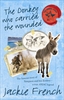
The Donkey who carried the wounded by Jackie French
Angus and
Robertson, 2009 ISBN 978073228839 6
(Ages 10+) The inestimable Jackie French has done it again, writing a
wonderful novel of a time in our history that we have all heard of, but
may know little about. Effortlessly she makes us believe that the
donkey which carried the wounded at Gallipoli was aware of what he was
doing, that he had a relationship with Simpson, the ambulance man who
retrieved the wounded from the terrible gulleys above the beach. Her
writing, using alternate chapters about Jack (Simpson) and the donkey
will impress the reader with their poignancy and authenticity. She has
used wide research to make sure that her setting is real, the
information is accurate and the ambience, truthful. Readers will soak
up the atmosphere, cling to the stories of the wounded and immerse
themselves in the world of Gallipoli in 1915, when so many were killed
and wounded.
She tells us in her notes at the end that she made up the beginning and
end of the story, and has used all sorts of research, myths and stories
to write her novel. She has succeeded brilliantly in creating a story
which will enlighten, inform and involve its readers. No-one will be
immune from shedding tears while reading this, as French gives us
chapters about some of the wounded, alongside Jack and the donkey, as
well as chapters about the sniper in the hills, who eventually killed
Simpson.
The whole, as in all of this series, The Animal Stars, has a
large
afterward, explaining the research that she undertook, and giving extra
notes about some of the features of the novel, along with an
informative glossary. This beautifully written book is a significant
addition to the books about Gallipoli, especially Simpson and his
Donkey. And, as in all of her books about war, she promotes the lives
of those less well known, the footnotes of history, and this makes
history truly real for her readership.
Fran Knight
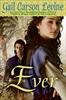
Ever by Gail Carson Levine
HarperCollins, 2008.
(Ages 9-14) Imagine that you are a young girl on the brink of
womanhood, and because of an oath that your father has made to the god,
Admat, you are going to be sacrificed. Kezi, knowing that she has only
a month to live, is trying to keep up her spirits, when she notices a
majestic, muscular young slave at a wedding. Unknown to her, it is
Olus, the god of the wind, and he has has fallen in love with her and
is determined to help her. He offers her the chance to become immortal,
but to do that they both have to undertake a difficult task to prove
their worth.
The author has written the story in the first person, with alternating
chapters told by Kezi and Olus. The reader gets to know the two
characters quite well as they recount their fears, feelings and what is
happening around them. All the sentences are short, as are the
chapters, and this makes for ease of reading. The exotic setting,
perhaps the Middle East, is fascinating, particularly the descriptions
of rug making and dancing, both of which Kezi excels at.
On the surface Ever appears to be a straight forward love story
between
a young god and a mortal girl, and younger readers will enjoy the
plight of the young couple and the action surrounding the difficult
quest that each must undertake. More discerning readers will spend time
pondering the meaning of love and what some people are prepared to
sacrifice for it. Religion is also a major theme and Levine examines
the way that two different belief systems can operate: in Kezi's world
there is only one god, but in Olus's domain there are many.
A very attractive cover will be sure to draw in readers, who will then
have to read on to find out if Kezi survives and if the young lovers
find happiness.
Pat Pledger
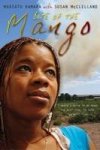
Bite of the Mango by Mariatu Kamara with Susan McClelland
Allen and
Unwin, 2009.
(Ages 15+ ) Biography. Civil war in Sierra Leone means that
Mariatu and her family have no idea of where to run when the rebels
arrive. Burning villages, raping, murdering and mutilating those they
come across, the drug addled, and leaderless anarchistic rebels cut off
the girl's hands in an effort to stop her voting for the president.
What is a president? She asks, underlining her innocence and naivety at
what is going on around her.
This amazing true story will fill readers with dread as they read of
what is happening in countries where guerilla bandits attempt to take
control, or at the very least, destabilise their country. It is a story
filled with horror as harrowing story after harrowing story is related
by this young girl. Eventually getting to a hospital, she finds that
she is pregnant, not to one of the rebels, but raped by her husband to
be.
Living in a refugee camp where she and her friends must beg to survive,
Mariatu is heartened by news that people from rich countries have read
of her plight and sent her money to survive. She revels in the fact
that she is being noticed, and is eventually taken to Canada where her
benefactors find a place for her to live and be educated. She decides
that her education will be the savior for herself and her country and
now divides her time between Canada and Sierra Leone helping others in
her situation.
A distressing story from start to finish, the core at its heart is
Mariatu's spirit. She rarely allows herself to be self pitying, instead
looking for ways to ensure her survival. She takes every opportunity
available to her, noting that those who have come from a life like hers
are eagerly taking up the education offered to them. It is a salutatory
read, one which will enhance our students' view of themselves in this
world, making them much more aware of the courage that some display to
survive. Fran Knight
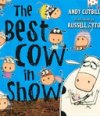
The best cow in show by Andy Cutbill and Russell Ayto
HarperCollins,
2009.
Ages 5+ Following on from the success of The cow that laid an egg,
comes this
charming picture book, relishing in the cow with her chicken offspring.
When the farmer's wife declares a competition to see who has the most
beautiful baby, all the cows are prepared to present their offspring.
There are calves everywhere, except for one place of course. Marjorie
and her chicken, Daisy, are ready to be inspected by the farmer's wife,
when Daisy spies a worm in her hat. Without further ado, she picks off
the worm, and the farmer's wife faints. All the cows laugh, but
Marjorie whisks Daisy into her arms telling them that she may not
be the same as all the others, but she is loved. With that the
bull, Derek, gives her the rosette as best in show because she is the
prefect mum.
A delightful story with a serious message, The best cow in show
will
absorb and amuse younger readers as they follow Marjorie's antics
through the book. The moral of the story is obvious to all, and many
discussions in class will follow as the children talk of how love is
unconditional. The fine illustrations by Russell Ayto are perfect,
paralleling the nonsense of the story, with the theme of a mother's
love reflected in the eyes of all the cows.
Fran Knight
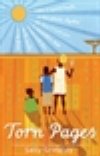
Torn pages by Sally Grindley
Allen and Unwin, 2009.
(Ages 12+) The impact of AIDS in Africa is told to readers using a
small family left alone by the distress of the deaths of their parents.
Lydia, a young girl in her early teens must look after her ill sister,
Kesi and brother Joe. One would expect other family members to
come to the fore and help the youngsters, but their only relative,
their father's mother, proves to be a disturbing and undermining
grandmother. She cannot accept her son's death and so blames the
mother, leaving the children bereft of any support.
In describing the family's plight, Grindley reveals the force of this
disease on the community. Lydia and her siblings can no longer attend
school, so their future is made even grimmer. Their isolation by some
members of the community, reinforced by the suspicion that Kesi has
AIDS, and the fear of catching the disease, is underlined by Kesi's
separation from other students at school. It is the daily existence
that Grindley explains so well: the family's attempts to grow
vegetables, Lydia's attempts to repair their clothes, the kindness of
others in the village, the daily struggle to attend school and Lydia's
nervousness at the offers of help from a local man. Lydia's continual
support comes from the diary left by her mother, encouraging the young
girl in her efforts to be optimistic and aware of her parents' love.
Quotes from this diary form a neat parallel to their day to day
existence.
Reading this novel will engender plenty of discussions about AIDS and
its progress through a community, and students will be able to compare
this book with others written on the same theme, Chanda's secret
(Allan
Stratton) The Heaven Shop (Deborah Ellis) and Two Weeks
with the
Queen (Morris Gleitzman) .
Fran Knight
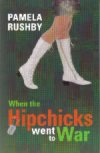
When the Hipchicks went to War by Pamela Rushby
Lothian, 2009. ISBN
978 0734410917
(Ages 14+) Using the medium of three young girls off to Vietnam to
entertain the troops, Rushby presents an easily digested story of the
Vietnam War and its impact on all concerned. Told through the youngest
of the girls, Kathy, a sixteen year old apprentice hairdresser, we see
her caught up in the times, the swinging sixties, wanting more out of
life than setting perms for housewives. She goes along to an audition
for dancers, and is dismayed to see the hundreds of girls just like her
lining up. Another girl suggests that she, Kathy and a third girl
present themselves as a trio, and they are immediately hired.
Once in Vietnam, they are quickly employed by the Americans to tour the
hospitals and they see the war at first hand. Covered in protective
gear, they ride in jeeps and helicopters of all shapes and sizes to the
hospital tents where they entertain the sick, injured and dying. The
impact on the girls is overwhelming, and Rushby's writing ensures that
the reader will be just as moved. The journey the girls take from
innocence to horror is riveting, and confronting. Kathy's brother is
called up, her boyfriend and closest girlfriend back in Australia are
involved in the anti Vietnam War rallies, they are followed by a
journalist Jan, who writes about their experiences for the Women's
Weekly and so on, all these experiences are real and add to the
authenticity of the story.
Rushby shows the changing times incredibly well, the attitude to women,
the protest movement, a shotgun marriage, the increasing
disillusionment with the war; increasing use of drugs and so on,
reminding me with immediacy of my uni days in the 1960's; the marches,
the burning of call up papers, the TV footage of the wounded and dying,
the self immolation of Buddhist priests, the imprisonment of
conscientious objectors. The book is redolent with the changes that the
Vietnam War and the sixties brought to the youth of Australia and will
be an eye opener for astute mature readers from about year 9 and up.
Fran Knight
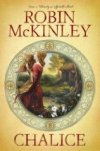
Chalice by Robin McKinley.
G.P. Putnam's Sons, 2008.
(Age 11+) Recommended. I have never been disappointed with a book
written by Robin McKinley and this is no exception. Mirasol is a humble
beekeeper, who tends her bees and sometimes hears the earthlines speak
to her. She is astounded when she is chosen to become the Chalice, a
very important member of the Master's Circle. It is her role to bind
the Circle together with its new Master and keep the Willowlands and
its people healthy. But Mirasol has not been trained for this important
duty and the new Master is a priest of fire whose very touch burns. How
can she give the Master his chance to lead his lands to prosperity?
McKinley never repeats her plots. Each book is a new and unique
experience and Chalice brims with originality. Her heroine is a
strong
young woman who must contend not only with bees that are making huge
amounts of honey and goats who are producing bounteous milk but the
enigmatic Master who burns beneath his cloak and who also has doubts
about his ability to lead.
This is not an action packed fantasy with sword wielding characters and
wicked sorcerers; rather it is a rich and rewarding story about duty
and love of the land. The tension revolves around whether her heroine
and hero will be able to overcome their doubts and fears and reach
their full potential.
The beautiful language ensures that the reader will remember the images
of Willowlands, the earthlines and most of all the healing power of
honey.
Intelligent readers who want their fantasy laced with intricate
language, wonderful images and a quiet romance will need to go no
further. This book is a keeper.
Pat Pledger
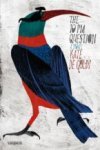
The 10pm question by Kate De Goldi
Allen and Unwin, 2009. ISBN 978174175 735 4
(Age 11-14) Recommended. A cleverly written book ideal for adolescents,
especially boys. Twelve year old Frankie is constantly afraid
about the 'Ifs' of his life. He has a continuing internal
dialogue with himself, made humorous by De Goldi's ability to paint a
vivid and lively account of his family and friends who have wonderfully
diverse and eccentric characteristics, especially the aunts.
Frankie and his best friend Gigs speak chilun, an invented language,
where they engage in hilarious conversations about other people while
in their presence! Life changes for Frankie when Sydney joins the
class. She, unlike all the other girls in his class and indeed in
his school, has dreadlocks, can bowl well and has a way of asking
Frankie unavoidable questions, which leads him to better understand
himself and in turn his family understanding him. A perfect
complementary book is Star Girl by Jerry Spinelli. The
fascinating title entices the reader to begin.
Sue Nosworthy
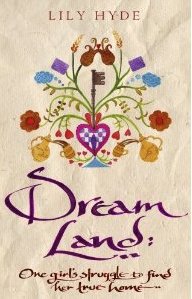
Dream land by Lily Hyde
Walker Books,London, 2008.
(Age: 12+)Cover blurb:'One girl's struggle to find
her true home'. It is the story of the return of a Crimean Tatar
family from exile in
Uzbekistan to the Crimea, told through the eyes of a young girl.
This beautifully written story is based on real events and is sponsored
by Amnesty International.It deals with the Crimean Tatars who
survived exile by Stalin after the war and who returned to their
homeland under perestroika. They find their old homes possessed by
Russians who were moved in and many of their old villages destroyed, in
much the same way as surviving Jews did when they returned to Poland
after the war. This little known story is vividly captured here. Safi,
about 12 or 13, arrives with her extended family to build a house by
themselves in face of hostility from the locals who see them as
unwanted intruders.
Lily Hyde conveys well the beauty of the Crimea, the fierce love of
homeland which survives exile and opposition, the strength of a united
loving family, the power of numbers against government might and the
pros and cons of risking all for a dream.The eye-catching
colourful
cover has a Tatar embroidery of a house key growing out of a
heart
from which sprout tendrils producing hearts, flowers and coffee pots.
The keys and coffee pots were kept by the exiles through years of
travail, as powerful symbols of what they loved and had lost, and
served to sustain their dream in the face of overwhelming odds. The
wonderful power of oral story telling of ethnic and family history is
captured here by Safi listening to grandfather's stories.
Safi's voice is that of a normal, very likeable girl trying to
make
sense of what is happening to her family. She unwittingly becomes a
heroine in a dramatic ending, and her realistic portrayal by Lily
Hyde
makes it possible for students to relate to her.Unfortunately,
girls
who are Safi's age may be too young to be attracted to, or fully
appreciate this book, as readable as it is.
It is sad that this book is unlikely to get the wide readership it
deserves.Better, curious students will enjoy and learn
from it, but
it does not have enough across the board appeal to become a class text.
Modern history students would gain a real feel for the human impact of
dictatorship. One for the library.
Kevyna Gardner
A world away by Pauline Francis
Usborne, 2009.
(Ages 14+) Somewhere between an historical novel and a romance, A
World
Away will
suit well with girls of a romantic disposition, immersed in the contact
between the old and new worlds, through the eyes of an apprentice
blacksmith from Portsmouth and an Indian girl. Nadie, the Indian girl
is captured by a group of settlers in New England, and taken back to
England as a curiosity. There she remains with a family and meets Tom,
the son of a blacksmith. Together they work out the idiosyncratic
behaviour of each of their tribes, and Nadie, anxious to return to her
home, is taken aboard a settlers ship bound for New England.Tom
is
persuaded that if he wishes to return the girl to her family, and marry
her, he must travel to the colony as well.
Here they encounter huge difficulties. The relationship between the new
settlers and the Indians is going from bad to worse and our two heroes
find that they are trusted by neither side. Amongst the long story,
told in alternate chapters by our two protagonists, is a look at the
conflict between the English settlers and the American Indians. At
first helpful, the Indians soon realised that the new settlers were
here to stay, and trouble ensued. An easy to read, if overlong but pacy
novel about the meeting of two cultures with an outcome seen the world
over when the two collide.
Fran Knight
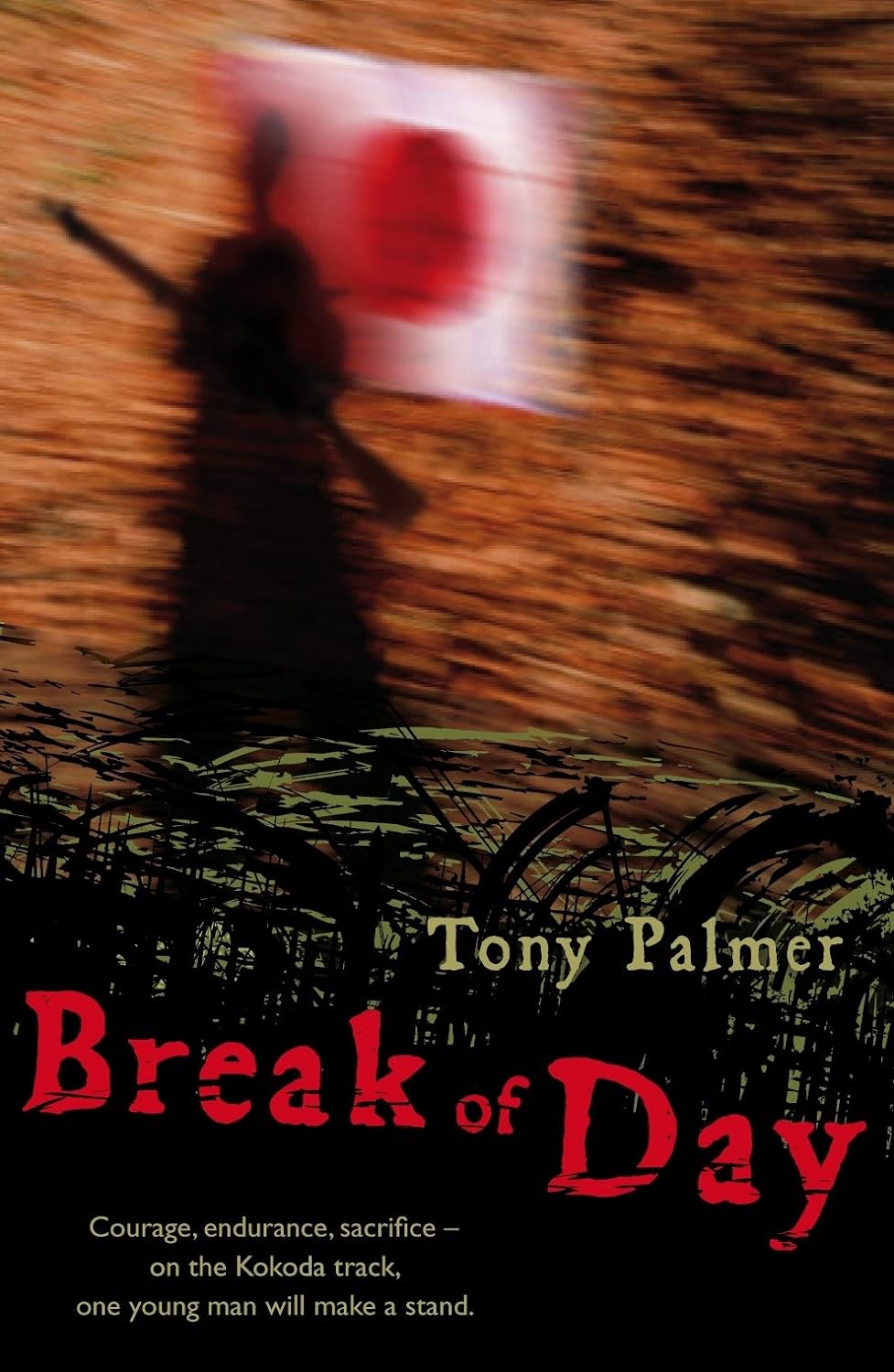
Break of day by Tony Palmer
(Age 11+) Recommended. A thoughtful look at the nature of courage and how people cope in the aftermath of war, Break of day is a memorable book that deepens the reader's understanding of how people react to difficult situations. Told in the first person by Murray Bennett, the story starts off in the jungles of Papua New Guinea where he is fighting on the Kokoda Trail. It then goes back in time to his life as a farm boy, where it traces the path that lead him, his brother Will and enemy Sid to their actions as soldiers.
Murray's pacifist nature, his fear about being thought a coward when he was young and his inability to kill the farm dog, are vividly bought to life. Images of war, fear and hiding from the enemy on the Kokoda Trail are ones that remain in my memory, as do the feelings of empathy and compassion that this reading engenders.
A very useful book for teachers who are planning a unit of work on war, Break of day not only celebrates family and love, but gives a balanced view of how war affects combatants and how difficult it is for many of them to fit in after the war. Its exploration of the meaning of courage will also engender thoughtful discussion. Pat Pledger
The Paris enigma by Pablo De Santis (translated from Spanish by Mara Lethem)
HarperCollins, 2009.
(Ages 14+) When the world's twelve greatest detectives converge on
Paris to
discuss their most famous cases, prior to the Paris World Fair of 1889,
problems are sure to arise as their jealousies, paranoia and general
mistrust of each other boil to the surface. When one of their number is
killed, Viktor Arzarky takes the case, sending out his new assistant,
Sigmundo Salvarto to follow up some of the clues he has unearthed.
Sigmundo, however is not all that he seems. He is the assistant to the
world renowned Argentinean detective, Renato Craig, who on becoming ill
has sent Sigmundo to Paris in his place. He has never left Buenos Aires
before, let alone travel to a new country. His position as Craig's
assistant was beyond anything he dreamt and when in Paris he finds
himself assisting the renowned Arzacky, he is overwhelmed.
With the constant attacks on the building of the Eiffel Tower,
suspicion points to the attackers, a crypto Christian organisation who
do not want change, and so the detectives pursue a circuitous route in
solving this crime. Just when they are about to bring all the clues
together, there is another murder. The twists and turns taken in this
novel will suit the most hardened crime fiction reader, and the setting
is intoxicating, especially so when the time is 1889. With overtures of
Sherlock Homes, and the continuing philosophical discussions about what
is behind detection, this is a most unusual crime story.
For those readers wanting an involving and very different story to
read, then this may fit the bill.
Fran Knight
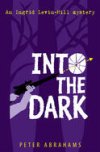
Into the dark by Peter Abrahams
Walker, 2008.
(Age 10 -13) The third book in the Echo Falls Mystery series, featuring
13 year old sleuth, Ingrid Levin-Hill, Into the dark is a fast
paced mystery with
enough clues and red herrings strewn about to keep the reader
interested in solving the mystery. While snowshoeing with her friend
Joey Strade, the couple stumbles on a body lying in the snow. Ingrid is
appalled when she hears that her grandfather has been accused of the
murder and is about to put in a plea for manslaughter. Why would he do
that? Ingrid is convinced that Grampy is innocent. He is a war hero and
she knows he would never shoot someone in the back. Evidence piles up
and as Ingrid sorts through it, she discovers some dark secrets about
people in Echo Falls.
Able to be read as a stand-alone, there is plenty of suspense in this
story. The astute reader will probably be able to work out who dunnit
as there are certainly enough pointers in that direction, but the
additional mystery of what Grampy did in the war and the traumas about
to hit Ingrid's family add further interest and depth to the story.
Other features are the allusions to Sherlock Holmes and the
often-humorous episodes while Ingrid is rehearsing for the play Hansel
and Gretel at the local theatre.
Ingrid is an intrepid girl, who faces some frightening situations in
her quest to save her grandfather, a grumpy old man. She discovers that
bravery is sometimes just making an effort to control fear and she
certainly has to learn to do that as she gathers evidence to try and
prove that Grampy wasn't around at the time of the murder.
Abrahams is an Edgar Award nominated author, and he sets up an
engrossing mystery which would be very useful as an introduction to the
genre.
Pat Pledger
Shrapnel by Robert Swindells
Corgi Books 2009.
(Ages 9+) A gripping wartime drama which restored my faith in Robert
Swindells after it was severely tested by his previous novel, The
Shade
of Hettie Daynes!, Shrapnel has all the hallmarks of
Swindells at his
best; a fast moving story that pulsates with action, short and gripping
chapters, a believable setting and an exciting denouement.
Gordon's older brother Raymond is rather an enigma - when most lads his
age want to join the RAF and fight for king and country, Raymond
somehow avoids joining up and leaves home in mysterious circumstances.
Soon after Raymond's departure Gordon discovers a pistol hidden in his
older brother's bedroom. When he eventually tracks his brother down, he
discovers that Raymond is a secret agent doing highly dangerous war
work for the government. Thrilled and excited, Gordon finds himself
recruited to help in this essential work. Is he about to become a spy
and help defeat Hitler, or is Raymond not quite everything that he
claims to be?
Swindells brings the era of World War Two to life in this exciting
boy-friendly story. It may lack the impact of Once and The
Boy in the
Striped Pyjamas, but readers will learn plenty about daily life
during
World War Two including rationing, air-raids and schoolboy shrapnel
collections. A useful addition to upper junior class libraries and well
worth directing towards confident but reluctant readers.
Claire Larson
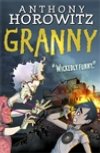
Granny by Anthony Horowitz
Walker Books ISBN 978140630570 8
(Age 8 -10) A 'tongue in cheek' tale of a very unkind and rare Granny
(I hope; although the novel is based on his own Granny!).
Horowitz uses descriptive words and wild exaggerations to ensure the
reader knows how horrible Granny really is. Joe the grandson, is
the butt of Granny's manipulative schemes. Based on his own
family, I'd like to think that Horrowitz has caricatured this Granny
for fun. The plot thickens with a highly imagined series of
incidents, resulting in life becoming easier for Joe and his parents,
except for the worry that Granny might discover where they were.
She never did!
Boys particularly enjoy Horrowitz, and may well enjoy this one too.
Sue Nosworthy