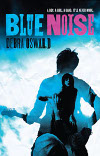
Random House, 2009.ISBN 9787741663754.
(Ages 12+) Drooling over the guitars in the local music
shop one morning, Ash is accosted by a geeky looking boy about his age,
who
cajoles him into taking the guitar from the stand and trying it out. In
the
ensuing few minutes, the boy, Charlie, who is about to join Ash's
school in
year 10, tells Ash about his idea to form a band and invites Ash to
join him.
From then on, Charlie uses humour and his own brand of determination to
take a
group of disparate people and form them into a playing entity.
But each of the three has problems to
overcome. Ash's brother is a gambling addict, making his family's life
chaotic,
as he steals and lies his way through life; Erin loves the blues band
but finds
it impossible to tell her parents about why she wants to remain at this
school
and continue with the band while Charlie lives with parents who come
and go at
the drop of a hat, his photographer father must pack and leave with his
family,
wherever the work turns out to be.
During the rehearsals, and performances, the
festival they attend and the up and downs of life as a band, each of
the three
works out what is important in their lives and come together, Ash and
Erin
romantically, while Charlie realises that leaving does not mean
severing ties
with friends.
A
warm, funny novel, infused with the sounds of music, this story will
have broad
appeal to middles school readers, and make an excellent choice as a
text for
early secondary students to study in detail.
Fran Knight
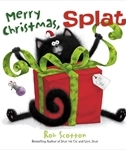
Merry Christmas, Splat by Rob Scotton
HarperCollins,
2009. ISBN
9780007326259
(Ages
4-6) Splat
the wide eyed, long limbed black cat is all agog over the closeness of
Christmas. He cannot wait to see what he will get and writes to Father
Christmas, asking for a big present. He explains that he has been a
good cat
and so, in his eyes, deserves a handsome gift as a reward. But his
friend,
Seymour, causes some disquiet, reminding Splat that he may not have
been good
enough. As a consequence, Splat offers assistance where ever he can,
doing
mum's dishes, dressing the Christmas Tree, shoveling the snow from the
door.
The reader will be able to see the difference between Splat's idea of
helping
and the reality of what he is doing.
Eventually Christmas Eve comes along and Splat waits all night
with his
torch hoping to see Father Christmas deliver his gift. The last page
when he
opens his gift gives a whole range of options for the reader.
This
is a funny look at Christmas and what children expect of the day.
Astute
teachers and parents will be able to lead the discussion to all sorts
of questions
about Christmas and what it means, with the idea of gift giving a major
thrust.
The illustrations are delightful, with the very funny Splat making a
comeback
after three other books in which he is the star. Children will delight
at the
mischievous fun of the illustrations and the humour shown in what Splat
and his
friend Seymour are doing.
Fran Knight
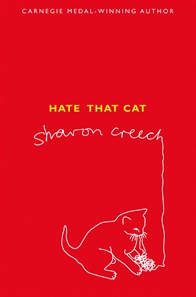
Hate that cat by Sharon Creech
Bloomsbury,
2009. ISBN
9780747599807.
(Age
9+) Recommended. What a delight to read
this reprint
of the companion volume to Love that dog. Jack is once again in
Miss
Stretchberry's class, writing a poetry journal, while learning about
the
elements of poetry from poems by Edgar Allan Poe, T. S. Eliot, William
Carlos
Williams, Valerie Worth, and Walter Dean and Chris Myers.
While
Jack struggles with his Uncle
Bill's caustic comments about free verse and learns about alliteration
and onomatopoeia, the
reader is drawn into his world through his wonderful descriptive poems
about
his dislike of cats, in particular the big black neighbourhood cat that
is 'meaner
than mean' and sneers at him. He is still recovering from the loss of
his dog
and knows no cat would ever compete. However, a Christmas present of a
small
black kitten which he names Skitter McKitter, makes him change his
mind.
I
particularly liked the way that I made
connections with Jack's life and feelings through his poetry. Learning
about
his deaf mother as Jack wrote about sound and silence was particularly
poignant.
The
book contains all the poems that
Miss Stretchberry used as well as a long list of Books on the Class
Poetry
Shelf.
This is a joy to read as an individual and as a read aloud and
would
make a wonderful class introduction to poetry.
Pat
Pledger
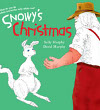
Snowy's Christmas by Sally Murphy and David Murphy
Random House Australia, 2009. ISBN 9781741664409.
(Age 4-6) Snowy has a soft white coat, which is very
different to all the other roos who are brown and rugged. He bounces
high, his
ears skimming the trees while the other roos leap long and low. He
feels left
out, but his mother assures him that he is special. When Ash, a huge
white
kangaroo, finds him and tells him he is perfect for a job, he follows
him on
the adventure of his life.
In her captivating story with an Australian setting, Sally Murphy
has managed to capture the spirit and fun of Christmas, while exploring
the theme
of fitting in and finding your own niche in life.
David Murphy's illustrations are bold with the vivid browns
and oranges and bright blue sky of the Australian landscape. I
particularly
liked the roos and reindeer who have such cute faces, each different
and
unique. Santa in his bush hat is a delight and the Christmas
decorations
scattered around in unlikely places are fun to find.
The theme of an Australian Christmas is sure to appeal to
young children who will love to see the white roos pulling Santa's
sled. A good
read aloud book, and one that the newly emerging reader will enjoy,
this will
enhance the library's collection of Christmas books.
Pat Pledger
Barack Obama: The making of a president by Dawne Allette
Tamarind 2009.
(Ages 9 +) Highly Recommended. This is a gem
of a book which tells the
fascinating, thought-provoking story of Barack Obama from his early
childhood
to his first hundred days in office. Barack's African routes and
Indonesian
childhood are covered in detail along with his complex family and his
political
ambitions. Reading about his upbringing, his nickname of Curly
Eyelashes and his beloved basketball,
young readers will identify with this very ordinary boy.
I found this a hugely uplifting and
informative read. Allette writes powerfully, describing Barack's
upbringing,
his ambition and how hard he worked to fulfil it. Today when many
children are
obsessed with celebrity and claim the rather empty ambition of 'wanting
to be famous' it is heartening to
read the story of an ordinary boy who set out to make a difference in
his
community before realising that to really succeed he would need to
change laws
- and to do that only the top job would suffice. This is a story of
real
ambition, of hard work, of love and support. However, it is no fairy
tale and
Allette covers the challenges and problems that faced Obama as well as
his
achievements.
Fact boxes offer helpful background
information and set Obama's story in the context of its time.
Unsurprisingly
prejudice is a recurring theme, from the era of slavery, right up to
the modern
day. During a visit to America in the 1960s, my sister remembers
only too well the signs on cafe
windows that read 'No Blacks'. Forty years on a black man occupies the
most
powerful position on earth. That is something worth celebrating and
Allette
does this in a hugely readable, dynamic and fascinating way. Buy it for
your
library, read it to your class, talk about it and use it to reinforce
the message
that Barack himself wants to convey: 'No dream is beyond our grasp if
we reach
for it, and fight for it and work for it'.
Claire Larson
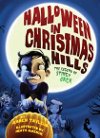
Halloween in Christmas Hills by Karen Tayleur
Ill. By Heath McKenzie. Black Dog books, 2009.
ISBN 9781742030302.
(Ages 5-8) Recommended. What will happen when Miles goes
trick or treating to Stingy Jack's house? Miles Cameron is number 5
child in the
Johnson family, and the whole family loves to dress up and celebrate
festivals.
Dad loves Australia Day, Easter is Mrs Johnson's favourite, and
everyone dresses up as leprechauns on St
Patrick's Day. When Halloween comes around Miles is determined to be
part of
the fun and even though he is warned not to go to Stingy Jack's house,
he rings
the doorbell and gets a big surprise.
This is a fun book that marks the different festivals that
are celebrated in Australia and explains that Halloween didn't
originate in
America. As Miles tells everyone it 'began as a Celtic fire festival.'
It will
find many fans for its humour and sly illustrations.
Heath McKenzie's drawings of the wide eyed Johnson family
are a delight and every page brought a chuckle as I followed their
exploits as
they put up Christmas lights, handed out Easter eggs and trouped around
the
neighbourhood on Halloween in their zany costumes. Working out just
what the tricky ending meant was fun too!
Halloween in Christmas Hills is just sheer fun to read - and
it could be a useful and very entertaining picture book to
supplement a
unit of work on festivals.
Pat Pledger
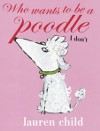
Who wants to be a poodle - I don't by Lauren Child
Puffin, 2009. ISBN 978014138490.
(Ages 4-8) Recommended. Trixie Twinkle
Toes lives in the lap of luxury
with a maid, a cook and a butler to cater to her every need but she is
unhappy.
Although she is adored by her owner, Verity Brulee, she would really
love to leave
all the pampering behind and just step in puddles.
Lauren Child has written a gentle satire about the fashion
of dressing dogs up in clothes, and taking them to beauty parlours,
when really
all they want to do is to act like a real dog. Information on the back
cover
tells the reader that 'poodles were originally trained to hunt
waterbirds' and Trixie
Twinkle Toes certainly proves that she is a 'dazzlingly dangerous
daring dog'
when she rescues little Gripper from certain death in a puddle.
Appealing collages tickle the funny bone as the exploits of
Verity Brulee and Trixie Twinkle Toes are brought to life by Child's
expert mix
of illustrations and cut-outs. The vibrant colours of Verity's elegant
clothes
and shoes will appeal to those interested in fashion, while dog lovers
will
rejoice to see that Trixie Twinkle Toes finally manages to act like a
dog.
Pat Pledger
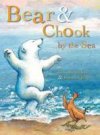
Bear and Chook by the sea by Lisa Shanahan and Emma Quay
Lothian Children's Books, 2009. ISBN 9780734411112.
(Ages: 5-7) Recommended. Bear decides it
is time to go to the sea. The
air is balmy and there is a holiday sky. Chook is very uncertain about
this big
adventure - they don't know the way and even when Bear assures her that
he can
find the sea, Chook is convinced that it is too far for her. Chook has
a very
frightening journey, but Bear reassures her that all is well. Once they
get to
the sea, they have lots of fun until a big wave dumps Bear and it is
Chook's
turn to bolster Bear's confidence about returning home safely.
Shanahan's text is a delight and her use of many sound words
like 'honky-tonk-tonk-tonk' for a frog and
'rickety-clickety-rickety-clickety-chooo-oooo'
for a train as they 'flomp, flomp, scratch, scratch' along to the sea
make for
a lively read aloud session. Short descriptive sentences and repetition
will
aid the beginning reader.
Emma Quay's illustrations are gorgeous. Beautiful blues,
yellows and greens bring alive the countryside and the ocean. The
personalities
of Bear and Chook are quite distinct and the changing expressions of
fear and
joy on their faces is captivating. I was left with a lovely
warm feeling about the power of friendship as I looked at the
illustrations of
Chook lolling against Bear as they watch the moon.
Themes of friendship, adventure and a seaside trip as well
as the memorable illustrations will ensure that this becomes a
favourite with
classes and individuals alike.
Pat Pledger
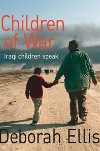
Children of War : Iraqi Children Speak by Deborah Ellis
Allen and Unwin, 2009. ISBN 9781742371146.
(Ages :
12+) In
the wake of her extraordinary Off to
War: Soldiers' Children Speak, Deborah Ellis gives us this
selection of
stories from Iraqi children, whose lives have been disturbed by war.
The 20
stories range from Haythem, aged 8, a boy with hydrocephalus caused by
the
enriched uranium used in bombs, to 15 year old Musim, who fled with her
family
to Amman after seeing the plight of women spiraling downwards in
Baghdad, and
19 year old B.W. along with others who can only be known by initials.
Each story
tells a different tale of that child's life, interrupted cruelly by the
conflict not of their doing, going on around them. Each story tells of
how they
have coped and are coping, in a land not of their birth, a place where
they are
refugees and outsiders, exploited, alone and living in poverty.
In
a classroom where issues are discussed, this book will form a basis for
conversation and thought. Students cannot help but be disturbed by the
stories
of children their age and the horrors they have seen and are involved
in. This
book will give faces to the horror scenes broadcast each night on TV.
Several
stories, amongst the many, stood out. 15 year old Musim had hoped along
with
her family that things would improve after the first Iraqi war. But
this did
not happen. Women's lives were even more strictly regulated. Many were
kidnapped, raped and beaten. When her father died, her mother
remarried, but
her stepfather grew more and more violent and threatening, when the
bombs
started. She vividly describes what it is like for people to live
during a
bombing raid, and so Musim and her family fled to Amman. Here at least
she and
her siblings can go to school, but the uncertainty is overwhelming.
A
telling quote form Dwight D. Eisenhower completes the stories, and this
is
followed by an excellent glossary of terms, and two pages of websites
where
further information can be found. Of all of these, the most chilling is
a site which keeps an up to
the minute count
of all Iraqi people killed. And we know that this count includes an
excessive
number of women and children.
Fran Knight
Pink by Lili Wilkinson
Allen and Unwin, 2009.
(Age
range: 14+) Recommended. Pink is a colour so often associated with
femininity
and girls and so aptly used as the title for this novel which deals
with peer
group and personal identity.
Ava
is trying to discover who she really is and where she truly fits in. As
she
begins a new school year having transferred to Billy Hughes private
school she
finds herself in with the ultra cool Alexis and her friends and also by
default
in with the misfit stage crew which is preparing props for the school
production. As Ava experiences the huge diversity of the two groups she
also
finds her friendship with Chloe, her best friend from her previous
school,
challenged by the new surroundings and her continual uneasiness with
who she is
and what she is becoming. Through her actions Ava alienates the people
who
really matter most to her and it is only through another's actions she
sees the
bigger picture more clearly.
Lili
Wilkinson is a talented author who seems to have an innate ability of
tapping
into the teenage mind and writing to suit their needs and likes.
Tracy
Glover
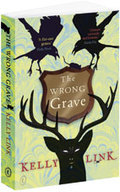
The wrong grave by Kelly Link
Text Publishing, 2009. ISBN 9781921520730.
(Age 14+) Recommended for those who like their stories strange and
scary, author
Kelly Link has written a unique collection of horror/fantasy stories to
keep the
reader awake at night. Reminiscent of Neil Gaiman's work, these short
stories are
compelling and unusual reading. In The Wrong Grave, Miles
decides that
he wants
to retrieve the poems that he put in his girlfriend's coffin, but has
an
unpleasant surprise when he opens the grave and digs up what seems to
be the
wrong girl. The wizards of Perfil live in high towers in a marsh, but
the
reader isn't sure if they exist or what they can do. Magic
for Beginners is a strange tale of
Jeremy whose friendships revolve around watching a weird TV show that
doesn't
appear regularly. In The Faery Handbag, a grandmother carries
around a
handbag, which may have a man-eating dog in it, or is it a whole
village? The
Specialist's Hat is the most frightening of all the stories, with
twin
girls
encountering a scary babysitter who joins them in a game to show
what it
is like to be dead.
Link's stories are unpredictable and creative, leaving the reader
gasping at
the sheer strangeness of her imagination and the deviousness of her
plots. I
won't easily forget the dead girl whose hair writhed like snakes or the
character Fox in the TV show The Library.
Making the stories even more appealing to teenagers are the insightful
comments
about girlfriends, kissing, parents and friendship that quietly appear
in each
story. Subtle humour is threaded throughout the tales and takes the
edge off
the horror. Shaun Tan's sketches at the beginning of each story are
also a
delight.
This is certainly a collection that I found so original that I will be
seeking
out Link's other works.
Pat Pledger
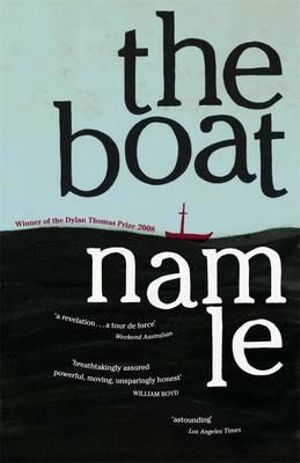
The Boat by Nam Le
(Age: Senior) This is an offering of invigorating and sometimes harrowing short stories by Vietnamese born Nam Le, whose family fled Vietnam in 1979, ahead of the northern Communist forces. Growing up in Melbourne, Nam Le knows the divided loyalties of someone living where they are not born. He gives us stories of homecoming and being a tourist in New York, of seeing his father after an absence of three years, of truthfulness, of braving the South China Seas, of Tehran and Melbourne, bringing a whiff of the exotic wherever they are set. The first story tells of a father's visit when the writer is living in Iowa. The disunity between the two men after an absence of three years, is compared with his writer's block, an anxious time, made more impossible by the forth coming deadline. Suffering writer's block, people give him ideas about writing. Ethnic writing seems to be the rage, so cash in on your boat people stories, some say. The unflattering suggestions of his friends, undermines what he has already written and published, but he is again taken back to his childhood in Melbourne, where his harsh father exerted a discipline born of anger. But deadline approaching, he resorts to the stories of his youth, of the Vietnamese men meeting at this house, of telling stories of their youth, of the problems in his own family home, where he and his father bristled against each other. When the father reads his words, he offers to tell him the real story and does so, but the story written is burnt, further breaking the threads between the two men. This first story is a captivating look at father son relationships and the disparity between generations. In Cartagena, the setting of the story is in the appalling corruption of drug soaked Colombia, where two men are discussing their contract to kill their target. The youth of the men is underlined by their innocent questions as they hustle the victim to the ground, in preparation for his murder. Each story is most unusual in its perspective, and the glowing imagery makes the reader want to stop and go back to read the line again. Senior students will find these an accessible group of stories to read and discuss. Fran Knight
Interview with Kirsty Murray
1. Do you see Vulture's Gate as a
departure,
especially from your historical books?
Vulture's Gate was a natural extension of the ideas I'd
been exploring across all my earlier novels. I've always been
interested in
stories that wrestle with ideas about time, place, historical
continuity and
historical continuity and the resilience of
children.
2. How did you develop the
characters in Vulture's Gate? Are
there links with those in the Children
of the Wind series?
The character of Callum was inspired by a photo of a boy
who was performing in a circus. What's always impressed me about
children in
the circus world is their flexibility - not only in the physical sense
but in
their ability to adapt to ever-changing circumstance. Bo began more
immediately
from the inspiration provided by my goddaughter, Roxane Walker.
Eventually,
both characters grew into their own distinctive selves, drawing
influence from
many of the children I have known. The principal connection to the
characters
from Children of the Wind series is Bo and Callum's resourcefulness. I
think
it's a very distinctive trait of immigrant children and, like Bridie,
Paddy,
Colm and Maeve, the children in Vulture's Gate have to face the
same
challenges
in terms of finding home in foreign climes.
3. What for you were the main
issues that you wanted brought forward in Vulture's
Gate
Despite how bleak and dark some of the projections in
Vulture's
Gate may appear, it's essentially a story that is optimistic
about
children's ability to adapt and make culture afresh in the wake of
environmental and social disasters.
4. The book ends with hope for
the future. Is there to be a sequel and if so what direction will it
take?
I didn't intend the book to have a sequel but I must
admit that Bo and Callum aren't quite so easily put to bed. I do have
notes and
scenes from their further adventures but I'm working on other projects
and trying
not to let Bo and Callum hijack me yet again.
5. What childhood books do you
feel have influenced your life as a writer?
The list would have to be very, very long. Alan Marshall,
Astrid Lindgren, Frances Hodgson Burnett and Mark Twain were authors
whose work
influenced me. Lucy Fitch Perkins' 'Twins Series' had a major impact on
my
reading when I was in middle-primary. I loved the way she infused her
stories
with so much cultural and historical information. Ann Holm's I am
David and
Ian Serraillier's
The Silver Sword were landmark books in my childhood reading
alongside Hesba
Brinsmead's Pastures of the Blue Crane and Ivan Southall's Ash
Road.
6. What books have you recently
read which are now amongst your favourites?
I'm both eclectic and voracious in my reading so my
'favourites' list is a shifting canvas. In the past few weeks I've
loved David
Metzenthen's Jarvis 24 and Katherine Constable's Winter of
Grace.
I've also
enjoyed Kelly Link's extraordinary collection of short stories The
Wrong Grave.
I'm re-reading Ford Madox Ford's The Good Soldier which is an
absolutely
perfect novel that's worth revisiting again and again.
7. What have been the main
influences on your writing?
My
children, step-children, godchildren and the many students that I've
met in
schools and writing workshops have all exerted a huge influence on my
writing.
I'm also very influenced by landscape - both urban and rural - and find
it very
difficult to separate any story from the place in which it is set so
Australia
is a significant influence on everything I write.
Vulture's gate by Kirsty Murray
Allen and Unwin, 2009.
ISBN 9781741757101.
(Age 13+) Highly recommended. A fabulous
science fiction story with
overtones of Mad Max, Vulture's gate tells the story of Callum, a young
boy
kidnapped by the dangerous Outlanders and Bo, Roboraptor Girl, who has
survived
alone in the desert since her grandfather was murdered. The world is a
lawless
place, and a bird virus has wiped out most of the women. When Callum
manages to
escape from his captors he discovers Bo's hiding place in the opal cave
where
she lives with her little robots, the roboraptors. Pursued by the
Outlanders,
they make a frantic dash across the desert in search of safety and
Callum's
fathers. But when they finally reach
Vulture's Gate, perilous surprises are in store for them.
This a great survival story with lots of action and
adventure to keep the reader interested. I loved the fast pace of the
story and
had to read quickly to the end to see whether Bo and Callum would
survive. Their
characters are vividly drawn and I found myself cheering them on as
they faced
terrible predicaments. The uniqueness of
the Australian setting, the barren landscape and the ruined city of
Vulture's
Gate added to the atmosphere.
Many thought provoking issues are raised. The theme of women
and girls being wiped out is a memorable one explored by Murray in a
low key
way. What would it be like to be regarded as an oddity if you were a
girl? As a
valuable rarity, what would powerful men want? What
would it be like for Callum to be brought
up by two fathers? The little roboraptors are fabulous and could be
used to
discuss genetic engineering and technology. The effects that a plague
virus could
have and devastation of the environment are also key themes.
This is a dystopian novel that deserves a place on library
shelves. The ending leaves enough openings for a sequel, and I would
love to
read one.
Pat Pledger
Finding Home by Gary Crew
IIl.by Susy Boyer. Ford St Publishing, 2009. ISBN
9781876462871.
(Ages 6-10) A
family arrives from England and taking up land in the bush, the father
clears
the trees and plants a crop. He is proud of what he has achieved, but
when his
son, a reader, tells him that the lone tree in his field is home to
many
cockatoos, the father cuts down the tree, making the birds find another
place
to roost or die. Paralleling this act of destruction, the boy, too,
must leave
or die in the barren place his father has created.
The
sparsely written text builds quickly to a crescendo of emotional pull
as the
reader is drawn to the boy and his love of his environment, taking in
the chasm
between the view taken by the parents and the boy. The savagery of
cutting down
the tree, the only one left in the field, is underscored by the
emotions felt
by each of the participants. The boy can only watch as the birds fly
around
looking for their home, bewildered, confused, and angry, while the
parents are
oblivious to the damage they have done. The gulf between the members of
the
family is quietly resolved as the boy leaves the farm with the
bookseller.
The
brutishness of the parents is contrasted with the soft, sometimes
dreamlike,
drawings by Susy Boyer. Her illustrations give quietness to the pace of
the
book which is suddenly erupted by the close up pencil drawings of the
parents
as they take in what the boy has said about borrowing a book. And this
abrupt
change is reiterated when the tree is felled. Her use of coloured
pencils and
water colour give an unusual texture to the page.
But
there is an oddity about the book which I found fascinating. Why did
the boy
leave? Why did the parents hate that he is a reader? Why did the
illustrator
encircle the boy and the hawker as they left the farm, with a halo of
white?
These and other questions will be eagerly discussed, along with other
more
obvious ideas. The thought of 'home' in the title is beguiling, as it
covers so
many different views of home in this book. And just who is 'finding
home'?
Conservation, environmental concerns, land clearing, settlement and
colonization
are just some of the topics of conversation I predict children will
discuss in
a classroom where this book is made available. And the idea of parents
being
cross with the child for reading a book! Well, I could go on and on.
Fran
Knight